
Midweek Review
Mandarin and Tamil – A historical perspective

By Dr. Nirmala Chandrahasan
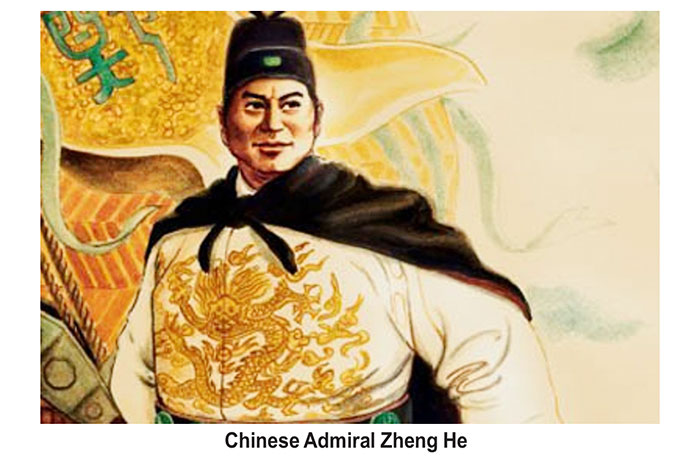
The recent discovery of name- boards in public institutions which have omitted one of the national languages, namely Tamil, only to replace it with Mandarin Chinese has caused a furor with Tamil members of Parliament and other politicians voicing their protests. Certainly, this is most unfortunate but rather than blame the Chinese it is the Government Authorities in charge of the implementation of the Official languages policy who should be blamed. They have been remiss in this instance which is only a small part of the general malaise in respect of the implementation of the official languages policy. This however is not within the remit of this article. In this article, I would like to focus on another trilingual inscription on a stone tablet stele, left by the Chinese Admiral Zheng He, and dated 15th February 1409, in Sri Lanka. It was originally inscribed in Nanjing in China itself and discovered in 1911 in Galle, and now preserved in the Museum in Colombo. This stone tablet with inscriptions in Chinese, Persian and Tamil signals the arrival of the Chinese fleet and invokes the blessings of Buddha and the Hindu God Vishnu whom the inscription mentions as “Thenavaran Nayanar” and refers to an endowment that Zheng He, had presented to the Vishnu Devale at Devinuwara and to a Mosque. Prof. Sasanka Perera in a very interesting and historically researched article titled “Veera Alakeshvaras Phlight signals from the past,” published in The Island of 28th April 2021, to which I am indebted, refers to this inscription as a “Subtle but obvious way of appealing to the socio political sensibilities of large and important communities in The Island at the time”. So it would appear that the Tamils were an important community in the island at the time. Sinhala does not feature in the inscription. Veera Alakeshwarar’s clash with the Chinese which I refer to in my article is part of the historical perspective which I wish to draw attention to. It has many lessons for the present , and brings to light the Chinese presence in this country many centuries ago.
To continue with the purpose of Admiral Zheng He’s naval journey, it was part of what was known as the “Ming Treasure voyages”. To quote Prof. Perera, the seven voyages under this naval scheme took place between 1405 -1433 AD and was the brainchild of the Ming Emperor Yongle. These voyages were undertaken to expand China’s military, political and commercial Authority across the oceans and to find local allies and establish Chinese spheres of influence in different parts of Asia, parts of the Middle East and places like Mogadishu and Mombasa in Africa. Before arriving in Sri Lanka Zheng He’s fleet had visited other south east Asian countries where also steles were left behind. All these interventions were made to ensure the stability of maritime routes for Chinese vessels. This is very much in line with what is happening today, with the Chinese “Belt and Road initiative”. The Chinese of that era were aware of the Tamil language and culture both because of the maritime traditions of the Tamils during the era of the great Chola empire but also because Tamil Buddhist monks from Kancheepuram had brought Buddhism to China. The Chola empire in South India which held sway over Sri Lanka also included parts of south east Asia , and had a large maritime fleet and merchant navy. Furthermore, Tamil traders and merchant guilds were active in the Indian occean and in south east Asia. With the decline of the Chola empire the seas were open for a new naval power and we find the Ming emperor making a strategic move.
To turn to Sri Lanka and Veera Alekeshvara’s encounter with the Chinese, I will have to go back in time to the Alagakkonara/Allagakone family, of which he was a member. This feudal family originally from Madurai or Kancheepuram in Tamil Nadu, settled down in Lanka and became very powerful in the Gampola Kingdom. The father of Veera Alakeshvara also known as Alakeshvara became a Minister in the Kingdom. He fortified a marshy region around the present city of Colombo and called the fortress he built there Jayawardenepura, and the area around became known as Kotte, (which means ‘fort’ in Tamil). From his fortifications he drove out the northern army of the Arya Chakraverti, who ruled the kingdom of Jaffna, and the tax collectors from this kingdom who were raiding the south western region. Thus, he came to overshadow king Vikramabahu I11rd of Gampola. Subsequently after some infighting with family members Veera Alakeshvara his son became king of the Gampola kingdom as Vijayabahu VI , and ruled from 1397- 1411 AD.
However, Veera Alakeshvara like some of our present China critics, was hostile to Chinese intentions in Sri Lanka and launched piracy attacks on the Chinese fleet in Sri Lankan waters with the help of some Muslim chieftains. As a consequence, Zheng He, left Sri Lankan waters as he had other ports of call, but returned to take revenge on Alakesvara. In 1410/11 Zheng He and his troops attacked Kotte and captured Veera Alakeshvara and his family together with other key political figures allied with him. He was taken as a prisoner to China. In the collected works of Yong Rong 1515, his capture is described as well as his subsequent pardon by the Emperor as follows “thus the August Emperor spared their lives and they humbly kowtowed making crude sounds ( a reference to their language) and praising the sage like virtue of the Imperial Ming ruler.” But this was not the end of the matter. As Prof. Sasanka points out regime change was the object, and Parakramabahu the Sixth ascended the throne. Chinese records reveal that the new king was chosen by Sinhalese emissaries present at the Ming Court, nominated by the Emperor and installed by Zheng He, using the Chinese military and naval power at his disposal, as a ruler more amenable to Chinas intentions. He created a political alliance with the Chinese that allowed expansive political projects such as the Ming Treasure fleet easy access to local waters as well as local political support.” It is also of interest to note that Sembagha Perumal alias Sapumal Kumaraya an ethnic Tamil and adopted son of Parakramabahu the Sixth subsequently conquered the northern Jaffna Kingdom and built the Nallur Kandasamy kovil in Jaffna and his exploits are commemorated by the poet Sri Rahula thera in the Kokila Sandesaya and the Selahini Sandesaya.
Aside from the sense of ‘deja vu’, which Prof. Perera remarks upon, Alakeshvarar’s story has many lessons for us today. We learn that the Tamil community in Sri Lanka was a powerful and respected one, hence the inscriptions in Mandarin along with Tamil and Persian. In the north the Kingdom of Jaffna under the Arya Chakravarti dynasty was as powerful as the other kingdoms and at that time was threatening kotte and even extracting taxes from regions in the South. Here too it was ethnic Tamils such as Alakeshvara senior who led the defense of the Kotte and Gampola kingdoms, and built Jayawardenapura, and it was Sembagha Perumal who later defeated the Arya Chacraverti and brought the Jaffna kingdom under the rule of Parakramabahu VI. The ethnic differences were subsumed, and Sinhalese and Tamils worked together as one people. The wars were for territory, with kings fighting kings and not between ethnic groups. It was only with the arrival of the western colonial powers starting with the Portuguese that ethnic differences surfaced, perhaps as a consequence of a divide and rule policy. Another lesson we learn is that the Chinese political presence i n the island is not something new. Furthermore Chinese trade was a key factor in the Sri Lankan economy as vindicated by the large collection of Chinese coins in Yapahuwe, which fact is adverted to in Prof. Perera’s article citing Prof. Sudarshan Senviratne. So, the resumption of Chinese political and economic activity in the island is not suprising. Chinese history records that after the great naval expeditions of Zheng He, there was a change in China’s policy and internal constraints made the Country turn inwards. It is now clear that China is resuming its old policy as evidenced by Admiral Zheng He’s naval expeditions, and is once again engaging in expanding its military, political and commercial authority across the globe vide the Belt and Road Initiative.
The Port City project in Sri Lanka is part of this grand design. The Port City project can bring benefits to Sri Lanka too, but it is the responsibility of the Sri Lankan Government and people to see that Sri Lanka’s interests are adequately protected and they cannot fault China for any short fall as every country looks after its own interests. In the context of the lessons we learn from the Veera Alakeshvara episode, Tamil politicians would be well advised to be more mindful when making protests at what they perceive to be Mandarin taking precedence over Tamil. We do not have to kowtow to the new Emperor in Beijing, and protests must surely be made when called for, but made courteously, recognizing that our cultures Tamil and Chinese, have co -existed enriching each other over many centuries as in the spreading of Buddhism by monks from the Tamil country, and the extensive trade as in the exchange of cotton goods for silk between the two civilizations. We have seen from the Galle Inscription that China gave the Tamil language pride of place in Sri Lanka at a certain point of time, and I may mention similar inscriptions have also been left by them in other south Asian countries. At that time Tamil was a language of commerce and trade in the Indian ocean region and the Tamil Kingdoms of South India were powerful entities. Similarly, the Persian language held sway for these reasons. Interestingly we learn from the Moroccan Traveller of the 14th Century, Ibn Batuta, who visited the kingdom of Jaffna, that the king Arya Chackraverti held control of the trade in pearls, had contact with foreign merchants and could speak Persian. It remains to be seen whether the Tamil language once again regains its lost position and the respect that entails. The Trilingual stele in Galle invokes the blessings of the Hindu deity the “Thenavaran Nayanar” Vishnu, for a peaceful world built on trade. For the present we have to recognize that China has come to stay as a power in the region, in a world built on Trade. We can be proud that two Asian nations India and China are emerging as the super powers of the 21st century and go with the trend giving due consideration to both countries in our political and economic policies.


Sri Lanka’s alignment with US-Indian combine/Quad alliance should be discussed, taking into consideration the declaration of bankruptcy, USD 2.9 bn IMF bailout package, US-Indian role in ousting President Gotabaya Rajapaksa and installation of a new virtually handpicked government by the US and India, additional financial burden of Cyclone Ditwah and the developing crisis in West Asia. The US and India exploited the situation to influence hapless Sri Lanka. Sri Lanka’s ban on foreign research vessels during 2024 is a case in point. Over a year and three months after the lapse of that ban, imposed at the behest of US and India, the NPP is still unable to state its position on the ban originally imposed by President Wickremesinghe.
By Shamindra Ferdinando
The 10th Synergia foundation’s conclave, a three-day strategic affairs forum, commenced in New Delhi on 11 March, 2026, 12 days after the joint Israeli-US attack on Iran. The meeting at the Manekshaw Centre Auditorium, New Delhi, took place a week after the US sunk an unarmed Iranian frigate just outside Sri Lanka’s territorial waters, in India’s backyard.
That calculated destruction placed India in an extremely embarrassing position as the ill-fated vessel was returning home after participating in International Fleet Review (IFR) and Milan 2026 that ended on 25 February with a closing ceremony conducted onboard India’s indigenous aircraft carrier, INS Vikrant, off the coast of Visakhapatnam.
The March conclave was the second such scene since the launch of the unprovoked Israeli-US air offensive meant to trigger a massive public-led regime change operation, which proved to be wishful thinking of the West and remnants and ardent followers of the ousted Shah Pahlavi family dynasty. The first was the 11th edition of the Raisina Dialogue, India’s flagship geopolitics and geo-economics conference that was held from 5-7 March, 2026, in New Delhi.
The Bangalore-based think tank founded in 1989 held its 9th conclave in Nov. 2023.
Over 200 persons, representing political and defence fields, participated in the Synergia conclave that took place as the unpalatable reality dawned on the aggressors and their allies that the anticipated regime change couldn’t be achieved.
The Narendra Modi government that failed at least to express concern over Israel-US action, displayed to the world the state of actual facts when Modi rushed to Israel, on the eve of the launch of the dastardly sneaky war, as if to give his blessings to it. But when the conflagration did not go as planned by the US and Israel, with a quick military knockout blow, that decapitated much of its leadership, but Iranian fight back capabilities, with increased vigour, coupled with the failure of an expected civilian revolt in the streets to materialise to bring about a regime change, New Delhi had no other option than to reach out to Tehran. Prime Minister Modi’s call to Iranian President Masoud Pezeshkian, on 12 March, amidst political turmoil at home, in the wake of crude oil and gas supply breakdown, badly exposed India. Pocketing their pride, the desperate call by the Indian PM paved the way for ships carrying crude oil and gas to pass the Hormuz Strait unharmed once again, as by that time up to 18 India bound vessels were held up there, underscoring New Delhi’s vulnerability.
The reportage of the Synergia conclave failed to pay adequate attention to the ongoing developments in West Asia that undermined economic-political-social stability in many parts of the world. Their failure to blame the developing crisis on the Israeli-US actions is understandable though not justifiable. India, against the backdrop of its strategic partnerships with Israel and US, found itself in an unenviable position as the deteriorating situation raised questions as New Delhi perceived position as the regional leader.
The new West Asia war should be examined taking into consideration the ongoing Russia-Ukraine conflict as they impacted gravely on the global economy. The crises proved that the North Atlantic Treaty Organisation (NATO), the world’s most powerful military alliance, cannot adopt a collective stand on two raging conflicts.
Against the backdrop of NATO’s predicament, our region should be fully aware of the vulnerability of regional alliances in the face of a global crisis. Quad comprising the US, Australia, Japan and India, is a case in point. Built to counter China, Quad leader US realised that it cannot, under any circumstances, receive military backing for the re-opening of the Hormuz Strait. The crisis, and the challenge faced by the US is so overwhelming, President Donald Trump ended up seeking Chinese Naval deployment in support of Hormuz re-opening.
At the time this piece went to print, the US had declared a 15-day pause on attacks on Iranian oil infrastructure in a bid to re-open Hormuz.
The Russia-Ukraine conflict and the West Asia war proved that whatever the alliances, and regardless of their leadership, such major conflicts caused irreparable damages and placed countries in unwinnable situations.
EX-CDS perspective
Retired General Shavendra Silva, former Chief of Defence Staff (CDS) of the war-winning Sri Lankan armed forces, discussed the regional issues on the basis that South Asia remained one of the least economically integrated regions in the world that limited its collective potential. Silva asserted that this gap is not just an economic issue but a strategic vulnerability as underdevelopment and instability in one country could swiftly spill over into other countries.
It would be pertinent to mention that the NPP government abolished the post of CDS.
Underscoring the pivotal importance in recognising the failure of the region to achieve meaningful economic and political integration, Silva warned against unilateral approaches, while declaring that cooperation among the countries would be essential.
The failure on the part of the decision-makers to address the issues, at hand, could fuel instability, unemployment, inequality and lack of development, and can even lead to migration pressures, crime and extremism, General Silva warned.
Stressing the importance of, what he called, military diplomacy to overcome challenges, the wartime General Officer Commanding (GoC) the celebrated 58 Division, expressed confidence that militaries could contribute to regional stability
In his concluding remarks, Silva made reference to the Colombo Security Conclave, shared challenges and the strategic necessity among countries in the region.
Unfortunately, elected leaders of so-called advanced countries, like the USA and Israel, are now behaving more like petty gangsters, launching brutal strikes on enemies, while ostensibly conducting peaceful negotiations to settle turf disputes. The US sinking of an unarmed Iranian frigate that claimed the lives of well over 100 officers and men caused excruciating diplomatic pressure as both countries struggled to cope up with the fallout.
The US could have targeted the Iranian vessel in international waters or at a point considerable distance away from India and Sri Lanka. Yet, the US submarine that had been tasked with the first such operation, after the end of the Second World War, struck seven nautical miles outside Sri Lanka’s territorial waters. The US action can be safely described as an attempt to test Indian and Sri Lankan reactions at a time of a major crisis and their loyalty to the sole superpower. Both countries struggled to cope up with the daunting challenge of reaching consensus with the US regarding the fate of two Iranian vessels namely Bushehr (auxiliary) and frigate Lena that respectively received refuge in Colombo and Cochin harbors.
The Iranian ship affair overwhelmed little Sri Lanka as the US sought to move the Djibout-based anti-ship missile carrying aircraft, via the Mattala Mahinda Rajapaksha International Airport, to a base tasked with mounting attacks on Iran. The request made on 26 February, two days before Israel-US initiated action placed Sri Lanka in a quandary. (Djibouti, in the horn of Africa hosts both US and Chinese military bases. In addition to French, Japanese, Italian and Saudi Arabian forces. Djibouti appears to have consolidated in security by having China and competing military powers on its territory).
President Anura Kumara Dissanayake disclosed his decision to deny the US request, along with Iranian wish to undertake a goodwill visit to Colombo from 9 to 13 March. Dissanayake sought to stress the country’s neutrality by denying both US and Iranian requests.
However, Dr. Alireza Delkhosh, has, in no uncertain terms, stressed that the three-member group of Iranian ships was invited by the Commander of the Sri Lanka Navy, Vice Admiral Kanchana Banagoda,when he met the Rear Admiral Shahram Irani during IFR/Milan 2026 in Visakhapatnam. That revelation, if true, underscored Sri Lanka’s responsibility as regards the well-being of the Iranians, though the government cannot be held accountable for the reckless US action in the Indian Ocean.
When The Island sought the US Embassy response to President Dissanayake’s refusal, a mission spokesperson said: “The United States and Sri Lanka maintain a longstanding defence partnership, grounded in transparency, mutual respect, and shared interests.” The Embassy refrained from commenting on the existing Acquisition and Cross-Servicing Agreement (ACSA), signed in 2007, and extended in 2017 for another 10-year period. ACSA will be extended next year.
That response revealed that the US understood the difficulties experienced by Dissanayake’s administration in dealing with the situation. The West Asia war, in a truly global sense, is perhaps the worst direct threat on the oil market and if not resolved within a week or two can cause a massive fallout. Sri Lanka hasn’t experienced a similar challenging situation in the post-Second World War era, since obtaining independence, in 1948, from the United Kingdom.
Whether President Dissanayake likes it or not, his government cannot deviate from the US-India led chosen path that may contradict often repeated claims of neutrality. In fact, India, too, seems to be trapped in Israel-US machinations as President Trump daringly used Islamabad in a bid to reach Iranian leadership. New Delhi may find the US move offensive, particularly against the backdrop of its repeated accusations that Islamabad backed terrorism directed at India.
Sri Lanka’s predicament
General Silva’s predicament highlights the daunting challenge faced by the Sri Lankan military in clearing its name. Having commanded the 58 Division that played a significant role in the destruction of the Liberation Tigers of Tamil Eelam (LTTE) in May 2009, Silva, in February 2020, suffered a devastating slap in the face when the US sanctioned him over unsubstantiated war crimes accusations.
Out of all the GoCs of frontline fighting divisions that fought in the Vanni theatre of operations (2007-2009) to defeat the Tigers, designated by the American FBI as the most ruthless terrorist organisation in the world, the US singled out Shavendra Silva for demeaning the sanctions regime. The February 2020 US declaration deprived the distinguished commander of an opportunity to visit some parts of the world. Hence the opportunities offered by India are of importance.
However, it would be pertinent to mention that India can never absolve itself of the responsibility for sponsoring terrorism in Sri Lanka in the ’80s. That despicable Indian project caused quite significant death and destruction in Sri Lanka over a period of three decades and also resulted in the assassination of one-time Prime Minister Rajiv Gandhi, in May 1991, in South India, and an abortive bid to assassinate Maldivian President Maumoon Abdul Gayoom in November, 1988.
The UN, notorious for its double standards, ignored the Indian terrorism project but adopted a hardline approach in respect of the Sri Lankan military that paid a very heavy price to bring terrorism to an end. Seven years after the eradication of the LTTE, Sri Lanka co-sponsored the US-led accountability resolution that condemned one’s own country for the killing of over 40,000 civilians on the basis of an unsubstantiated UN report, released in March, 2011, though it contradicted another UN report prepared by its Colombo office, with the support of other NGOs/INGOs operating in the Vanni during the war.
Sri Lanka simply lacked the courage to properly defend the armed forces at the Geneva-based United Nations Human Rights Council (UNHRC) or any other forum as we were more or less led at the time by traitors.
Gen. Silva received another blow, in March, 2025, when the UK sanctioned him, along with Admiral of the Fleet Wasantha Karannagoda, retired General Jagath Jayasuriya, and former LTTE commander Karuna Amman, obviously for turning against Tiger Supremo Velupillai Prabhakaran. When the writer inquired about sanctions imposed by various foreign governments, ex-Foreign Minister Ali Sabry, PC, declared that not only individuals but entire fighting divisions have been sanctioned. That was in early September, 2022, soon after President Ranil Wickremesinghe negotiated a USD 2.9 bn loan facility with the International Monetary Fund (IMF) to stabilise the national economy.
Sri Lanka never adopted a tangible action plan to counter lies propagated by interested parties. Hounded by the West and their fellow travellers, since the crushing of the Tigers in the battlefield, even the war-winning Mahinda Rajapaksa lacked a clear strategy. In the absence of a cohesive post-war action plan, interested parties, both here and abroad, pursued narratives that demonised Sri Lanka. Successive governments neglected their responsibility to the armed forces. They were so pathetic that significant opportunities, presented by the disclosures made by wartime US Defence Attache here Lt. Colonel Lawrence Smith, in June, 2011, and Lord Naseby, in October, 2017, on the basis that UK High Commission dispatches weren’t used. Their treacherous response facilitated a high profile campaign against Sri Lanka. Instead of mounting a proper defence, political parties exploited post-war developments to reach political alliances meant to promote agendas inimical to the country.
The decision to field the then retired General Sarath Fonseka as the common Opposition candidate at the 2010 presidential election delivered a knockout blow to war crimes allegations. The Tamil National Alliance (TNA), that served the LTTE’s interests from 2001 until the very end of the war, joined the UNP and the JVP in fielding the war-winning Army Chief. That political move, within a year after the decimation of the LTTE, should have paved the way for a national campaign to counter accusations of genocide perpetrated by the Sri Lankan military. Against the backdrop of Fonseka securing all predominately Tamil speaking northern and eastern districts ,as well as Nuwara Eliya, though he lost the election by a staggering 1.8 mn votes, genocide claims were no longer tenable after the Tamils response to Fonseka. If they were serious about war crimes accusations, Fonseka couldn’t have won those districts.
Impact on military
Mahinda Rajapaksa’s defeat at the 2015 presidential election brought in the Yahapalana government that betrayed the war-winning military at the UNHRC in October, 2015. The treacherous UNP-SLFP combine had no qualms in co-sponsoring accountability resolution in line with a secret tripartite understanding reached with the US and the TNA. However, for some reason TNA bigwig M.A. Sumanthiran disclosed the agreement in Washington while having the then Sri Lanka’s Ambassador to the US, top career diplomat Prasad Kariyawasan by his side.
Action taken against the Sri Lankan military should be discussed taking into consideration the Yahapalana political strategy that weakened the military. In fact, successive governments either facilitated external actions or neglected their profound moral responsibility to safeguard the interests of the military.
Political-economic-social security agenda pursued by a particular country largely depends on its military strength and the alliances and groupings it belongs to. Although Sri Lanka signed the ACSA during the last phase of the war, it gradually tilted towards the US with the arrival of Yahapalanaya, a year after Narendra Modi led the Bharatiya Janata Party (BJP) to a historic victory. Since then, both India and Sri Lanka gradually transformed themselves as regional US allies with India pursuing its own agenda in respect of Sri Lanka.
Actually, the US project to end the Rajapaksa rule really began in 2010 with the fielding of Fonseka as the common candidate as previously mentioned. The US and India perceived the Rajapaksas’ relationship with China a serious threat to them.
In June ,2016, former Foreign Secretary and the country’s Permanent Representative at the UN in New York, H.M. G.S. Palihakkara, cautioned the Yahapalana government over its policy towards China.
Responding to the late Bandula Jayasekera on Sirasa ‘Pathikada,’ Palihakkara commended the Yahapalana government for restoring relations with the US and other western countries, following the January 2015 presidential election. Having said so, Palihakkara warned the government against undermining the country’s relations with other countries, particularly China. In no uncertain terms, he advised that Sri Lanka couldn’t, under any circumstance, antagonise any particular country or a group of countries. That advice is even applicable today as the NPP tries to deal with the developing situation caused by the reckless US President.
Obviously referring to the halting of the China funded Colombo Port City project and the controversy over accusations directed at China, regarding costly loans, the soft spoken Palihakkara asserted that the government handled the issue ‘roughly’ at the expense of longstanding relationship between Sri Lanka and China.
During Yahapalanaya, the US made an abortive bid to force Sri Lanka to sign the Status of Forces Agreement (SOFA) and Millennium Challenge Corporation (MCC) Compact. The signing of SOFA would have paved the way for positioning of US forces here. In spite of their failure to finalise SOFA and MCC, Sri Lanka gradually enhanced military cooperation with Quad countries (US, Australia, Japan and India) and today receives major assistance by way of ships, surveillance aircraft, helicopters and drones. The government has enhanced defence cooperation by signing a defence MoU with the US in November 2025. That move should be examined against the backdrop of Sri Lanka entering into a defence MoU with India in April, 2025, and the transfer of controlling shares of the Colombo Dockyard Limited to a business enterprise, directly affiliated to the Indian Defence Ministry.
Sri Lanka has now gone a step further by seeking Saudi support to enhance the capabilities of the Navy and Air Force, an unprecedented and unexpected development but seems in line with the overall US backed policy. Saudi Arabia that had been at the receiving end of Iranian counter attack, following joint Iran-US air offensive, is the major beneficiary of US armament sales outside Israel.
Sri Lanka is finding it difficult to maintain neutrality (friends of all and enemy of none policy) as West Asia conflict drags the world on a perilous path.

The recent verdict delivered in Los Angeles in the landmark case K.G.M. v. Meta et al. has sent shockwaves far beyond the United States, carrying profound implications for societies across the globe, including Sri Lanka. In this historic ruling, a jury found Meta Platforms and Google legally responsible for designing social media platforms that contributed to the addiction and psychological harm of a young user. The case, in which Mark Zuckerberg appeared as a central figure, represents a turning point in how the world understands the relationship between technology, corporate responsibility, and the mental health of young people.
For many years, social media platforms such as Instagram and YouTube have been widely embraced as tools of communication, education, and entertainment. In countries like Sri Lanka, they have become deeply embedded in everyday life, especially among the youth. From online learning during and after the COVID-19 pandemic to social interaction and self-expression, these platforms now play a central role in shaping the experiences of a generation. Yet, the Los Angeles verdict has forced a global reconsideration of a crucial question: are these platforms merely tools, or are they powerful systems deliberately designed to capture and hold human attention?
The court’s decision makes it clear that the issue goes far beyond individual behavior. The jury concluded that certain design features such as infinite scrolling, auto play videos, and algorithm-driven content recommendations are not accidental but intentional mechanisms aimed at maximizing user engagement. In doing so, these platforms may foster compulsive use, particularly among children and adolescents whose cognitive and emotional capacities are still developing. This recognition marks a shift away from blaming individuals for “lack of self-control” and instead highlights the structural power of digital platforms.
In Sri Lanka, this message is particularly significant. The country is experiencing rapid digital growth, with increasing smartphone penetration and widespread internet access, especially in urban areas such as Colombo. Young people are spending more time online than ever before, often without sufficient awareness of the potential risks. While comprehensive national data on social media addiction remains limited, anecdotal evidence from teachers, parents, and mental health professionals suggests a worrying trend. Students are increasingly distracted, sleep patterns are disrupted, and issues such as anxiety, low self-esteem, and social comparison are becoming more visible.
What makes the situation in Sri Lanka even more complex is the gap between technological advancement and social preparedness. Sociologists often describe this as a “cultural lag,” where material changes such as the rapid adoption of smartphones and social media outpace the development of social norms, regulations, and awareness. Unlike in the United States, where this case has sparked legal and policy debates, Sri Lanka still lacks a comprehensive framework to address issues such as algorithmic accountability, child online protection, and digital well-being. As a result, Sri Lankan users, particularly children, are exposed to the same powerful technologies without the same level of institutional safeguards.
The verdict also carries a deeply personal and urgent message for parents. In many Sri Lankan households, giving a smartphone to a child has become almost routine, often justified by educational needs or social convenience. However, the Los Angeles case demonstrates that early and unregulated exposure to social media can have long term consequences. The young plaintiff in the case began using these platforms at a very early age, and the court recognised that this early exposure played a significant role in her subsequent mental health struggles. This should serve as a wake-up call for Sri Lankan families.
Parents can no longer afford to view social media as a harmless pastime. Instead, they must recognise it as a powerful environment that actively shapes behavior and emotions. This does not mean that technology should be rejected altogether; rather, it calls for a more conscious and balanced approach. Parents need to be actively involved in their children’s digital lives, setting boundaries, monitoring usage, and encouraging alternative activities such as sports, reading, and face-to-face interaction. Equally important is the need for open communication, where children feel comfortable discussing their online experiences without fear of punishment or misunderstanding.
At the same time, the strength of Sri Lankan society may offer a unique advantage in addressing this challenge. Unlike many Western societies, Sri Lanka traditionally emphasizes strong family bonds and collective values. Research has shown that supportive family environments can significantly reduce the negative impacts of excessive social media use. This suggests that the solution is not only technological or legal but also social. By strengthening family relationships and fostering meaningful offline interactions, Sri Lankan society can build resilience against the pressures of the digital world.
Beyond the household, the implications of the verdict extend to policymakers, educators, and the broader community. There is an urgent need for public awareness campaigns that educate citizens about the risks of excessive screen time and the importance of digital well-being. Schools should incorporate digital literacy into their curricula, teaching students not only how to use technology but also how to use it
responsibly. Mental health services must also adapt to address the emerging challenges associated with digital addiction, particularly among young people.
Critically, the Los Angeles verdict challenges the long-standing assumption that technology companies bear little responsibility for how their products are used. By holding corporations accountable for the design of their platforms, the court has opened the door for a new era of digital governance. For Sri Lanka, this presents both a challenge and an opportunity. The challenge lies in developing appropriate policies and regulations in a rapidly changing technological landscape. The opportunity, however, is to learn from global experiences and take proactive steps before the problem becomes more severe.
The broader lesson of this case is that technology is not neutral. It reflects the values and priorities of those who create it, and it has the power to shape the societies that adopt it. In the context of Sri Lanka, where young people represent a significant portion of the population, the stakes are particularly high. The choices made today by parents, educators, policymakers, and individuals will determine how this generation navigates the digital world.
As the world reflects on the implications of this historic verdict, one message stands out with clarity and urgency. The responsibility for protecting children in the digital age cannot be left to chance. It requires awareness, engagement, and collective action. For Sri Lankan parents, the message is simple but profound: technology must be guided, not left to guide.
In conclusion, the landmark verdict in Los Angeles serves as a powerful global warning that the digital environments shaping today’s children are neither neutral nor harmless. For a society like Sri Lanka, which is rapidly embracing technology without equally strong systems of awareness and regulation, the lessons are both urgent and unavoidable. The ruling against Meta Platforms and Google highlights a critical shift in thinking: the responsibility for the well-being of young users must be shared among corporations, governments, communities, and, most importantly, families.
Sri Lanka now stands at a crossroads. It can either continue to adopt digital technologies without question, allowing global platforms to shape the behaviors and mental health of its younger generation, or it can take a more thoughtful and proactive path. This includes developing policies that protect children, integrating digital literacy into education, and encouraging open national conversations about screen use and mental health. The absence of immediate action may not produce visible consequences overnight, but over time, it risks creating a generation increasingly dependent on screens, socially isolated, and psychologically vulnerable.
For parents, the message is especially clear and deeply personal. Raising children in the digital age requires more than providing access to devices; it demands guidance, supervision, and emotional connection. Technology should never replace human relationships, nor should it become the primary source of comfort, validation, or identity for children. Instead, families must actively cultivate balanced lifestyles where digital engagement is complemented by real world interaction, creativity, and critical thinking.
Ultimately, this verdict is not just about a court decision in a distant country it is about the future of children everywhere. For Sri Lanka, it is an opportunity to reflect, to act, and to ensure that technological progress does not come at the cost of human well-being.
by Milinda Mayadunna
The world today is in turmoil. The killing of innocent people, the destruction of property, and the spread of hatred among fellow human beings have become distressingly common. Acts of dishonesty- such as corruption, the misuse of public funds, and the exploitation of state resources for personal gain by those in power, are no longer rare occurrences, but troubling patterns seen across both developed and developing nations.
What is particularly striking is the contradiction within many so-called developed and democratic countries. Their leaders frequently lecture poorer nations on the principles of democracy and moral responsibility yet often fail to uphold these very values when it conflicts with their own interests. This hypocrisy raises difficult but necessary questions about the true state of global leadership and accountability.
At the same time, we rightly condemn authoritarian regimes and one-party systems, where power is concentrated in the hands of a few, often at the expense of millions of lives. Such systems have caused immense suffering, as leaders cling to power at any cost.
Having been born and raised in the “democratic” world, I find myself, in later years, reflecting on a Sri Lankan folk tale which I learnt in my early years in Sri Lanka, one that carries a powerful moral about the dangers of placing great power in the hands of the unwise and the power-hungry. For readers who may not be familiar with this story, I would like to share it as a lens through which we might better understand and reflect upon the precarious state of our world today.
The Monkey Story
Once upon a time, a barber in a village would travel from house to house shaving men who sat outdoors, with his razor-sharp blade. One day, after finishing his work near the forest, he rested under a tree. A curious monkey, who had been watching him closely, was fascinated by how carefully the barber used the shining blade. When the barber got up to leave, he accidentally dropped the razor.
The monkey quickly climbed down, grabbed it, and began examining it. It had seen the barber glide the blade across faces and thought, “That looks easy! I can do that too.”
The monkey found a few sleeping fellow monkeys and decided to imitate the barber.
It pressed the blade against the monkeys’ skin. But unlike the barber, the monkey had no skill, patience, or understanding. With a few careless motions, it cut too deeply.
The monkeys woke up in pain, bleeding badly.
Startled and frightened, the monkey panicked. Still holding the razor, it began jumping wildly from branch to branch. In its fear and confusion, it injured more animals, slashing blindly as it moved. What began as curiosity turned into danger and destruction. Eventually, the monkey dropped the blade and fled. The forest was left in chaos, and the animals learned a painful lesson.
The story ends with a moral often expressed like this:
“A sharp tool in the hands of the unskilled is more dangerous than helpful.”
or “Knowledge without understanding leads to harm.”
World Today The United States of America (USA) is widely regarded as one of the most powerful and economically influential countries in the world. On 20 January 2025, Donald Trump was inaugurated as the 47th President after winning a majority of votes in the election. As President, he holds significant executive authority, although the Constitution provides checks and balances through Congress and the Supreme Court to limit potential abuses of power.
A potential concern in this system arises when the majority in Congress aligns with the President’s party and a significant number of Supreme Court justices were appointed by presidents of the same party. In such circumstances, decisions may be more likely to favour the President’s agenda, raising questions about the effectiveness of institutional checks.
During his early months in office, President Trump introduced a series of tariffs affecting multiple countries. These measures were presented as efforts to address trade imbalances and protect domestic industries. However, they drew criticism from several nations and analysts, who argued that the tariffs disrupted global trade and contributed to financial uncertainty in some markets.
As international opposition grew, adjustments were made to tariff levels for certain countries. Nevertheless, the policy strained relationships with some allies and raised concerns about the future of global economic cooperation.
In the last few months, there have been reports suggesting that President Trump expressed interest in expanding U.S. influence over certain territories. For example, discussions surrounding Greenland have drawn international attention, particularly after suggestions of potential economic or strategic arrangements. These ideas were met with strong opposition from European nations, and no formal action has been taken yet.
Reports and footage have circulated suggesting that U.S. forces detained Venezuela’s president and his wife and transported them to the United States. It has also been reported that the appointment of the country’s vice President as the President of Venezuela with the consent of President Trump, to govern the country. No one knows when the people in Venezuela will erupt against this interference by a foreign leader in the internal affairs of their country which is against the international law.
A few months ago, President Trump repeatedly suggested that he wanted Canada to become part of the U.S., openly discussing the idea of annexation. Canada opposed this proposal, which strained relations and led the country to distance itself from the USA.
USA / Israel Vs Iran
American representatives including President Trump’s son-in-law, Jarrd Kushner, reportedly engaged in negotiations with the Iranian counterparts mediated under the auspices of Oman to negotiate a settlement for nuclear disarmament by the Iranians. The negotiations were halted for a week to resume to discuss further. It has been reported in the UK and international media that before they could resume negotiations, on 28 February 2026, the USA and Israel launched missiles strikes against Iranian targets without provocation from the Iranian regime. This would constitute a violation of the processes and procedures of the negotiations which would represent a serious breakdown in diplomatic protocol and trust.
Reports indicate that USA and Israel have bombed Iranian army and civilian properties killing Iranian supreme leader together with some leading political, military personnel, and innocent civilians. If confirmed, this could indicate an unprovoked attack led Iran to retaliate by firing missiles to Israel and Iranian’s Arabic neighbours who are having American and Western military bases in their countries. The war escalated killing thousands of Iranian and Lebanese civilians and unprecedent damage to both military and civilian infrastructure.
Rhetoric and Risk
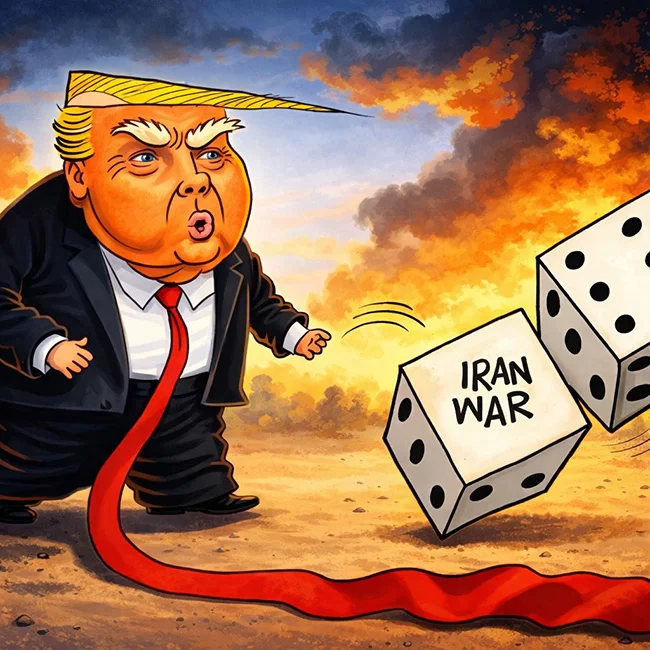
The President of the USA warns Iran that he would obliterate the Iran if they did not surrender immediately.
He also stated that he would get rid-of the Iranian leaders and he would nominate an Iranian leader of his choice to lead the country. Rather than weakening the regime, foreign intervention tends to unify the population against a common external adversary. By bombing and murdering innocent civilians and their properties, the Iranian public who were previously against the Iranian regime, rallied behind their government, strengthening the very structures the external forces wanted to undermine. Haven’t the leaders of USA and Israel learnt lessons from the wars in Iraq and Afghanistan?
President Trump and the Israeli Leader Benjamin Netanyahu have found that it is not that easy to obliterate Iran, as Iranians are united against the Americans and Israelis. Iranians have blocked the Hormuz Strait stopping the path to deliver oil and gas to the rest of the world as most of global oil passes through the Strait of Hormuz.
Although President Trump has stated that American Navy and Airforce have destroyed the Iranian capabilities, still the Iranians are firing missiles to Israel and neighbouring countries who have American and European military bases. This discrepancy raises questions about the accuracy of battlefield assessments. The assumption that military superiority guarantees swift outcomes is frequently challenged in asymmetric conflicts. Despite claims of weakened Iranian capabilities, continued missile activity suggests a more complex reality.
Currently the USA and Israel are unable to open the Hormuz Strait as Iranians have claimed that they have planted mines both in the water and in the vicinity. The current situation is affecting the whole world economically, politically, and socially due to increased energy prices and reduced global oil and gas supply.
Power and Judgement
These episodes echo the Sri Lankan story of the Monkey and the Razor Blade, mentioned at the very beginning of this article. The moral of the story offers several lessons that resonate with the actions taken thus far by the President of the United States and the Prime Minister of Israel. It is hoped that these lessons are recognised by those in positions of power who may be misusing their authority:
· Misusing something powerful can lead to harm, both to others and to oneself.
· A lack of wisdom and self-control often leads to downfall.
· Imitation without understanding can create significant danger.
· True intelligence lies in sound judgement, not merely in power or cleverness.
· Absolute or exaggerated statements should be avoided unless they are supported by evidence.
The challenge for global leadership is not merely the existence of power, but the wisdom of knowing when to act, and when to stand down.
Sri Lankan Situation
During the 2014 election, a broad coalition led by the late Ven. Maduluwawe Sobhitha Thero, along with the UNP, JVP, breakaway SLFP members, and various civic organisations, campaigned tirelessly to abolish the Executive Presidency. Their efforts contributed to the defeat of then President Mahinda Rajapaksa and the establishment of the Yahapalana government in 2015.
However, despite this mandate, the “Yahapalana” leadership failed to introduce or pass legislation to abolish the Executive Presidency after coming to power. Prior to that, two Executive Presidents from the SLFP governed the country from 1994 to 2015, and both also failed to fulfil similar promises made during their election campaigns.
Sri Lanka has endured nearly fifty years of endemic deception, fraud, bribery, and corruption. Political loyalty, rather than merit, has dictated appointments to positions of power, including within the judiciary, ensuring decisions serve the interests of the ruling elite. These abuses were enabled by the unchecked exercise of executive authority, protected by the immunity afforded to the Executive President while in office. The concentration of such powers, combined with legal immunity, has been a principal factor behind the economic, social, and legal crises that have plagued the country over the past fifty years.
The National People’s Power (NPP) government came to power on an anti-corruption, reform agenda, promising to reduce traditional patronage politics. However, critics across the political spectrum argue that some recent appointments reflect a continuation of the same practices rather than a break from Sri Lanka’s historical governance models.
Some of these politically motivated appointments appear to continue under the present government as well. Examples include the appointments of the Auditor General, Director of the CID, Secretary to the Ministry of Public Security, Commissioner General of Excise, several Ambassadors and High Commissioners, and the Secretary to the President all of which bypassed career diplomats, undermining professional merit.
The current administration, led by NPP leader Anura Kumara Dissanayake (AKD), previously aligned with opposition movements that strongly advocated for the abolition of the Executive Presidency. His election manifesto also included this pledge. Yet, after more than a year and a half in office as Executive President, the government has remained largely silent on the issue.
Considering recent global discussions on executive power, including developments in the United States, it is timely and necessary for President AKD to clearly state his position on this matter. Without decisive action, the continued existence of the Executive Presidency may pose long-term challenges to democratic governance in Sri Lanka.
by Gamini Jayaweera

Amelia Kerr hits 139-ball 179* as New Zealand pull off record chase to level series

Punjab Kings fined for slow over-rate

Ice-cool Connolly leads nervy Punjab Kings home on IPL debut

Showers expected in the Western, Sabaragamuwa and Southern provinces in the evening or night

Heat Index at Caution Level in the Western, Sabaragamuwa, Southern, Eastern, North-western, Northern and North-central provinces and in Monaragala district

Urea shortage threatens Yala harvest: Experts

‘Dates have the highest sugar content to fight Coronavirus’

Sunday Island 27 December – Headlines

#SundayIsland 17th December – Headlines

Sunday Island – 28th March

Sunday Island Headlines – 21 March

Sunday Island – 21st February – Headlines
-

 Features5 days ago
A World Order in Crisis: War, Power, and Resistance
-

 News6 days ago
Energy Minister indicted on corruption charges ahead of no-faith motion against him
-

 News7 days ago
US dodges question on AKD’s claim SL denied permission for military aircraft to land
-

 Business7 days ago
Dialog Unveils Dialog Play Mini with Netflix and Apple TV
-

 Sports6 days ago
SLC to hold EGM in April
-
 Opinion6 days ago
When elephants fight, it is the grass that suffers
-
 Latest News6 days ago
A strong Technical and Vocational Education and Training (TVET) system equips individuals with practical, relevant, and future-oriented skills helping to innovate responsibly towards a greener and sustainable future – PM
-
 Features6 days ago
Lest we forget