
News
Lord Naseby: UK policy statement on Lanka riddled with factual inaccuracies

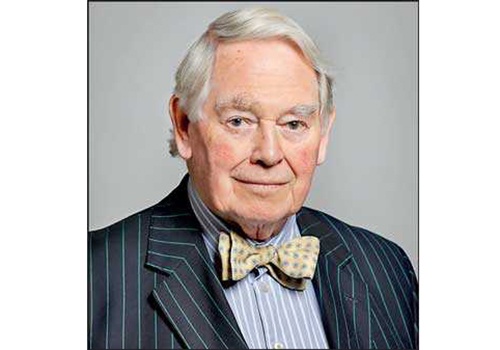
Lord Naseby, the Honorary President of The All Party Parliamentary British Sri Lanka Group has, on the basis of assurances received from the heads of ICRC, Colombo, on three occasions; denied torture was taking place in post-war Sri Lanka. In a letter addressed to Lord (Tariq) Ahmad, Minister of State for South Asia and the Commonwealth, reminded the Minister how some Tamils caused self-harm to gain entry into the UK.
The following is the full text of the letter:
The reference to Sri Lanka in the 20 November 2020 Ministerial Statement you made on Human Rights Priority Countries for the period Jan -June 2020 is dreadful, as it is riddled with factual inaccuracies and a total failure to reflect in any way the efforts of Sri Lanka to achieve reconciliation following the end of the terrorist conflict in May 2009. In fact the question arises as to why Sri Lanka is in the list of our human rights priority countries when there are countries with abysmal human rights records. I highlight the following:
1. I can understand the frustration of the UN at Sri Lanka’s withdrawal from the UN Resolutions. However, you know the background of the Foreign Minister Mangala Samaraweera signing without having the agreement of the Executive President or seemingly the Cabinet. Sri Lanka now has a new Government which is frustrated at the UN approach and wishes now to handle the reconciliation internally. Indeed the new Executive President highlighted ‘reconciliation’ in his inaugural speech and the Foreign Minister in his address to the UNHRC session in February 2020.
Frankly I draw an analogy with the UK. Following a Referendum of our people we are leaving the EU so that we can make our own laws & be responsive to our own legal system rather than being subservient to European laws & Courts.
Sri Lanka is no different. They had a general election with a turnout of voters far higher than we achieve and as a result the new Government were empowered to give notice to leave the UN Resolutions and seek an internal solution. The present Sri Lankan Government sought a mandate from the people for this which was approved overwhelmingly by the voters. It is a sovereign decision of Sri Lanka just as the decision of ours to leave the EU.
2. The claim is made ‘Parliamentary elections were delayed twice because of COVID -19 without reconvening Parliament, which resulted in a lack of Parliamentary oversight from March onwards’.
“The independent and highly regarded Election Commission who I can personally vouch for, decided to postpone the parliamentary election from its initial date of 25 April 2020 to 20 June 2020 and finally to 5 August 2020 due to challenges posed by the Covid 19 pandemic.
The eighth Sri Lanka Parliament was dissolved on 2nd March 2020 invoking Article 70(7) of the Sri Lanka Constitution in the context of an Emergency. The dissolution of the Sri Lankan Parliament was done before the spread of the Covid 19 pandemic and the election was duly held on 5 August, the earliest occasion it was feasible to hold the election and Sri Lanka is among the few countries in the world that successfully held elections in the midst of a pandemic.
Personally, I see a comparable parallel to the UK. On the 23rd March Prime Minster Boris Johnson made a TV address in which he asked people to stay at home and only leave for very limited purposes. On 24th March Secretary of State Hancock made a statement in the Commons saying that the PM announcement was not advice but rules enforceable by the Police. Parliament rose for the Easter recess on 25 March and was not recalled. The Government stated the regulations were needed urgently and therefore were brought into force without prior parliamentary approval.
I am astounded that our lead representative in Geneva chose to criticise Sri Lanka with incorrect factual information made even worse as there was there was no Parliamentary oversight in the UK. Indeed it is still worse in the UK as we regularly receive SI’s in the Lords for debate weeks after they have been implemented.
Furthermore, since Sri Lanka’s ninth Parliament has been in session, no new laws have been enacted to deal with COVID 19 pandemic which is clear evidence that the existing laws were adequate to deal with the pandemic or any other situation between March and August 2020.
3. The UNHRC on freedom of religion or belief state there was an increase in anti-Muslim sentiment ‘fuelled by disinformation around Covid 19’. Sri Lanka like most Countries set up a Covid Committee with scientists, epidemiologists and experienced health administrators. These experts stated that due to the shallow water table in Sri Lanka and the possibility of those who died of Covid-19 contaminating the ground water, normal burial would not be possible. This was to apply to everyone and regardless of cause of death. However, taking in consideration Muslim representations a Committee has been set up to examine the possibility of burial in the dry areas. I would expect anyone with any understanding would recognise in an emergency the science must be listened to, after all we in the UK are told to do so. It may be noteworthy that recently, people in Denmark have raised concerns about the possibility of groundwater being contaminated in areas where culled mink are buried and urged the authorities to burn the carcases of culled mink instead of burying for the same reason.
4. I note the UN makes no mention of the relative success of Sri Lanka in controlling the Virus. I checked and as at 24.11.2020 Covid deaths were 90 for a population of 21 million which as a percentage is 0.0004% – the best in South Asia. We in the UK as at 25th November had 56,533 deaths for a population of 67.88m which is a ratio of 0.0832. This is the worst in Europe. In addition, there has been no acknowledgement whatsoever to the rehabilitation and release of 12000 LTTE cadres and the release of private land utilised by both the Indian military and subsequently by Sri Lankan military during the 30 year conflict. This is particularly significant in the context of the recent terror attacks in Vienna where the perpetrator of the terror attack had been given an early release from his prison sentence following a terror related conviction.
5. There is criticism of the Presidential Task Force and use of the military. However, the UK has used the military with success. Many of us think they should have been used much more. Indeed, I note our Military are on standby during the festive season. The deployment of armed forces along with other government officials to assist people in natural calamities and in disaster management is nothing new. It is not a practice limited to Sri Lanka. In fact, Sri Lankan armed forces have always contributed to assist relief work following natural disaster such as the Boxing Day Tsunami in 2004 as well as landslides, flooding and droughts which are a common occurrence in Sri Lanka.
6. ‘Military appointments to government roles included individuals accused of war crimes’. It is inevitable that former military senior officers will be accused of alleged War Crimes by the LTTE who escaped and now control some of the Diaspora Groups who pump out propaganda. I remind you and the UN that this was a war and the law that operates is the law of armed conflict, otherwise known as International Humanitarian Law. The Government of Sri Lanka sees that there is no case against their senior Officers indeed Col Gash in his despatches praises the Sri Lanka armed forces for the care they took to try to minimize civilian casualties. I see nothing wrong at all in having a highly qualified military surgeon assigned to lead the Government Health Service to good effect looking at their Covid success in contrast to our NHS.
I make two further observations: You will be aware that we in the UK have a Bill going through Parliament – Overseas Operations (Service Personnel and Veterans) Bill. The need for this legislation arises from bogus allegations of war crimes by British Military in the Iraq war. I see a direct parallel with Sri Lanka in relation to unfounded allegations principally from former LTTE leaders using the Diaspora. Sri Lankan armed forces fought to neutralize a deadly terrorist outfit which was a threat not only to Sri Lanka but the whole world. They did not fight someone else’s war in another country. Given the allegations against the Australian forces in Afghanistan, we must be cautious when we accuse the armed forces of a country which fought to safeguard its own territorial integrity and to rid the world of a ruthless terror outfit.
I also remind you that we in the UK seem comfortable to have Mrs Adele Balasingham, a British Citizen by marriage residing in the UK. It was she who as a LTTE leader recruited and trained ‘Child Soldiers’ resulting in a heavy death toll as they were put in the front line. There can be no greater War Crime than this. In fact, according the Rome Statute to which the UK is a State Party, recruitment of children is a war crime.
7.’Complaints from Human Rights Activists and Human Rights defenders’. On my last three visits I have been told by NGO activists that ‘Torture’ is happening in Sri Lanka. Each time I question the head of the ICRC, as it happens a different person each time, who state categorically that they have never seen or had any evidence to substantiate the claims. You also know we have seen in the UK cases of self-harm by certain Tamils trying to gain entry into the UK.
8. ‘Domestic Mechanism’ for reconciliation and accountability. The criticism ignores the vital role of the missing persons Commission and the beginning of Reparation payments. Furthermore, since notice was only given in April just as the Pandemic struck and a General Election had to be held it is ridiculous to imply nothing was really happening which is the tenor of this part of the UN complaint.
9. The only substantial point in the Report that warrants real attention is the holding in custody of the Muslim Lawyer without being charged. I have raised this issue at the highest level in Sri Lanka pointing out it is unacceptable. I am told that evidence is being collected in relation to a possible association with the Easter Sunday bombing atrocity. I have made it clear he should either be charged or released.
I conclude. You will be aware that the well-known and respected Legatum Institute who annually assess 167 nations across 65 policy-focused elements, measured by almost 300 country-level indicators enabling them to construct a thoroughly comprehensive picture of prosperity across its institutional, economic and social dimensions. They issued their latest report on14th November 2020.
Ironically, they state in relation to Sri Lanka and I quote;
‘This year’s Index will showcase the impressive performance of Sri Lanka over the past decade in improving its ranking across a number of key social indicators. Specifically, it will highlight the extent to which improvements to the healthcare and education sectors have been key to delivering this increase in prosperity, and how your approach might serve as an inspiration for other nations confronted with similar challenges today’.
What a contrast to the UNHCR report the UK Government has issued internationally full of factual errors which is frankly unacceptable.
We in the UK are beneficiaries of the mammoth investment by the Government of Sri Lanka in its human capital given the large numbers of professionals of Sri Lankan origin, including from the Tamil community serving in medicine, engineering, accountancy and other fields.
There is a misplaced vindictiveness towards a country with huge potential and talent well able with encouragement to become the Singapore of South Asia. We have just appointed a new Trade Envoy. In my judgement the UK now trading as a sovereign country on its own needs to nurture these opportunities rather than sit on the side-lines criticising.
Moreover, Sri Lanka is a country that has supported the UK in the international arena. It is among the handful of countries that voted with the UK on the UN resolution in the 1980s on the Falklands issue. Recently, Sri Lanka was also amongst the very few countries that abstained on the UN resolution on the issue of the Chagos Archipelago. Sri Lanka must have done so irrespective of its close relations with Argentina in the former case and Mauritius in the second, due to the importance it accords to its relations with the UK. The UK should reciprocate such goodwill and not attempt to victimise Sri Lanka for petty domestic reasons at the behest of an extreme Sri Lankan Tamil Diaspora in the UK.’

Latest News
Heat Index at Caution Level in the Western, Sabaragamuwa, Southern, Eastern, North-western, Northern and North-central provinces and in Monaragala district


Warm Weather Advisory
Issued by the Natural Hazards Early Warning Centre
Issued at 3.30 p.m. on 31 March 2026, valid for 01 April 2026.
The Heat index, the temperature felt on human body is likely to increase up to ‘Caution level’ at some places in the Western, Sabaragamuwa, Southern, Eastern, North-western, Northern and North-central provinces and in Monaragala district.
The Heat Index Forecast is calculated by using relative humidity and maximum temperature and this is the condition that is felt on your body. This is not the forecast of maximum temperature. It is generated by the Department of Meteorology for the next day period and prepared by using global numerical weather prediction model data.

Effect of the heat index on human body is mentioned in the above table and it is prepared on the advice of the Ministry of Health and Indigenous Medical Services.
ACTION REQUIRED
Job sites: Stay hydrated and takes breaks in the shade as often as possible.
Indoors: Check up on the elderly and the sick.
Vehicles: Never leave children unattended.
Outdoors: Limit strenuous outdoor activities, find shade and stay hydrated.
Dress: Wear lightweight and white or light-colored clothing.
Note:
In addition, please refer to advisories issued by the Disaster Preparedness & Response Division, Ministry of Health in this regard as well. For further clarifications please contact 011-7446491.

Govt. rations stocks as imports falter
By Ifham Nizam
The government faces a looming fertiliser crisis ahead of the 2026 Yala season, with a sharp shortfall in urea threatening paddy yields and food security.
Experts have warned that the fertiliser shortage will take its toll on the yala harvest.
With just over 100,000 tonnes of fertiliser in stock by early March—barely enough for paddy cultivation alone—and more than half of expected imports either cancelled or delayed, the government has moved to ration supplies through Agrarian Service Centres, based on last year’s consumption.
Leading crop scientist Professor Buddhi Marambe has warned that while rationing is unavoidable, it will reduce productivity. “Even last season we applied below recommended levels. This year, the gap will be worse,” he said.
Authorities are prioritising paddy, followed by maize and tea, as limited stocks are stretched across crops.
However, experts estimate yields could fall by 15–20% if nutrient shortages persist—raising the risk of higher food prices in the months ahead.
The crisis has been worsened by global disruptions, including Gulf conflict affecting fertiliser shipments and precautionary export restrictions by key suppliers, such as China.
Although the Government is pursuing deals with countries like Russia, supplies remain uncertain.
With global urea prices surging and production costs rising, smallholder farmers are expected to be the hardest hit.
“This is a wake-up call,” Prof. Marambe said, urging urgent steps to build buffer stocks and strengthen Sri Lanka’s long-term food security strategy.
By Shamindra Ferdinando
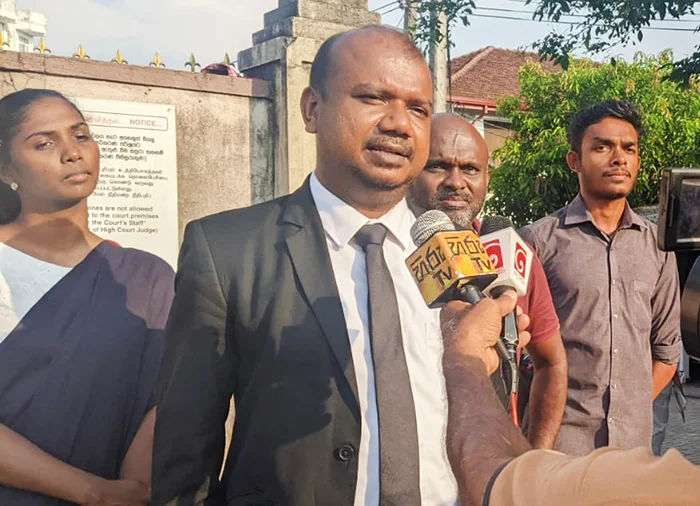
Frontline Socialist Party (FSP) spokesman Pubudu Jayagoda says the Gampaha Magistrate’s Court order that the ruling JVP hand back the FSP’s Kirindiwela office, grabbed by a group of JVP politicians on 02 September, 2025, has shown that the government cannot undermine the law.
Jayagoda said that the FSP had been compelled to move the court against the JVP as the Gampaha police refused to intervene due to political pressure. “They probably thought we were going to give up that office. Perhaps, the ruling party felt they could forcibly occupy other FSP offices,” Jayagoda said.
FSP’s Administrative Secretary Chamira Koswatta and trade unions, which operated from the Salmal Garden office, sought the court intervention to confirm the ownership of that building in the FSP. The court initially transferred the building to the police and issued a directive to law enforcement authorities to remove the JVP/NPP from that building.
Among the 20 respondents was Tilvin Silva, General Secretary of the JVP. Those now identified themselves as FSP quit the JVP in 2011 and later formed their own party.
Gampaha Additional Magistrate Shilani Perera on Monday ruled that the legitimate owner was the FSP. The Magistrate ruled that the FSPers had been forced out of that office, illegally.
Jayagoda said that the FSP considered the court ruling a victory for democracy and a devastating blow to the increasingly authoritarian JVP/NPP rule.

Amelia Kerr hits 139-ball 179* as New Zealand pull off record chase to level series

Punjab Kings fined for slow over-rate

Ice-cool Connolly leads nervy Punjab Kings home on IPL debut

Showers expected in the Western, Sabaragamuwa and Southern provinces in the evening or night

Heat Index at Caution Level in the Western, Sabaragamuwa, Southern, Eastern, North-western, Northern and North-central provinces and in Monaragala district

Urea shortage threatens Yala harvest: Experts

‘Dates have the highest sugar content to fight Coronavirus’

Sunday Island 27 December – Headlines

#SundayIsland 17th December – Headlines

Sunday Island – 28th March

Sunday Island Headlines – 21 March

Sunday Island – 21st February – Headlines
-

 Features5 days ago
A World Order in Crisis: War, Power, and Resistance
-

 News6 days ago
Energy Minister indicted on corruption charges ahead of no-faith motion against him
-

 News7 days ago
US dodges question on AKD’s claim SL denied permission for military aircraft to land
-

 Business7 days ago
Dialog Unveils Dialog Play Mini with Netflix and Apple TV
-

 Sports6 days ago
SLC to hold EGM in April
-
 Opinion6 days ago
When elephants fight, it is the grass that suffers
-
 Latest News6 days ago
A strong Technical and Vocational Education and Training (TVET) system equips individuals with practical, relevant, and future-oriented skills helping to innovate responsibly towards a greener and sustainable future – PM
-
 Features6 days ago
Lest we forget