
News
Liberal Youth Movement says Anti-Terrorism Bill paves way for state abuse and human rights violations

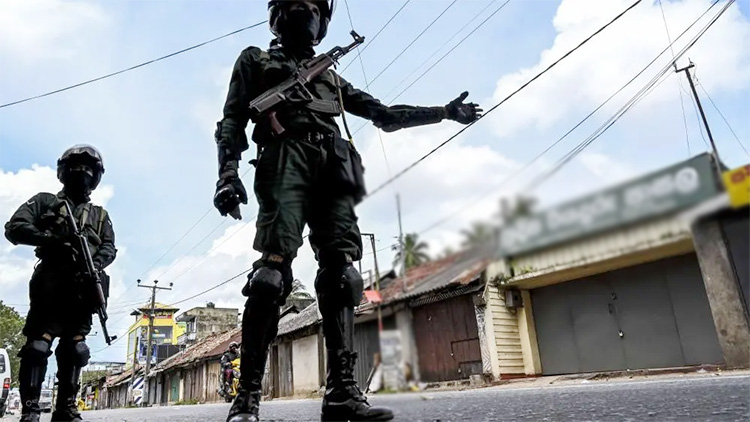
The Liberal Youth Movement has expressed deep concern over the potential for state abuse and human rights violations that could be resultant from the newly proposed Anti-Terrorism Bill.
The movement has in a statement said: It is essential that any legislation enacted to protect citizens from terrorism is designed with robust human rights protections to prevent misuse and uphold fundamental freedoms.
While the Bill does incorporate some positive elements, such as basic due process rights, we are concerned that these safeguards may not be sufficient to protect constitutionally guaranteed rights or prevent a continuation of abuse by successive governments under the guise of countering terrorism.
Of particular concern is the Bill’s definition of terrorism, which deviates from internationally accepted standards and introduces broad and undefined elements. This could lead to the criminalization of activities and opinions that do not constitute terrorism under international law.
Additionally, the Bill grants excessive powers to members of the armed forces, leading to the further militarisation of law enforcement and increasing the risk of human rights violations. This includes the power to arrest without evidence or due process, search without authorisation, and issue detention orders without oversight.
Moreover, the proposed legislation undermines the role of magistrates, granting the police more power over detention decisions and limiting the ability of magistrates to act as a check on police actions. This further erodes the separation of powers and weakens the oversight mechanisms necessary to prevent abuse.
The establishment of a parallel institution to the Human Rights Commission of Sri Lanka, the Independent Review Panel (IRP), raises questions about its function and transparency. The IRP’s powers, remedies, and relationship with the Human Rights Commission are unclear, and its confidentiality requirement appears to be more focused on protecting perpetrators than safeguarding complainants.
The Bill’s provisions also concentrate power in the hands of the President, allowing for the proscription of organisations and the declaration of “prohibited places” without transparent processes or objective criteria. This creates a situation ripe for arbitrary decision-making and unchecked executive power.
In conclusion, the Liberal Youth Movement urges a thorough review of the proposed Anti-Terrorism Bill to ensure that it meets international human rights standards, prevents abuse, and upholds the fundamental rights and freedoms of the people of Sri Lanka. We call for increased transparency, oversight, and the implementation of safeguards that protect citizens from potential state abuse.”













In terms of the provisions of the Establishments Code on payment of festival advance to government officers, there’s a possibility of obtaining rupees 10,000/- as an advance for celebrating festivals of Theipongal, Ramazan, Sinhala and Hindu New Year, Wesak, Deepavali, and Christmas as well as for pilgrimages (Sri Paada pilgrimage and Hajj pilgrimage).
Provisions have been given to recover the said advance in 08 installments or if required earlier without interest. It has been proposed by the Budget 2026 to increase the said festival advance up to rupees 15,000/-.
Accordingly, the Cabinet of Ministers granted approval to the proposal submitted by the Minister of Public Administration, Provincial Councils and Local governments to revise the relevant provisions so that the festival advance can be increased up to rupees 15,000/- .
As per the approval given by the cabinet meeting held on 02-06-2025, action is being taken at present to offer the underutilized lands/properties of the Sri Lanka State Plantation Corporation, the Janatha Etate Development Board, and the Elkaduwa Plantation Company which are under the Ministry of Plantation and Community Infrastructure which have been identified under stage one to suitable investors.
Accordingly, the Cabinet of Ministers has approved the proposal presented by the Minister of Plantations and Community Infrastructure to provide following lands/properties on a lease basis to the suitable investors for optimal utilization following the prescribed procurement procedure.
• underutilized lands/properties identified under stage two owned by the Sri Lanka State Plantation Corporation, the Janatha Estate Development Board, and the Elkaduwa Plantation
Company,
• The Mawarala watte land and the Tea factory 40.48 hectares in extent, located in Matara District belonging to the Tea Shakthi Fund.
• The underutilized land of 1,541 hectares in extent of Kondachchi Estate is enjoyed by the Sri Lanka Cashew Corporation.
The drafting of the National Fisheries and Aquaculture Policy has commenced with the objective of equitable distribution of the benefits of the fisheries industry and the sustainable management of fisheries and aquaculture. This policy has been updated from time to time according to current requirements. However, steps have not been taken to obtain the approval of the Cabinet of Ministers for that purpose.
According to the policy declaration of the present government, ‘Vistas of Prosperity and Splendor’ the National Fisheries and Aquaculture Policy has been redrafted, updating the aforementioned policy in line with the economic and development objectives of the government.
The recommendations of the Department of National Planning have been received for the drafted policy.
Accordingly, the Cabinet of Ministers has approved the proposal presented by the Minister of Fisheries, Aquaculture, and Marine
Resources to implement the National Fisheries and Aquaculture Policy, integrating it with other relevant policies.

Trump to meet Venezuelan opposition leader Machado at the White House

Festival advance for government officers to be increased
Providing underutilized lands/properties to suitable investors for optimal utilization.
Implementation of the National Fisheries and Aquaculture Policy

Expressions of Interest called to develop selected locations within the Pelawatte Sugar Factory premises
Minimum purchasing price of Samba and Kiri Samba paddy increased

‘Dates have the highest sugar content to fight Coronavirus’

Sunday Island 27 December – Headlines

#SundayIsland 17th December – Headlines

Sunday Island – 28th March

Sunday Island Headlines – 21 March

Sunday Island – 21st February – Headlines
-

 News3 days ago
Sajith: Ashoka Chakra replaces Dharmachakra in Buddhism textbook
-

 Business3 days ago
Dialog and UnionPay International Join Forces to Elevate Sri Lanka’s Digital Payment Landscape
-

 Features3 days ago
The Paradox of Trump Power: Contested Authoritarian at Home, Uncontested Bully Abroad
-

 Features3 days ago
Subject:Whatever happened to (my) three million dollars?
-

 News2 days ago
Level I landslide early warnings issued to the Districts of Badulla, Kandy, Matale and Nuwara-Eliya extended
-

 News2 days ago
National Communication Programme for Child Health Promotion (SBCC) has been launched. – PM
-

 News3 days ago
65 withdrawn cases re-filed by Govt, PM tells Parliament
-

 Opinion5 days ago
The minstrel monk and Rafiki, the old mandrill in The Lion King – II