
News
LG polls controversy: State Minister responds to rebel SLPP criticism, urges reappraisal of strategy

By Shamindra Ferdinando
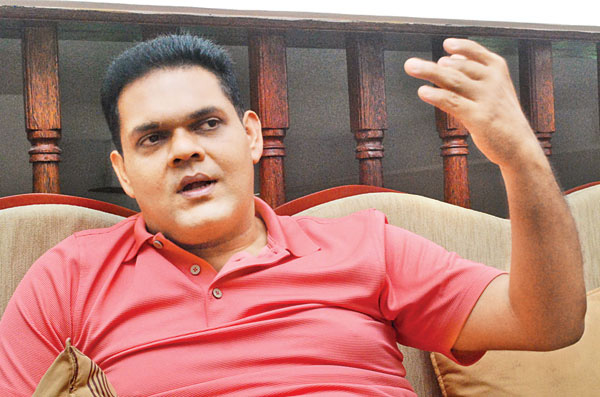
State Finance Minister Shehan Semasinghe said yesterday that the national economy was in such a parlous state that an election was the last thing the public needed.
The Anuradhapura District lawmaker said so in response to him being criticised by rebel SLPP leader, Prof. G.L. Peiris, at their regular weekly briefing ,at Nawala, over the possible postponement of Local Government polls, scheduled for early next year. As constitutionally stipulated, newly elected 340 Local Government authorities have to be formed by, or before, March 20, 2023.
Semasinghe said that had he been in the Opposition, he, too, would have certainly adopted that stance. “Therefore, I don’t find fault with Prof. Peiris for taking essentially a political stand that may not be realistic in view of the developing crisis. We are not out of the woods yet,” State Minister Semasinghe said, urging the Opposition to be mindful of the daunting challenges ahead.
The lastast LG polls were held in Feb. 2018, during the Yahapalana administration.
Responding to The Island queries, MP Semasinghe said that the entire parliamentary group, and members of the Cabinet, chaired by the executive, should accept responsibility for the current crisis.
The State Minister said that he couldn’t absolve himself of the responsibility, though he never represented the Cabinet at the time. Those who quit, or dropped, from the Cabinet, since the eruption of the controversy over the Yugadanavi power plant, in Sept. 2021, and those remained therein, were collectively responsible. “Let there be a thorough reappraisal of the decisions taken during Gotabaya Rajapaksa’s presidency,” the State Minister said.
MP Semasinghe strongly denied accusations that he was opposed to Local Government elections. The SLPP had the wherewithal to meet electoral challenge at any level, the lawmaker declared, underscoring the need to address the issues at hand before attention could be diverted.
The Minister said that priority should be given to, what he called, economic re-building measures. The MP asked whether those who had been demanding LG polls considered them urgent remedy for the crisis. According to the State Minister, some Opposition elements felt an electoral contest, early next year, would be advantageous to them, regardless of the consequences. “They do not realise that an election campaign will definitely discourage political parties from reaching the much required consensus on an economic recovery plan. Consequences will be devastating,” the State Minister said, warning the Opposition not to take advantage of the situation.
Whatever the criticism of the budget proposals, presented by President Ranil Wickremesinghe, in his capacity as the Finance Minister, received the approval of Parliament, lawmaker Semasinghe said. Therefore, the Opposition should now throw its weight behind the ongoing government efforts to rebuild the economy, the State Minister added. Unfortunately, there were interested parties who felt further delay in the finalization of the agreement with Washington-based International Monetary Fund (IMF), in respect of the USD 2.9 bn loan, would be politically advantageous to them.
State Minister Semasinghe said that those who exploited the current crisis could be compared with the political setup which took advantage of the war at a time the LTTE seemed invincible.
Responding to another query, the State Minister said that the USD 2.9 bn could be finalized once all creditors approved the overall resuscitation plan. MP Semasinghe said that he didn’t want to go into details as negotiations were continuing.
The State Minister also acknowledged that the recovery of unpaid taxes, amounting to billions of Rupees ,as well as remittance of funds ‘parked’ overseas, remained contentious issues which needed serious attention.
Recently, the Committee on Public Enterprises (COPE) revealed that unpaid taxes, accruing interest et al amounted to a staggering Rs 763 bn whereas Justice Minister Dr. Wjeyadasa Rajapaksa, PC declared, both in and out of Parliament, that exporters continued to hold export proceeds amounting to billions of USD in offshore accounts, despite being publicly exposed.




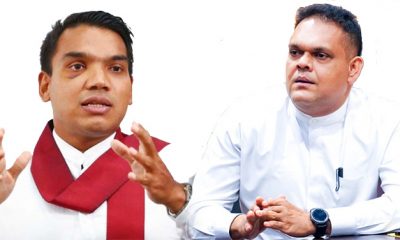

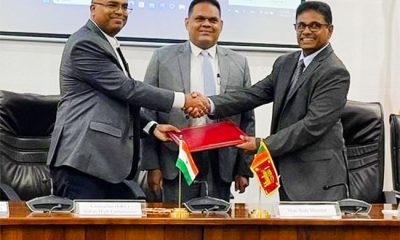

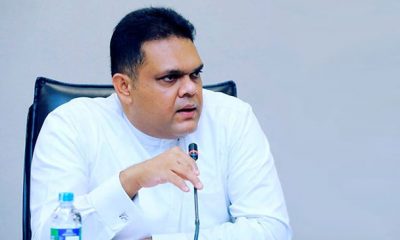


The government, under heavy Opposition fire over inclusion of a sex website in the Grade 6 English module, as well as overall education reforms, has decided to put on hold reforms in respect of Grade 6.
Cabinet Spokesman and Media and Health Minister Dr. Nalinda Jayatissa announced the government decision yesterday (13) at the post-Cabinet media briefing at the Information Department.
According to him, the decision had been taken at the previous day’s Cabinet meeting, chaired by President Anura Kumara Dissanayake. Dr. Jayatissa said that education reforms pertaining to Garde 6 had been put on hold until 2027.
The Minister said that other proposed education reforms would be implemented as planned. The Minister said that action would be taken against those responsible for the inclusion of a link to a sex website following investigations conducted by the Criminal Investigation Department and the National Education Institute.
The SJB and several other political parties, as well as civil society groups, have accused the government of promoting an LGBTQ agenda, through the proposed education reforms.
The Opposition grouping Mahajana Handa, on Monday, made representations to the Mahanayake Thera of the Malwatta Chapter regarding the controversial reforms, while urging their intervention to halt the project.
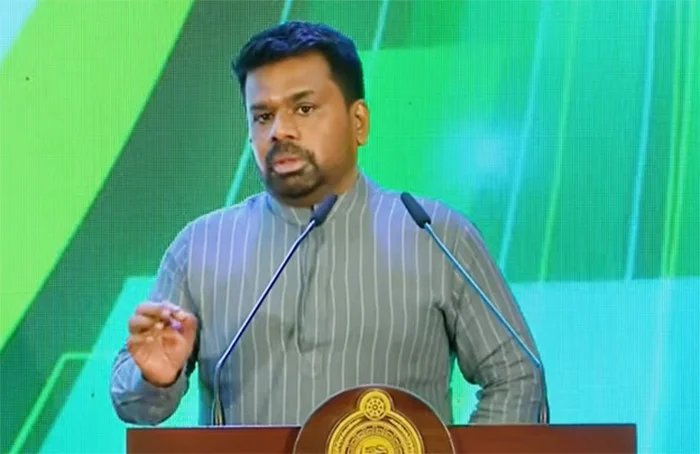
President Anura Kumara Dissanayake yesterday (13) vowed to go ahead with his government’s agenda, regardless of the destruction caused by Cyclone Ditwah.
Emphasising the responsibility on the part of all to contribute to the post-Ditwah recovery efforts, President Dissanayake said that he would have complete faith in the public service.
The President said so at the launch of the re-building Sri Lanka project at the BMICH yesterday.
The JVP and NPP leader said that he wouldn’t take advantage of the death and destruction caused by the cyclone or use the situation as an excuse to reverse their agenda or weaken it.
President Dissanayake said that in spite of many calling for amending the then Budget, in view of the cyclone, the government presented the proposals that were agreed before the disaster struck.

The United States has announced that it will provide the Sri Lanka Air Force with 10 US Navy TH-57 helicopters free of charge.
The announcement was made by outgoing US Ambassador Julie Chung, who stated, on social media, that the helicopters would be transferred under the United States’ Excess Defence Articles programme. The aircraft are Bell 206 Sea Ranger helicopters previously operated by the US Navy.
US sources said that the transfer was intended to strengthen Sri Lanka’s disaster response capabilities, following the devastating cyclone that struck the island at the end of 2025 and killed more than 600 people. US officials have framed the move as a humanitarian measure aimed at improving aerial rescue and relief operations.

Showery condition over the island is expected to reduce from tomorrow (15th)

USA’s Ali Khan claims having been ‘denied’ India visa ahead of T20 World Cup

At least 28 dead as crane collapses onto train in Thailand

Fair weather will prevail except for a few showers in the Uva, Eastern, Western and Central provinces and in Galle, Matara and Rathnapura districts

Trump cancels US-Iran meetings, urges protesters to take over institutions

Govt. bows to pressure, shelves Grade 6 reforms

‘Dates have the highest sugar content to fight Coronavirus’

Sunday Island 27 December – Headlines

#SundayIsland 17th December – Headlines

Sunday Island – 28th March

Sunday Island Headlines – 21 March

Sunday Island – 21st February – Headlines
-

 Business4 days ago
Dialog and UnionPay International Join Forces to Elevate Sri Lanka’s Digital Payment Landscape
-
 News4 days ago
Sajith: Ashoka Chakra replaces Dharmachakra in Buddhism textbook
-

 Features4 days ago
The Paradox of Trump Power: Contested Authoritarian at Home, Uncontested Bully Abroad
-

 Features4 days ago
Subject:Whatever happened to (my) three million dollars?
-

 News4 days ago
Level I landslide early warnings issued to the Districts of Badulla, Kandy, Matale and Nuwara-Eliya extended
-

 Business21 hours ago
New policy framework for stock market deposits seen as a boon for companies
-

 Opinion6 days ago
The minstrel monk and Rafiki, the old mandrill in The Lion King – II
-

 News4 days ago
65 withdrawn cases re-filed by Govt, PM tells Parliament