
News
Lawyers Collective call for end to executive presidency, online policing law, PTA


ECONOMYNEXT –The Lawyers Collective has called on the National Poeople’s Power administration to abolish of the executive presidency, repeal an anti-terror law and an online policing law.
“The autocratic rule made possible in the role of the executive president has been extremely damaging to democracy, the rule of law and the independence of institutions including the judiciary,” the lawyers said in a statement.
“The abuse of power and undermining of all public institutions and the corruption that has accompanied this have been witnessed by citizens for decades, especially in 2009-2024.
The grouping also raised an issue a university.
The full statement is reproduced below:
Lawyers’ Collective Statement – 2024 December 05
Lawyers Collective on a Legislative
Agenda for the New Government and Parliament and Rule of Law Issues
The Lawyers’ Collective writes to the new Cabinet of Ministers and all members of the newly elected 10th Parliament of Sri Lanka on the importance of recognizing the legislative mandate signalled by the people at this election. We congratulate all elected representatives of the new parliament and emphasize that the mandate given is a clarion call to ensure that the legislative agenda reflects the sovereign will of the people.
We urge the new government to recognize now and without further delay the need for action on the promises given to the nation on an urgent national legislative agenda. The absence of a 2/3 majority hampered progress on earlier attempts at constitutional reform and this type of agenda. The massive mandate given by the Sovereign People of Sri Lanka for vital legislative reform must be accompanied by swift action to carry this promised agenda forward, with due attention to urgent priorities.
In light of the massive mandate to carry forward this vision of accountable governance to the Sovereign People of Sri Lanka, the Lawyers’ Collective wishes to highlight the need to carry forward promised reforms in a new legislative agenda prioritizing the following areas:
The Preamble to the Constitution has been a reminder of the purpose of the confidence reposed by the People in their Representatives. It is to ‘…constitute SRI LANKA into a DEMOCRATIC SOCIALIST REPUBLIC whilst ratifying the immutable republican principles of REPRESENTATIVE DEMOCRACY and assuring to all Peoples FREEDOM, EQUALITY, JUSTICE, FUNDAMENTAL HUMAN RIGHTS and the INDEPENDENCE OF THE JUDICIARY as the intangible heritage that guarantees the dignity and well-being of succeeding generations of the People of SRI LANKA and of all the People of the World, who come to share with those generations the effort of working for the creation and preservation of a JUST AND FREE SOCIETY:’
Towards constituting this vision of Sri Lanka, the Lawyers Collective highlights the most urgent of the legislative reform that must be prioritized.
1. Abolish the Executive Presidency
The autocratic rule made possible in the role of the executive president has been extremely damaging to democracy, the rule of law and the independence of institutions including the judiciary. The abuse of power and undermining of all public institutions and the corruption that has accompanied this have been witnessed by citizens for decades, especially in 2009-2024.
The Janatha Vimukthi Peramuna drew attention to this reality and sought the abolition of the Executive Presidency through the Twentieth Amendment to the Constitution, 2018. The Samagi Jathika Balavegaya, the main opposition party, unsuccessfully brought the Twenty-First Amendment to the Constitution, 2022, during the last government to achieve this goal. Both the National People’s Power and the Samagi Jathika Balavegaya promised this reform in their manifestos as a foundational basis to eliminate corruption and achieve accountable governance for the Sovereign People of Sri Lanka.
The Lawyers’ Collective urges the President and the Government to place this matter at the top of the legislative agenda and take the necessary steps towards achieving it as a matter of priority. A great deal of work has already been done on this issue reform, and there are important reports from both official agencies and civil society organizations in the public domain. We also have the Constitution Bill of 2000 and the Twentieth and Twenty-first Amendment Bills referred to above. The Constitutional Assembly of 2016-17, to which the Janatha Vimukthi Peramuna contributed immensely, also worked on this issue and presented an Interim Report and a draft constitutional bill. Thus, the task of drafting a constitution to abolish the Executive Presidency can be completed in a few months in the first year of office. This can enable the President, as promised, to head the government as the Prime Minister of the country, responsible for accountable governance to Parliament and the People.
Prioritizing this reform is vital. As the reform requires approval at a referendum, history has shown us that proposing such reform at later stages of a parliamentary term becomes a referendum on a government’s performance instead of a referendum on the constitutional amendment. Governments also have to deal with political opposition by spoilers and an opposition that finds political gain making in retracting support for necessary reforms. To put it in another way, the Government must strike when the iron is hot. As the late Maduluwawe Sobhitha Nayaka Thero put it in pithy Sinhala in 2015 when advocating the immediate abolition of the Executive Presidency, the roti must be made while the pan is hot (‘thatiya rathvela thiyanakota rotiya puchchanna’).
2. Repeal the Prevention of Terrorism Act of 1979 (PTA)
The PTA has made a mockery of the anti-terrorism legal framework in Sri Lanka and has been repeatedly used by successive governments against individuals, groups and institutions to suppress legitimate freedoms of expression, assembly and other civic rights. The law has become infamous for its draconian provisions, which fully undermine the human rights safeguards that ought to be ordinarily provided to citizens. The PTA gives broad powers of arrest and detention based on a vague and broad definition of terrorism, and such powers are not subject to judicial review. It also provides for broad, extraordinary presidential powers. Repealing this law is thus crucial from human rights as well as reconciliation, accountability and institutional reform point of view.
The Lawyers’ Collective is distressed to note that the draconian PTA is still being used even in cases where the ordinary law of the land can be used.
3. Repeal the Online Safety Act of 2023
The Online Safety Act was proposed under the guise of protecting the rights of women and children, and its scheme is overwhelmingly focused on defamation and critique. This law regressed Sri Lanka’s position of removing criminal liability from defamation. The law serves no purpose and is poorly crafted with overly broad definitions and powers. As such, it cannot sit in the law books of Sri Lanka as a necessary piece of legislation.
4. Some current and recent issues of governance of concern
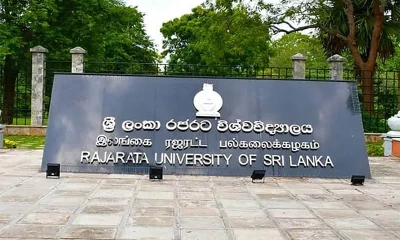
The Lawyers’ Collective notes that the powers of the executive presidency have been abused to undermine the autonomy of the public University system in Sri Lanka. We urge the legislature to consider the reforms that strengthen the independence and internal accountability mechanisms of the public university system.
The most recent issue that the Lawyers Collective takes this opportunity to highlight is the long-standing need for independence of institutions. An example of concern is the matter relating to the Vice Chancellor of Ruhuna University. The recent incidents in Ruhuna University demonstrate the manner in which governing bodies and academic bodies in public universities have become dysfunctional due to the years of political interference in university administration. The Lawyers’ Collective notes that the Minister of Education has exercised powers under the University’s Act to manage the current crisis. A Competent Authority has been appointed as an interim measure. However, for the Rule of Law to be followed and sustained, there must be an independent inquiry, with due process and respect for norms of natural justice and the right of the Vice-Chancellor of the Ruhuna University to be heard before a Competent Authority is appointed or he is removed from office. This is a Presidential appointment and it is the President who can remove a Vice-Chancellor in consultation with the UGC. Such a decision would also require due process be observed by all involved in the decision. The President may act on the basis of a report by an inquiry committee forwarded to him by the Minister of Education with her recommendation.
The legislative agenda outlined above represents a clear break from autocratic and oppressive centralized rule to ruling by people for people. Signalling this break with these legislative reforms will be received as a fulfilment of the mandate and will set the tone for institutional governance that is people-focused.
The Lawyers’ Collective has been a voice for democracy, the rule of law and the independence of the judiciary in Sri Lanka. As evidenced by our several statements in the last few years, the process of law-making has failed the people of this country. We remind the government and the representatives in the legislature that it is important to adopt a transparent and inclusive process of policy and law-making that is proportionate and responsive to the needs of the people. Dialogue and communication with the sovereign people of this country will deepen legitimacy and public trust in governance.
Yours faithfully,
On behalf of the Lawyers’ Collective, Upul Jayasuriya, President’s Counsel, Dr. Jayampathy Wickramaratne, President’s Counsel, Professor Savitri Goonesekere, Attorney-at-Law, Geoffrey Alagaratnam, President’s Counsel, Saliya Pieris, President’s Counsel, S.T. Jayanaga, President’s Counsel, Professor Deepika Udagama, Professor Camena Gunaratne, Rev. Fr. Noel Dias, Attorney-at-Law, K.W. Janaranjana, Attorney-at-Law, Srinath Perera, Attorney-at-law, Ermiza Tegal, Attorney-at-Law and Darshana Kuruppu, Attorney-at-Law.




Latest News
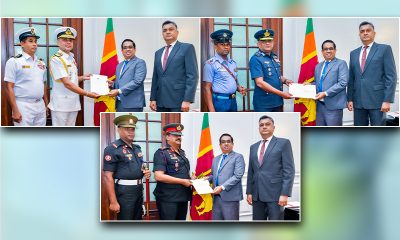
Tri-Forces donate LKR. 372 million, a day’s pay of all ranks to ‘Rebuilding Sri Lanka’ Fund

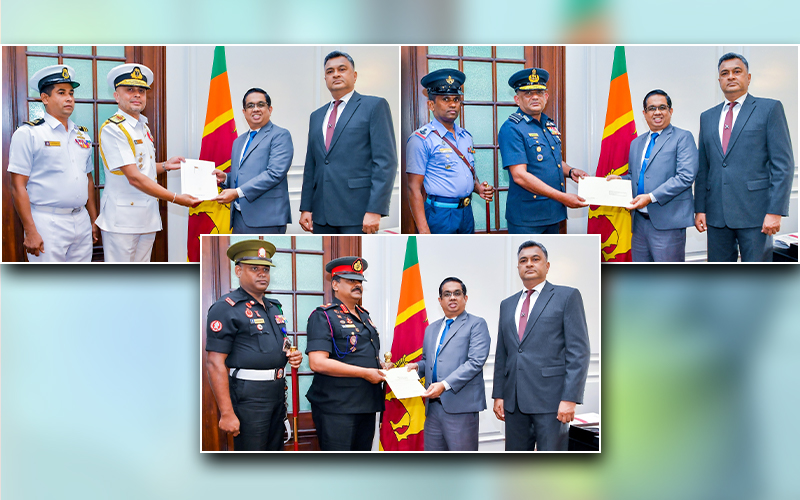
Members of all ranks from the Sri Lanka Army, Sri Lanka Navy and Sri Lanka Air Force have collectively donated a day’s basic salary to the ‘Rebuilding Sri Lanka’ Fund, which was established to restore livelihoods and rebuild the country following the devastation caused by Cyclone Ditwah.
Accordingly, the total contribution made by the Tri-Forces amounts to LKR. 372,776,918.28.
The cheques representing the financial contributions were handed over on Wednesday (31 December) at the Presidential Secretariat to the Secretary to the President, Dr. Nandika Sanath Kumanayake.
The donations comprised LKR. 250 million from the Commander of the Army, Major General Lasantha Rodrigo; LKR. 73,963,879.71 from the Commander of the Navy, Rear Admiral Kanchana Banagoda and LKR. 48,813,038.97 from the Commander of the Air Force, Air Marshal Vasu Bandu Edirisinghe.
Secretary to the Ministry of Defence, Air Vice Marshal Sampath Thuyacontha, was also present on the occasion.
The Ceylon Electricity Board (CEB) has submitted a proposal to the Public Utilities Commission of Sri Lanka (PUCSL) seeking an 11.57 percent increase in electricity tariffs for the first quarter of 2026, citing an estimated revenue shortfall and additional financial pressures, including cyclone-related damages.
According to documents issued by the PUCSL, the proposed tariff revision would apply to electricity consumption from January to March 2026 and includes changes to both energy charges and fixed monthly charges across all consumer categories, including domestic, religious, industrial, commercial and other users.
Under the proposal, domestic electricity consumers would face increases in unit rates as well as fixed monthly charges across all consumption blocks.
The CEB has estimated a deficit of Rs. 13,094 million for the first quarter of 2026, which it says necessitates the proposed 11.57 per cent tariff hike. The utility has noted that any deviation from this estimate whether a surplus or a shortfall will be adjusted through the Bulk Supply Tariff Adjustment (BSTA) mechanism and taken into account in the next tariff revision.
In its submission, the CEB said the proposed revision is aimed at ensuring the financial and operational stability of the power sector and mitigating potential risks to the reliability of electricity supply. The board-approved tariff structure for the first quarter of 2026 has been submitted to the PUCSL for approval and subsequent implementation, as outlined in Annex II of the proposal.
The CEB has also highlighted the financial impact of Cyclone Ditwah, which it said caused extensive damage to electricity infrastructure, with total losses estimated at around Rs. 20 billion. Of this amount, Rs. 7,016.52 million has been attributed to the first quarter of 2026, which the utility said has a direct bearing on electricity tariffs.
The CEB warned that if external funding is not secured to cover the cyclone-related expenditure, the costs incurred would need to be recovered through electricity tariffs in the second-quarter revision of 2026.
Meanwhile, the PUCSL has said that a decision on whether to approve the proposed tariff increase will be made only after following due regulatory procedures and holding discussions on the matter.
By Sujeewa Thathsara ✍️
Ondansetron controversy
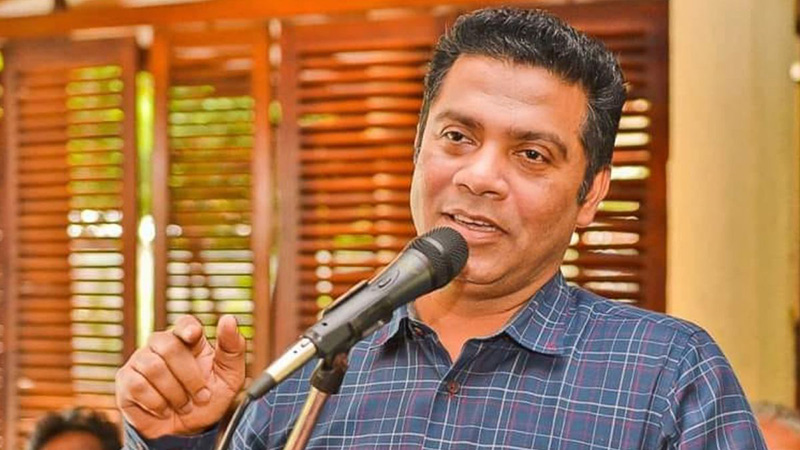
Minister of Health and Mass Media Dr Nalinda Jayatissa has sent a letter of demand for Rs. 1 billion in damages from YouTube content creator Dharmasri Kariyawasam, accusing him of disseminating false and defamatory material linking the Minister to the importation of Ondansetron and inciting public unrest.
The notice, sent through the Minister’s lawyers, states that investigations are currently under way into 10 medicines, including Ondansetron Injection, manufactured by India-based Maan Pharmaceutical Limited.
Ondansetron Injection was among nine injectable drugs recently suspended by the National Medicines Regulatory Authority (NMRA) following reports of patients administered with the drug suffering adverse complications.
Despite the ongoing investigations, Kariyawasam allegedly aired a widely viewed programme on his YouTube channel titled “The hidden story of the Indian drug that claimed lives, Mayor Balthazaar’s relative, and Minister Nalinda’s cover-up.”
According to the letter of demand, the programme falsely portrayed Minister Jayatissa as being directly responsible for importing the drug, colluding with the supplier, and attempting to conceal the issue, while depicting him as indifferent to public suffering.
The Minister’s lawyers maintain that these allegations are entirely false and defamatory, citing passages in which Kariyawasam allegedly accused Jayatissa of lying about the supplier, concealing facts related to PTC Medicals (Pvt) Ltd., the actual importer, and showing a lack of concern over deaths purportedly linked to the drug.
The programme also claimed links between the directors of PTC Medicals and family members of Colombo Mayor Vraîe Cally Balthazaar, implying political favouritism.

Tri-Forces donate LKR. 372 million, a day’s pay of all ranks to ‘Rebuilding Sri Lanka’ Fund

Rabada to lead strong South Africa pace attack at T20 World Cup

Showes about 75 mm are likely at some places in the Eastern and Uva provinces and in Matale, Nuwara-Eliya and Polonnaruwa districts.

CEB demands 11.57 percent power tariff hike in first quarter

Health Minister sends letter of demand for one billion rupees in damages

One killed, two injured in shooting at Kaduwela

‘Dates have the highest sugar content to fight Coronavirus’

Sunday Island 27 December – Headlines

#SundayIsland 17th December – Headlines

Sunday Island – 28th March

Sunday Island Headlines – 21 March

Sunday Island – 21st February – Headlines
-

 Sports5 days ago
Gurusinha’s Boxing Day hundred celebrated in Melbourne
-
 News3 days ago
Leading the Nation’s Connectivity Recovery Amid Unprecedented Challenges
-

 Sports6 days ago
Time to close the Dickwella chapter
-

 Features4 days ago
It’s all over for Maxi Rozairo
-

 News6 days ago
Environmentalists warn Sri Lanka’s ecological safeguards are failing
-
 News4 days ago
Dr. Bellana: “I was removed as NHSL Deputy Director for exposing Rs. 900 mn fraud”
-
 News3 days ago
Dons on warpath over alleged undue interference in university governance
-
 Features6 days ago
Digambaram draws a broad brush canvas of SL’s existing political situation