
News
Lawyer draws judge Marasinghe’s attention to deaths in custody

HRC issues instructions to police on PTA cases
By Shamindra Ferdinando
The Human Rights Commission (HRC) has issued specific instructions to police headquarters as regards those already in custody under the Prevention of Terrorism Act (PTA) and new arrests.
The heads of the Criminal Investigations Department (CID), Terrorist Investigation Division (TID) and the Police Legal Division have been advised to brief the HRC immediately on the change of status of PTA suspects, as well as new arrests.
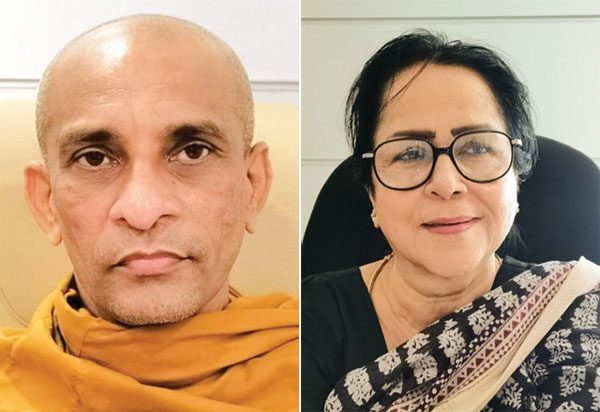
Authoritative sources said that instructions had been issued at a meeting summoned by the newly appointed HRC Chairperson Justice (Retired) Rohini Marasinghe last Wednesday (29) at the HRC.
HRC Commissioner Dr. Vijitha Nanayakkara participated online whereas the other members, Chairperson Marasinghe, Ven. Kalupahana Piyarathana Thero, Dr. M.H. Nimal Karunasiri and Ms. Anusuya Shanmuganathan attended the meeting. Sources said that the HRC had stressed the pivotal importance of keeping the outfit fully informed of developments relating to PTA cases.
President Gotabaya Rajapaksa has recently appointed Ven. Kalupahana Piyarathana Thero, Sri Lankan Collective for Consensus (SLCC), to the HRC. Sources said that the SLCC had held discussions with the government over the post-war reconciliation process and the PTA remained high on the group’s agenda. Ven. Priyarathana replaced another civil society activist Harsha Kumara Navaratne, who recently received appointment as High Commissioner in Canada.
The HRC has also asked the head of the Colombo Crime Division (CCD) to be present at discussions pertaining to PTA cases. Sources said that though the CCD had made representations to the HRC last week, the Commissioners were keen to meet the head of the outfit himself.
A spokesperson for the HRC told The Island that over 12 years after the conclusion of the war, the PTA had remained one of the most contentious issues with the UN, the European Union as well as several powerful countries repeatedly taking it up.
Sri Lanka was under pressure to do away with the PTA or introduce amendments ‘to make it conform to international standards’, the official said. Referring to work undertaken by successive governments in this regard, the official said that the HRC intended to maintain a closer watch on law enforcement outfits.
Several hundred persons are currently detained under PTA. Most of them are believed to be persons taken into custody in connection with the ongoing investigations into Easter Sunday attacks (2019).
Prominent civil society activists who haven’t joined the SLCC initiative say the government owes an explanation on how it intends to reform the PTA. One-time HRC member, Ambika Satkunanathan, in a recent statement sent to The Island on behalf of a large grouping of civil society members and organisations strongly criticised the way the government handled the issue. The grouping alleged that the government proposals shared with the SLCC did not address even ten basic shortcomings of the PTA. Calling for greater transparency in the process, the group has warned that national security couldn’t be achieved by causing insecurity among sections of the population. The group has reiterated its call for repealing the PTA.
The group has said: “The repeal of the PTA must also be considered in light of the anti-terrorism and public security legal framework that Sri Lanka has in place, and the historical abuse of power by state entities. These entities should not be bestowed with additional power.”
Appreciating the HRC focus on PTA cases, lawyer Senaka Perera said that urgent review of security of those in police and judicial custody was necessary. Senaka Perera emphasized that the new HRC head should inquire into deaths in police custody since the change of government in Nov 2019. Responding to another query, the lawyer said that deaths in custody ceased during the 2015-2019 period but resumed after the last presidential election.
The rights activist said that he intended to seek a meeting with the HRC soon to discuss the issues at hand. “Death of handcuffed persons cannot be accepted under any circumstances,” lawyer said, faulting the police headquarters as well as the Public Security Ministry over continuing killings in custody. Referring to the statements issued by the HRC during tenure of Dr. Jagath Balasuriya as the Chairperson of the outfit as regards deaths in custody, attorney-at-law Perera said that the HRC failed to take tangible measures. Those bent on subverting the law wouldn’t give up their strategy simply because the HRC issued a statement or called for explanation from police headquarters. The lawyer said that he hoped the new HRC head would take remedial measures.

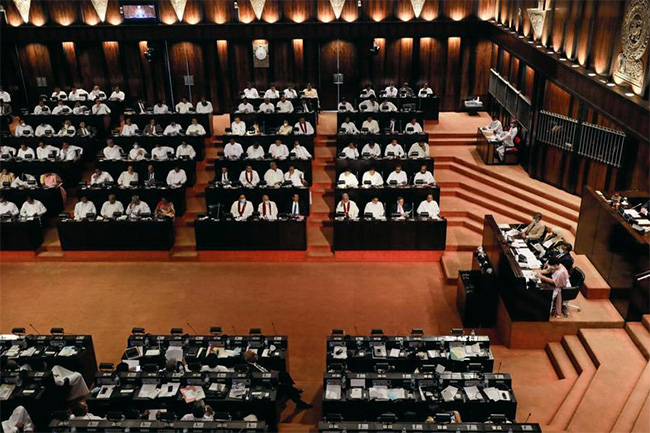
A no-confidence motion brought by the Opposition against Energy Minister Kumara Jayakody was defeated in Parliament yesterday by a majority of 104 votes.At the end of the debate, 49 members voted in favour of the motion, while 153 voted against it.
The motion, submitted to the Speaker on 19 March, was signed by Opposition Leader Sajith Premadasa, SJB MPs, and other Opposition members.
It accused Minister Jayakody of failing to ensure the procurement of adequate and quality coal for the Lakvijaya Coal Power Plant in Norochcholai, alleging that such negligence amounted to a breach of ministerial responsibility over a critical national energy asset.
The motion also cited ongoing legal proceedings against the Minister, noting that he has been indicted by the Commission to Investigate Allegations of Bribery or Corruption and produced before the Colombo High Court under Section 70 of the Bribery Act, in connection with alleged acts of corruption during his tenure as Procurement Manager of the Ceylon Fertiliser Company Limited.
The motion read: Vote of No Confidence against Kumara Jayakody, Minister of Energy,— Whereas the Provision in Section 6 of the Part III of the Code of Conduct for Members of Parliament which states that: “The Members shall on all occasions act in accordance with the public trust entrusted with them and shall always behave with probity and integrity, including the use by them of any public resources.” has been violated; And whereas the following rules of conduct set out in Section 9 of the Part V of the Code of Conduct for Members of Parliament have prima facie been breached, namely:- “(a) to be conscience; (c) to act so as to merit the trust and respect of the people; (e) to hold themselves accountable for the conduct and duties for which they are responsible;” And whereas it is observed that the Minister has failed, in his capacity as a Minister of the Cabinet of Ministers, to discharge the fundamental duties incumbent upon him in accordance with Article 28 of the Constitution;
And whereas it is established that the Minister of Energy has failed to discharge his primary duty of ensuring the procurement of adequate and good quality coal for the Norochcholai Lakvijaya Coal Power Plant;
And whereas such gross negligence in overseeing a critical national energy asset constitutes a fundamental breach of ministerial responsibility;
And whereas the Minister of Energy has failed to carry out the subjects and functions vested in him by the Notification of Gazette Extraordinary No. 2412/08 of 25th November 2024 of the Democratic Socialist Republic of Sri Lanka, including taking necessary steps to reduce the losses at the institutional management level and technical damages that occur to the electricity generation and distribution system and reduction of costs for generating electricity and removal of uncertainties during generation;
And whereas the Commission to Investigate Allegations of Bribery or Corruption has filed formal indictments before the Colombo High Court against the incumbent Minister of Energy under Section 70 of the Bribery Act (Chapter 26) for the offence of “corruption” in connection with acts of corruption allegedly committed while he was serving as the Procurement Manager of the Lanka Fertilizer Company;
And whereas, in light of the foregoing, the Minister of Energy has irretrievably forfeited the confidence of Parliament and the people of Sri Lanka by causing losses to public finances, endangering national energy security, corruptly mishandling the procurement process, being subjected to active judicial proceedings for the offence of “corruption”, and betraying the Government’s own “anti-corruption mandate”, and his continued tenure as the Minister of Energy is contrary to the public interest, the rule of law, and the principles of good governance;
That this Parliament resolves that it has no confidence in the competence of Kumara Jayakody, Minister of Energy to function as a Minister of the Cabinet of Ministers any longer.”
by Saman Indrajith

Chinese Ambassador to Sri Lanka Qi Zhenhong yesterday assured that China would not allow a fuel crisis to arise in Sri Lanka, under any circumstances, reaffirming Beijing’s continued support to the country.
The Ambassador made these remarks addressing the media after attending a dry ration distribution programme for 350 low-income families at Sri Chandananda Buddhist College, at Asgiriya, in Kandy.
Highlighting the longstanding ties between the two countries, Ambassador Qi said China has consistently stood by Sri Lanka and remains ready to extend assistance whenever required.
Amid concerns over global energy disruptions, stemming from the ongoing Middle East conflict, he noted that several countries are already facing difficulties, but stressed that China is prepared to support Sri Lanka at any time.
He said that any potential fuel shortage in Sri Lanka could be managed with the involvement of China’s Sinopec.
Reiterating Beijing’s commitment to Sri Lanka’s economic recovery and development, the Envoy also expressed hope that the current ceasefire in the Middle East would hold, while assuring that China stands ready to respond to any future developments and assist Sri Lanka as needed.
By SK Samaranayake
News
Minister Jayatissa blames administrations since 2010 for not following proper procedures when procuring coal


Health and Mass Media Minister Dr Nalinda Jayatissa yesterday defended the government during the no-confidence debate on Energy Minister Kumar Jayakody, assuring that the ongoing coal procurement controversy would neither lead to power cuts nor result in increased electricity tariffs.
Addressing Parliament, Jayatissa said the issue should be viewed in the context of coal procurement practices over the past 15 years, claiming that proper procedures and quality testing mechanisms had not been adequately followed during that period.
“Even if you build Artemis 3, go to the moon, and land there to hunt for corruption allegations against this government’s Ministers, you will not succeed,” Jayatissa told the Opposition.
He noted that since 2010, a total of 462 coal shipments had been imported for the Lakvijaya Power Plant at a cost of billions of dollars, adding that the present administration was taking steps to introduce a more transparent procurement process, alongside stricter quality controls.
The Minister said the government was considering appointing an independent and empowered committee to investigate all coal shipments imported since 2010, including whether calculations had been manipulated to favour certain suppliers and whether payments were made based solely on load port reports while disregarding discharge port findings.
He added that such a probe would help uncover past irregularities and strengthen future procurement systems.
Jayatissa said that steps had already been taken to recover losses arising from coal quality discrepancies, with penalties amounting to approximately USD 17 million being pursued from suppliers.
He assured that these losses would not be passed on to the public, reiterating that electricity tariffs would not be increased and that there would be no power cuts despite challenges such as low reservoir levels and rising global energy prices.
Dismissing Opposition allegations of corruption, Jayatissa maintained that the government remained committed to ensuring transparency, addressing systemic weaknesses, and maintaining an uninterrupted power supply.

Opposition NCM against Energy Minister defeated

Chinese Ambassador assures Lanka China will not allow a fuel crisis to develop here

Minister Jayatissa blames administrations since 2010 for not following proper procedures when procuring coal

Motor Traffic Commissioner General further remanded

Newly renovated sanitary facilities at Colombo Central Bus Stand vandalised again

ADB predicts slower economic growth this year along with higher inflation

‘Dates have the highest sugar content to fight Coronavirus’

Sunday Island 27 December – Headlines

#SundayIsland 17th December – Headlines

Sunday Island – 28th March

Sunday Island Headlines – 21 March

Sunday Island – 21st February – Headlines
-

 Features6 days ago
Ranjith Siyambalapitiya turns custodian of a rare living collection
-

 News6 days ago
Global ‘Walk for Peace’ to be held in Lanka
-

 News4 days ago
Lankan-origin actress Subashini found dead in India
-

 Business1 day ago
Israeli attack on Lebanon triggers local stock market volatility
-

 News2 days ago
AG: Coal procurement full of irregularities
-

 Features6 days ago
Beyond the Blue Skies: A Tribute to Captain Elmo Jayawardena
-

 Features6 days ago
Aspects of Ceylon/Sri Lanka Foreign Relations – 1948 to 1976
-

 Business2 days ago
Hayleys Mobility introduces Premium OMODA C9 PHEV