
News
Lankans arrested in Gujarat over terrorism charges: India, Sri Lanka findings vary while university don warns of post-Easter Sunday failures

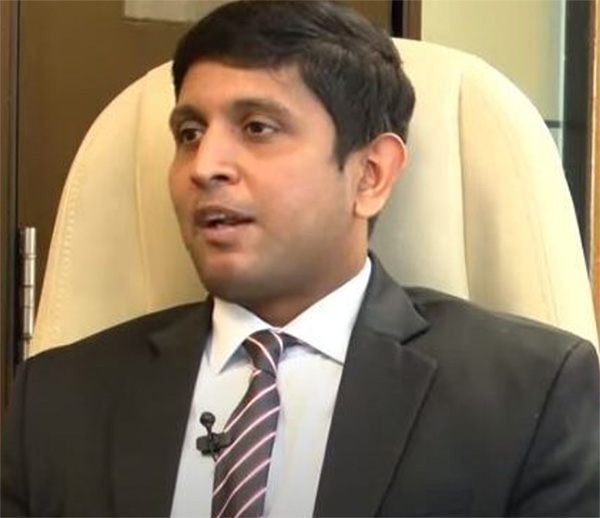
‘We should ask India to hand them over to us’
By Shamindra Ferdinando
The findings made by Indian and Sri Lankan security and intelligence authorities about the recent arrest of four Sri Lankans on the suspicion of being religious extremists are contradictory.
While Gujarat Anti-Terrorist Squad declared that the suspects had been involved with the Islamic State terror group, investigations conducted by Sri Lankan authorities claimed they weren’t linked to Islamic State or any other extremist group.
Even in the Easter Sunday carnage case it was India that repeatedly tipped off local law enforcers here of the impending threat. Despite being armed with such vital advance intelligence local law enforcers failed to prevent the terror strikes.
However, authorities here have acknowledged the possibility of them being used by religious extremists for some destructive purpose.
The suspects have been identified as Mohammad Nusrat (35), Mohammad Nafran (27), Mohammad Faris (35), and Mohammad Rashdeen (43). According to police Nufran (or Nafran) is the son of the first wife of Mohammed Niyas Nauffer alias Kudu Naufer, an underworld criminal who was sentenced to death for ordering the death of Colombo High Court judge Sarath Ambepitiya in 2004.
Following the arrests in Gujarat, police here took into custody six men, including Pushparaja Osman, 46, in Colombo a few days ago. Although the media described Osman as the handler of the men now held in Gujarat, a section of the Indian media earlier claimed that their handler was based in Pakistan.
Authoritative sources said that Sri Lanka and India have exchanged their findings regarding the arrests made at the Sardar Vallabhai Patel airport in Ahmedabad on 19 May. The four men had taken an Indigo flight from the Bandaranaike International Airport (BIA) to Chennai on 19 May. From there they had taken a domestic flight to Ahmedabad where they were arrested.
Sources said that the four persons who had been arrested in Gujarat and the six persons apprehended here subsequently could be categorised as drug peddlers, drug addicts and smugglers.
Immediately after India alerted Sri Lanka of the Gujarat arrests, police raided the homes of the four suspects but couldn’t find any incriminating evidence.
Sources said over the weekend that so far Sri Lankan investigators hadn’t received an opportunity to question the suspects held in Gujarat. “There is constant pressure as the current investigation is being conducted against the backdrop of still ongoing 2019 Easter Sunday probe. The arrests made during the final phase of Indian parliamentary polls naturally led to various possible theories,” a person familiar with such investigations said.
The Indian media quoted Gujarat Director General of Police Vikas Sahay as having said that the suspects told investigators that they had been earlier associated with the banned Sri Lankan radical militant outfit, National Thowheeth Jamaath (NJT), and joined IS after getting in touch with Pakistani handler Abu Bakr Al Bagdadi.
The NTJ has been blamed for Easter Sunday attacks that claimed the lives of nearly 270, including 11 Indians.
The Indian High Commission spokesperson yesterday (3) said that they didn’t have any comment on the issue at the moment.
The ongoing local investigation took an unexpected turn when the Criminal Investigation Department (CID) arrested Dr. Punsara Amarasinghe on May 29 over his high profile declaration of the arrested persons’ direct involvement with religious extremism. The controversial comments were made during an interview with Dilan Mayadune on ‘Rathu Miniththuwa’ on Hiru. Dr. Amarasinghe was granted bail on the same day.
The lecturer attached to the Kotelawela Defence University (KDU) declared that all four arrested in Gujarat had been identified as radicalised youth following the Easter Sunday investigations. According to the academic, they had been among 300 to 400 persons so categorised though local authorities never found anything to link them to terrorism. The academic declared a direct link between the arrested and the NTJ.
Mayadunne told The Island that they had interviewed Dr. Amarasinghe on the issue as he was a much respected authority on the subject. Of the four arrested in Gujarat, two had been to India on 38 and 40 occasions whereas two were there for the first time, Dr. Amarasinghe said, while describing them as ordinary people.
Responding to a spate of questions posed by Hiru journalist, Dr. Amarasinghe found fault with the Wickremesinghe-Rajapaksa government for lifting restrictions imposed on religious extremism last year while blaming governments that came to power post-Easter Sunday carnage for their failure to implement a proper rehabilitation programme. Dr. Amarasinghe alleged that instead, those who had been held and under rehabilitation, including a person (he named though we refrain from doing so) who encouraged religious extremism. Referring to that particular person, Dr. Amarasinghe questioned the failure on the part of relevant authorities to arrest him though been alerted by Indian authorities in early 2018.
Dr. Amarasinghe alleged that in spite of devastating Easter Sunday carnage, political and security authorities had failed to adopt appropriate strategy to counter the still growing threat posed particularly by Islamic religious extremism.
Unless the government resorted to a proper action plan, attacks similar to Easter Sunday could happen again, Dr. Amarasinghe warned.
Comparing the measures taken by India in the wake of major terror attacks such as raid on Mumbai by Pakistan based Lashkar-e-Tayyib in Nov 2008, and post-Easter Sunday security measures here, Dr. Amatasinghe was of the opinion that Sri Lanka was yet to put in place cohesive action plan. The scholar pointed out that those who had been trying to cause mayhem in India couldn’t mount a single successful attack over the past five years due to strict vigilance on the part of India.
Dr. Amarasinghe didn’t mince his words when he declared that various interested parties constantly brought pressure on the government to go slow on those promoting religious extremism.
Referring to the unprecedented Oct 7 Hamas raid on Israel that resulted in the ongoing Gaza war, Dr. Amarasinghe said that consequences of major intelligence failures could be quite devastating. The KDU lecturer defended the Indian move to arrest the four Sri Lankans after they arrived in Ahmedabad via Chennai without alerting Sri Lankan authorities. India was responding to an immediate threat and in such a situation, wouldn’t have shared available intelligence with their counterparts for obvious reasons, Dr. Amarasinghe said, declaring that the Gujarat Anti-Terrorism Squad’s response to the immediate threat posed by external elements was most appropriate.
The academic stressed the urgent need to enact efficient anti-terrorism law as part of the overall measures to counter the worldwide threat posed by religious extremists. He said that the Prevention of Terrorism Act (PTA) introduced in 1979 was insufficient to meet the threat, whereas India had protected its interests with a slew of laws enacted over a period of time.
Pointing out that Counter Terrorism legislation was still in its draft stage, Dr. Amarasinghe expressed concern how the parliament handled the enactment of the new law.
Dr. Amarasinghe alleged that even five years after the Easter Sunday carnage, the religious extremism was on the march here un-checked, hence the responsibility on the part of the powers that be to take tangible measures without delay. Urging the government to keep Madrasa Islamic schools under close watch, Dr. Amarasinghe stressed the pivotal importance of maintaining links and sustaining close cooperation with Indian intelligence services. The academic explained how the negligence on the part of Sri Lanka led to the Easter Sunday carnage four years after the disclosure of a person reaching Syria via Turkey in 2015.
Dr. Amarasinghe said that Sri Lanka should ask India to hand over the suspects to Colombo. He called for a genuine effort to neutralise those who had been in touch with the four arrested in Gujarat and those who facilitated them to reach Ahmedabad.

Latest News
Heat index likely to increase up to ‘Caution level’ at some places in the Northern, North-central, North-western, Western, Sabaragamuwa, Southern and Eastern provinces and Monaragala district


Warm Weather Advisory
Issued by the Natural Hazards Early Warning Centre at 3.30 p.m. on 11 April 2026, valid for 12 April 2026
The Heat index, the temperature felt on the human body is likely to increase up to ‘Caution level’ at some places in the Northern, North-central, North-western, Western, Sabaragamuwa, Southern and Eastern provinces and Monaragala district.
The Heat Index Forecast is calculated by using relative humidity and maximum temperature and this is the condition that is felt on your body. This is not the forecast of maximum temperature. It is generated by the Department of Meteorology for the next day period and prepared by using global numerical weather prediction model data.

Effect of the heat index on human body is mentioned in the above table and it is prepared on the advice of the Ministry of Health and Indigenous Medical Services.
ACTION REQUIRED
Job sites: Stay hydrated and takes breaks in the shade as often as possible.
Indoors: Check up on the elderly and the sick.
Vehicles: Never leave children unattended.
Outdoors: Limit strenuous outdoor activities, find shade and stay hydrated.
Dress: Wear lightweight and white or light-colored clothing.
Note: In addition, please refer to advisories issued by the Disaster Preparedness & Response Division, Ministry of Health in this regard as well. For further clarifications please contact 011-7446491.
Latest News
Sun directly overhead Cheddikulam, Kebithigollewa, Gomarankadawala and Nilaveli about 12:11 noon. today [12]

On the apparent northward relative motion of the sun, it is going to be directly over the latitudes of Sri Lanka from 05th to 15th of April in this year.
The nearest areas of Sri Lanka over which the sun is overhead today (12th) are Cheddikulam, Kebithigollewa, Gomarankadawala and Nilaveli about 12:11 noon.


The Ceylon Electricity Board (CEB) has directed owners of large-scale rooftop solar systems to temporarily disconnect their installations for a 10-day period beginning from Friday (April 10), citing growing concerns over grid stability amid low electricity demand and high solar generation.
The directive applies to rooftop solar systems exceeding 300 kW capacity, which are required to remain switched off until April 20. The move coincides with the extended holiday season, during which national electricity demand typically declines, alongside prevailing sunny weather conditions that significantly increase solar output.
Senior electrical engineers told The Island that the decision, though exceptional, was necessitated by operational risks posed to the national grid.
“We are seeing a pronounced imbalance between supply and demand,” a senior CEB system control engineer said. “With industries and commercial establishments operating at reduced levels during the holidays, demand drops. At the same time, solar generation remains high, creating excess power that the grid struggles to absorb.”
He explained that such imbalances could lead to fluctuations in system frequency, potentially threatening the stability of the grid. “If generation exceeds demand, frequency rises beyond acceptable limits.
This can trigger automatic protection mechanisms or, in extreme cases, lead to partial outages.”Another senior engineer attached to the transmission division noted that managing distributed solar generation remains a technical challenge.
“Unlike conventional power plants, rooftop solar systems are not centrally dispatchable. We cannot directly control their output in real time. This limits our ability to balance the system during periods of excess generation,” he said.
He added that the country’s grid infrastructure is still adapting to the rapid growth of renewable energy. “We lack sufficient large-scale battery storage and advanced grid management systems to effectively handle these fluctuations. Until such capabilities are enhanced, temporary curtailment becomes necessary.”
Engineers also pointed out that conventional thermal plants cannot be abruptly shut down or adjusted to compensate for sudden surges in solar generation.
“These plants require minimum stable operating levels. When solar floods the grid during low demand, it creates operational constraints that are not easy to manage,” one official said.
The CEB, in its statement, expressed appreciation for the cooperation of solar system owners affected by the measure, stressing that it is a short-term intervention aimed at ensuring uninterrupted and stable electricity supply across the country.
Energy experts say the development underscores the urgent need for grid modernization, including investment in battery energy storage systems, smart grid technologies, and improved demand-side management.
“This is part of the transition challenge,” an independent analyst noted. “As solar penetration increases, the grid must evolve to become more flexible. Otherwise, curtailment will remain a recurring necessity.”
Despite the temporary shutdown, CEB engineers reaffirmed their commitment to expanding renewable energy.
“Solar power is a key pillar of Sri Lanka’s future energy mix,” a senior engineer said. “But integration must be carefully managed. Grid stability cannot be compromised.”
The temporary disconnection order, which took effect yesterday, marks a critical moment in Sri Lanka’s energy transition—highlighting both the progress made in renewable energy adoption and the technical hurdles that remain.
By Ifham Nizam

Sanju Samson and Jamie Overton deliver first points for Chennai Super Kings

Arya, Prabhsimran and Shreyas help Punjab Kings ace another 200-plus chase

Beauty of Sri Lanka in focus: Global showcase blends art, diplomacy and conservation

Showers expected in the Western, Sabaragamuwa, Central, Southern, North-western and Uva provinces and in Ampara, Batticaloa and Polonnaruwa districts after 1.00 p.m.

Heat index likely to increase up to ‘Caution level’ at some places in the Northern, North-central, North-western, Western, Sabaragamuwa, Southern and Eastern provinces and Monaragala district

Sun directly overhead Cheddikulam, Kebithigollewa, Gomarankadawala and Nilaveli about 12:11 noon. today [12]

‘Dates have the highest sugar content to fight Coronavirus’

Sunday Island 27 December – Headlines

#SundayIsland 17th December – Headlines

Sunday Island – 28th March

Sunday Island Headlines – 21 March

Sunday Island – 21st February – Headlines
-

 News5 days ago
Lankan-origin actress Subashini found dead in India
-

 News3 days ago
AG: Coal procurement full of irregularities
-

 Business2 days ago
Israeli attack on Lebanon triggers local stock market volatility
-

 Business3 days ago
Hayleys Mobility introduces Premium OMODA C9 PHEV
-

 Business2 days ago
HNB Assurance marks 25 years with strategic transformation to ‘HNB Life’
-

 Sports3 days ago
DS to face St. Anthony’s in ‘Bridges of Brotherhood’ cricket encounter
-

 News5 days ago
UN Regional Director launches SL’s first Country Gender Equality Profile during official visit
-

 News4 days ago
AKD admits import of substandard coal, blames technicalities and supplier