
News
Lanka votes with 148 other countries demanding immediate ceasefire in Gaza


Sri Lanka joined 148 other nations in voting in favour of a United Nations General Assembly resolution demanding an immediate, unconditional, and lasting ceasefire in Gaza, as the humanitarian crisis in the region continues to escalate.
The resolution was adopted during an emergency session held on Thursday (12) at the UN Headquarters in New York. It comes in the wake of the UN Security Council’s failure to pass a similar measure last week, which was blocked by a veto from the United States.
In total, 149 countries supported the resolution, while 12 voted against and 19 abstained.
The United States and Israel were among those opposing the measure, joined by countries including Argentina, Hungary, and Paraguay.
Notably, India, Georgia, Ecuador, Romania, and Ethiopia abstained from the vote.
Key elements of the resolution:
* Ceasefire: Calls for an immediate, unconditional and permanent ceasefire by all parties.
* Hostages: Demands the immediate and unconditional release of all hostages held by Hamas and other armed groups.
* Implementation: Urges the full and immediate implementation of Security Council resolution 2735 (2024), including the ceasefire, hostage and prisoner exchanges, return of displaced persons, and withdrawal of Israeli troops from Gaza.
* International law: Reaffirms that all parties must uphold international humanitarian and human rights law, with particular attention to civilian protection and accountability for violations.
* Starvation as a weapon: Strongly condemns the use of starvation and the denial of aid as tactics of war.
* Humanitarian access: Demands the full, safe and unimpeded delivery of aid – including food, medicine, water, shelter and fuel – throughout Gaza.
* Detention practices: Calls for the humane treatment and release of those arbitrarily detained, and the return of remains.
* ICJ advisory opinion: Recalls the request for an urgent advisory opinion from the International Court of Justice on Israel’s obligations in the Occupied Palestinian Territory.
* End of blockade: Demands Israel immediately lift the blockade on Gaza and open all border crossings for aid deliveries.
* Accountability: Urges Member States to take necessary steps to ensure Israel complies with its international legal obligations.
* UN and humanitarian personnel: Calls for full respect for the work and immunity of UN staff and humanitarian workers.
* Protection of aid workers: Urges both humanitarian and UN bodies to ensure the safety of their personnel.
* Medical neutrality: Underscores the duty to protect medical workers, health facilities, and transport routes.

Latest News
Tri-Forces donate LKR. 372 million, a day’s pay of all ranks to ‘Rebuilding Sri Lanka’ Fund

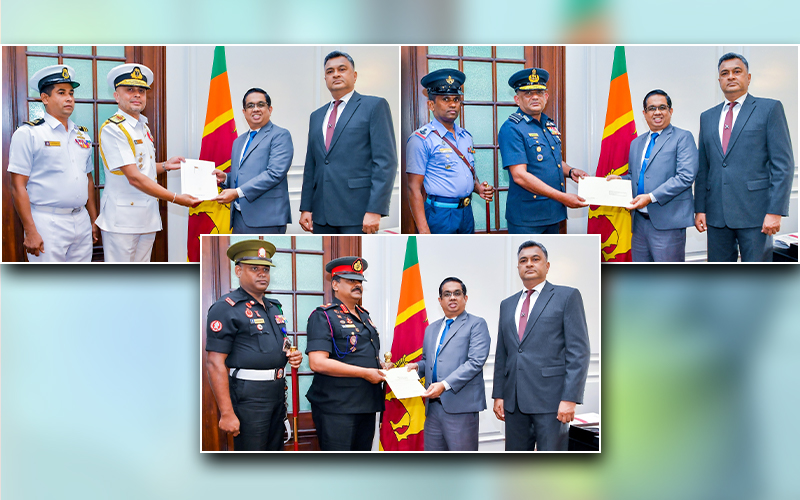
Members of all ranks from the Sri Lanka Army, Sri Lanka Navy and Sri Lanka Air Force have collectively donated a day’s basic salary to the ‘Rebuilding Sri Lanka’ Fund, which was established to restore livelihoods and rebuild the country following the devastation caused by Cyclone Ditwah.
Accordingly, the total contribution made by the Tri-Forces amounts to LKR. 372,776,918.28.
The cheques representing the financial contributions were handed over on Wednesday (31 December) at the Presidential Secretariat to the Secretary to the President, Dr. Nandika Sanath Kumanayake.
The donations comprised LKR. 250 million from the Commander of the Army, Major General Lasantha Rodrigo; LKR. 73,963,879.71 from the Commander of the Navy, Rear Admiral Kanchana Banagoda and LKR. 48,813,038.97 from the Commander of the Air Force, Air Marshal Vasu Bandu Edirisinghe.
Secretary to the Ministry of Defence, Air Vice Marshal Sampath Thuyacontha, was also present on the occasion.
The Ceylon Electricity Board (CEB) has submitted a proposal to the Public Utilities Commission of Sri Lanka (PUCSL) seeking an 11.57 percent increase in electricity tariffs for the first quarter of 2026, citing an estimated revenue shortfall and additional financial pressures, including cyclone-related damages.
According to documents issued by the PUCSL, the proposed tariff revision would apply to electricity consumption from January to March 2026 and includes changes to both energy charges and fixed monthly charges across all consumer categories, including domestic, religious, industrial, commercial and other users.
Under the proposal, domestic electricity consumers would face increases in unit rates as well as fixed monthly charges across all consumption blocks.
The CEB has estimated a deficit of Rs. 13,094 million for the first quarter of 2026, which it says necessitates the proposed 11.57 per cent tariff hike. The utility has noted that any deviation from this estimate whether a surplus or a shortfall will be adjusted through the Bulk Supply Tariff Adjustment (BSTA) mechanism and taken into account in the next tariff revision.
In its submission, the CEB said the proposed revision is aimed at ensuring the financial and operational stability of the power sector and mitigating potential risks to the reliability of electricity supply. The board-approved tariff structure for the first quarter of 2026 has been submitted to the PUCSL for approval and subsequent implementation, as outlined in Annex II of the proposal.
The CEB has also highlighted the financial impact of Cyclone Ditwah, which it said caused extensive damage to electricity infrastructure, with total losses estimated at around Rs. 20 billion. Of this amount, Rs. 7,016.52 million has been attributed to the first quarter of 2026, which the utility said has a direct bearing on electricity tariffs.
The CEB warned that if external funding is not secured to cover the cyclone-related expenditure, the costs incurred would need to be recovered through electricity tariffs in the second-quarter revision of 2026.
Meanwhile, the PUCSL has said that a decision on whether to approve the proposed tariff increase will be made only after following due regulatory procedures and holding discussions on the matter.
By Sujeewa Thathsara ✍️
Ondansetron controversy
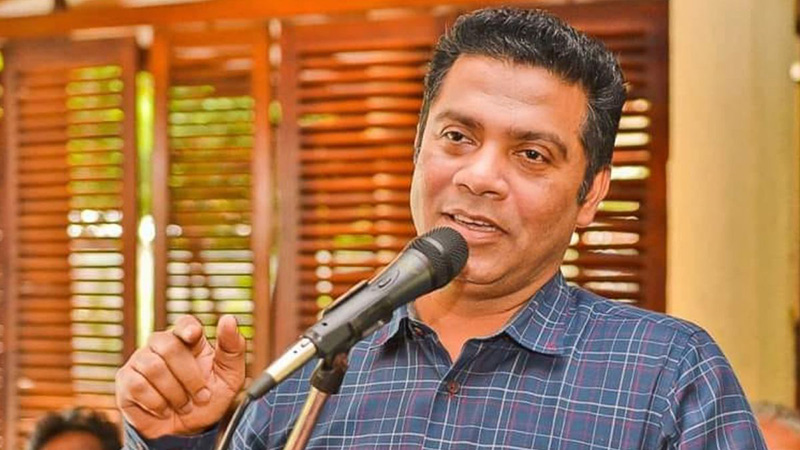
Minister of Health and Mass Media Dr Nalinda Jayatissa has sent a letter of demand for Rs. 1 billion in damages from YouTube content creator Dharmasri Kariyawasam, accusing him of disseminating false and defamatory material linking the Minister to the importation of Ondansetron and inciting public unrest.
The notice, sent through the Minister’s lawyers, states that investigations are currently under way into 10 medicines, including Ondansetron Injection, manufactured by India-based Maan Pharmaceutical Limited.
Ondansetron Injection was among nine injectable drugs recently suspended by the National Medicines Regulatory Authority (NMRA) following reports of patients administered with the drug suffering adverse complications.
Despite the ongoing investigations, Kariyawasam allegedly aired a widely viewed programme on his YouTube channel titled “The hidden story of the Indian drug that claimed lives, Mayor Balthazaar’s relative, and Minister Nalinda’s cover-up.”
According to the letter of demand, the programme falsely portrayed Minister Jayatissa as being directly responsible for importing the drug, colluding with the supplier, and attempting to conceal the issue, while depicting him as indifferent to public suffering.
The Minister’s lawyers maintain that these allegations are entirely false and defamatory, citing passages in which Kariyawasam allegedly accused Jayatissa of lying about the supplier, concealing facts related to PTC Medicals (Pvt) Ltd., the actual importer, and showing a lack of concern over deaths purportedly linked to the drug.
The programme also claimed links between the directors of PTC Medicals and family members of Colombo Mayor Vraîe Cally Balthazaar, implying political favouritism.

Tri-Forces donate LKR. 372 million, a day’s pay of all ranks to ‘Rebuilding Sri Lanka’ Fund

Rabada to lead strong South Africa pace attack at T20 World Cup

Showes about 75 mm are likely at some places in the Eastern and Uva provinces and in Matale, Nuwara-Eliya and Polonnaruwa districts.

CEB demands 11.57 percent power tariff hike in first quarter

Health Minister sends letter of demand for one billion rupees in damages

One killed, two injured in shooting at Kaduwela

‘Dates have the highest sugar content to fight Coronavirus’

Sunday Island 27 December – Headlines

#SundayIsland 17th December – Headlines

Sunday Island – 28th March

Sunday Island Headlines – 21 March

Sunday Island – 21st February – Headlines
-

 Sports5 days ago
Gurusinha’s Boxing Day hundred celebrated in Melbourne
-
 News3 days ago
Leading the Nation’s Connectivity Recovery Amid Unprecedented Challenges
-

 Sports6 days ago
Time to close the Dickwella chapter
-

 Features4 days ago
It’s all over for Maxi Rozairo
-

 News6 days ago
Environmentalists warn Sri Lanka’s ecological safeguards are failing
-
 News4 days ago
Dr. Bellana: “I was removed as NHSL Deputy Director for exposing Rs. 900 mn fraud”
-
 News3 days ago
Dons on warpath over alleged undue interference in university governance
-
 Features6 days ago
Digambaram draws a broad brush canvas of SL’s existing political situation