
News
Labour Minister says migrant workers returning to SL given free hotel quarantine


Migrant workers who return to Sri Lanka are provided quarantine faculties free of charge in 14 hotels across the country chosen by the Sri Lanka Bureau of Foreign Employment (SLBFE), Labour Minister Nimal Siripala De Silva told Parliament last week.
De Silva was responding to a question raised by the opposition about quarantine regulations for Sri Lankan arrivals being relaxed prior to Minister Basil Rajapksa’s recent return to the island from the US and allowing paid hotel quarantine only after that.
Main opposition Samagi Jana Balavegaya (SJB) MP Thushara Indunil Amarasena said the rules imposed – from PCR tests to quarantine – could cost repatriates about 300,000 rupees.
“Migrant workers are given accommodation facilities and quarantine facilities free of charge in 14 hotels chosen by the SLBFE and recommended by the Sri Lanka Army,” Minister De Silva said.
“Using SLBFE funds, 25 migrant workers in a Dubai safe house were brought back and quarantine facilities were provided for them while 20 from safe houses in Saudi Arabia and Oman were also brought back similarly,” he said.
“The SLBFE will work on bringing back more Sri Lankans in safe houses once airport restrictions are relaxed,” he added.
Last week, Sri Lanka imposed a restriction on inbound passengers from six middle-eastern countries as a large number of returnees tested positive for COVID-19 on arrival despite airlines clearing their documents. The countries were Qatar, United Arab Emirates, Saudi Arabia, Oman, Bahrain and Kuwait.
However, within 24-hours this directive was revoked and a new directive issued in its place.
As per the new directive issued June 30, passengers from the six countries are permitted to arrive subject to mandatory hotel quarantine or travel through Sri Lanka Tourism’s “bio bubble route”.
Minister De Silva said that most migrant workers, especially women, are in safe houses.
“Safe houses are maintained to give protection and security to ‘housemaids’ who were subjected to various hardships, who were not paid salaries and who had finished their service period or those who are expecting to return to Sri Lanka,” he said.
According to the minister, the SLBFE maintains safe houses in 10 Sri Lankan missions in Abu Dhabi and Dubai in the UAE, Riyadh and Jeddah in Saudi Arabia, Jordan, Kuwait, Lebanon, Oman, Cyprus and Qatar.
“The safe houses have enough space but due to the COVID-19 pandemic, additional allocations were given to Sri Lankan missions in Oman, Kuwait and Cyprus to rent out alternate places to give temporary accommodation when there was not enough space in the safe houses,” he said.
The minister said that women in safe houses are brought down according to a priority list and as and when their documents are cleared. By June 15, 2021, there were 122 housemaids in the safe houses and 69 by July 5.
“The National Operations Centre for Prevention of COVID 19 is working on bringing back all Sri Lankans including migrant workers. For this, the Foreign Ministry, Sri Lankan missions abroad and SLBFE provide the required assistance. They are repatriated based on a priority list and capacity of quarantine centres,” he said.



Opposition and SJB Leader Sajith Premadasa has alleged that the current government is attempting to suppress freedom of expression and media freedom to lead the country towards authoritarian rule.
In a video message on Thursday (25), Premadasa said that in a democratic country, the four main pillars safeguarding democracy are the legislature, the executive, the judiciary, and the independent media, but, at present, the government is using the police to violate both the democratic rights of the people and the rights of police officers themselves.
He said that the government is working to establish a police state that deprives citizens of their right to access truthful information.
“For democracy to be protected, media freedom must be safeguarded, and space must be given to independent media. Instead, the government is interfering with the independent media process, using the police to suppress and intimidate independent media,” he said.
He noted that even when independent media present their views based on reason, facts, and evidence, the government attempts to suppress them. Such actions, he said, amount to turning a democratic country into a police state. “Do not suppress the voice of the silent majority, the independent media,” he urged.
Premadasa emphasised that independent media represent the voice of the silent majority in the country and must not be suppressed.
“Media repression is a step towards authoritarian rule, and the people did not give their mandate to create an authoritarian regime or a police state. If the government attempts to abolish democratic rights, the Samagi Jana Balawegaya will stand as the opposition against it,” he said.
The Opposition Leader further alleged that the government was interfering with police independence, stating, “Political interference has undermined the independence of the police, making it impossible for them to serve impartially. Suppressing freedom of expression is an attempt to lead the country towards authoritarian rule.”
Premadasa pointed out that the media has the right to reveal the truth, and interfering with that right is a violation of the rights of 22 million citizens.
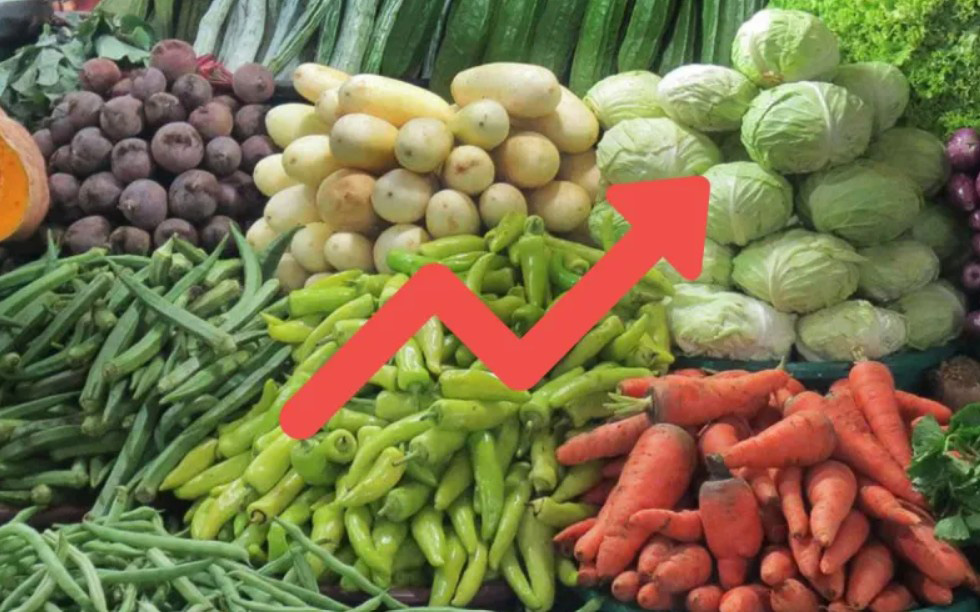
Vegetable prices at the Peliyagoda Manning Wholesale Market surged to unusually high levels yesterday (26), raising concerns among consumers as the festive season drives up demand. The situation is expected to persist over the next few days, a spokesman for the Manning Market told The Island.
He said a sharp increase in the number of buyers visiting the wholesale market, ahead of upcoming festivities, had resulted in a sudden spike in demand, prompting wholesale traders to raise prices significantly. The price hikes have affected a wide range of commonly consumed vegetables, placing additional pressure on household budgets.
According to market sources, the wholesale price of beans climbed to Rs. 1,100 per kilogram, while capsicum soared to Rs. 2,000 per kilogram. Green chillies were selling at around Rs. 1,600 per kilogram. Prices of other vegetables, including beetroot, brinjal (eggplant), tomatoes, bitter gourd, snake gourd and knolkhol, also recorded unusually high increases.
The spokesman alleged that despite the steep rise in prices, vegetable farmers have not benefited from the increases. Instead, he claimed that a group of traders, who effectively control operations at the wholesale market, are arbitrarily inflating prices to maximise profits.
He warned that if the relevant authorities fail to intervene promptly to curb these practices, vegetable prices could escalate further during the peak festive period. Such a trend, he said, would disproportionately benefit a small group of middlemen while leaving consumers to bear the brunt of higher food costs.
By Kamal Bogoda ✍️

The Hakgala National Botanical Garden, which was closed in the aftermath of Cyclone Ditwah, has been reopened to tourists from yesterday, the Ministry of Environment indicated.
The Ministry said the reopening was carried out in accordance with recommendations and guidelines issued by the National Building Research Organisation (NBRO) and the DisasterManagement Centre (DMC) after safety assessments were completed.
However, due to the identification of hazardous ground conditions, several areas, within the garden, have been temporarily restricted. These include the pond area, near the main entrance, and access roads leading towards the forest park where potential risks were observed. Warning signs have been installed to prevent visitors from entering these zones.
To ensure the safety and convenience of both local and foreign visitors, the garden’s management has introduced a special assistance programme, with staff deployed to guide and support tourists.
The Hakgala Botanical Garden was closed as a precautionary measure during the disaster situation triggered by Cyclone Ditwah. The Ministry noted that the garden has now been safely reopened, within a short period, following remedial measures and inspections, allowing visitors to resume access while maintaining necessary safety precautions.
By Sujeewa Thathsara ✍️

A few showers may occur in the Northern, Eastern and Uva provinces and in Polonnaruwa, Matale and Nuwara-Eliya districts

Sajith warns country is being dragged into authoritarian rule

Wholesale mafia blamed for unusually high vegetable prices

Cyclone-damaged Hakgala Botanical Garden reopened with safety measures

Holiday travellers generate record revenue for expressways

Another casualty from underworld warfare succumbs to his injuries

‘Dates have the highest sugar content to fight Coronavirus’

Sunday Island 27 December – Headlines

#SundayIsland 17th December – Headlines

Sunday Island – 28th March

Sunday Island Headlines – 21 March

Sunday Island – 21st February – Headlines
-

 News5 days ago
Members of Lankan Community in Washington D.C. donates to ‘Rebuilding Sri Lanka’ Flood Relief Fund
-

 News3 days ago
British MP calls on Foreign Secretary to expand sanction package against ‘Sri Lankan war criminals’
-

 Business7 days ago
Browns Investments sells luxury Maldivian resort for USD 57.5 mn.
-

 News6 days ago
Air quality deteriorating in Sri Lanka
-

 News6 days ago
Cardinal urges govt. not to weaken key socio-cultural institutions
-
 Features7 days ago
Hatton Plantations and WNPS PLANT Launch 24 km Riparian Forest Corridor
-
 Features7 days ago
Another Christmas, Another Disaster, Another Recovery Mountain to Climb
-

 Features5 days ago
General education reforms: What about language and ethnicity?