
News
Kotmale Dairy reinforces commitment to Sri Lanka with ‘Nourishing Our Nation’ Campaign’

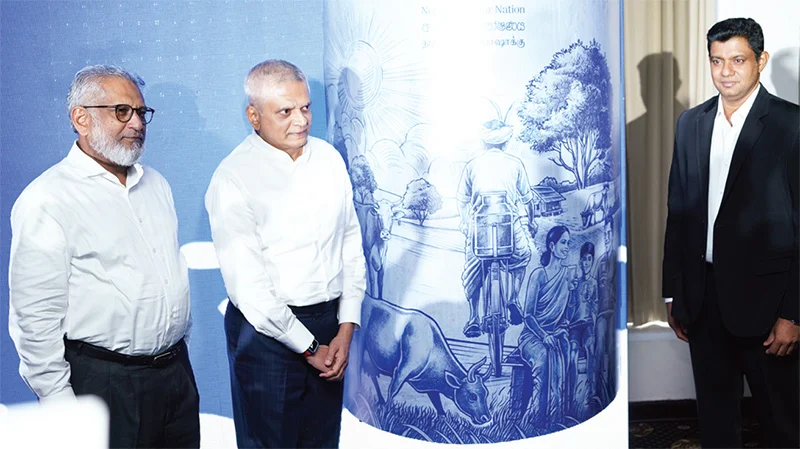
Collects 180,000 litres of fresh milk daily from 17,000 smallholder dairy farmers
Kotmale, the country’s largest collector of fresh milk, has unveiled its new brand campaign, “Nourishing Our Nation,” reaffirming its dedication to empowering rural communities, advancing sustainable dairy farming, and delivering high-quality nutrition to households across Sri Lanka.
Central to the campaign is the iconic milk can – a timeless symbol of Sri Lanka’s dairy heritage and a tribute to the journey from farm to table. This emblem underscores Kotmale’s deep-rooted connection to the farmers and landscapes that sustain the nation, while embodying its mission to provide trusted, locally sourced dairy nutrition.
Kotmale collects approximately 180,000 litres of fresh milk daily from over 17,000 smallholder dairy farmers, making it the largest fresh milk aggregator in Sri Lanka. By eliminating intermediaries and ensuring fair farmgate prices, the company secures a stable income for rural families while maintaining consistent quality for consumers.
Since its acquisition by Cargills (Ceylon) PLC in 2010, Kotmale has been revitalised under Cargills’ community-centric business philosophy, which prioritises farmer welfare and sustainable growth. This approach, rooted in Cargills’ direct engagement with outgrower farmers since 1999, has driven Kotmale’s expansion, modernisation, and transformation into a catalyst for rural economic development.
Today, Kotmale operates three ISO-certified dairy processing facilities, leveraging cutting-edge technology to uphold the highest food safety and quality standards. A pioneer in digitalisation, Kotmale was the first in Sri Lanka’s dairy sector to automate milk collection, enhancing transparency, reducing waste, and boosting efficiency.
The company’s diverse product portfolio including fresh milk, yoghurts, cheese, butter, curd, UHT and pasteurised milk, and dairy ice cream is made from 100% local milk, reinforcing its commitment to nutrition and quality.
Through its farmer development programme, Kotmale supports Sri Lanka’s push toward milk self-sufficiency by providing farmers with technology, training, veterinary care, artificial insemination, and subsidised feed. These initiatives enhance productivity, animal health, and livelihoods, ensuring long-term sectoral growth.
Sustainability remains a cornerstone of Kotmale’s operations. The company employs rainwater harvesting, wastewater reuse systems, solar power, and biomass boilers to minimise environmental impact, aligning with global best practices in resource efficiency.
Kotmale’s products reach consumers through an extensive distribution network, including modern trade outlets, 55,000+ general trade shops, and food service channels, while also serving export markets. This ensures that affordable, high-quality dairy nutrition is accessible to all Sri Lankans.
With local milk production meeting only 40% of national demand, Kotmale plays a vital role in strengthening food security, reducing import reliance, and conserving foreign exchange. By empowering smallholder farmers who contribute 95% of Sri Lanka’s dairy output, the company fosters rural prosperity and national resilience.
The “Nourishing Our Nation” campaign goes beyond dairy; it reflects Kotmale’s broader vision: nourishing people, uplifting communities, safeguarding the environment, and building a stronger, self-reliant Sri Lanka.




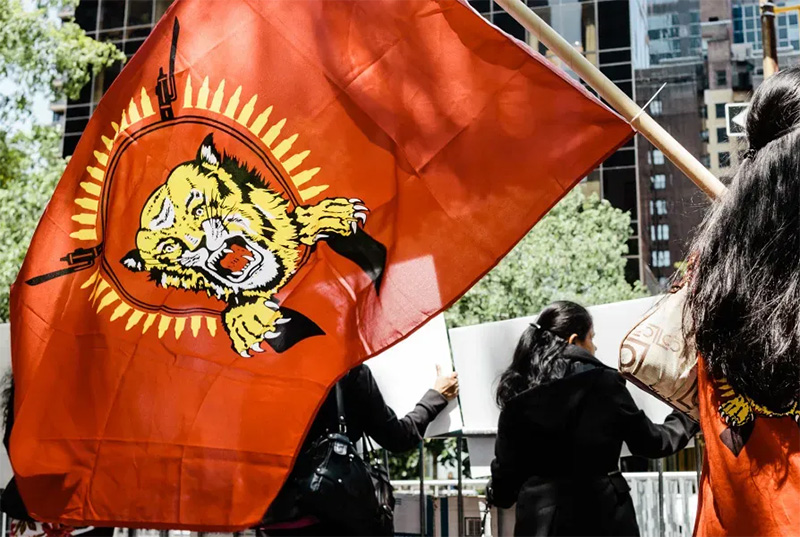
The NPP government has issued a new extraordinary gazette renewing and extending Sri Lanka’s long-standing ban on the LTTE and several Tamil diaspora organisations and individuals, continuing to designate them as “terrorists”.
The gazette, published recently, replaces a previous gazette issued in May 2025 and reaffirmed the proscription of a wide range of Tamil political and advocacy bodies operating around the world, alongside dozens of named individuals. The government alleged both the organisations and individuals listed are involved in “terrorism-related activities”.
The organisations blacklisted by the Sri Lankan government include:
• Liberation Tigers of Tamil Eelam (LTTE)
• Tamil Rehabilitation Organisation (TRO)
• Tamil Coordinating Committee (TCC)
• World Tamil Movement (WTM)
• Transnational Government of Tamil Eelam (TGTE)
• World Tamil Relief Fund (WTRF)
• National Council of Canadian Tamils (NCCT)
• Tamil Youth Organisation (TYO)
While the majority of the designations mirror those contained in the May 2025 gazette, the latest document updates identification details and addresses for a number of individuals and introduces at least one additional organisation to the list. All entries have been reissued under new reference numbers for 2026, though the underlying allegations and framing remain unchanged.
Successive governemnts have maintained a sweeping proscription regime against Tamil diaspora groups and individuals. A ban can make it a criminal offence for Sri Lankan citizens to maintain contact with these organisations or their members, severely restricting political engagement and stifling links between the diaspora and the Tamil homeland.
The original mass listings were introduced in 2014 under the administration of Mahinda Rajapaksa. Despite repeated outcry, subsequent governments have continued to uphold and renew the proscription regime, even after the Rajapaksas were voted out of power.

Police yesterday (12) obtained an injunction order from the Kaduwela Magistrate’s court against the protest launched by National Freedom Front (NFF) leader and former Minister Wimal Weerawansa opposite the Education Ministry, Isurupaya, at Battaramulla.
Police informed Weerawansa of the court order. In line with the court order, the police informed Weerawansa that the road near the Ministry should not be obstructed and that no sound amplification equipment be used while the GCE Advanced Level (A/L) examination is in progress. The examination, put off due to Cyclone Ditwah, recommenced yesterday.
News
Chinese Foreign Minister Wang Yi expresses optimism that Sri Lanka is on the right path to progres

Minister of Foreign Affairs, Foreign Employment and Tourism Vijitha Herath held productive discussions with his Chinese counterpart Wang Yi today (12/01), during the latter’s brief visit to Sri Lanka.
The meeting aimed at further strengthening bilateral engagement and advancing the Strategic Cooperative Partnership between the two countries. Both Ministers reaffirmed the longstanding friendship and time-tested cooperation between Sri Lanka and China rooted in centuries of exchanges and consolidated since the establishment of diplomatic relations seven decades ago. The discussion also focused on enhancing partnership in the areas of trade, investment, development cooperation and tourism.
Minister Herath extended deep appreciation to the Government and the people of China for the steadfast support extended to Sri Lanka following cyclone Ditwah and requested further support for the second phase of resettlement, relocation and rebuilding, particularly for the restoration of affected infrastructure including identified roads, railways and bridges that are vital to connectivity, economic recovery and daily lives of people. Minister Wang assured China’s fullest support for this initiative and expressed confidence that Sri Lanka will continue its rapid recovery under the leadership of President Anura Kumara Disanayaka. He also welcomed the people-centric policies of the Government and expressed optimism that Sri Lanka is on the right path toward fulfilling aspirations of its people.
Minister Herath expressed appreciation for China’s constructive role in international fora and reiterated Sri Lanka’s firm commitment to the One China Policy and China’s sovereignty and territorial integrity.
Both Ministers also recalled the successful high level exchanges in the recent past, including visits of the President and the Prime Minister of Sri Lanka to China in 2025.

Showers in the Northern, North-central, Uva, Western, Eastern, Sabaragamuwa, North-western and Central provinces and Galle and Matara districts

Govt. extends ban on LTTE

Police obtain court order banning Wimal’s protest

Chinese Foreign Minister Wang Yi expresses optimism that Sri Lanka is on the right path to progres

India plans to restore northern regular train services to pre-Ditwah frequencies before traditional New Year 2026

Inauguration of first Bailey Bridge under Indian assistance package for post-Ditwah reconstruction

‘Dates have the highest sugar content to fight Coronavirus’

Sunday Island 27 December – Headlines

#SundayIsland 17th December – Headlines

Sunday Island – 28th March

Sunday Island Headlines – 21 March

Sunday Island – 21st February – Headlines
-
 News2 days ago
Sajith: Ashoka Chakra replaces Dharmachakra in Buddhism textbook
-

 Business2 days ago
Dialog and UnionPay International Join Forces to Elevate Sri Lanka’s Digital Payment Landscape
-

 Features2 days ago
The Paradox of Trump Power: Contested Authoritarian at Home, Uncontested Bully Abroad
-

 Features2 days ago
Subject:Whatever happened to (my) three million dollars?
-

 News2 days ago
Level I landslide early warnings issued to the Districts of Badulla, Kandy, Matale and Nuwara-Eliya extended
-

 News2 days ago
National Communication Programme for Child Health Promotion (SBCC) has been launched. – PM
-

 News2 days ago
65 withdrawn cases re-filed by Govt, PM tells Parliament
-

 Opinion4 days ago
The minstrel monk and Rafiki, the old mandrill in The Lion King – II