
Foreign News
Israel confirms latest body returned from Gaza is dead hostage

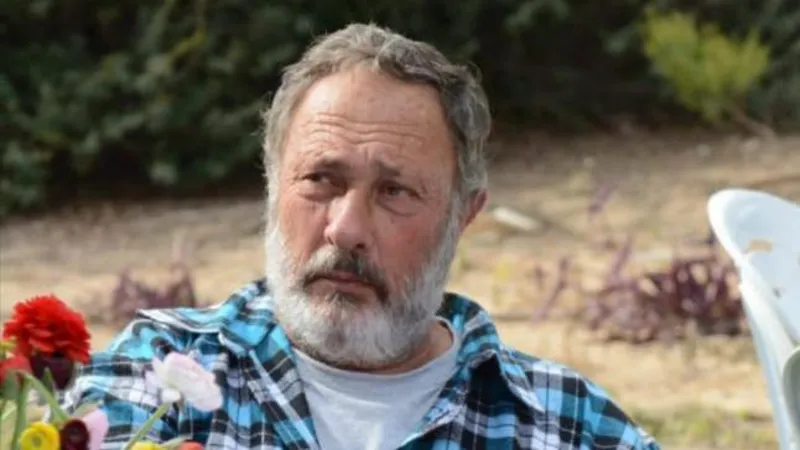
Israel’s military has confirmed that the latest remains handed over to the Red Cross in Gaza and returned to Israel are those of a dead hostage.
The Israel Defense Forces (IDF) said the returned hostage is Eliyahu Margalit, 75, who was killed on 7 October and his body taken into Gaza from Nir Oz kibbutz.
His death was announced by Israel in December 2023, a month after his daughter Nili – who was also taken hostage – was released during a temporary truce.
Mr Margalit, who was known to his family and friends as Churchill, is the 10th dead hostage to be returned from Gaza. The remains of another 18 people have yet to be repatriated.
The International Committee of the Red Cross (ICRC) said in a statement on Friday night that its team had taken “all possible measures to ensure the deceased are managed with respect”, and that Israeli forensic authorities would identify the remains in Tel Aviv.
There has been fury in Israel that Hamas has not returned all of the bodies, in line with last week’s ceasefire deal – though the US has downplayed the suggestion it amounts to a breach.
On Friday night, the IDF again stressed that Hamas must “uphold the agreement and take the necessary steps to return all the hostages”.
Hamas has said it remains committed to the ceasefire, including “keenness to hand over all remaining corpses”.
It has blamed Israel for making the task difficult because Israeli strikes have reduced so many buildings to rubble and it does not allow heavy machinery and diggers into Gaza to be able to search for the hostages’ bodies.
UN humanitarian chief Tom Fletcher told the BBC News Channel that the Gaza Strip “is now a wasteland”, with people picking through the rubble for bodies and trying to find their homes – many of which have been flattened.
He added that aid agencies have “an enormous job ahead of us to stabilise the situation, to stop the starvation, to get the hospitals open, to get the kids back in school”.
“We’ve started to do that and we’re having an impact already but being here on the ground, it’s an overwhelming task,” he said, speaking from Gaza City.
As part of the US-brokered ceasefire deal, Israel freed 250 Palestinian prisoners in Israeli jails and 1,718 detainees from Gaza.
After Hamas said it was unable to retrieve all the bodies, two senior Trump advisers said preparations to move to the next phase of the ceasefire deal were continuing.
The advisers told reporters that the US government did not so far believe that Hamas had broken the agreement by not retrieving more remains, and said the group had acted in good faith by sharing information with interlocutors.
While the full text of the agreement between Israel and Hamas has not been made public, a leaked version which appeared in Israel media appeared to allow for the possibility that not all of the bodies would be immediately accessible.
Speaking about their role in brokering the ceasefire, US special envoy Steve Witkoff told CBS News’s 60 Minutes programme that President Donald Trump had felt “like the Israelis were getting a little bit out of control in what they were doing” after it targeted Hamas leaders in an air strike in Qatar in September.
Following the strike in Doha, in which five lower-level Hamas members and a Qatari officer were killed, Witkoff said Trump had felt “it was time to be very strong and stop them [Israel] from doing things that he felt were not in their long-term interests”.
Witkoff, who led the US team at the talks alongside Trump’s son-in-law Jared Kushner, said they had felt “a little bit betrayed” by the Israeli move.
“We had lost the confidence of the Qataris. And so Hamas went underground, and it was very, very difficult to get to them,” Witkoff told the US network.
Qatar, a key US ally, has played an important mediating role in ceasefire negotiations between Hamas and Israel.
The Israeli military launched a campaign in Gaza in response to the 7 October 2023 attack, in which Hamas-led gunmen killed about 1,200 people in southern Israel and took 251 others hostage.
At least 67,967 people have been killed by Israeli attacks in Gaza since then, according to the territory’s Hamas-run health ministry, whose figures are seen by the UN as reliable.
[BBC]


A scheme to encourage climbers to bring their waste down from Mount Everest is being scrapped – with Nepalese authorities telling the BBC it has been a failure.
Climbers had been required to pay a deposit of $4,000 (£2964), which they would only get back if they brought at least 8kg (18lbs) of waste back down with them.
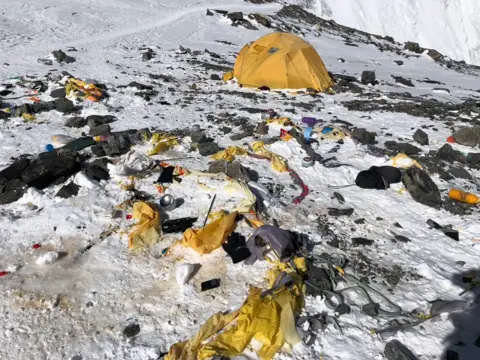
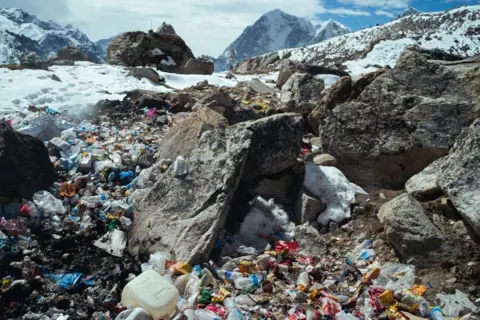
It was hoped it would begin to tackle the rubbish problem on the world’s highest peak, which is estimated to be covered in some 50 tonnes of waste.
But after 11 years – and with the rubbish still piling up – the scheme is being shelved because it “failed to show a tangible result”
Himal Gautam, director at the tourism department, told the BBC that not only had the garbage issue “not gone away”, but the deposit scheme itself had “become an administrative burden”.
Tourism ministry and mountaineering department officials told the BBC most of the deposit money had been refunded over the years – which should mean most climbers brought back their trash.
But the scheme is said to have failed because the rubbish climbers have brought back is usually from lower camps – not the higher camps where the garbage problem is worst.
“From higher camps, people tend to bring back oxygen bottles only,” said Tshering Sherpa, chief executive officer of the Sagarmatha Pollution Control Committee, which runs an Everest checkpoint.
“Other things like tents and cans and boxes of packed foods and drinks are mostly left behind there, that is why we can see so much of waste piling up.”
Mr Sherpa said on average a climber produces up to 12kg (26lbs) of waste on the mountain where they spend up to six weeks for acclimatisation and climbing.
Apart from the “flawed rule” that required climbers to bring back less trash than they produce, authorities in the Everest region said lack of monitoring has been the main challenge.
“Apart from the check point above the Khumbu Icefall, there is no monitoring of what climbers are doing,” said Mr Sherpa.
Nepalese authorities are hoping a new scheme will be more effective.
Under the changed rule, officials said, a non-refundable clean-up fee from climbers will be used to set up a checkpoint at Camp Two and also deploy mountain rangers who will keep going to the higher parts of the mountain to make sure climbers bring down their trash.
Tourism ministry officials said it will most probably be $4,000 per climber – the same amount as deposit money – and will come into effect once passed by the parliament.
Mingma Sherpa, chairperson of the Pasang Lhamu rural municipality, said the change was something the Sherpa community had lobbied for for many years now.
“We had been questioning the effectiveness of the deposit scheme all this time because we are not aware of anyone who was penalised for not bringing their trash down.
“And there was no designated fund but now this non-refundable fee will lead to creation of a fund that can enable us to do all these clean-up and monitoring works.”

The non-refundable fee will form part of a recently introduced five-year mountain clean-up action plan, with Jaynarayan Acarya, spokesperson at the ministry of tourism, saying it was designed “to immediately address the pressing problem of waste on our mountains”.
Although there has been no study quantifying the waste on Everest, it is estimated there are tons of it including human excrement which does not decay on the higher part of the mountain because of freezing temperature.
And the growing number of climbers each year, averaging around 400 with many more supporting staff, has been a growing concern for mountaineering sustainability.
[BBC]

Former Malaysian Prime Minister Najib Razak has been jailed for 15 years for abuse of power and money laundering, in his second major trial for a multi-billion-dollar state funds scandal.
Najib, 72, was accused of misappropriating nearly 2.3 billion Malaysian ringgit ($569m; £422m) from the nation’s sovereign wealth fund 1Malaysia Development Berhad (1MDB).
On Friday afternoon a judge found him guilty in four charges of abuse of power and 21 charges of money laundering.
The former PM is already in jail after he was convicted years ago in another case related to 1MDB.
Friday’s verdict comes after seven years of legal proceedings, which saw 76 witnesses called to the stand.
The verdict, delivered in Malaysia’s administrative capital Putrajaya, is the second blow in the same week to the embattled former leader, who has been imprisoned since 2022.
He was handed four 15-year sentences on abuse of power charges, as well as five years each on 21 money laundering charges. The jail terms run concurrently under Malaysian law.
On Monday, the court rejected his application to serve the remainder of his sentence under house arrest.
But the former prime minister retains a loyal base of supporters, who claim that he’s a victim of unfair rulings and who have showed up at his trials calling for his release.
On Friday, dozens of people gathered outside the court in Putrajaya in support of Najib.
The 1MDB scandal made headlines across the world when it came to light a decade ago, embroiling prominent figures from Malaysia to Goldman Sachs and Hollywood.
Investigators estimated that $4.5bn was siphoned from the state-owned wealth fund into private pockets, including Najib’s.
Najib’s lawyers claim that he had been misled by his advisers – in particular the financier Jho Low, who has maintained his innocence but remains at large.
But the argument has not convinced Malaysia’s courts, which previously found Najib guilty of embezzlement in 2020.
That year, Najib was convicted of abuse of power, money laundering and breach of trust over 42 million ringgit ($10m; £7.7m) transferred from SRC International – a former unit of 1MDB – into his private accounts.
He was sentenced to 12 years in prison, but saw his jail term halved last year.
The latest case concerns a larger sum of money, also tied to 1MDB, received by his personal bank account in 2013. Najib said he had believed the money was a donation from the late Saudi King Abdullah – a claim rejected by the judge on Friday.
Separately Najib’s wife, Rosmah Mansor, was sentenced to ten years in jail in 2022 for bribery. She is free on bail pending an appeal against her conviction.
The scandal has had profound repercussions on Malaysian politics. In 2018 it led to a historic election loss for Najib’s Barisan Nasional coalition, which had governed the country since its independence in 1957.
Now, the recent verdicts has highlighted fissures in Malaysia’s ruling coalition, which includes Najib’s party United Malays National Organisation (UMNO).
Najib’s failed house arrest bid on Monday was met with disappointment from his allies but celebrated by his critics within the same coalition.
Malaysia’s Prime Minister Anwar Ibrahim called for politicians on all sides to respect the court’s decisions.
Former Malaysian lawmaker Tony Pua told the BBC’s Newsday programme that the verdict would “send a message” to the country’s leaders, that “you can get caught for corruption even if you’re number one in the country like the prime minister”.
But Cynthia Gabriel, founding director of Malaysia’s Center to Combat Corruption and Cronyism, argued that the country has made little headway in anti-corruption efforts despite the years of reckoning after the 1MDB scandal.
Public institutions have not been strengthened enough to reassure Malaysians that “the politicians they put into power would actually serve their interests” instead of “their own pockets”, she told Newsday.
“Grand corruption continues in different forms”, she added. “We don’t know at all if another 1MDB could occur, or may have already occurred.”
(BBC)

A pile-up involving at least 50 vehicles on a highway in central Japan has left two people dead and 26 injured, according to police.
The incident was caused by a crash between two trucks, sparking a chain reaction that set at least 10 vehicles on fire, local police said.
A 77-year-old woman from Tokyo was killed, and another body was discovered in the driver’s seat of a burnt-out truck. Five people were seriously injured and 21 suffered minor injuries, police said.
There was a heavy snow warning in place at the time of the crash. Police believe icy surfaces likely caused the trucks to skid on the roads.
The crash happened on the Kan-etsu Expressway in Minakami, Gunma prefecture, about 160km (100 miles) north-west of Tokyo, at about 19:30 local time (10:30 GMT) on 26 December.
It took about seven and a half hours to put out the fire, police said.
Following the incident, a section of the highway was closed, with a long line of vehicles, many charred beyond recognition, stuck in the outbound lane. Work is under way to tow them away.
A man in his 60s, whose vehicle was involved in the accident, told local media outlet NHK he heard a loud explosion from the far end of the pile-up and saw fire during the crash. The blaze then spread to other vehicles, he said.
He said he was evacuated to a nearby toll gate with about 50 other people and spent the night in the hallway there.
Nexco, which operates the road, said checks were needed to see if the surface was damaged by the fire.
The company is warning travellers not to use the highway.
(BBC)

Shafali, Renuka close in on top five in ICC T20I rankings

S. Achchudan appointed as Director General of the Sports Development Department.

Amendment of the National Environment Act No. 47 of 1980
Tax relief for Dates received as donations or gifts for Ramadan
Cabinet nod to establish the Sri Lanka Industrial Transformation and innovation Authority
Temporary employment of Sri Lankan labour in the State of Israel

‘Dates have the highest sugar content to fight Coronavirus’

Sunday Island 27 December – Headlines

#SundayIsland 17th December – Headlines

Sunday Island – 28th March

Sunday Island Headlines – 21 March

Sunday Island – 21st February – Headlines
-

 News6 days ago
British MP calls on Foreign Secretary to expand sanction package against ‘Sri Lankan war criminals’
-
 News5 days ago
Street vendors banned from Kandy City
-
 Sports6 days ago
Chief selector’s remarks disappointing says Mickey Arthur
-

 Opinion6 days ago
Disasters do not destroy nations; the refusal to change does
-

 News7 days ago
Sri Lanka’s coastline faces unfolding catastrophe: Expert
-

 News5 days ago
Lankan aircrew fly daring UN Medevac in hostile conditions in Africa
-
 Midweek Review7 days ago
Year ends with the NPP govt. on the back foot
-

 Sports2 days ago
Gurusinha’s Boxing Day hundred celebrated in Melbourne