
Foreign News
Iraq starts mass grave excavation from ISIL (ISIS) carnage south of Mosul


Iraqi officials have begun the excavation of what is believed to be a mass grave left behind by ISIL [ISIS] during its years of carnage exacted upon the civilian population after it seized large swaths of the nation from 2014 onwards, until being vanquished three years later.
Local authorities were working alongside the judiciary, forensic investigators, the Iraqi Martyrs Foundation and the directorate of mass graves to carry out the excavation in al-Khafsa, south of the northern city of Mosul, the state-run Iraqi News Agency reported on Sunday.
The site – a sinkhole about 150 metres (nearly 500 feet) deep and 110 metres (360 ft) wide – is believed to have been the grisly scene of some of the worst massacres committed by ISIL.
Ahmad Qusay al-Asady, head of the Martyrs Foundation’s mass graves excavation department, told The Associated Press news agency that his team began work on August 9 at the request of the Nineveh province.
The operation will initially be limited to gathering visible human remains and surface evidence, while preparing for a full exhumation that officials say will require international support, al-Asady said.
The foundation will then build a database and start collecting DNA samples from families of suspected victims.
Full exhumations can only proceed once specialised assistance is secured to navigate the site’s hazards, including sulfur water and unexploded ordnance. The water may have also eroded the human remains, complicating DNA identification.
Because of the presence of these elements, al-Khafsa is “a very complicated site,” al-Asady added.
[Aljazeera]


About 550,000 accounts were blocked by Meta during the first days of Australia’s landmark social media ban for kids.
In December, a new law began requiring that the world’s most popular social media sites – including Instagram and Facebook – stop Australians aged under 16 from having accounts on their platforms.
The ban, which is being watched closely around the world, was justified by campaigners and the government as necessary to protect children from harmful content and algorithms.
Companies including Meta have said they agree more is needed to keep young people safe online. However they continue to argue for other measures, with some experts raising similar concerns.
“We call on the Australian government to engage with industry constructively to find a better way forward, such as incentivising all of industry to raise the standard in providing safe, privacy-preserving, age appropriate experiences online, instead of blanket bans,” Meta said in a blog update.
The company said it blocked 330,639 accounts on Instagram, 173,497 on Facebook, and 39,916 on Threads during it’s first week of compliance with the new law.
They again put the argument that age verification should happen at an app store level – something they suggested lowers the burden of compliance on both regulators and the apps themselves – and that exemptions for parental approval should be created.
“This is the only way to guarantee consistent, industry-wide protections for young people, no matter which apps they use, and to avoid the whack-a-mole effect of catching up with new apps that teens will migrate to in order to circumvent the social media ban law.”
Various governments, from the US state of Florida to the European Union, have been experimenting with limiting children’s use of social media. But, along with a higher age limit of 16, Australia is the first jurisdiction to deny an exemption for parental approval in a policy like this – making its laws the world’s strictest.
The policy is wildly popular with parents and envied by world leader, with the Tories this week pledging to follow suit if they win power at the next election, due before 2029.
However some experts have raised concerns that Australian kids can circumvent the ban with relative ease – either by tricking the technology that’s performing the age checks, or by finding other, potentially less safe, places on the net to gather.
And backed by some mental health advocates, many children have argued it robs young people of connection – particularly those from LGBTQ+, neurodivergent or rural communities – and will leave them less equipped to tackle the realities of life on the web.
(BBC)
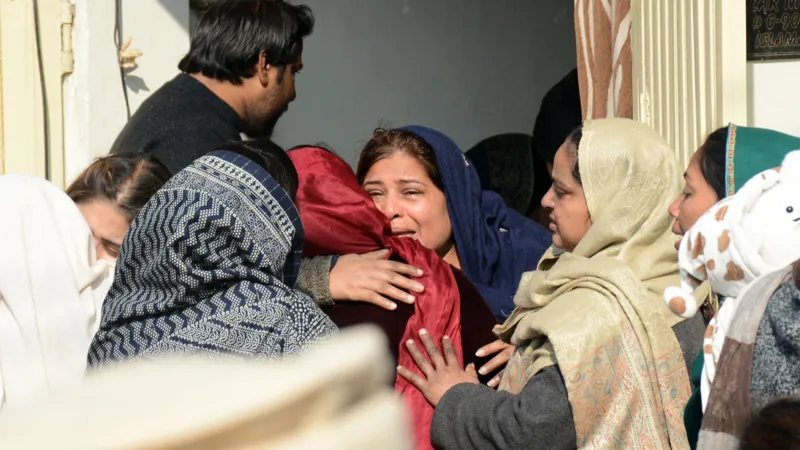
A newly married couple were killed when a gas cylinder exploded at a house in Islamabad where they were sleeping after their wedding party, police have said.
A further six people – including wedding guests and family members – who were staying there also died in the blast. More than a dozen people were injured.
The explosion took place at 07:00 local time (02:00 GMT) on Sunday, causing the roof to collapse.
Parts of the walls were blown away, leaving piles of bricks, large concrete slabs and furniture strewn across the floor. Injured people were trapped under the rubble and had to be carried out on stretchers by rescue workers.
(BBC)

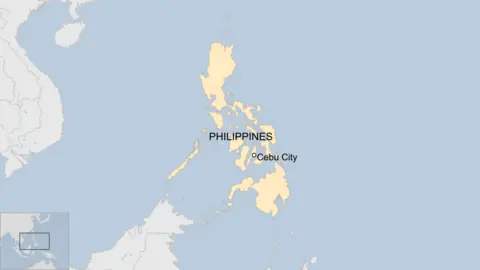
Rescue workers are racing to find dozens of people still missing following a landslide at a landfill site in the central Philippines that occurred earlier this week, an official has said.
Mayor Nestor Archival said on Saturday that signs of life had been detected at the site in Cebu City, two days after the incident.
Four people have been confirmed dead so far, Archival said, while 12 others have been taken to hospital.
Conditions for emergency services working at the site were challenging, the mayor added, with unstable debris posing a hazard and crew waiting for better equipment to arrive.
The privately-owned Binaliw landfill collapsed on Thursday while 110 workers were on site, officials said.
Archival said in a Facebook post on Saturday morning: “Authorities confirmed the presence of detected signs of life in specific areas, requiring continued careful excavation and the deployment of a more advanced 50-ton crane.”
Relatives of those missing have been waiting anxiously for any news of their whereabouts. More than 30 people, all workers at the landfill, are thought to be missing.
“We are just hoping that we can get someone alive… We are racing against time, that’s why our deployment is 24/7,” Cebu City councillor Dave Tumulak, chairman of the city’s disaster council, told news agency AFP.
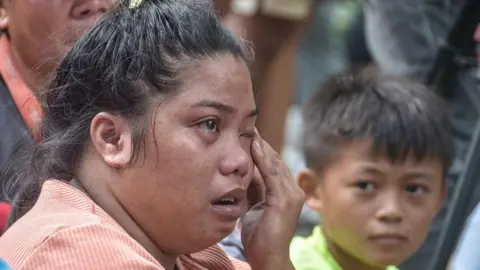
Jerahmey Espinoza, whose husband is missing, told news agency Reuters at the site on Saturday: “They haven’t seen him or located him ever since the disaster happened. We’re still hopeful that he’s alive.”
The cause of the collapse remains unclear, but Cebu City councillor Joel Garganera previously said it was likely the result of poor waste management practices.
Operators had been cutting into the mountain, digging the soil out and then piling garbage to form another mountain of waste, Garganera told local newspaper The Freeman on Friday.
The Binaliw landfill covers an area of about 15 hectares (37 acres).
Landfills are common in major Philippine cities like Cebu, which is the trading centre and transportation gateway of the Visayas, the archipelago nation’s central islands.
[BBC]

Fair weather will prevail except for a few showers in the Uva, Eastern, Western and Central provinces and in Galle, Matara and Rathnapura districts

Trump cancels US-Iran meetings, urges protesters to take over institutions

Govt. bows to pressure, shelves Grade 6 reforms

AKD: Govt. agenda on track despite Ditwah disaster

SL to receive 10 helicopters from US

Foreign couple held over alleged biopiracy at Horton Plains

‘Dates have the highest sugar content to fight Coronavirus’

Sunday Island 27 December – Headlines

#SundayIsland 17th December – Headlines

Sunday Island – 28th March

Sunday Island Headlines – 21 March

Sunday Island – 21st February – Headlines
-

 Business3 days ago
Dialog and UnionPay International Join Forces to Elevate Sri Lanka’s Digital Payment Landscape
-

 News3 days ago
Sajith: Ashoka Chakra replaces Dharmachakra in Buddhism textbook
-

 Features3 days ago
The Paradox of Trump Power: Contested Authoritarian at Home, Uncontested Bully Abroad
-

 Features3 days ago
Subject:Whatever happened to (my) three million dollars?
-

 News3 days ago
Level I landslide early warnings issued to the Districts of Badulla, Kandy, Matale and Nuwara-Eliya extended
-

 News3 days ago
National Communication Programme for Child Health Promotion (SBCC) has been launched. – PM
-

 News3 days ago
65 withdrawn cases re-filed by Govt, PM tells Parliament
-

 Opinion5 days ago
The minstrel monk and Rafiki, the old mandrill in The Lion King – II