
Business
IDL, Clouds by SOZO and the Rukmini Tissanayagam Trust partner with the HSBC Ceylon Literary & Arts Festival 2026


The HSBC Ceylon Literary & Arts Festival 2026, taking place from 13 to 15 February at Cinnamon Lakeside, Colombo, promises to be one of those rare cultural moments that linger long after the last session ends. It is a gathering not only of writers, artists and thinkers, but of ideas, shared, challenged and celebrated in spaces where curiosity feels welcome.
The HSBC Ceylon Literary & Arts Festival 2026 is supported by several organizations through non-promotional CSR initiatives, including Clouds by SOZO and the Rukmini Tissanayagam Trust. International Distillers Limited contributes in a strictly neutral CSR capacity, providing logistical and resource support for the event without any brand promotion or product visibility.
The Festival celebrates Sri Lanka’s creative voice by showcasing literature, arts, and cultural talent from across the country. All supporting organizations participate solely in a philanthropic and educational role, ensuring that the focus remains on artistic expression and community engagement.
The Rukmini Tissanayagam Trust brings to the Festival a deep and enduring commitment to nurturing literature and the arts as essential pillars of society. Its work is driven by the belief that creative spaces are not optional additions, but vital platforms that shape how communities think, feel and engage with the world around them.
Speaking on this collaboration, Indhu Selvaratnam, Director of SOZO Beverages and Trustee
of The Rukmini Tissanayagam Trust, stated, “The Rukmini Tissanayagam Trust is delighted to partner with the Ceylon Literary Festival for the second time. We are deeply committed to enriching Sri Lanka’s intellectual and cultural landscape and admire the festival’s evolution in embracing literature, art, music, and initiatives that nurture emerging local talent. These efforts align closely with the Trust’s mission to support creative expression, and we look forward to continuing our support as the festival strengthens Sri Lanka’s global cultural presence.”
Adding a complementary dimension to this partnership is Clouds by SOZO, Sri Lanka’s premium mountain spring water brand, whose ethos of purity, sustainability and thoughtful living aligns naturally with the spirit of the Festival. Sourced from a pristine spring in the Knuckles mountain range, Clouds represents a return to authenticity, an idea that resonates strongly within creative and cultural spaces.
Speaking on the partnership, Dushyantha De Silva, Founder of SOZO Beverages (Pvt) Ltd, said, “The arts invite us to slow down, to observe, and to think more deeply, and Clouds comes from that same place of intention. Supporting the HSBC Ceylon Literary & Arts Festival is about being part of a space where ideas flow freely and thoughtfully. It’s a privilege for us to align with a platform that values creativity, dialogue and conscious choices.”
The HSBC Ceylon Literary & Arts Festival 2026 offers something increasingly rare: three uninterrupted days of ideas. Of language and imagination. Of conversations that do not require a screen to feel alive. It is a reminder of the power of gathering, of listening, discovering and engaging with perspectives that challenge and inspire.
As February approaches, the hope is simple: that more people choose to attend, to listen, and to support Sri Lankan creativity in all its forms. Because when a country invests in its writers and artists, it is not merely celebrating talent, it is shaping how it remembers, how it questions, and how it evolves.

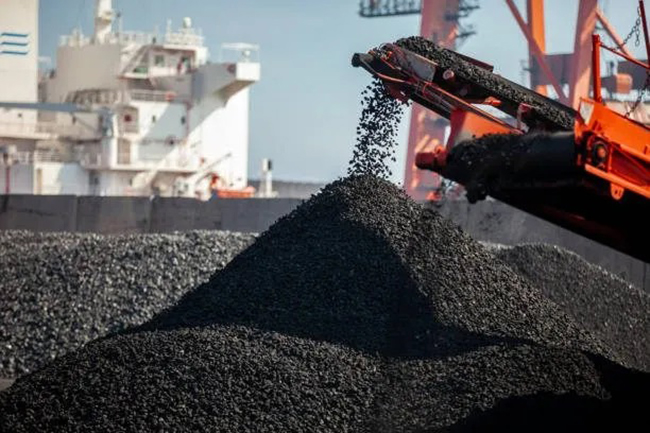
Operations at Sri Lanka’s main coal-fired power facility, the Lakvijaya coal power plant, suffered a significant disruption soon after a new shipment of coal was introduced, raising concerns over generation stability and environmental emissions.
Energy analyst Dr. Vidura Ralapanawa said in a social media post that the plant began using coal from “Ship 11” on Wednesday, following confirmation from officials of the Ceylon Electricity Board (CEB).
However, almost immediately after the new batch of coal was fed into the system, the plant’s generation capacity began to decline due to the poor quality of the fuel.
According to Dr. Ralapanawa, the plant’s output dropped by about 82 megawatts overall. Unit 1 recorded a drop of 45 MW, Unit 2 fell by 15 MW, and Unit 3 declined by 22 MW shortly after the coal was introduced.
The situation worsened later in the night when two coal mills in Unit 3 reportedly became clogged around 11 p.m., causing a rapid fall in generation capacity. Unit 3, which normally operates at a higher output level, was said to be running at around 170 MW following the malfunction.
Coal mills are a crucial component in coal-fired power generation. They grind raw coal into a fine powder before it is fed into the boiler for combustion. Each generating unit at the Norochcholai facility is equipped with five coal mills, and any obstruction in these systems can severely affect plant operations.
When mills become clogged, plant operators often have to rely on diesel-fired burner guns to stabilise the flame inside the boiler. While this helps maintain combustion, it significantly increases operating costs because of the high price of diesel.
The heavy use of diesel has another consequence. According to Dr. Ralapanawa’s post, when diesel firing increases, the plant’s Electro-Static Precipitators (ESPs) must be shut down. ESPs are designed to capture and remove particulate matter such as fly ash before emissions are released through the chimney.
With the ESPs switched off, large amounts of fly ash may be released into the atmosphere, potentially affecting surrounding communities.
Dr. Ralapanawa further noted that the coal shipment appears to have low calorific value, low volatile matter, and high ash content, all of which reduce combustion efficiency. In addition, the coal reportedly has a low grindability index, making it harder to pulverise and increasing the likelihood of mill blockages.
He added that while the immediate clogging of the mills may be cleared within a day, the underlying quality issues with the coal could make the problem persistent.
The development comes amid earlier assurances from officials of the Ceylon Electricity Board that the Norochcholai plant could be operated effectively even with lower-quality coal supplies.
The Norochcholai facility, with an installed capacity of 900 MW, is the largest power station in Sri Lanka and a critical component of the national grid. Any disruption to its operations can have wider implications for the country’s electricity supply, potentially forcing the system to rely on more expensive oil-based power generation.
Engineers are currently working to address the clogged mills and stabilise generation, but energy analysts warn that unless the fuel quality improves, similar operational issues could recur.
By Ifham Nizam

CSE trading yesterday was positive overall on account of local economic growth prospects but concerns deriving from West Asian tensions lingered.
The market is still recovering from previous days’ uncertainties, market analysts said.
The All Share Price Index went up by 256 points, while the S and P SL20 rose by 63.8 points. Turnover stood at Rs 5.68 billion with nine crossings.
Seven crossings were reported in HNB Finance where 130 million shares crossed to the tune of Rs 1.1 billion; its shares traded at Rs 8.50, LMF four million shares crossed for Rs 348 million; its shares traded at Rs 87, Commercial Bank 661,000 shares crossed for Rs 142 million; its shares traded at Rs 215, Seylan Bank (Non-Voting) 750,000 shares crossed for Rs 49 million; its shares sold at Rs 75.50, ACL Cables 500,000 shares crossed for Rs 49 million; its shares traded at Rs 98, HNB 100,000 shares crossed for Rs 43.2 million; its shares sold at Rs 432 and Access Engineering 500,000 shares crossed for Rs 38.5 million and its shares fetched at Rs 77.
In the retail market companies that mainly contributed to the turnover were; HNB Finance Rs 331 million (34.8 million shares traded), Lanka Credit and Business Finance Rs 184 million (21.6 million shares traded), LOLC Holdings Rs 180 million (320,000 shares traded), Commercial Bank Rs 167 million (774,000 shares traded), Softlogic Capital Rs 138 million (twelve million shares traded), Sampath Bank Rs 124 million (789,000 shares traded) and ACL Cables Rs 123 million (1.26 million shares traded). During the day 330 million share volumes changed hands in 36639 transactions.
It is said that the banking and financial sectors performed well. HNB Finance was active in the financial sector, while Commercial Bank and HNB were active in the banking counters.
Further, National Development Bank has received Colombo Stock Exchange approval in principle to list Rs 16 billion of 11.50, 11.04 and 11.85 percent debentures, it said in a CSE filing.
NDB will issue 120 million Tier 2, listed, rated, unsecured, subordinated, redeemable Basel III compliant GSS+ bonds with a non-viability conversion, at Rs 100 each.
Yesterday the rupee was quoted at Rs 310.70/85 to the US dollar in the spot market, weaker from Rs 310.30/60 the previous day, dealers said, while bond yields were broadly steady.
By Hiran H Senewiratne

A new crisis looms with a second Iranian vessel at the doorstep
Sri Lanka’s parliament became a secondary battleground yesterday as the sinking of the Iranian frigate IRIS Dena ignited a fierce debate over national sovereignty, regional maritime priciples, and the government’s perceived ‘strategic paralysis.’
While the Navy’s rescue of 32 sailors was initially painted in shades of heroism, Opposition MPs have now unfurled a narrative of missed warnings and geopolitical betrayal.
In a scathing address, Opposition firebrand Chamara Sampath Dissanayake challenged the circumstances of the vessel’s arrival in Sri Lankan waters. The IRIS Dena had been a guest of the Indian Navy during the MILAN-2026 exercises just days prior. Dissanayake alleged that at the conclusion of the fleet review, the vessel was effectively ‘put out’ of India, leaving the crew with no choice but to steer toward Sri Lanka.
“This was a deliberate attempt by the host to put a guest in harm’s way,” Dissanayake charged, stopping just short of naming India directly while making the implication undeniable. He argued that Sri Lanka had been ‘set up’ to deal with the fallout of a targeted strike that occurred only 11 nautical miles from Galle.
The debate took a darker turn when SJB MP Mujibur Rahman dropped a bombshell regarding the timing of the attack. Rahman alleged that the IRIS Dena had signalled for permission to enter Sri Lankan waters 11 hours before it was struck by U.S. torpedoes.
“Why did the authorities keep silent?” Rahman demanded. He blasted the government for failing to act on humanitarian grounds, suggesting that Colombo’s hesitation provided the necessary window for what U.S. Defense Secretary Pete Hegseth termed a ‘Quiet Death.’ Rahman’s critique painted a picture of a government ensnared in superpower machinations, unable to uphold the principles of the Indian Ocean as a ‘Zone of Peace.’
Responding to the barrage of questions, Cabinet Spokesman Dr. Nalinda Jayatissa confirmed a chilling new development: a second Iranian vessel is currently positioned in the Exclusive Economic Zone (EEZ) off Colombo.
While Jayatissa assured the House that the President and the Security Council are ‘fully aware’ and making ‘necessary interventions’ to protect those on board, the lack of specific details fueled further anxiety. Political analysts suggest that the government’s failure to announce a clear, proactive neutral policy has left it in a state of ‘vacillation,’ unable to decide whether to grant refuge to the second ship or risk another tragedy on its doorstep.
The parliamentary clash was punctuated by the visit of former president Ranil Wickremesinghe to the Iranian Embassy yesterday to offer condolences for the passing of Supreme Leader Ayatollah Ali Khamenei. Wickremesinghe had warned on March 2 – just 48 hours before the sinking – that the current ‘leadership eviction’ methodology in the Middle East could destabilise the Indian Ocean.
As the death toll from the IRIS Dena stands at 87 with 60 still missing, the ‘can of worms’ opened in parliament reveals a nation at a crossroads. The government’s silence during the Dena’s final hours and its current ‘intervention’ with the second vessel will likely define Sri Lanka’s standing in a rapidly fragmenting global order.
As the House adjourned, one question remained hanging in the air: In the face of a superpower conflict, does Sri Lanka have the ‘backbone’ to be truly neutral, or is it merely a spectator to its own maritime destiny?
by Sanath Nanayakkare

Showers or thundershowers are likely at a few places in the Southern province and in Rathnapura, and Kaluthara districts during evening or night.

‘IRIS Dena was Indian Navy guest, hit without warning’, Iran warns US of bitter regret

Risk of power cuts due to use of low-quality coal,PUCSL warns

Sajith demands clear statement from govt. about Iranian vessel sunk close to Galle and another located near Colombo port

Sri Lanka evacuates crew of second Iranian vessel after US sunk IRIS Dena

University of Wolverhampton confirms Ranil was officially invited

‘Dates have the highest sugar content to fight Coronavirus’

Sunday Island 27 December – Headlines

#SundayIsland 17th December – Headlines

Sunday Island – 28th March

Sunday Island Headlines – 21 March

Sunday Island – 21st February – Headlines
-
 Features4 days ago
Brilliant Navy officer no more
-

 Opinion4 days ago
Sri Lanka – world’s worst facilities for cricket fans
-

 Business2 days ago
Cabinet nod for the removal of Cess tax imposed on imported good
-

 Features4 days ago
A life in colour and song: Rajika Gamage’s new bird guide captures Sri Lanka’s avian soul
-
 Features5 days ago
Overseas visits to drum up foreign assistance for Sri Lanka
-
 Features5 days ago
Sri Lanka to Host First-Ever World Congress on Snakes in Landmark Scientific Milestone
-
 Latest News2 days ago
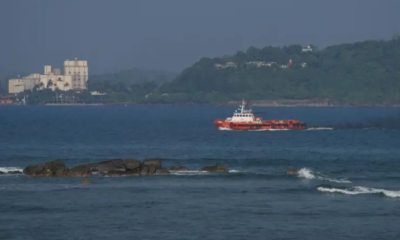
Around 140 people missing after Iranian navy ship sinks off coast of Sri Lanka
-
 Business2 days ago
War in Middle East sends shockwaves through Sri Lanka’s export sector