
Business
Ideal Motors presents Sri Lanka Police two fully-customized Mahindra Mojo motorcycles valued at Rs 2.4 million


Ideal Motors (Pvt) Ltd presented Sri Lanka Police with two fully customized Mahindra Mojo motorcycles valued at Rs 2.4 million recently.
Nalin Welgama, Founder and Chairman of the Ideal Group handed over the two valuable motorcycles to C.D. Wickramaratne, Inspector General of Police at the Police Headquarters during a simple ceremony.
Powered by a 300cc engine, the two Mahindra Mojo motorcycles will be used by the Sri Lanka Police’s Vehicle Division for important occasions while all future service requirements will be undertaken by Ideal First Choice, the multi-brand vehicle care arm of the Ideal Group.
Ideal Motors (Pvt) Ltd is proud of its long-standing cooperation with Sri Lanka Police, who continue to protect and serve all communities. The robust motorcycles were donated to Sri Lanka Police with the aim to continuing this congenial association.
Commenting on this initiative, Nalin Welgama noted, “Ideal Motors and the Sri Lanka Police have been cooperating for a very long time. Sri Lanka Police use a large number of Mahindra Scorpio Jeeps and Mahindra Cabs for their operations. To-date, the Mahindra Ideal and Sri Lanka Police have maintained and enjoyed over a decade of strong business ties. We have provided a large number of Scorpio Jeeps and Cabs to Sri Lanka Police. They are confident and assured that Ideal Motors provides excellent after sales service for these vehicles. To reinforce our commitment and to serve this institution we have donated two fully customized Mahindra Mojo motorcycles.”
He added, “The aim of this donation is to further strengthen our relationship with Sri Lanka Police and we believe this gift will also cement our long-term bond. Additionally, these are two motorcycles are in line with the modern concept of smart mobility and they have been modernized by Ideal Choice to suit our environment and handed over to Sri Lanka Police for their use.”
Moreover, Ideal Motors are committed to fully refurbish 128 Scorpio jeeps which are used by the Police department. In addition, Ideal First Choice have undertaken to fully refurbish 522 motorcycles of various makes which were in need of urgent repairs, currently used by the department.
In keeping with its commitment to serve society, Ideal Motors (Pvt) Ltd recently donated a fully-equipped ambulance to the Madura Vithana Foundation, valued at approximately Rs. Ten million. The vehicle was donated primarily to enable the Foundation to support the vaccination of persons over 60 years of age and the disabled in the Colombo District.






Sri Lanka’s economic growth is expected to moderate to 4.0% in 2026 and climb to 4.2% in 2027, following two consecutive years of strong 5.0% growth.
This forecast is based on an early stabilization scenario for the Middle East conflict, according to the Asian Development Outlook (ADO) April 2026, Asian Development Bank’s (ADB) flagship economic publication. Sri Lanka’s recovery held firm in 2025 despite the late-year disruption of Cyclone Ditwah. Private consumption surged amid low inflation and easing interest rates, while remittances hit a record high, as did the primary budget surplus. The current account posted a third consecutive surplus, and official reserves climbed to their strongest level in years.
The outlook for 2026 is increasingly shaped by the conflict in the Middle East, even as post-Ditwah reconstruction spending provides some support for growth. Private consumption will remain the main growth driver, though higher inflation will temper household spending power, and private investment is expected to recover only gradually amid heightened uncertainty.
Higher energy costs, potentially weaker remittance inflows, and disruptions to trade and tourism will weigh on household incomes and external buffers and drag on economic growth. Inflation is projected to accelerate sharply to 5.2% in 2026, driven largely by the Middle East conflict.
“Sri Lanka has come a long way since the recent economic crisis, and its economic performance over the last two years is a major achievement,” said ADB Country Director for Sri Lanka Shannon Cowlin. “However, the risks ahead are real and significant. This is not the moment to ease up on reforms. Fiscal discipline must be maintained and resilience must be strengthened against the external shocks that will keep testing this economy. At the same time, scaling up and executing public investment will be essential to sustaining the recovery.”
ADB is a leading multilateral development bank supporting sustainable, inclusive, and resilient growth across Asia and the Pacific. Working with its members and partners to solve complex challenges together, ADB harnesses innovative financial tools and strategic partnerships to transform lives, build quality infrastructure, and safeguard our planet. Founded in 1966, ADB is owned by 69 members—50 from the region.(ADB)
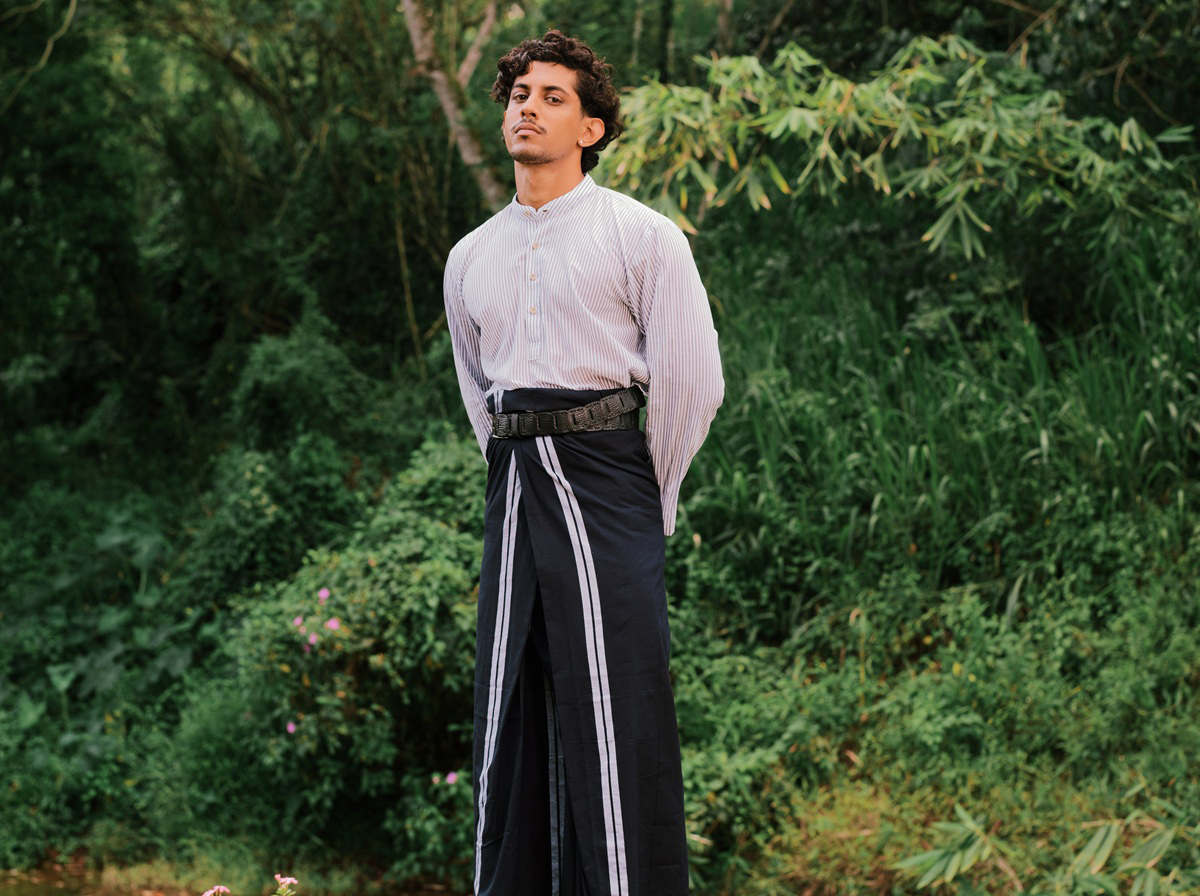
This Avurudu season, Hameedia introduces its latest campaign, “Threads of Culture,” celebrating the traditions that connect generations while embracing a more conscious and forward-thinking approach to fashion.
Rooted in the spirit of Sinhala and Hindu New Year, the campaign highlights the importance of preserving culture while evolving with modern values. This year, Hameedia places a strong emphasis on ethical and sustainable fashion, encouraging customers to move away from fast and imitation fashion towards quality, authenticity, and responsible choices.
As part of this shift, Hameedia presents a refreshed festive collection crafted using lightweight cotton and linen fabrics, designed specifically for Sri Lanka’s climate. The collection focuses on breathability, comfort, and timeless style, offering customers clothing that is both practical and refined for the season.
Commenting on the campaign, Fouzul Hameed, Managing Director of Hameedia, stated, “Avurudu is a time of renewal, reflection, and meaningful connection. With ‘Threads of Culture,’ we wanted to go beyond celebration and inspire a shift in mindset, encouraging Sri Lankans to choose authenticity over imitation, quality over quantity, and responsibility over convenience. As a homegrown brand, we take pride in upholding craftsmanship and ethical practices, and we believe fashion should not only look good but also do good.”
Marking a key milestone in its expansion, Hameedia is also set to open its newest outlet in Galle, further strengthening its presence across the island and making its signature craftsmanship more accessible to customers in the southern region.

The much-anticipated 41st Edition of the Colombo Shopping Festival (CSF) – Avurudu Fair was ceremonially declared open at the BMICH Exhibition Centre, marking the beginning of five exciting days of festive shopping in celebration of the Sinhala and Tamil New Year.
The ceremonial opening commenced with the traditional lighting of the oil lamp on 8th April 2026, in the presence of guests, industry leaders, and invitees. Organized by Aitken Spence Conventions and Exhibitions, the event continues to reinforce its position as one of Sri Lanka’s premier consumer exhibitions.
Running from 8th to 12th April 2026, from 10:00 a.m. to 10:00 p.m. daily, the Colombo Shopping Festival brings together over 200+ Micro, Small, and Medium Enterprises (MSMEs) from across the island, offering a vibrant marketplace that supports local businesses while delivering exceptional value to shoppers.
This year’s Avurudu Fair promises an unmatched retail experience, featuring a wide range of products including fashion, lifestyle, homeware, beauty, and more. Visitors can shop top brands such as Boss, EL Holdings, Vantage, Miniso, Governor Shirts, Edge Casual, Avirate, Cetaphil, Phoenix, Rite Shu and many more top brands, alongside a diverse selection of Indian stalls offering exclusive collections at massive discounts.
The festival creates the perfect opportunity for families and shoppers to prepare for the New Year with unbeatable deals, festive offers, and a lively atmosphere filled with seasonal excitement.
With its strong legacy and continued commitment to empowering local entrepreneurs, the Colombo Shopping Festival stands as a key highlight in Sri Lanka’s event calendar—bringing together commerce, culture, and celebration under one roof.

Sooryavanshi blitz, Jurel 81* help Rajasthan Royals take down Royal Challengers Bengaluru with ease

Sun directly overhead Pomparippu, Anuradhapura, Mihinthale, Galenbindunuwewa, Agbopura and Serunuwara about 12:11 noon today (11)

Showers expected in the Western, Sabaragamuwa, North-western , Southern and Uva provinces and in Anuradhapura, Mannar, Kandy and Nuwara-Eliya districts after 2.00 p.m.

Opposition NCM against Energy Minister defeated

Chinese Ambassador assures Lanka China will not allow a fuel crisis to develop here

Minister Jayatissa blames administrations since 2010 for not following proper procedures when procuring coal

‘Dates have the highest sugar content to fight Coronavirus’

Sunday Island 27 December – Headlines

#SundayIsland 17th December – Headlines

Sunday Island – 28th March

Sunday Island Headlines – 21 March

Sunday Island – 21st February – Headlines
-

 Features7 days ago
Ranjith Siyambalapitiya turns custodian of a rare living collection
-

 News7 days ago
Global ‘Walk for Peace’ to be held in Lanka
-

 News5 days ago
Lankan-origin actress Subashini found dead in India
-

 News3 days ago
AG: Coal procurement full of irregularities
-

 Business2 days ago
Israeli attack on Lebanon triggers local stock market volatility
-

 Features7 days ago
Beyond the Blue Skies: A Tribute to Captain Elmo Jayawardena
-

 Features7 days ago
Aspects of Ceylon/Sri Lanka Foreign Relations – 1948 to 1976
-

 Business3 days ago
Hayleys Mobility introduces Premium OMODA C9 PHEV