
Life style
Human – Elephant Conflict Is Rising in Sri Lanka

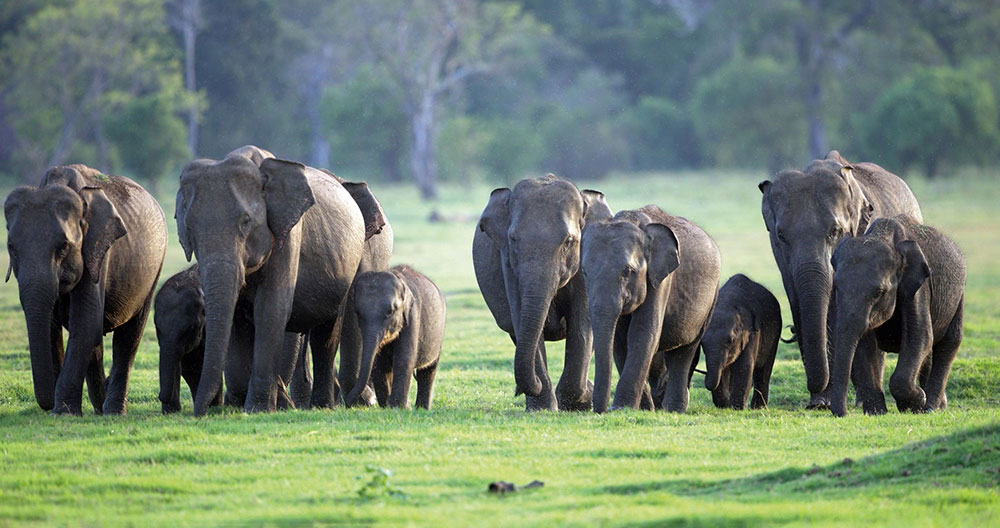
Driven from their original habitats, the animals are raiding crops and being killed by frightened farmers, but conservationists are piloting better ways to coexist
In Makulpotha village, 89 miles northwest of Colombo, Punchibanda woke up to the trumpet of an elephant while he was sleeping in a small wooden hut built on a tree beside his vegetable farm. Fearing that the elephant could destroy his harvest of pumpkins, melons and eggplants, Punchibanda rushed to chase it away. But he could not guard his produce, and instead lost his life.
The large bull elephant charged toward the 62-year-old, who fainted out of fear; the animal crushed him to death. Over a year later, villagers still live in fear as they struggle to protect their crops from wild elephants.
Historically, elephants and humans lived in harmony in Sri Lanka. When the farmers were done harvesting their fields, they would allow elephants to feed on the stubble. But deforestation, haphazard cultivation methods and massive development projects have led to increasing human-elephant conflict in the country. Sri Lanka has the highest number of elephant deaths caused by conflict with humans, and second-highest number of human deaths caused by elephants. In 2022 and 2023, over 800 elephants in Sri Lanka died.
In a bid to balance population density across the country, people have been relocated to areas with a high density of elephants. The animals are forced to live in protected wildlife parks that have limited resources. They venture into nearby villages looking for food and water, which leads to the destruction of crops, causing the farmers to employ violent methods to get rid of them.
In other instances, elephants would get aggressive and attack farmers. If you pluck someone who lives in a town and tell them to live in a village, they would not know how to coexist with the wildlife; they would carry the fear and treat them with aggression, said Zaineb Akbarally, vice president of the Wildlife and Nature Protection Society.
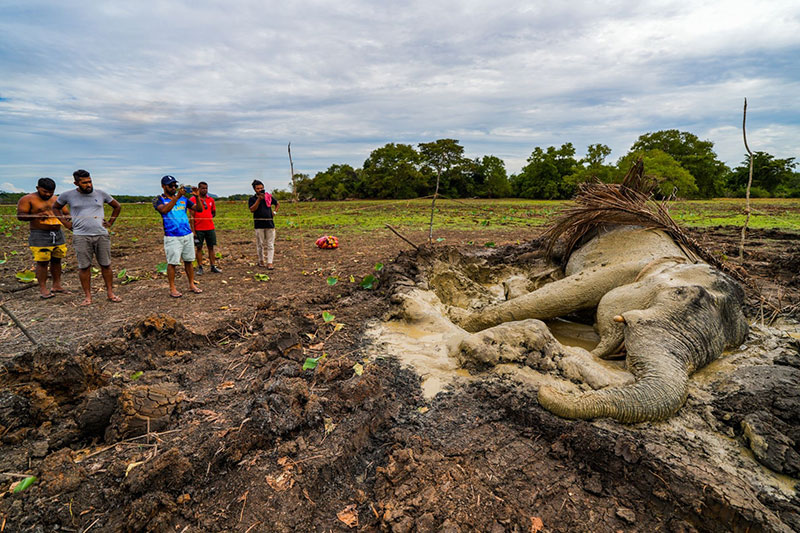
People visit a sick wild elephant in Thirappane, Anuradhapura, Sri Lanka
Sri Lanka is home to a subspecies of endangered Asian elephants and had a population of over 5,000 elephants in 2011, according to a government survey. But Akbarally doesn’t think that s an accurate number since it is difficult to count elephants in the wild, and numbers appear to have been in decline. “We’ve pretty much lost all the elephants in the central highlands,” she said, adding that only one herd remained in the Peak Wilderness nature reserve and two elephants in Sinhraja, the country s last primary rain forest, that had previously belonged to bigger herds.
Elephants have been sacred to both Hindus and Buddhists in Sri Lanka and were considered a symbol of pride to ancient rulers, who employed them in battles. To this day, domesticated elephants play a key role in Esala Perahera, an annual Buddhist cultural and religious procession, where they carry a replica of Buddha s tooth relic (the holiest religious relic for Sri Lankan Buddhists) in a casket, caprisoned in extravagant sequin-embroidered outfits accompanied by fire performers, drummers and dancers in Kandy. However, wildlife activists allege that elephants are tortured by mahouts to perform during the procession.
Elephant populations in Sri Lanka started to fall during colonial rule as the Portuguese, Dutch and then the British captured them for export. Historical records also suggest that the British killed over 5,000 elephants in 15 years as they hunted them for sport. But after independence in 1948, as infrastructure projects started getting built in the country to provide land to the landless and reduce population density, forest cover was cleared and new farmlands were created next to the elephant habitats, which laid the ground for the current conflict.
In response, local authorities started fencing elephants inside protected wildlife parks. But two-thirds of the home ranges of wild elephants, which included their feeding, watering, mating and resting sites, lay outside these parks. This also led to overcrowding, and elephants ventured into villages. Many died of starvation or became malnourished.
Currently, there are 26 national parks in Sri Lanka, and most elephants live in the large ones such as Yala, Wilpattu, Udawalawe and Minneriya. But in a 2019 survey, conservationists found out that while humans lived in 70% of these elephant ranges, only 18.4% of the elephant ranges were in those protected parks.
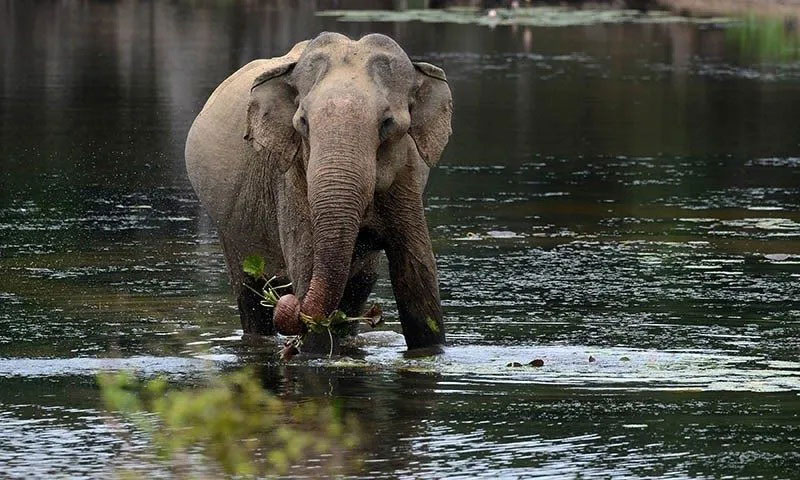
Meanwhile, farmers were growing crops like sugarcane, rice and vegetables that elephants loved to eat, so they would raid and destroy the crops and knock down houses in the process. Farmers, who are often impoverished and vulnerable, tended to retaliate by shooting at them or bursting firecrackers. Between January and April of 2023, 38 elephants were shot dead in Sri Lanka, according to the Department of Wildlife Conservation.
Villagers also use jaw bombs to drive elephants away. To make these, they pack gunpowder and metal scraps with fodder and hide them inside watermelons and pumpkins, which detonate when bitten. While these instantly kill smaller animals, they end up wounding large animals like elephants or shattering their jawbone so they can no longer eat or drink and suffer a slow, painful death with injuries. In 2022, as many as 55 wild elephants died due to this explosive bait.
Christy Nikson, 36, a farmer in Thikkodai village in eastern Sri Lanka, uses a small, low-voltage electric fence to guard his farm, but it offers little to no help now. Elephants are smart. When they see the fence, they cover it with dry wood, step on it, and come to our paddy fields, he said. For six to eight months every year, when water is scarce, Nikson and the villagers have to battle with elephants every single day. Elephants also know the smell of wheat flour. And they love it, Nikson said. When we have flour or roti in our kitchens, they try to enter from our backyards, try to break into our homes, and take the food using their trunks.
It is a very painful situation for low-income rural communities at the heart of this conflict, according to Akbarally. The crops are their bread and butter, it s their livelihood. Suddenly, animals come and destroy your livelihood. We haven’t given people a sense of security either, she said. If there s some sort of compensation when farmers lose their crops, it can at least mitigate the animals being shot and killed.
While the government did introduce an insurance scheme in 2013 to cover elephant damage to crops, farmers complained it was difficult to claim the funds or that the coverage was limited. Pritiviraj Fernando, chairman of the Centre for Conservation and Research, explained that it s challenging to verify crop loss caused by elephants. If a farmer is not happy with the compensation, they can even encourage elephants to come and eat the crops. So these programs are very difficult to implement, he said, adding that the situation leads to distrust between farmers and local authorities.
Sri Lanka s three decades of civil war also had an impact on conflict between humans and elephants. When the war was underway in the northern and eastern regions, it forced people to flee their homes and abandon their farmlands. With limited human activity, wild elephants started venturing into these areas again. However, as many people started resettling in their villages after the war ended in 2009, it worsened conflict with the elephants.
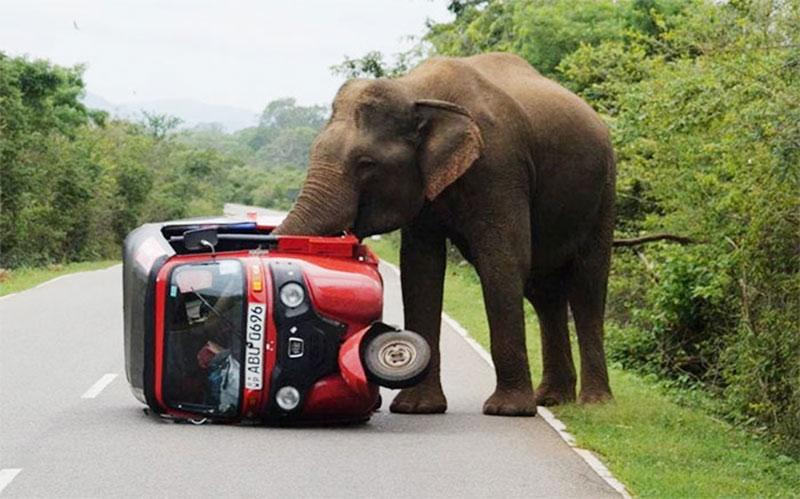
Meanwhile, over the last few decades the government’s response has been a repeat of the past, as they have forced more elephants into smaller pockets of forest cover creating unsustainable conditions. They do this through elephant drives, which involve hundreds of people walking through the forest and chasing elephants away by making different kinds of noises, firing thousands of firecrackers or shooting at the sky. Electric fences are also erected on the boundaries of these protected areas so that elephants cannot return.
Yet often these elephants do end up returning to the villages. For instance, when shrublands were cleared for the Mahaweli Development Project a program that began in the 1960s, covering 39% of the country s area, aiming to develop agricultural land and create hydroelectric power facilities the wildlife department conducted a large elephant drive to move 130 elephants into the Wilpattu National Park, but about 50 of them returned.
Over 100 ended up returning after 150 elephants were driven into the Maduru Oya National Park in 1988. While the authorities haven’t done any major drives since 2006, they conduct smaller ones when people complain. But these kinds of drives only increase the aggressiveness of elephants and subject them to severe stress, said Fernando.
While young calves and adult females live in herds, adult males lead a solitary life. And it s often these bull elephants that raid crops and cause human deaths, injuries and damage to property. Over the years, researchers have found that while elephant drives chase away some of the herds they do not drive away the aggressive, solitary males.
Later on, when the Sri Lankan government realized they could not fence wild elephants, they started building holding grounds to retain and rehabilitate them. But conservationists believe that these grounds do not hold enough food for elephants. Audit reports have also revealed mismanagement of funds allocated for feeding elephants. Out of the 65 elephants that were housed at the first holding ground in Horowpathana National Park, 16 of them died in the first six years due to malnutrition. A few were shot dead while trying to escape the grounds. Irrespective of these concerns, the government is planning to build another holding ground in southern Sri Lanka.
“Almost half of the country is now shared by elephants and humans. So it shows that the attempt to limit elephants to protected areas has completely failed and it s not an option,” said Fernando.
Looking for ways to mitigate the conflict, Fernando and his team have been testing community fencing initiatives across villages in the country. They’ve been experimenting with different kinds of electric fences to be placed around farmland to protect human habitats, as opposed to national parks which limit elephants access to sites of food and water. These fences were removed after cultivation and animals were allowed to pass through the farmlands, which, Fernando said, reduced conflict and safeguarded crops.
But small organizations can only show the way, said Fernando. Initiatives have to be planned and implemented by the government. The government has always announced plans and appointed committees but no action has been taken on the ground. Just last year, Pavithradevi Wanniarachchi, the Minister of Wildlife and Forest Resources Conservation, said that a new policy would be formed to address the conflict, but there has been no follow-up to that statement since then.
“We need to make the right policy and governance decisions,” Akbarally said. “Instead, we are creating more conflict by setting up more and more infrastructure developments, constantly cutting down forests and putting more pressure on these animals. It s not like the elephants come out and decide one day , ‘let s go to war with humans.’”
By Zinara Rathnayake
(New Lines Magazine)


Ramani Fenando’s new Image and Etiquette Academy
In a world where first impressions speak before words, Sri Lanka’s beauty icon Ramani Fernando has taken a bold step beyond the salon chair to shape confidence from within. Her newly launched Etiquette and Image Academy is designed to refine not only appearance, but presence, poise and personal power.
Step into a space where confidence meets sophistication, Ramani Fernando Academy is redefining how Sri Lankans approach personal branding ,offering a unique blend of ettiquette, style and communication mastery.
Her newly launched personal branding and EtiquetteAcademy was unveiled in a simple ceremony at the Galle Face hotel. This marks a bold and timely step into the realm of confidence leadership, presence and modern social grace.
Colombo’s social elite, corporate leaders, fashion insiders and longtime clients gathered in celebration of a vision that seeks to shape not just appearance but cofidence building.
Ramani, in her opening speech, said “our courses are carefully designed to meet with international standards, ensuring participants recieve training that meets both local and global expectations.
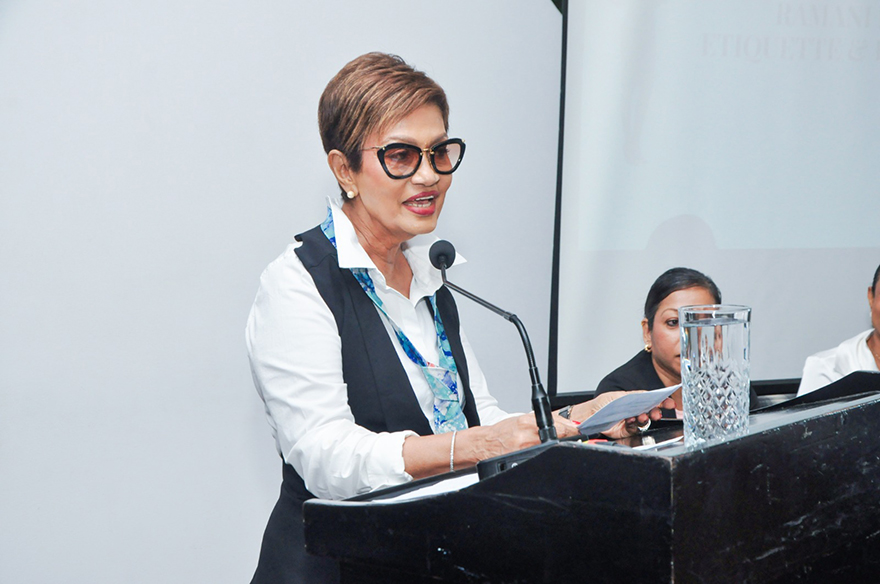
Ramani Fernando – shaping confidence

Professional face of etiquette training
Faith Launders who is the Director of Etiquette and Protocol in the Academy pointed out this personal branding and etiquette programmes will help participants cultivate grace, confidence and refined personal style through expert guidance. A former Miss Sri Lanka beauty queen, with experience in aviation, will contribute a creative and professional lens to the Academy’s curriculam.

Invitees from the world of fashion gathered to celebrate the occasion

Carolyn Jurie

Chalana at the helm of beauty
She brings professionalism, poise and a strong commitment to cultivate confidence and promote refined social skills among students. Known for her approachable style and inspiring presence, she strives to create an inclusive learning space where students can transform into confident individuals to navigate life with dignity and elegance.
For decades, Ramani has been a transformative force in Sri Lanka’s beauty industry.
and now this venture signals a natural evolution from external refinement to the art of personal distinction.
The programme blends traditional etiquette with contemporary relevance, offering personal branding and professional image building both in social and corporate etiquette. These are some of the programmes:
= Communication skills and body language, grooming, style and wardrobe alignment.
= Digital image and social media conduct.
= Platforms or in social events the ability to command attention with confidence has to become an important tool.
In today’s hyper connected world, impressions are formed in seconds often long before a handshake, whether in boardrooms, diplomatic circles or in the media.
The teaching staff consists of industry experts trainers amd adminitrators led by othe senior professionals
The Managing Director, Lakmini Lenagala, Training and Administrative Manager, Ramono, Navaratnarajah, Personal Assistant, Merisha Aserappa and Chalana Munasinghe are all industry professionals who have experience, theoretical knowledge and practical skills.
They are experienced instructors with hands on expertise in grooming, etiquette, image building and communication.
While the vision of the Personal Branding and Etiquette Academy belongs to Ramani Fernando, its strength lies in the collective expertise of the professionals who bring the programmes to life.
By bringing together specialists from diverse fields, the Academy offers participants a rare opportunity to refine every dimension of their public and private persona under one roof.
Sessions cover skin care, hair, make up, wardrobe planning and colour coordination.
Communication and public speaking recognising that presence is also conveyed though voice and expression, the Academy offers training in articulation tones, posture and body language.
The training also includes table manners, event conduct, professional courtesy and cross cultural awareness. This Etiquette Academy us designed for both women and men offering guidance on grooming, communication, professional conduct and social confidence.
The Academy acts as a transformative space – one that equips individuals not merely to succeed but to stand out with authencity and grace. The institution reflects Ramani Fernando’s belief that true elegance is a way of being not simply a way of dressing!.
By Zanita Careem
Pix by Thushara Athapatu
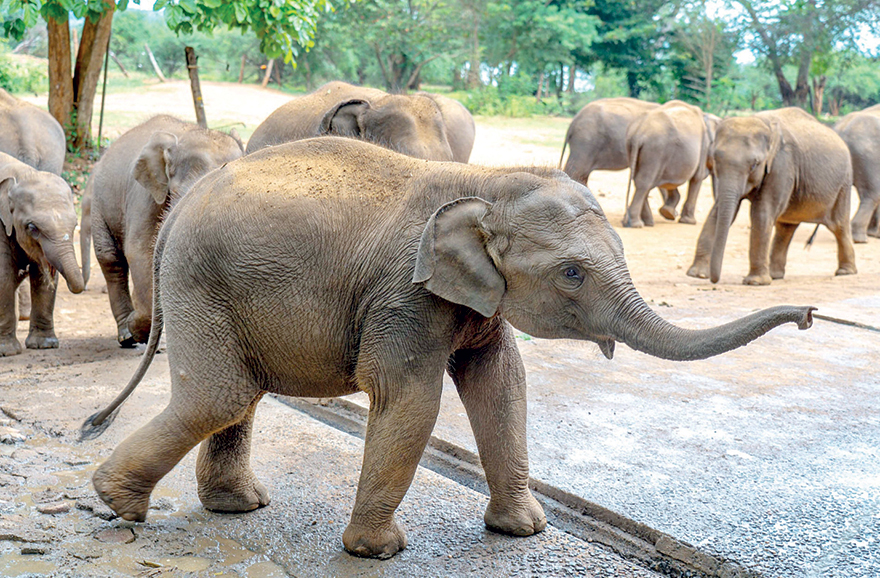
World Wildlife Day 2026:
He arrived at the Elephant Transit Home in Udawalawe on March 23, 2024, barely eight months old. Kalo had spent an unknown number of days trapped at the bottom of an abandoned well near Galenbidunuwewa in Sri Lanka’s Anuradhapura District, separated from the herd he had lost. When wildlife officers from the Department of Wildlife Conservation pulled him out, they found a frightened calf, but also something else: resilience.
Today, nearly two years after his rescue, Kalo is no longer the fragile elephant calf who arrived at the Transit Home alone. He is growing steadily, eating well, and has fully integrated into a group of calves preparing for eventual release. His progress is measured not only in size, but in behaviour like social bonding, herd interaction, and independent foraging skills that will determine his readiness for life beyond human protection. Since his arrival, Kalo has grown from 125 kilograms to over 300 kilograms. The wounds he sustained before rescue have fully healed, and he is no longer on any specific medical treatment instead routine management only. He is, by every measure, active, playful, and thriving.
The Elephant Transit Home, also known as Ath Athuru Sevana, has operated within Udawalawe National Park since 1995. It is not an orphanage in the traditional sense. There are no rides, no performances, no human dependency. Human contact is limited strictly to feeding and veterinary care. The rest of the time, the calves are left to bond with one another.
That philosophy is intentional. Elephants are deeply social animals, and calves that grow too attached to humans struggle to survive in the wild. The daily play, the hierarchy, and the formation of peer bonds are all part of a structured rehabilitation process designed to prepare them for rewilding.
Since its establishment, more than 200 orphaned elephants have passed through the Elephant Transit Home. Over 100 have been successfully released back into the wild. In July 2025 alone, six young elephants were returned to Udawalawe National Park during the facility’s 26th release. If all continues as planned, Kalo will follow that path in 2029.
On May 8, 2024, less than two months after Kalo’s rescue, Sun Siyam Pasikudah formalised its long-term commitment to his care through the CarePhant initiative under Sun Siyam Care. The resort pledged ongoing monthly contributions to support Kalo’s nutrition, veterinary care, and daily rehabilitation needs through to his planned release.
Sun Siyam Care is the group’s overarching sustainability programme that integrates environmental stewardship, biodiversity conservation, community engagement, and long-term socio-economic value creation across all Sun Siyam Resorts in the Maldives and Sri Lanka. Through Sun Siyam Care, we invest in initiatives that protect marine and terrestrial ecosystems, reduce waste and single-use plastics, improve resource efficiency, support renewable energy and local sourcing, and promote awareness and participation among guests and communities alike. Kalo’s journey from rescue to rewilding is one example of how Sun Siyam Care extends beyond hospitality, connecting responsible tourism with meaningful environmental and wildlife conservation impact.
“We are delighted to embark on the CarePhant project and become stewards of Kalo’s well-being. Sri Lanka’s elephants are not just a conservation issue; they are part of the living identity of this island, and we feel a genuine responsibility to play our part in protecting them,” said Arshed Refai, General Manager, Sun Siyam Pasikudah.
For Chaminda Upul Kumara, Sustainability Project Manager at Sun Siyam Resorts, the commitment reflects the deeper purpose of Sun Siyam Care. “Conservation is not a single moment. It is a process that requires patience and consistency. With Kalo, we committed to being part of that journey from rescue to release. Every month of support is an investment in his return to the wild,” said Upul.
In the month that marks World Wildlife Day, observed on 03rd March, Kalo’s story serves as a reminder that conservation is not abstract. It is individual. It is long term. And it depends on partnerships between public institutions and responsible private sector actors. In a landscape where habitat loss and human–elephant conflict continue to threaten Sri Lanka’s wild elephant population, sustained commitments like CarePhant demonstrate how responsible tourism can contribute to tangible, measurable conservation outcomes.
Sun Siyam Pasikudah, which holds Travelife Gold Certification and operates under the broader Sun Siyam Care sustainability framework, integrates conservation, local sourcing, and community engagement into its daily operations. The CarePhant project builds on that foundation by linking responsible hospitality directly to wildlife protection.
Three years from now, in 2029, Kalo is expected to walk beyond the protective boundaries of the Elephant Transit Home and into Udawalawe National Park as a young wild elephant. Every veterinary check, every month of nutritional support, and every bond formed within his herd brings him closer to that moment.
“When Kalo walks back into the forest in 2029, it will mark the completion of a journey that began in crisis but was sustained through commitment,” added Arshed Refai. “We are proud that Sun Siyam Care is part of that long-term promise.”
Until then, Kalo continues doing what young elephants at Ath Athuru Sevana are meant to do: growing, learning, and preparing quietly for a life in the wild.

The High Commission of the Islamic Republic of Pakistan and the Pakistani community based in Sri Lanka celebrated the 86th National Day of Pakistan with traditional flavour and resolve to make Pakistan a strong, vibrant and progressive democratic welfare state.
The day commemorates a defining moment that led the foundation for the creation of Pakistan.
The ceremony commenced with the raising of their national flag, fluttering proudly against the morning sky, symbolising faith, unity and discipline, the ideals upon which the nation was built. Dignitaries, members of the diplomatic corps, community leaders and guests gathered in silence as the national anthem resonated creating an atmosphere charged with emotion and national pride .
Cultural elegance added a distinctive charm to the occasion, with traditional attire and warm exchanges reflecting the rich heritage of Pakistan. Guests were later invited to partake in light refreshments, providing an opportunity for cordial interacton and celebration.
Acting High Commissioner of Pakistan, Zunaira Latif unfurled the Pakistani flag to the tune of Pakistan’s national anthem in a ceremony held at the Pakistan High Commission
The National Day of Pakistan is celebrated on 23rd March every year in remembrance of the historic 1940 resolution passed in Lahore, calling for a separate homeland for Muslims of the subcontinent that ultimately led to the creation of Pakistan on August 14, 1947.
Special messages by the President and the Prime Minister of Pakistan were readout, in which both the leaders highlighted the importance of the day and paid tributes to Quaid-e-Azam Muhammad Ali Jinnah.
The Acting High Commissioner of Pakistan in her message on the occasion said that Pakistan and Sri Lanka continue to maintain their traditionally close and mutually beneficial relations, based on mutual respect and trust. She said that the strength of the Pakistan – Sri Lanka relationship lies in diversified engagement in many fields such as trade, defence, science, culture, and education. She also extended sincere greetings and best wishes on behalf of the government and people of Pakistan to the government and people of Sri Lanka.
-

 Features4 days ago
A World Order in Crisis: War, Power, and Resistance
-

 News5 days ago
Energy Minister indicted on corruption charges ahead of no-faith motion against him
-

 News6 days ago
US dodges question on AKD’s claim SL denied permission for military aircraft to land
-

 Business6 days ago
Dialog Unveils Dialog Play Mini with Netflix and Apple TV
-

 Sports5 days ago
SLC to hold EGM in April
-

 Latest News6 days ago
A strong Technical and Vocational Education and Training (TVET) system equips individuals with practical, relevant, and future-oriented skills helping to innovate responsibly towards a greener and sustainable future – PM
-

 Opinion5 days ago
When elephants fight, it is the grass that suffers
-

 Features5 days ago
Lest we forget