
Business
Hemas Holdings delivers stable FY25 Q1 performance amidst market challenges


Hemas Holdings PLC announced its financial results for the first quarter ended June 30, 2024, demonstrating resilience in a challenging economic environment.The Group’s consolidated revenue was Rs. 25.5 billion alongside operating profits of Rs. 1.9 billion and earnings of Rs. 0.9 billion. The revenue decrease compared to the previous year was largely due to downward price adjustments and subdued consumer spending, exacerbated by extended holidays in the first two months of the quarter. Despite the revenue dip, the Group’s profitability margins benefited from efficiency improvement initiatives and reduced finance costs.
The Consumer Brands sector reported revenue of Rs. 8.9 billion, with operating profits of Rs. 0.8 billion and earnings of Rs. 0.6 billion. Despite lower revenue, margins improved due to supply chain efficiencies and productivity initiatives.
The quarter saw a successful emphasis on personal care, with notable market presence in Baby and Feminine Hygiene segments. Innovations included the launch of Baby Cheramy Liquid Soap and new variants of Goya Soap. ‘Atlas’ maintained its market leadership, expanding its share in both the premium and value-for-money segments. ‘Kumarika’ increased its market share in the VAHO market, driven by new value-for-money and pure coconut oil products, while ‘Actisef’ continued to be an essential part of the portfolio.
The Healthcare Sector performance delivered revenue of Rs. 16.0 billion, with operating profit of Rs. 1.3 billion and earnings of Rs. 0.8 billion. Profitability increased due to overhead optimization, improved working capital management, and lower interest rates.
In addition, the sector sustained its market-leading position despite market contraction and regulatory price reductions. Focused efforts on cost optimization, efficiency improvements, and effective working capital management enhanced profitability. The Healthcare segment also witnessed increased inpatient and outpatient volumes due to more surgeries and medical screenings.
The Mobility Sector’s revenue grew 14% to Rs. 475.9 million, driven by maritime volume growth. Operating profit and earnings both more than doubled, reaching Rs. 455.3 million and Rs. 269.7 million respectively.
The segment’s performance improved with higher freight rates and volume growth, while the Aviation vertical benefited from improved yield and higher cargo volumes, despite intense competition affecting the passenger segment.
Hemas continued its commitment to the environmental, social and governance agenda, focusing on plastic waste offset, water usage reduction, and increased renewable energy use. Partnerships, such as with Eco Spindles, have been pivotal, with over 720,000 kg of plastic collected to date. The Group’s social initiatives positively impacted over 56,800 families, including professional training for educators and the opening of the 66th Piyawara preschool, supporting underserved communities.
Looking ahead, Hemas is committed to expanding its footprint domestically and globally, executing strategic priorities from its Long-Range Plan, and maintaining strong liquidity and efficient resource allocation. The Group continues to drive operational transformation across all business segments, aiming for sustained growth amidst ongoing market challenges.


As the curtain prepares to fall on Sri Lanka’s tea trading year, the penultimate auction of 2025 has painted a picture of a market grappling with headwinds. The sale, catalogued in the aftermath of the disruptive Cyclone Ditwah, presented 6.0 million kilograms to the trade, but was met with a predominantly bearish sentiment, casting a reflective shadow over the year’s closing.
The High and Medium Grown offerings, particularly from the Ex-Estate sector, set a cautious tone. With overall quality described as barely maintained, prices faced downward pressure. The better liquoring Western BOP/BOPF varieties, often a market bellwether, declined by up to Rs. 50 per kg. This easing trend rippled through the Below Best and Plainer categories, which were often cheaper by Rs. 20-40 per kg. Regional nuances were evident: Nuwara Eliya teas remained sluggish, Uda Pussellawa listings weakened, and Uva varieties were mostly steady only where quality was exceptionally upheld, with others declining. The CTC segment mirrored this fragility, with PF1s generally easier by Rs. 20 per kg, while the very bottom end of the market faced severe challenges, becoming at times unsellable.
This internal market dynamic was compounded by a notable sluggishness in global demand. The report notes a concerning inactivity from traditional buyers in the UK and the European continent. While shippers to Japan, China, the CIS, and the Middle East continued to operate, they did so at lower levels of engagement. Activity from South Africa was described as virtually absent, underscoring a broader pattern of restrained international participation.
In stark contrast to this overarching bearishness, the Low Growns sector emerged as a relative bastion of stability. With approximately 2.45 million kilograms on offer, this category witnessed fair demand across the board. In the Leafy and Semi-Leafy catalogues, Select Best and Best BOP1s held firm, with others even appreciating. Well-made OP1s also generally maintained their ground, though poorer teas at the bottom saw substantial declines. The Tippy and Premium catalogues told a similar story of selectivity, where well-made FBOPs, Very Tippy teas, and the best varieties either held firm or appreciated, while poorer descriptions faced irregular and easier conditions.
The tale of this penultimate sale, therefore, is one of a stark dichotomy. The market narrative bifurcates into a struggling, quality-sensitive mainstream estate sector weighed down by climatic after-effects and muted Western demand, and a more resilient Low Growns market where quality continues to find its price. This divergence highlights the increasingly selective nature of the global tea trade.
As the industry looks toward the final sale and the year’s reckoning, the events of this penultimate auction offer sobering reflection. The impact of Cyclone Ditwah, both real and psychological, coupled with the cautious stance of key international buyers, has applied palpable pressure. Yet, the enduring firmness for the best Low Grown teas provides a counter-note of confidence, suggesting that in an uncertain global environment, uncompromising quality and specific origin characteristics remain Sri Lanka’s most reliable assets. The challenge heading into the new year will be navigating this two-tiered reality.
By Sanath Nanayakkare ✍️

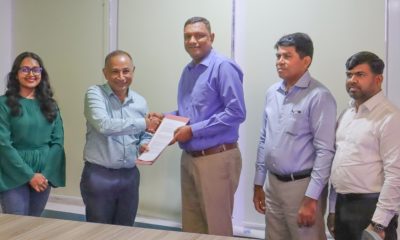
First Capital Holdings PLC, a subsidiary of JXG (Janashakthi Group) and Sri Lanka’s pioneering full-service investment institution, announced the signing of a Memorandum of Understanding (MoU) with the Wildlife and Nature Protection Society (WNPS) through its PLANT initiative (Preserving Land and Nature (Guarantee) Limited) to support a large-scale forest restoration initiative in the central highlands of Sri Lanka.
First Capital’s sustainability journey is anchored in the belief that long-term success stems from empowering people through financial literacy and responsible social and environmental practices. At the heart of our agenda is a commitment to advancing financial stability, enabling individuals and communities to make informed financial decisions, build economic strength and contribute meaningfully to national development.
This core focus is complemented by initiatives in community engagement, climate action, and environmental protection, ensuring a balanced approach to sustainable growth. Aligned with SLFRS S2 and global best practices, we champion programmes that promote inclusive progress, sustainable development and long-term wellbeing across Sri Lanka. By embedding financial literacy and sustainability into our core strategies, we aspire to create a financially empowered and environmentally conscious nation.

The Cabinet of Ministers has approved the proposal presented by Transport, Highways and Urban Development Minister Anura Karunathilake on the recommendation of the Cabinet appointed standing procurement committee to award Access Engineering PLC the contract to build 615 housing units at Colombage Mawatha, Kirulapone, which had been stalled.
On 30 December 2024, the Cabinet of Ministers approved following the relevant procurement process to select a contractor for the design and construction of the remaining works of the project.
“Accordingly, the Urban Development Authority (UDA) has invited bids and four bids have been received,” Cabinet Spokesman and Minister Dr. Nalinda Jayatissa said at the weekly post-Cabinet meeting media briefing yesterday.
He said the Cabinet of Ministers approved awarding the relevant contract to Access Engineering PLC based on the recommendations submitted by the High Level Standing Procurement Committee regarding these bids.

Australia seize handy lead after Josh Tongue five-for on 20-wicket day

Showers may occur in the Northern, Eastern and Uva provinces and in Polonnaruwa, Matale and Nuwara-Eliya districts

Lankan aircrew fly daring UN Medevac in hostile conditions in Africa

Lanka to observe National Safety Day today

Street vendors banned from Kandy City

Police fully armed with breathalyser test kits during season of cheer

‘Dates have the highest sugar content to fight Coronavirus’

Sunday Island 27 December – Headlines

#SundayIsland 17th December – Headlines

Sunday Island – 28th March

Sunday Island Headlines – 21 March

Sunday Island – 21st February – Headlines
-

 News4 days ago
Members of Lankan Community in Washington D.C. donates to ‘Rebuilding Sri Lanka’ Flood Relief Fund
-

 Latest News7 days ago
Landslide early warnings issued to the districts of Badulla, Kandy, Kurunegala, Matale and Nuwara-Eliya extended till 8AM on Sunday (21)
-

 News5 days ago
Air quality deteriorating in Sri Lanka
-

 Business6 days ago
Browns Investments sells luxury Maldivian resort for USD 57.5 mn.
-

 News2 days ago
British MP calls on Foreign Secretary to expand sanction package against ‘Sri Lankan war criminals’
-

 Editorial7 days ago
Cops as whipping boys?
-
 Features6 days ago
Hatton Plantations and WNPS PLANT Launch 24 km Riparian Forest Corridor
-

 News5 days ago
Cardinal urges govt. not to weaken key socio-cultural institutions