
Editorial
Headless Audit Office


Tuesday 20th January, 2026
The National Audit Office (NAO) has remained headless since last month. It was under an Acting Auditor General for about nine months from April 2025. The longstanding vacancy at the highest level of the supreme audit institution in the country and deplorable attempts being made to appoint a crony of the ruling party as Auditor General (AG) will severely erode the confidence of investors and donors. The post-Ditwah rebuilding programme requires donor assistance, which is not likely to be forthcoming if the NAO remains without a head. This situation would not have come about if President Anura Kumara Dissanayake had nominated a senior official in the NAO for the post of AG. Instead, he nominated less qualified outsiders and the Constitutional Council (CC) rightly refused to approve those nominations.
The Opposition has argued that the government is desperate to appoint one of its loyalists as AG due to the sheer number of questionable deals on its watch, some of the high-profile ones being the green-channelling of 323 red-flagged freight containers in January 2025, the coal scandal, the Ondansetron or pharmaceutical procurement scam, questionable rice imports and controversial pickup truck deal. They have the potential to bring down what has been touted as the central pillar of the NPP government—the much-advertised anti-corruption campaign
At the time of going to press, pressure was mounting on the government to reveal a foreign laboratory report on substandard coal stocks procured for power generation. The Energy Ministry has refused to accept the results of tests conducted by a state-owned laboratory, which found the coal stocks substandard. Coal samples were then sent to a laboratory in India for testing, and the Frontline Socialist Party has said the test results have been submitted to the government, but it is keeping them under wraps as part of a grand cover-up.
SJB MP Dr. Harsha de Silva, who has evinced a genuine interest in resolving the NAO issue, has gone on record as saying that President Dissanayake sought his assistance to put the matter to rest, but the Speaker prevented him from communicating with the CC members. It was a case of the President proposing and the Speaker disposing, as we said in a recent headline.
The current CC has lived up to the expectations of the campaigners for good governance mainly thanks to its intrepid civil society members, who have become an effective counter-balance. The government is allegedly biding time until the reconstitution of the CC and the exit of the civil society members who have frustrated its efforts to appoint one of its cronies as AG. Speculation is rife that the JVP/NPP will do everything in its power to make the CC a mere rubber stamp for the President.
The AG must be free from executive control to ensure unbiased scrutiny of government accounts. He or she is required to perform multiple tasks impartially to strengthen good governance, some of them being ensuring financial accuracy, preventing misuse, evaluating performance, reporting to Parliament, reinforcing accountability, and supporting governance reforms. If the President succeeds in parachuting an outsider with NPP links into the post of AG, over the eligible candidates in the NAO, that person will naturally be beholden to the government, compromising the integrity of the vital institution. Such an appointment, tainted with politics, will run counter to the letter and spirit of the 21st Amendment to the Constitution, which was introduced to reinforce independent institutions, restore mechanisms for transparent appointments, and uphold good governance.
The Police Department has become a malleable tool for the ruling party. The Executive’s pressure tactics have compromised the autonomous decision-making powers of the Attorney General to a considerable extent. Only the judiciary is still held in high esteem as most of its decisions have so far embodied certain core hallmarks that uphold fairness, legitimacy and public trust. One can only hope that it will continue to safeguard its independence vis-à-vis the hostility of meddlesome politicians. It may be recalled that the previous government sought to summon some Supreme Court (SC) judges before the parliamentary Committee on Ethics and Privileges over an interim order that cleared obstacles to conducting elections. The order was given by a three-member SC bench, comprising Justice Preethi Padman Surasena, (who became Chief Justice), Justice Janak de Silva and Justice Priyantha Fernando, allowing the consideration of a fundamental rights petition filed by the SJB. Fortunately, sanity prevailed and the SLPP-UNP administration walked back its decision.
The laudable objectives that the 21st Amendment to the Constitution was expected to help achieve remain unattainable. The NPP Manifesto, A Thriving Nation: A Beautiful Life, pledges to “Improve public finance efficiency, transparency, governance and accountability, and eliminate unnecessary public expenditure” (p. 57). It also promises “merit-based appointments and promotions” (p. 110). How can a government ensure public finance efficiency, etc., without an AG independent of the Executive and free from any conflict of interest or quid pro quo? It is imperative that the most suitable official in the NAO be appointed as Auditor General urgently.

Wednesday 11th February, 2026
Today’s front-page photo in this newspaper shows former President Mahinda Rajapaksa and Foreign Minister and JVP stalwart Vijitha Herath in conversation at a Chinese New Year reception in Colombo on Monday. This picture speaks volumes. Its significance and irony may not have escaped astute political observers familiar with Sri Lanka’s political marriages of convenience during the past several decades.
The JVP made a public show of its antipathy towards the Rajapaksas to win elections in 2024. It vowed to throw them behind bars immediately after forming a government. Some Opposition bigwigs have claimed that it was to settle political scores with Mahinda that the JVP-led NPP government made former Presidents leave their official residences. The JVP leaders continue to inveigh against Mahinda and other members of the Rajapaksa family, much to the glee of their cadres. They pretend that they have had nothing to do with the former ruling family. But the truth is otherwise.
The aforesaid photo may remind political observers of the pivotal role played by Herath and other JVP seniors, including Anura Kumara Dissanayake, in enabling Mahinda to achieve his presidential dream in 2005. The SLFP, which fielded Mahinda as its presidential candidate, did not throw its weight behind him in the presidential race; in fact, the then President Chandrika Kumaratunga did her best to queer the pitch for him, without success. The JVP campaigned extremely hard for him and ensured his victory.
The present-day JVP leaders are seen in some videos of Mahinda’s 2005 presidential election campaign, waving the Mahinda Chinthanaya policy framework at campaign rallies and portraying it as a silver bullet capable of helping Sri Lanka solve all its problems and achieve progress. Herath was among the key speakers at Mahinda’s election rallies. Perhaps, it would have been the end of the road for the Rajapaksas in national politics had Mahinda lost the 2005 presidential election. Thus, it may be seen that the blame for what the JVP accuses Mahinda, his family members and his cronies of having done since 2005 should be apportioned to the JVP leaders who made his elevation to the presidency possible.
The JVP fell out with President Rajapaksa as he did not fulfil some of his key promises, especially his pledge to abolish the executive presidency. It joined forces with the UNP, etc., thereafter and strove to defeat Mahinda in the 2010 presidential election, but in vain. However, it realised that goal by helping Maithripala Sirisena, who promised to scrap the executive presidency, win the 2015 presidential election. He reneged on his pledge.
Ironically, the Rajapaksas created conditions for the JVP’s meteoric rise to power, albeit unwittingly. After their return to power, they indulged in corruption, suppressed the rule of law, and, above all, bankrupted the economy in 2022, when the JVP had only three MPs and its national vote share had shrunk to a meagre 3%. The JVP effectively harnessed public anger over economic hardships to regain lost ground and win elections. It also promised to do away with the executive presidency. This pledge appears on page 109 of the NPP’s policy programme, A Thriving Nation: A Beautiful Life.
Today, the JVP is in a position to do what it pressured Mahinda and Sirisena to do in 2005 and 2015 respectively—abolishing the executive presidency. The NPP government led by the JVP has a two-thirds majority, and the Opposition is also demanding that the executive presidency be scrapped forthwith. So, the question is why the JVP is dragging its feet on its pledge to do so.
Tuesday 10th February, 2026
The Opposition has accused the government of seeking to exploit the impact of Cyclone Ditwah to postpone the much-delayed Provincial Council (PC) elections. It has challenged the JVP-led NPP to hold the PC polls immediately. Pivithuru Hela Urumaya leader and former minister Udaya Gammanpila told the media yesterday that the government was all out to avoid an electoral contest on some pretext or another because its vote share had dropped drastically, according to a recent survey.
The government’s approval rating must be decreasing. Otherwise, it would have amended the PC Elections Act promptly and held the PC polls under the Proportional Representation system. However, this does not mean that the Opposition is ready for an election and in a position to turn the tables on the government. Both the government and the Opposition are afraid of facing an election any time soon.
It amounts to a blatant subversion of democracy for a government to meddle with the country’s election calendar. Elections must not be advanced or postponed to suit anyone’s political agenda. Ideally, there should be midterms, which help gauge public perception of the performance of a government. The PC polls are expected to act as a referendum on the incumbent administration’s performance.
It is only wishful thinking that a government can win elections by postponing them. A poll postponement is counterproductive in that it causes public anger to well up and find expression in massive protest votes resulting in electoral anomalies, such as the return of corrupt politicians to power or huge majorities for untested political entities. One may recall that in 1977, the SLFP-led United Front government suffered a crushing defeat after postponing a general election. The UNP won an unprecedented five-sixths majority in Parliament. The SLFP could not make a comeback for 17 long years. The second term of President Jayewardene, who retained the UNP’s steamroller majority by replacing a general election due in 1982 with a heavily rigged referendum, became a disaster. The UNP-led Yahapalana government also postponed the Provincial Council elections in 2017, unable to face them, but lost the 2018 local government (LG) polls and collapsed the following year. President Gotabaya Rajapaksa also blundered by postponing the LG polls in 2022. If he had mustered the courage to hold them, the SLPP would have lost, but the people would have canalised their pent-up anger in the form of a protest vote, and the SLPP government would have been able to make a course correction. President Ranil Wickremesinghe made the same mistake the following year. Neither the SLPP nor the UNP could avoid electoral disasters by postponing the LG polls.
The NPP government finds itself in a dilemma. It has suffered a string of defeats in cooperative society elections, which the main political parties have turned into shows of strength. The LG election results did not meet the NPP’s expectations, which were extremely high. It emerged the winner, but failed to arrest a drop in its vote share and bag a considerable number of hung councils where it secured pluralities. There has been an erosion of its support base, with some powerful state sector trade unions turning against the government. The NPP would not have been in this predicament if it had held the PC polls early last year, when its popularity was high, and the Opposition was in total disarray. Its strategists should be blamed for missing that opportunity.
The government cannot go on postponing the PC polls indefinitely. It has to grasp the nettle. It is lucky that its political rivals are equally wary of facing an election, and have therefore stopped short of cranking up pressure on it to hold the PC elections. Their campaign against the postponement of the PC election is all sizzle and no steak, a wag says.


Monday 9th February, 2026
Politicians cannot bring themselves to let go of power after savouring it and do everything possible to retain their hold thereon. This may explain why excessive powers vested in the executive presidency, draconian laws such as the Prevention of Terrorism Act (PTA), and the misuse of Emergency regulations have survived successive governments led by self-righteous leaders who promised to protect democracy during election campaigns. Only President J. R. Jayewardene (JRJ) made no bones about his dictatorial intentions.
The incumbent dispensation has failed to be different from the previous governments which misused emergency regulations to further their political interests. On Friday (06), Parliament voted to extend a state of emergency, declared by President Anura Kumara Dissanayake in the aftermath of Cyclone Ditwah about two months ago. The Opposition let out a howl of protest, claiming that the JVP-NPP government kept on extending a state of emergency with an ulterior motive—suppressing democratic dissent.
On Friday, the government frontbenchers took great pains to have the public believe that the Opposition was seeing ‘more devils than vast hell can hold’ when it claimed the extension of the state of emergency was aimed at suppressing democracy. However, the Opposition’s arguments were tenable. Arguing that there was no need for emergency regulations for the ongoing relief and rebuilding programmes to be carried out, Opposition Leader Sajith Premadasa said that instead of extending the state of emergency, the government should amend the Disaster Management Act and create a new Ministry for Disaster Management. This is a cogent argument. The government’s disaster preparedness left much to be desired in November 2025. Sri Lanka is among the countries badly affected by the extreme weather events related to climate change, and the government must urgently set up a separate ministry for disaster management and give the existing disaster management laws stronger teeth.
Ironically, most of those who are berating the current administration for misusing emergency regulations had no qualms about doing so while in power. Only a snake will know the tracks of another snake, as a local saying goes. So, one should take serious note of what ‘snakes’ say about each other when they clash on the Diyawanna lakeshore.
There is no way the government can justify its decision to overuse emergency regulations by claiming that the call for declaring a state of emergency came from the Opposition in the immediate aftermath of Cyclone Ditwah.
President Dissanayake has declared that there will be no pay hikes until 2027, regardless of what trade unions may do to pressure his government. The emergency regulations which can be used to suppress workers’ right to strike should be viewed against President Dissanayake’s aforesaid statement which, in our book, is a warning. The government has resorted to brinkmanship in dealing with protesting doctors who have threatened to intensify their ongoing trade union action. Pro-government groups are astroturfing as ordinary citizens and calling for tough action to force the state sector trade unions into submission. Deputy Minister of Public Security Sunil Watagala has asked the police to use emergency regulations to deal with those who carry out what he describes as personal attacks on the President and the ministers. The Human Rights Commission of Sri Lanka has reportedly expressed serious concern over growing threats to freedom of expression in the country, particularly the targeting of journalists through police investigations into instances of alleged defamation.
Meanwhile, arrests are still made under the PTA, which the JVP-led NPP, in the run-up to the 2024 elections, pledged to abolish. It promised “the abolition of all oppressive acts including the Prevention of Terrorism Act and ensuring civil rights of people in all parts of the country”(NPP Policy Framework, A Thriving Nation: A beautiful Life, p. 129). Time was when Dissanayake, as an Opposition MP, waxed eloquent in Parliament, condemning governments for overusing emergency regulations.
All Executive Presidents, except D. B. Wijetunga, have been affected by what may be described as the JRJ syndrome, which drives the wielders of the presidency to arrogate to themselves the powers of vital state institutions and subjugate everything to the interests of their political parties. No surprise that President Dissanayake now has emergency regulations extended on some pretext or another. Besides, he travels by helicopter, and two choppers are deployed in tandem for his journeys even though he once condemned his predecessors for that practice, sarcastically asking whether a President could jump from one helicopter to another in midair in case of an emergency. This kind of behaviour exemplifies the popular local saying: “A water monitor (kabaragoya) becomes a land monitor (thalagoya) when one wants to eat it.”

Ten new buses with facilities for people with special needs

Ghosts of 2016 writ large as England, West Indies meet again
Amendment to the regulations for registration of Subscriber SIM Cards (Subscriber Identity Modules- SIM) and reregistration of subscriber information related to the SIM cards obtained before 02-08-2019

Undermanned Australia get campaign going against dangerous Ireland

Afghanistan face mighty South Africa with campaign on the line

Pilot praised after crash-landing faulty Somali passenger plane on seashore

‘Dates have the highest sugar content to fight Coronavirus’

Sunday Island 27 December – Headlines

#SundayIsland 17th December – Headlines

Sunday Island – 28th March

Sunday Island Headlines – 21 March

Sunday Island – 21st February – Headlines
-
 Features3 days ago
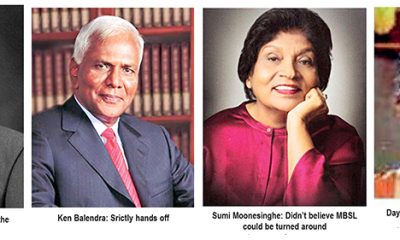
My experience in turning around the Merchant Bank of Sri Lanka (MBSL) – Episode 3
-

 Business4 days ago
Zone24x7 enters 2026 with strong momentum, reinforcing its role as an enterprise AI and automation partner
-

 Business3 days ago
Remotely conducted Business Forum in Paris attracts reputed French companies
-

 Business3 days ago
Four runs, a thousand dreams: How a small-town school bowled its way into the record books
-

 Business3 days ago
ComBank and Hayleys Mobility redefine sustainable mobility with flexible leasing solutions
-

 Business4 days ago
HNB recognized among Top 10 Best Employers of 2025 at the EFC National Best Employer Awards
-

 Editorial6 days ago
All’s not well that ends well?
-

 Business4 days ago
GREAT 2025–2030: Sri Lanka’s Green ambition meets a grid reality check