
News
Group of top retired military officers seeks clarification


Retired Rear Admiral D.P.K. Dassanayake asked whether Sri Lanka raised the recent UK sanctions imposed on Admiral of the Fleet Wasantha Karannagoda, General Shavendra Silva, General Jagath Jayasuriya and former LTTE commander and ex-lawmaker Vinayagamoorthy Muralitharan during discussions with the British parliamentary delegation.
Dassanayake said that the armed forces expected the government to vigorously take up this matter to prevent interested parties from targeting the war-winning military that made so many sacrifices to save the country.
Responding to The Island queries, Dassanayake, who had been involved in the Mullaitivu sea blockade, in 2009, leading to the eradication of the LTTE leadership on the banks of the Nanthikadal lagoon, emphasised that the government was yet to make public the recommendations made by a three-member ministerial team comprising Foreign Minister Vijitha Herath, Justice Minister Harshana Nanayakkara and Deputy Defence Minister Maj. Gen. Aruna Jayasekara regarding the UK sanctions.
The UK government on 24 March, 2025, imposed sanctions on the mentioned officers alleging they were responsible for serious human rights abuses and violations during the war, including extra judicial killings, torture and/or perpetration of sexual violence.
The Foreign, Commonwealth and Development Office declared that the measures taken against them included UK travel bans and asset freezes.
Dassanayake said that an association that represented the interests of the war-winning military recently sought meetings with both the government and the Opposition to discuss the ongoing campaign against the country and how those genuinely interested in safeguarding national interests could work together. Unfortunately, both the ruling NPP and the main Opposition SJB, didn’t respond to our plea, an irate ex-officer said, urging the government to address accountability issues without further delay.
Dassanayake said that Sri Lanka wouldn’t have been in this predicament if the war-winning Mahinda Rajapaksa government fulfilled its obligations. Unfortunately, the Gotabaya Rajapaksa government, too, failed to adopt a cohesive action plan, he said, pointing out that Sri Lanka should be deeply worried that accountability issues here were utilised by various foreign political parties to attract influential voter bloc, of Sri Lankan origin, in their countries.
Dassanayake pointed out that the Secretary of State for Foreign, Commonwealth and Development Affairs, David Lamm, is on record as having assured the electorate, during the last election campaign, to ensure those responsible are not allowed impunity. Lammy’s Office quoted him as having said that the 24 March, 2025, sanctions ensured that those responsible for past human rights violations and abuses would be held accountable.
Dassanayake said that Parliament should represent the country’s interests and take tangible measures to defend the armed forces in the face of unsubstantiated and politically motivated accusations.
By Shamindra Ferdinando


Interdicted Deputy Director at the National Hospital, Sri Lanka (NHSL) Dr. Rukshan Bellana yesterday (29) alleged that the powers that be moved against him for seeking the CIABOC (Commission to Investigate Allegations of Bribery or Corruption) investigation into a massive fraud at the NHSL laboratory.
Dr. Bellana said so in response to The Island query regarding the circumstances the Health Ministry interdicted him on 18 December, through a letter, as directed by the Health Committee of the Public Service (PSC) Commission. “That letter has been signed by an Additional Secretary, as Health Secretary Dr. Anil Jasinghe was overseas,” Dr. Bellana said.
Dr. Bellana stated that the government had paid for reagents, contaminated or close to expiry dates, obtained from a leading local medical supplier, since 2022. He emphasised that his complaint to the CIABOC, and subsequent complaint to the Criminal Investigation Department (CID), were entirely based on the issues raised by the National Audit Office (NAO).
Responding to another query, Dr. Bellana said that the public funds, amounting to Rs. 900 mn, had been spent on chemical reagents past expiry dates. Regardless of the intervention made by the NAO, the NHSL continued to procure supplies from the same company, Dr. Bellana said, adding that he had received the unconditional support of the civil society. Among them were Dr. Chamal Sanjeewa, President of Medical and Civil Rights Professional Association of Doctors (MCPA), President of Academy of Health Professionals Ravi Kumudesh, and leader of Mage Rata Sanjaya Mahawatta.
Dr. Bellana said that he had complained about the scam to the CIABOC in June this year.
Dr. Chamal Sanjeewa, who also lodged a complaint with CIABOC, regarding the same matter, is on record as having said in September this year that the reagents had been procured over a three-year period without the proper approval of the Medical Supplies Division of the Ministry. Dr. Sanjeewa has alleged that some of the reagents were either contaminated or close to expiry dates, while contracts had been given to a single company at unapproved prices.
Dr. Bellana said that had there been a proper system for CIABOC and law enforcement authorities to act on findings made by the NAO they wouldn’t have personally intervened in the NHSL laboratory matter. “Parliament should look into this. Did Parliament take up the NHSL laboratory matter at the relevant watchdog committee or at the Sectoral Oversight Committee that handled health?” Dr. Bellana asked.
Asked whether the letter that informed him of his interdiction gave any specific reason for the action taken, Dr. Bellana said the Ministry had found fault with him for speaking to the media. The irate ex-official said that he never hesitated to take a stand against injustice. “When former Health Minister Keheliya Rambukwella was accused of corruption, pertaining to medical procurement, I condemned the Minister. Lambasted those responsible for wrongdoings.”
Dr. Bellana said that the NAO had dealt with mega crime involving the public and private sector. “That is the undeniable truth. Parliament should look into this as public money is its responsibility. Having vowed to stamp out corruption, the NPP was allowing and encouraging those who had been making money at the expense of the sick, Dr. Bellana said.
Dr. Bellana said that as many as 10,000 tests were conducted daily at the NHSL. The racketeers had been active during Aragalaya as the NHSL and the private supplier reached agreement in 2022 and the process continued even after the last presidential election, conducted in September 2024.
Dr. Bellana said that the long delay in finalising the Auditor General’s appointment exposed the government. If those holding high political office were genuinely interested in fighting corruption, they wouldn’t have allowed that Office of AG stay vacant even for a day.
Dr. Bellana noted the tough statements issued by the Bar Association, Transparency International Sri Lanka and the Committee on Public Finance demanding the immediate appointment of AG.
Health Ministry officials were not available for comment.
By Shamindra Ferdinando

BIA unions, including those affiliated to political parties, are demanding bonuses equal to five months’ basic salaries.
A group of workers yesterday (29) protested outside BIA urging the Airport and Aviation Services Sri Lanka (Private) Ltd to increase their bonuses. They claimed that the Chairman of Airport and Aviation Services Sri Lanka (Private) Ltd., Air Vice Marshal (Retd) Harsha Abeywickrama, had assured them that they would be paid bonuses worth five times their basic salaries.
The SriLankan Nidahas Sewaka Sangamaya (SLNSS) of the airport, the Podujana Sewaka Sangamaya, the Pragathishili Sewaka Sangamaya, the Jathika Sevaka Sangamaya, and the SLNSS of SriLankan Airlines joined the protest.
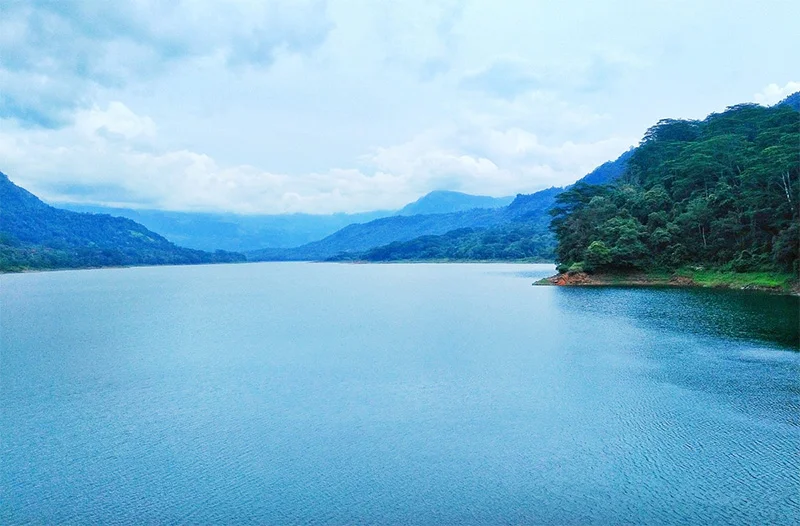
The Sri Lanka Mahaweli Authority has issued an urgent safety warning to residents living along the banks of the Kotmale Oya and the Mahaweli River, as water levels in the Kotmale Reservoir are reaching maximum capacity.
According to a special weather advisory issued by the Department of Meteorology on December 26, 2025, heavy rainfall is expected in the catchment areas over the coming days.
In response, the Mahaweli Authority released a statement on December 27, warning that spill gates may have to be opened to manage the water flow.
Eng. A.M.A.K. Seneviratne, Resident Engineer and Deputy Director of the Kotmale Reservoir, stated that the opening of spill gates would lead to a significant rise in the water levels of both the Kotmale Oya and the Mahaweli River.
Areas on Alert
Residents in the following Divisional Secretariat divisions are urged to remain extra vigilant:
• Nuwara Eliya District: Kotmale West and Kotmale East.
• Kandy District: Udapalatha, Udunuwara, Doluwa, Pasbage Korale, and Ganga Ihala Korale.
Authorities have advised the public in these low-lying and river-adjacent areas to monitor the situation closely and take necessary precautions to ensure their safety and the protection of their property.
By S.K. Samaranayake

Showers expected at times in the Northern, Eastern, Central, North-central and Uva provinces

Dr. Bellana: “I was removed as NHSL Deputy Director for exposing Rs. 900 mn fraud”

BIA unions demand bonuses equal to five months’ basic salaries

People warned of rising water levels at Kotmale reservoir

Lahore Aitchison College students visit Pakistan High Commission, Colombo

GMOA may take up Dr. Bellana’s issue at ex-co

‘Dates have the highest sugar content to fight Coronavirus’

Sunday Island 27 December – Headlines

#SundayIsland 17th December – Headlines

Sunday Island – 28th March

Sunday Island Headlines – 21 March

Sunday Island – 21st February – Headlines
-

 News5 days ago
British MP calls on Foreign Secretary to expand sanction package against ‘Sri Lankan war criminals’
-
 Sports5 days ago
Chief selector’s remarks disappointing says Mickey Arthur
-
 News4 days ago
Street vendors banned from Kandy City
-

 News6 days ago
Sri Lanka’s coastline faces unfolding catastrophe: Expert
-

 Opinion5 days ago
Disasters do not destroy nations; the refusal to change does
-

 News4 days ago
Lankan aircrew fly daring UN Medevac in hostile conditions in Africa
-
 Midweek Review6 days ago
Year ends with the NPP govt. on the back foot
-
 Sports6 days ago
Life after the armband for Asalanka