
Life style
Golden Jubilee years of Sinhala Pop Music;


Christian youth herald an Integrative revolution
By Dr D.Chandraratna
Right at the outset I need to justify the above subtitle. The readers may be understandably perturbed that the use of the word Christian is an irrelevant identity marker, given the violence that identity markers have caused in Sri Lanka. I am acutely conscious of Amartya Sen’s advice, ‘Reason before Identity’ before we classify groups (Identity Violence, 2007). However this identity profiling is only an empirical generalization contextualized here because it has contingent social significance.
I wish to demonstrate how young, predominantly Christian youth, through Sinhala song stumbled on to foster amity, dialogue and communication between communities, ‘unloading a million bricks’ out of the Sinhala psyche (Langston Hughes, The Big Sea, 1986). Having relieved my burden I shall come to the subject proper. This article is to celebrate more than half a century of the continued dominance of Christian youth led popular Sinhala music where they reigned supreme.
Bands Galore
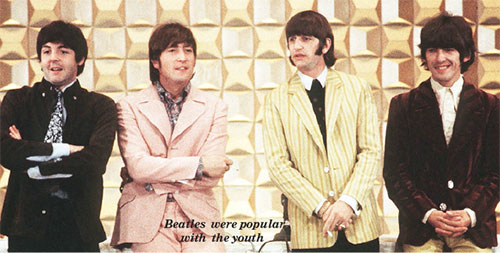
At independence while Sinhala music was experimenting with different forms, amidst debate and rancour the city dwelling youth were emulating the sprouting bands and vocalists in the West, and Latin America. The Beatles, Shadows, Kinks, Rolling Stones etc. and generally fast rhythm music was mimicked by the westernized youth who were mostly Christian whose talents were honed in the arts and performances of the church. The bill was split between competing groups. Among the most popular were La Ceylonians, Moonstones, Sunflowers, La Lavinians, Los Flamingos, Hummingbirds, La Bambas, Los Muchachos, Los Serenaders, Los Caberellos, Beacons, Peddlers, Sunflowers, Spitfires, Gypsies, Eranga and Priyanga and many more in the country towns including the North. The Christian schools in Colombo as St Thomas’, St Peter’s, St Joseph’s, St Benedict’s provided much needed youth to work the bands. Likewise the Christian Schools in towns of Kandy, Ratnapura, Nawalapitiya, Galle, and Jaffna followed suit supplying vocalists and instrumentalists.
The dawn of the ‘people’s revolution’ in the late fifties was turbulent. It was a time Sri Lankan society was badly challenged by language and religion thereby partitioning the pluralities and diversities that were considered the norm. The revolution was executed in a rush without debate and dialogue. Exultation was short lived and as the ideals became distant many communities felt betrayed and perceived to feel outside the Sri Lankan heritage. The thesis canvassed here is that Sinhala popular music championed by Christian youth, led an integrative revolution, which was successful in no small measure.
The sudden loss of the conviviality and robust richness of the cultural mix that was their world may have driven the youth to yearn for a mechanism to return to the beautiful old days. Sinhala pop music beckoned them as the integrative solution that many were yearning for. Their school education, mainly in the liberal arts, equipped them with a number of competencies; an intellectual tolerance, substantial questioning of dogmatism, social maturity, rejection of authoritarianism and a degree of secularizati

on outside of books. They were not oblivious to many aspects of the contemporary world.
Meteoric popularity of the Sinhala bands
With apologies to many bands and artists of yore including the Dharmaratna brothers who were the stars of the Sinhala pop I will limit myself to the trio, Indrani Perera, Annesley Malewana and Clarence Wijewardena. Indrani of the Three Sisters and Clarence and Annesley of Golden Chimes, and their bittersweet re-union in Super Golden Chimes were at the helm for the entire period. Their stamp in the pop scene has survived all these years and naturally they have been dubbed the Queens and Kings of the fifty plus year’s history of the Sinhala popular music.
The stars of Indrani, Annesley and Clarence have burned brighter for more than half a century and I will be excused for selecting the three for the purposes of this article. Indrani’s crystalline voice delivering folk like verses were framed in exquisite musical arrangements prepared by Clarence Wijewardena, the songwriter and producer extraordinaire. He was bass guitarist devising dynamic guitar breaks as a value add, especially to the moody emotion filled songs such as Dilhani and Kalpani Duwani. He once said in public that as a teen he was an avid listener to Beatles and Shadows with Cliff Richard and that after secondary school all he wanted was to make actual music with his interiorized musicality. Indrani’s vocals were often multilayered with harmonies by her sisters. Annesley’s dusky voice ranging in delivery from home based country anthems to solemn folk balladry attracted large crowds and sold the records under numerous labels.
Trained in gospel singing, in Indrani and others the Sri Lankan audiences discovered a national treasure That won lasting affection for bringing us nostalgic experiences of our own lives; beauty of the landscape, undiluted romantic innocence, and the warmth of a human community. Throughout their long and brilliant careers spanning five decades they entertained millions of Lankans. Working long hours in a undervalued vocation in the 60’s and 70’s we who are the recipients of their precious gift owe them an enormous debt of gratitude. A career in music is hard work, a lot of sacrifice, but more importantly need a lot of perseverance and patience.
The integrative revolution
The singer and audience relationship is about connection; above all an emotional bond that make you cry, laugh, think, hold out a hand, in brief empathic union. The bands playing western music were moving the people on the dance floor while the Sinhala groups were moving people in an atmospheric emotional direction. Beyond the form they also were driving hard a message to bring the nation together. In sonata style, without big guitar moments, warbling in unhurried tunes, fittingly mellow with mundane lyrics made an impressive appeal.
It was the immense capacity to put together a poetic collection of images, sounds, scents and stories, wrapped in mellifluous but simple words. They produced a grand alchemy of songs all testimony to the indigenous artists’ engagement with the country and its people, the common folk. At the same time they evoked something within all and we felt connected. It was a part of the little tradition of the Sri Lankan culture that brought us together.
This change in the music topography and culture that took place from the decade of the 60’s points to something beyond the confines of musical creation and musical thought to the wider sphere of social life and social strife. This was an integrative revolution responding to kindred developments in the realm of wider society. The integrative revolution was led by the suburban Christian youth.
Clarence Wijewardena, mindful of the furious forces that were beating against the barriers that hemmed them in, stuck to his motto throughout: semplice-sempre, simple in style and presentation. Contemporary reality mirrored and expressed in spirited conversations with few instruments, he was able to compose songs like Sigiriya, Ruwanpuraya , Kalu ganga Udarata Kandukaraye, Dunhinda Manamali, Wana bambaro ohoma hitu, Dilhani, Ela dola piruna Gon Bassa, Mango nanda, Gamen liyumak avilla, Udarata niliya heda wage, Kalu mame, and many others disregarding formalistic aspects of language and idiom. Of course some of the words were criticized and even censored for being rustic.
Use of words such as Himihita wetiyan, Umbata rideyinam, ohoma hitu, and bithu sithuwam neluwo were subjected to trenchant criticism. But the most important fact was that this music, lyrics and tempo appealed to all segments of society, Buddhists, Christians, Hindu and Muslims could enjoy breaking ethnic and class barriers. In sociological parlance it can be said that while the earlier bands and music were westernized, the Sinhala pop music was sanskritized.
The authoritative Indian sociologist M.N.Srinivas captured the social changes in the 1960’s in India by devising the term sanskritization for a similar process that we can freely use to describe the changes in Sri Lanka ushered in by popular music. Even to the urban society it impressed both on an intellectual and emotional level. I may be pursuing a tenuous connection leading to a dead end but I considered it necessary to record this transformation as a valuable contribution, as reminded by Reverend Malcolm Ranjith quite candidly. It was a social movement and the implied consequences may not be intended. However as Hegel once noted philosophy should avoid political entanglements.
Music and song became the catalyst that unleashed the forces and opened vistas of all communities including the upper middle classes to fall in line. No doubt there was opposition but there were also entrepreneurs like Gerald Wickremasooriya who unstintingly offered assistance. Perhaps they understood the underlying integrative element because it was a contrapuntal message, given better than any political pamphleteer. Popular artists liberated the melody from its tight constrictive wordy bodice and made it part of the common man’s idiom. More importantly, the text invited all social classes and communities to embrace the ethos of our common Sri Lankan heritage. Maw bima obei sithala, rata deya kere bandila, panamen obei sithala, pili gatha yuthui puthune, they pleaded.
One needs only a comparative perspective to understand how the thought content of their music presented a contrasting but an inclusive society in which all communities and religions to wipe out that ordre positif of the old feudal regime and enter a much better ‘ordre naturel’ preordained by the all-wise and all loving deities whose work men can mar but never mend. Was that the confidence they possessed to accomplish their task fighting all barriers that playwrights like Professor Sarachchandra could not easily dismantle.
Professor K.N.O Dharmadasa noted in an introduction to a booklet on Maname the interesting and enlightening dialogue between Professor Sarachchandra and a Cinnamon Gardens lady on the steps of the Lionel Wendt theatre on one of the early days of Maname where the lady said that Sinhala nadagama appealed nicely to the likes of her kitchen maid. No more profound expression of the class divide of the Sri Lankan Weltanschauung is needed. The upper classes were steeped in a world quite alien to the common Sri Lankan heritage. We therefore pose the question whether the musicians, mostly brought up in the Christian Church background lifted the impenetrable barricades as they sang ‘Api enawa murakawal okkoma bindala’ with much more ease, one wonders.
In the 1950s and sixties the freedom, equality and liberty that independence had granted to Sri Lanka was blotted out by dark shadows of communalism and religious bigotry, a society already fractured by caste and creed. The Bandaranaike revolution was hardly inclusive. The politics at the time failed to create a liberated society, a society that is able to express a richer and fuller life. The people’s revolution brought out the monstrosity of communalism more repulsive than the semi feudal class oppression that it was intent on driving out.
Here we draw the power of the form and thought of creative art in song and music. These musicians, who were the progeny of parents outside the ‘purists’ managed to enter the depths of the consciousness of those who were distracted by the people’s revolution and unobtrusively connected them with the Sinhala mainstream society. While appealing to the common multitude they also entered the homes of the rich and famous freely and all this without political undertones.
All we can say is ‘Thank you for the music and thank you for bringing us close’.



In the quiet, rain-washed village of Boralugoda, where narrow streams slip silently through thick green undergrowth and the air carries the scent of wet earth, a remarkable story of science, persistence, and quiet resistance has been unfolding for decades.
At its centre is Research Scientist and artist Shantha Jayaweera—a man who has spent nearly 40 years studying, documenting, and defending one of the richest freshwater ecosystems in the island. His life’s work is not just about fish, but about a fragile world that exists beneath the surface of flowing water—often unseen, frequently misunderstood, and increasingly under threat.
“Sri Lanka holds a very special place in global freshwater biodiversity,” Jayaweera says, reflecting on decades of fieldwork. “But even within the island, there are pockets that are extraordinarily rich. Boralugoda is one of them.”
A Global Context, A Local Wonder
Sri Lanka is part of the Oriental region—one of the most biologically diverse freshwater zones in the world. Within the island, the lowland wet zone stands out as the most species-rich area, nurtured by year-round rainfall and dense vegetation.
But Boralugoda, located within this wet zone, is exceptional even by those standards.
“Out of about 94 true freshwater fish species recorded in the country, around 84 are found in the lowland wet zone,” Jayaweera explains. “What is remarkable is that Boralugoda alone supports 53 species. That is the highest number recorded in any inland location.”
He pauses before adding a sobering detail.
“Of those 53 species, 26 are endemic. And 23 are threatened—ranging from vulnerable to critically endangered. That’s a very serious signal.”
-

- Boralugoda Ella
The Secret of the Maguru
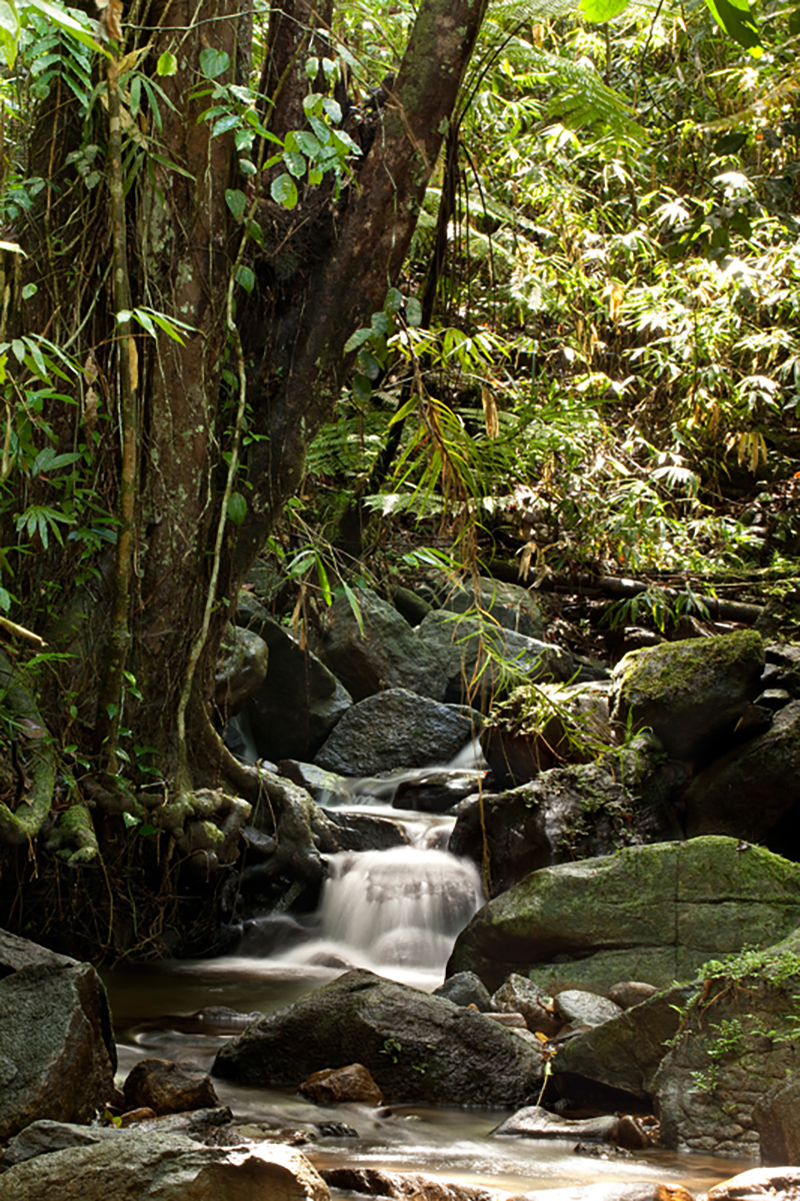
Flowing through this biodiversity hotspot is the Maguru River—a relatively small river with an outsized ecological role. Originating in the rainforest-covered Morapitiya area, it carries with it the ecological signature of its pristine beginnings.
“What makes the Maguru unique is its clarity,” Jayaweera says. “Most rivers turn brown as they carry sediment downstream. But this river remains clear, which allows sunlight to penetrate and sustain aquatic life.”
The river’s structure adds another layer of ecological complexity.
“It starts with fast-flowing, rocky sections and then gradually shifts to sandy, slow-moving areas,” he explains. “Different species are adapted to each of these habitats. Some are highly specialised and cannot survive outside the rocky zones.”
This diversity of microhabitats is one of the key reasons for the area’s richness.

Banded mountain loach

Red neck goby – endangerd now extinct from the area due to sand mining
“Fish like certain gobies and barbs are restricted to fast-flowing rocky areas,” he notes. “If those habitats are disturbed, the species simply disappear.”
Streams That Sustain Life
Beyond the main river, Boralugoda is crisscrossed by an intricate network of streams—fed by rainfall, forest cover, and underground springs.
“This area has one of the highest stream densities in the Western Province,” Jayaweera says. “These streams act as nurseries, refuges, and migration pathways for many species.”
The surrounding landscape further enhances this ecological mosaic.
“You have a mix of rainforest patches, home gardens, tea estates, and cultivated lands,” he explains. “Each of these contributes in some way to the overall habitat diversity.”
However, this delicate balance is increasingly being pushed to its limits.
Sand Mining: A River Reshaped
One of the most destructive forces to hit the Maguru River has been large-scale sand mining, particularly since the early 2000s.
“The riverbed has been completely altered,” Jayaweera says, his tone turning grave. “We’ve lost aquatic plants, native riverbank trees, and entire habitats.”
The ecological consequences have been severe.
“The endangered Red Neck Goby has become locally extinct,” he reveals. “And the Ocellated Pipefish has not been recorded for years, largely due to the loss of specific aquatic plants it depends on.”
The physical damage to the river is equally alarming.
“Sand mining has deepened the river unnaturally,” he explains. “This leads to bank erosion, collapse, and long-term instability. It changes the entire character of the river.”
Although recent policy changes have halted new permits, the damage done over decades cannot be easily reversed.
-
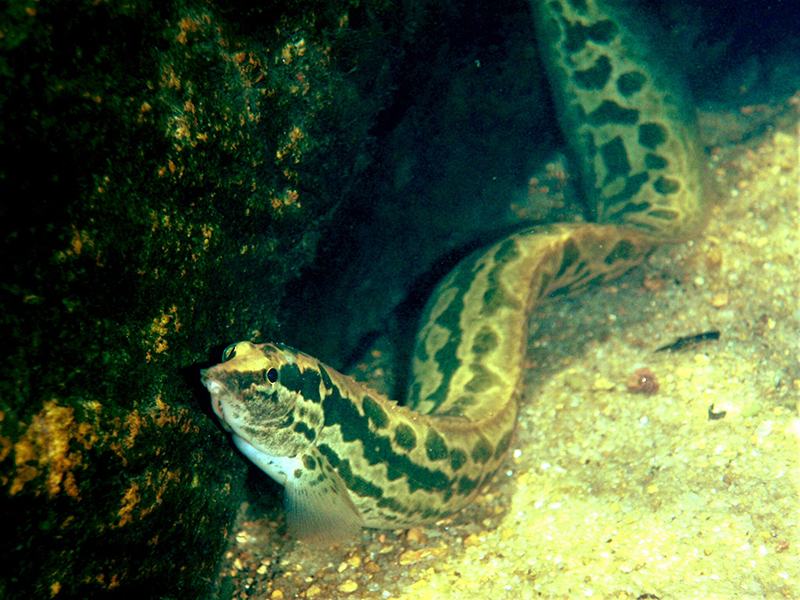
- Marbled spiny eel
-
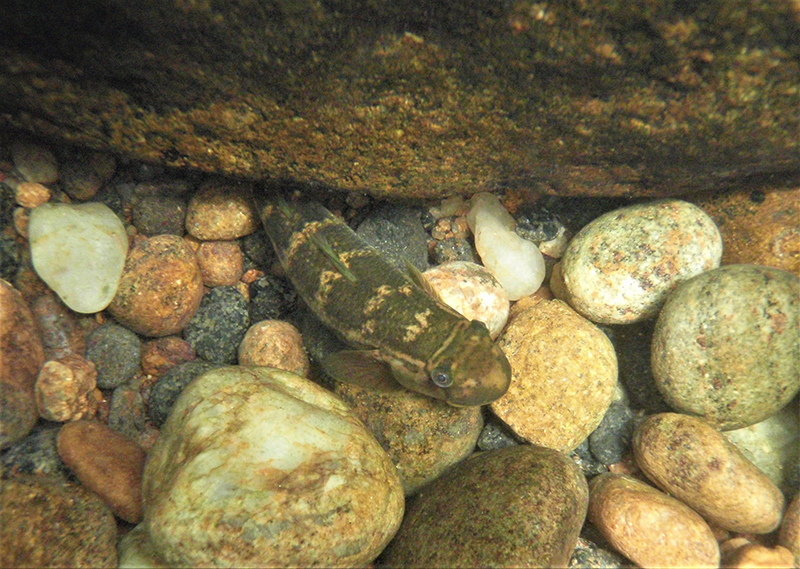
- Red tailed goby – endangered
Tea Expansion and Vanishing Buffers
Another major pressure comes from agricultural expansion—particularly the spread of lowland tea cultivation.
“Since the 1990s, we’ve seen a steady conversion of home gardens and even forest patches into tea plantations,” Jayaweera says. “In some cases, even rubber lands have been cleared.”
This transformation has not only reduced biodiversity on land but has also affected water systems.
“Riverbank vegetation is often cleared to make way for cultivation,” he explains. “But these trees are critical—they stabilise banks, filter runoff, and provide shade.”
What is particularly troubling is the disregard for existing environmental regulations.
“There are clear laws requiring buffer zones along rivers and streams,” he says. “But many local authorities are either unaware or do not enforce them. As a result, these protective areas are disappearing.”
A Life Dedicated to Observation and Action
For Jayaweera, these changes are not abstract trends—they are deeply personal.
“I’ve been observing this ecosystem for nearly four decades,” he says. “I’ve seen species decline, habitats shrink, and patterns change.”
But his work has never been limited to observation alone.
Through the Organisation for Aquatic Resources Management (OARM), he has led numerous conservation and restoration efforts.
“We’ve worked on replanting rainforest species in degraded areas, restoring stream banks, and raising awareness among local communities,” he explains. “In some places, we’ve seen encouraging signs of recovery.”
His approach combines science with grassroots engagement.
“Conservation cannot happen in isolation,” he says. “You need the community to be involved.”
Where Science Meets Art
What sets Jayaweera apart is his ability to translate science into art.
As an accomplished artist, he uses illustrations and visual storytelling to bring freshwater ecosystems to life.
“Art can reach people in ways that science sometimes cannot,” he says. “It creates an emotional connection.”
His paintings often depict the intricate beauty of fish species, aquatic plants, and flowing streams—capturing not just their form, but their essence.
“When people see what is at stake, they are more likely to care,” he adds.
A Community at a Crossroads
Despite decades of work, challenges remain at the community level.
“Some people still treat rivers as dumping grounds,” Jayaweera says with frustration. “Plastic and waste continue to find their way into these waters.”
Yet, there are also signs of hope.
“A group of committed individuals regularly organise clean-up campaigns,” he notes. “They collect waste and display it publicly to raise awareness. It’s a simple but powerful act.”
These grassroots efforts, he believes, are crucial.
“Real change begins at the local level,” he says.
A Fragile Future
For Jayaweera, Boralugoda is more than just a field site—it is a symbol of what is at stake.
“If we lose ecosystems like this, we lose something irreplaceable,” he warns. “These species are found nowhere else in the world.”
His message is both urgent and measured.
“We need stronger enforcement of environmental laws, better awareness, and a genuine commitment to conservation,” he says.
“Otherwise, the damage will become irreversible.”
As the clear waters of the Maguru River continue to flow through Boralugoda—past rocks, roots, and remnants of a once-pristine landscape—they carry with them a quiet story of resilience.
And alongside that flow stands Shantha Jayaweera—scientist, artist, and guardian of a hidden world—still watching, still working, and still hoping that it is not too late.
By Ifham Nizam
Pictures by Shantha Jayaweera
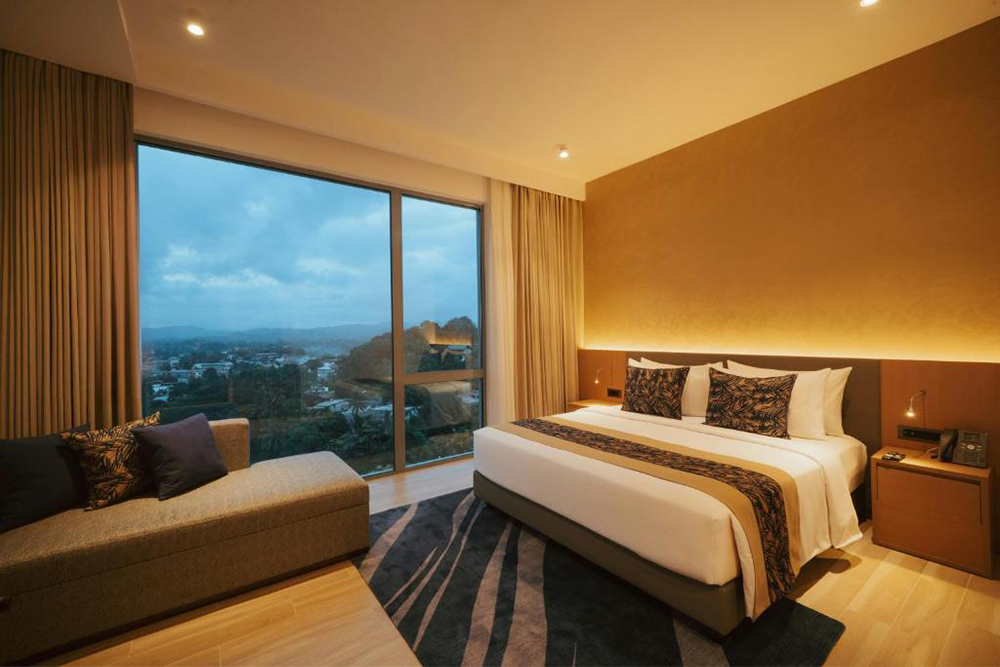
Perched in the heart of Sri Lanka’s hill capital, Kandy Myst by Cinnamon recently marked its first anniversary, celebrating a year of redefining modern hospitality in the historic City of Kandy. Since opening its doors on February 12, 2025, the hotel has quickly established itself as a vibrant lifestyle destination that blend contemporary comfort with the cultural charm of the region.
This property was designed to bring a fresh energy to the city’s hospitality scene with 215 modern rooms, the largest room inventory in Kandy. The hotel caters to both leisure and business travellers seeking comfort, convenience and stylish surrounding close to the city’s key attraction.
Within the first year, the hotel has achieved notable milestones, including become the first hotel in Kandy to receive Leed Gold Certificate reflecting its commitment to sustainable and responsible development. Beyond accommodation and dining, the property has also emerged as a hub for cultural events.
As Kandy Myst by Cinnamon enters its second year, the hotel continues to position itself as more than a place to stay. With its lively dining venues, social spaces and commitment to sustainability and community engagement, it is steadily shaping a new chapter in Kandy’s evolving hospitality landscape – one where tradition meets contemporary style.



Over the months the restaurant has hosted themed culinary events, special promotions and vibrant social evenings, further strengthening its place as a lively hub in Kandy’s hospitality scene. Guests have been drawn not only by the flavours on the plate but also by the inviting atmosphere that captures the essence of city’s elegance.
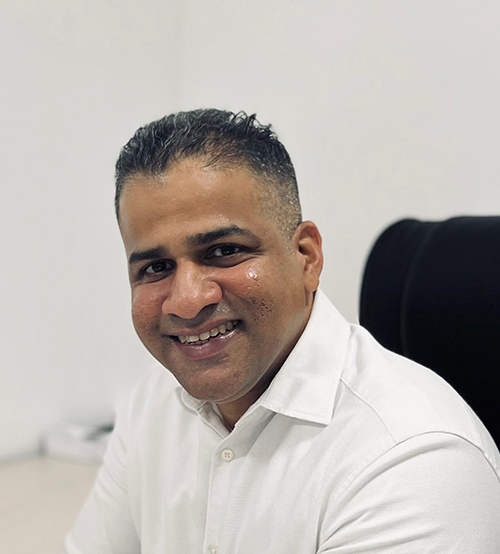
General Manager – Dhinal Perera
Kandy Myst by Cinnamon celebrates its first anniversary, marking a year as Kandy’s contemporary hospitality destination that brings energy, culture, and lifestyle experiences to the city. Opened through a partnership between Cinnamon Hotels & Resorts and Indra Traders (Pvt) Ltd, the hotel blends hospitality expertise with local insight to deliver a modern, energetic and lifestyle driven offering.
With the highest room inventory in Kandy, comprising 215 contemporary rooms, Kandy Myst by Cinnamon caters to both leisure and business travellers, offering modern comfort in close proximity to the city’s key attractions and transport routes. Its dynamic dining and social spaces; Grains Dining, Terra Lounge, and the rooftop Kosmos Sky Bar with heated infinity pool, invite guests and locals to engage, with panoramic city views, curated entertainment, and vibrant social experiences. Grains Dining, the buffet restaurant, serves an extensive selection of local and international cuisine, while Terra Lounge provides a welcoming café-style hub for casual meetups and social gatherings.
In its inaugural year, the hotel achieved significant milestones, becoming the first hotel in Kandy to receive LEED Gold certification, demonstrating a commitment to responsible, future-ready development. Reinforcing its culturally connected and globally relevant positioning, Kandy Myst by Cinnamon hosted globally celebrated icons such as Alpha Blondy and a series of high-profile local and international events, including the official trophy unveiling of the inaugural New Zealand U85kg Rugby Tour of Sri Lanka in May 2025.
Throughout the year, the hotel brought guests and the community together through seasonal activations, curated experiences, and loyalty-driven offers, contributing to strong engagement while supporting Kandy’s tourism economy through local partnerships and community initiatives.
As it enters its second year, Kandy Myst by Cinnamon continues to invite international and local guests alike to experience its vibrant dining, social, and lifestyle spaces, while reinforcing its role in shaping Kandy’s modern hospitality and cultural landscape. (Zanita )

Internationally renowned luxury Maison Montblanc has introduced its latest fragrance, Montblanc Explorer Extreme, to the Sri Lankan market through Exclusive Lines, the sole authorised agent for the brand in the country.
The launch event was hosted at Virticle by Jetwing, where guests were invited to experience the newest addition to the bestselling Explorer line in a setting that reflected the Maison’s enduring themes of adventure, refinement and craftsmanship.
Montblanc Explorer Extreme represents a significant evolution of the Explorer franchise and is the first Parfum concentration within the collection. Conceived as an ode to vast landscapes and the world’s most remote desert terrains, the fragrance delivers a deeper, more intense interpretation of the original Explorer Eau de Parfum. Its woody, ambery and leathery composition is crafted to embody courage, ambition and the drive to push beyond limits.
Hiru Surtani, Managing Director and CEO of Exclusive Lines, said the launch reinforces the company’s commitment to bringing globally celebrated luxury brands to Sri Lanka. “Montblanc Explorer Extreme Parfum stands for courage, ambition and the determination to surpass boundaries, values that strongly resonate with us at Exclusive Lines. We are proud to present this remarkable fragrance to Sri Lanka’s discerning consumers, offering a scent that captures the essence of adventurous living,” he stated.
-

- Treshan and Senuri
-

- Thiyasha
-

- Roshan Ranawana
Inspired by dramatic desert landscapes such as Saudi Arabia’s AlUla, the fragrance reflects the bold spirit of modern exploration. It opens with fresh green notes of bergamot blended with clary sage, creating an immediate sense of vitality. The heart reveals patchouli layered with Ambrofix™, delivering warmth and depth, while the base combines rich amber, leather accords and refined vetiver to leave a powerful and lasting impression.
The bottle design draws inspiration from the Montblanc Extreme 3.0 Collection, echoing its distinctive textured motif associated with modern travel and dynamism. Crafted from fully black lacquered glass and topped with a polished black cap, the design underscores the intensity of the parfum. Production and assembly take place at Montblanc’s dedicated Pelleteria workshop in Florence, Italy, with elements crafted across Germany and France, a testament to the Maison’s European craftsmanship.
The global campaign features American actor, model and musician Justice Joslin as the contemporary Explorer, set against striking desert landscapes that symbolise ambition and achievement.
Montblanc Explorer Extreme joins Montblanc Explorer and Montblanc Explorer Platinum in the line-up and is now available exclusively in Sri Lanka through Exclusive Lines outlets and authorised retail partners nationwide.

Trump says US will ‘obliterate’ Iran’s power plants if Strait of Hormuz not open before 48-hour deadline

Showers may occur at several places in the Western, Sabaragamuwa and Southern provinces and in Nuwara-Eliya district after 1.00 pm.

PM Harini leads panel to protect public services

Sajith slams President over war conduct and economic missteps

Johnston Fernando, sons held in Lanka Sathosa lorry misuse case

Gura: The unsung hero

‘Dates have the highest sugar content to fight Coronavirus’

Sunday Island 27 December – Headlines

#SundayIsland 17th December – Headlines

Sunday Island – 28th March

Sunday Island Headlines – 21 March

Sunday Island – 21st February – Headlines
-

 Business7 days ago
Browns EV launches fast-charging BAW E7 Pro at Rs. 5.8 million
-

 News5 days ago
CIABOC questions Ex-President GR on house for CJ’s maid
-

 News6 days ago
Sri Lankan marine scientist Asha de Vos honoured at UNGA opening
-

 Features7 days ago
Achievements of the Hunduwa!
-

 News6 days ago
Australian HC debunks misleading travel risk claims for Sri Lanka
-
 News4 days ago
Bailey Bridge inaugurated at Chilaw
-

 Latest News6 days ago
Wednesdays declared a government holiday with effect from 18th March
-

 News4 days ago
Pay hike demand: CEB workers climb down from 40 % to 15–20%