
Features
Going to the Fair

By Uditha Devapriya
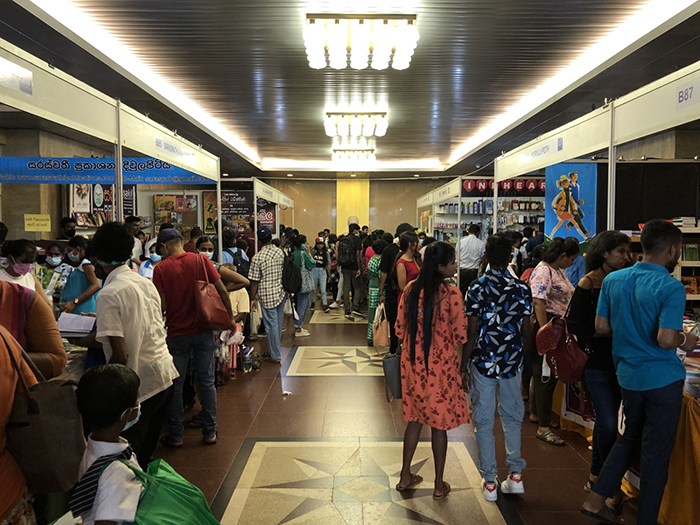
Now in its 23rd year, the Colombo International Book Fair has become something of a social event. One doesn’t go there merely to buy books; one goes there to see it. It was the same, I felt, at Gotagogama: one went there not only to shout, to scream, to vent one’s anger and rage, but also to be a part of it. One particularly didactic newspaper editorial put it years ago that the choice at the Fair was between reading books and eating noodles. This was, a false dichotomy, however: one can read, and yet also eat. That was the point of Gotagogama too: one could go there to protest, and to have fun. What’s the harm in doing both?
I half-thought there wouldn’t be crowds this year. I was wrong. When I predicted a low turnout this time, a friend of mine suggested the very opposite. I retorted, pointing out that with an economic crisis hanging over everyone, no one would be in a mood to go out. “But that,” my friend replied, “is exactly why they will go to the Fair. They have been crushed so badly, deprived of many things they took for granted, that the Fair will seem like a return to normalcy for them.” COVID-19 had almost pre-empted the event in 2020 and prevented it in 2021. The crisis this year had pushed people into a different world. In that sense, my friend pointed out, the Fair would be a welcome distraction.

Sri Lankans are noticeably finicky about books. Some like to read, some like to make others think they read, and some don’t read and make it a point of pride to say they don’t. I have seen and interacted with all three kinds of people at the Fair. The pleasures of walking to a bookstall, in other words, lie beyond buying or even going through books. There is a distinct pleasure in saying that you have been there. This is the biggest such event – though hardly the only one – where every local publisher gets together. It’s a virtual kaleidoscope, and for even those who don’t read it’s carnivalesque, much like Gotagogama. The pleasure, in other words, is in the total package, not in the immediate objective of buying a book
If going to the Fair is one point of pride, buying as many books as one can and condemning them to the dust of bookshelves is another. I have accumulated many books over the last five or so years, and there are still many I haven’t read. It’s not just the big discounts that compel one to go on a spending spree here, however. It’s also the fear that you won’t get another opportunity to buy so many books again. The Fair, after all, is a social event, and social events are those you devote your free time to. A “visit” to a bookshop, on the other hand, requires you to make time, and besides, you don’t enjoy the same level of freedom. That is why we are less relaxed when at a Kade than we are when at a Pola.
There has been justifiable criticism about the side-events at the Book Fair. Some, like the Kavi Mandapaya, are of course ancillary to the event’s literary ambitions. Others are not. Yet such criticism misses the point. Simply put, people wouldn’t go to the Fair if these events were not there, and the publishers wouldn’t get their worth. This point came to me when I looked at the price of the admission: at Rs 20, it hasn’t changed from what it was three, four years ago. Publishers are desperate for buyers, and the only way to keep the buyers coming back is by including as many distractions as they can.

The Colombo Book Fair is hardly the only such event that indulges in these distractions. Edward Jayakody’s anthem for the Fair, written by Bandara Eheliyagoda and constantly played everywhere, reminds you that you came here to buy books and read them. But to denounce those who gravitate to other pursuits is to forget that, in the 16th century, the Frankfurt Book Fair (the oldest of them all) included diversions like musical contests, roper dancers, drinking bouts, even gambling and prostitution. Eheliyagoda’s lyrics sound a tad hagiographic at times, celebrating the event’s worth, but consider that, in 1574, the scholar Henri Estienne composed a Latin panegyric on the Frankfurt Fair. Colombo is far away from Frankfurt, yet these events can, and do, bring different cultures together.
Not unlike in Frankfurt or Leipzig, the Colombo Book Fair coincides with a major literary awards ceremony, the Swarna Pusthaka. As such a not insignificant crowd comes here to grab autographed and discounted copies of the nominated titles. On my way out two years ago, I came across a group of teenage girls, most probably undergraduates, debating over who had won and been nominated and in what categories. Given the linguistic bent of these awards, one can argue that the Fair targets a middle-class and Sinhala readership, though I concur that such generalisations are crass. Still, it’s the Sinhala books that sell like hotcakes, followed by the Tamil and, much more meagrely, the English.
Over the years there have been complaints that publishers market the same books, the same genres, the same themes. These are valid criticisms, and they can be made even of the Big Bad Wolf. But publishers cater to demand, and the demand is overwhelmingly for titles and genres which sell big. Teenage romances will always occupy a top seat, as they do at the Big Bad Wolf. Translations of this bestseller or that will also attract crowds: the student next to me, for instance, was hunting one stall after another for translations of Dan Brown, which he claimed to dote on like a prayer. There are other genres, like biography, which we like to go for. Sri Lankans love to read about great people, even if they dislike the cults which grow around them: translations of “personal memoirs”, for instance, sell big.
This is not to say that English books don’t sell at all. Yet even here, it’s the same titles and genres that readers go and lap up. Apart from Harry Potter, Roald Dahl, and comic books, not to mention biographies and autobiographies, there isn’t much of an audience for English here. Nevertheless, the big bookshops make it a point to include more serious and scholarly works at their stalls: Sarasavi this year, for instance, had not just Penguin Classics, but also Routledge, including one particularly unlikely title, Henri Lefebvre’s Napoleon. Perhaps it’s a symbol of how badly such books sell, but I saw only single copies of them. Surprisingly for a time of crisis, they were rather cheap: Lefebvre’s book was only Rs 1,250. Perhaps it was an old and unsold copy, a leftover from last year that fetched the old price.
My preferences tend to diverge from what passes for trends here. I always go for the less patronised publishers. Two years ago, for instance, I found a goldmine in the Archaeology Department stall. They were selling Paranavitana’s magnificent Inscriptions of Ceylon for Rs 500: so cheap for such a monumental work. Visidunu Prakashakayo sold The Handbook of the Ceylon National Congress, which records every session and speech from that historically significant association, for Rs 775; this year they had Paranavitana’s The Art of the Ancient Sinhalese for Rs 1,500. Progress Publishers sells Marx and Engels, and Luxembourg and Leon Trotsky, for less than Rs 500 too: two years ago, when I made my way there, they greeted or rather “garlanded” me with posters of Che Guevara and Fidel Castro.
All this is in addition to the small bookstalls, the second-hand bookshops, which sell bigger treasures for much less. The fact that Sri Lanka is not as much a reading society as it should be and the fact that Sri Lankans prefer glossy, expensively decorated books to the cheaper variety are, I think, intimately linked. That is why they don’t buy serious titles and why they don’t realise that there are much better deals at the smaller stalls. That is also why, when Sarasavi and Vijitha Yapa organised discounted, second book sales at various places in and around Colombo years ago, not many bothered to come over and check out what they had in store. Vijitha Yapa organised a second hand sale next to its Thurstan Road branch, which began in March and was supposed to end in April. But given that not many have come in, at least not as much as Vijitha Yapa hoped for, that sale is still open.
Brian Moeran has contended that book fairs are “tournaments of value” removed from the routine of everyday life. While agreeing with him, I would suggest that the fair in Colombo is a microcosm of the economics of book buying in Sri Lanka. It is not a tournament of value, but rather a reflection of what they like to read and what they like to buy. It is a social event, to be sure, but hardly removed from their preferences, desires, and habits.
In many ways the Colombo Book Fair is not as elitist as Fairs elsewhere may be. It brings people together and tries to incorporate as many preferences as it can. There’s room in it for everyone, even if, in the cacophony of popular opinion, it leaves little space for some. Year after year, I find myself an outsider here. But there is a point, while I am with friends, eating noodles, and basically having fun, when I feel like a part of something. It’s the same feeling I got on July 12 – when I spent a day, and passed a night, at Gotagogama. The Fair in Colombo, in that sense, is a less a tournament of value than a leveller of taste.
The writer is an international relations analyst, researcher, and columnist who can be reached at udakdev1@gmail.com


Three hours after the spectacular Artemis II flight launch in Florida, US President Donald Trump delivered a forlorn speech from Washington. Thirty three days after starting the war against Iran as Epic Fury, the President demonstrated on national and global televisions the Epic Fumble he has made out of his Middle East ‘excursion’. It was an April Fool’s Day speech, 20 minutes of incoherent rambling with the President looking bored, confused, disengaged and dispirited. He left no one wiser about what will come next, let alone what he might do next.
There was more to April Fool’s Day this year in that it brought out the nation’s good, bad and the ugly, all in a day’s swoop. The good was the Artemis II flight carrying astronauts farther from the Earth’s orbit and closer to the moon for the first time in over 50 years. The mission is a precursor for future flights and will test the performance of a new spacecraft, gather new understanding of human conditioning, and extend the boundaries of lunar science. It is a testament to humankind being able to make steady progress in science and technology at one end of a hopelessly uneven world, while poverty, bigotry and belligerence simmer violently at the other end.
Terrible Trump
The four Artemis II astronauts, three Americans, Reid Wiseman, Victor Glover, and Christina Koch, and one Canadian, Jeremy Hansen, are also symptomatic of the endurance of America’s inclusive goodness in spite of efforts by the Trump Administration to snuff the nation’s fledgling DEI (Diversity, Equity and Inclusion) ethos. To wit, of the four astronauts, Victor Glover, a Caribbean American, is the first person of colour, Christina Koch the first woman, and Jeremy Hansen of Canada the first non-American – to fly this far beyond the earth’s orbit. All in spite of Trump’s watch.
Yet Trump managed to showcase his commitment to America’s ugliness, on the same day, by presenting himself at the Supreme Court hearing on the constitutionality of his most abominable Executive Order – to stop the American tradition of birthright citizenship. He keeps posting that America is Stupid in being the only country in the world that grants citizenship at birth to everyone born in America, regardless of the status of their parents, except the children of foreign diplomats or members of an occupying enemy force. In fact, there are 32 other countries in the world that grant birthright citizenship, a majority of them in the Americas indicating the continent’s history as a magnet for migrants ever since Christopher Columbus discovered it for the rest of the world.
And birthright citizenship in the US is enshrined in the constitution by the 14th Amendment, supplemented by subsequent legislation and reinforced by a century and a half of case law. Trump wants to reverse that. Thus far and no further was the message from the court at the hearing. A decision is expected in June and the legal betting is whether it would be a 7-2 or 8-1 rebuke for Trump. In a telling exchange during the hearing, when the government’s Solicitor General John Sauer quite sillily dramatized that “we’re in new world now … where eight billion people are one plane ride way from having a child who’s a US citizen,” Chief Justice John Roberts quietly dismissed him: “Well, it’s a new world. It’s the same Constitution!”
Trump’s terrible ‘bad’ is of course the war that he started in the Middle East and doesn’t know how to end it. Margaret MacMillan, acclaimed World War I historian and a great grand daughter of World War I British Prime Minister Lloyd George from Wales, has compared Trump’s current war to the origins of the First World War. Just as in 1914, small Serbia had pulled the bigger Russia into a war that was not in Russia’s interest, so too have Netanyahu and Israel have pulled Trump and America into the current war against Iran. World War I that started in August, 2014 was expected to be over before Christmas, but it went on till November, 2018. Weak leaders start wars, says MacMillan, but “they don’t have a clear idea of how they are going to end.”
There are also geopolitical and national-political differences between the 1910s and 2020s. America’s traditional allies have steadfastly refused to join Trump’s war. And Trump is under immense pressure at home not to extend the war. This is one American war that has been unpopular from day one. The cost of military operations at as high as two billion dollars a day is anathema to the people who are aggravated by rising prices directly because of the war. Trump’s own mental acuity and the abilities of his cabinet Secretaries are openly under question. There are swirling allegations of military contract profiteering and selective defense investments – one involving Secretary of War Pete Hegseth.
Trump’s Administration is coming apart with sharp internal divisions over the war and government paralysis on domestic matters. There are growing signs of disarray – with Trump firing his Attorney General for not being effective prosecuting his political enemies and Secretary Hegseth ordering early retirement for Army Chief of Staff Randy George. In America’s non-parliamentary presidential system, Trump is allowed to run his own forum where he lies daily without instant challenger or contradiction, and it is impossible to get rid of his government by that simple device called no confidence motion.
Asian Dilemmas
Howsoever the current will last or end, what is clear is that its economic consequences are not going to disappear soon. Iran’s choke on the Strait of Hormuz has affected not only the supply and prices of oil and natural gas but a family of other products from fertilizers to medicines to semiconductors. The barrel price of oil has risen from $70 before the war to over $100 now. After Trump’s speech on April 1, oil prices rose and stock prices fell. The higher prices have come to stay and even if they start going down they are not likely to go down to prewar levels.
There are warnings that with high prices, low growth and unemployment, the global economy is believed to be in for a stagflation shock like in the 1970s. Even if the war were to end sooner than a lot later, the economic setbacks will not be reversed easily or quickly. Supplies alone will take time to get back into routine, and it will even take longer time for production in the Gulf countries to get back to speed. Not only imports, but even export trading and exports to Middle East countries will be impacted. The future of South Asians employed in the Middle East is also at stake.
In 1980, President Carter floated the Carter Doctrine that the US would use military force to ensure the free flow of oil through the Strait of Hormuz. Trump is now upending that doctrine – first by misusing America’s military force against Iran and provoking the strait’s closure, and then claiming that keeping the strait open is not America’s business. Ever selfish and transactional, Trump’s argument is that America is now a net exporter of oil and is no longer dependent on Middle East oil.
To fill in the void, and perhaps responding to Trump’s call to “build up some delayed courage,” UK has hosted a virtual meeting of about 40 countries to discuss modalities for reopening the Strait of Hormuz. US was not one of them. While Downing Street has not released a full list of attendees, European countries, some Gulf countries, Canada, Australia, Japan and India reportedly attended the meeting. Which other Asian countries attended the meeting is not known.
British Foreign Secretary Yvette Cooper has blamed Iran for “hijacking” an international shipping route to “hold the global economy hostage,” while insisting that the British initiative is “not based on any other country’s priority or anything in terms of the US or other countries”. French President Emmanuel Macron now visiting South Korea has emphasized any resolution “can only be done in concert with Iran. So, first and foremost, there must be a ceasefire and a resumption of negotiations.”
Prior to the British initiative focussed on the Strait of Hormuz, Egypt, Pakistan and Türkiye have been playing a backdoor intermediary role to facilitate communications between the US and Iran. Trump as usual magnified this backroom channel as serious talks initiated by Iran’s ‘new regime’, and Trump’s claims were promptly rejected by Iran. There were speculations that Pakistan would host a direct meeting between US Vice President JD Vance and an Iranian representative in Islamabad. So far, only the foreign ministers of Egypt, Pakistan, Saudi Arabia and Türkiye have met in Islamabad, and Pakistan’s Foreign Minister Ishaq Dar flew to Beijing to brief his Chinese counterpart, Wang Yi, of Pakistan’s diplomatic efforts.
The Beijing visit produced a five-point initiative calling for a ceasefire, the opening of the Strait of Hormuz and diplomacy instead of escalation. The five-point pathway seems a follow up to the 15-point demand that the US sent to Iran through the three Samaritan intermediaries which Iran rejected as they did not include any of Iran’s priorities. The state of these mediating efforts are now unclear after President Trump’s April Fool’s Day rambling. In fairness, Pakistan’s Ministry of Foreign Affairs has announced that his country intends to keep ‘nudging’ the US and Iran towards resuming negotiations and ending the war.
While these efforts are welcome and deserve everyone’s best wishes, they have also led to what BBC has called the “chatter in Delhi” – “is India being sidelined” by Pakistan’s intermediary efforts? Indian Foreign Minister Jaishankar’s rather undiplomatic characterization of Pakistan’s role as “dalali” (brokerage) provoked immediate denunciation in Islamabad, while Indian opposition parties are blaming the Modi Government’s foreign policy stances as an “embarrassment” to India’s stature.
The larger view is that while it is Asia that is most impacted by the closure of Hormuz, with Singapore’s Foreign Affairs Minister Vivian Balakrishnan calling it an “Asian crisis”, Asia has no leverage in the matter and Asian countries have to make special arrangements with Iran to let their ships navigate through the Strait of Hormuz. There is no pathway for co-ordinated action. China is still significant but not consequentially effective. India’s all-alignment foreign policy has made it less significant and more vulnerable in the current crisis. And Pakistan has opened a third dimension to Asia’s dilemmas.
In the circumstances, it is fair to say that Sri Lanka is the most politically stable country among its South Asian neighbours. Put another way, Sri Lanka has a remarkably consensual and uncontentious government in comparison to the old governments in India and Pakistan, and even the new government in Bangladesh. But that may not be saying much unless the NPP government proves itself to be sufficiently competent, and uses the political stability and the general goodwill it is still enjoying, to put the country’s economic department in order. More on that later.
by Rajan Philips

From Parliament to Fruit Grove:
After more than two decades in politics, rising to the positions of Cabinet Minister and Deputy Speaker of Parliament, Ranjith Siyambalapitiya has turned his attention to a markedly different arena — one far removed from parliamentary debate and political intrigue.
Today, Siyambalapitiya spends much of his time tending to a sprawling 15-acre home garden at Vendala in Karawanella, near Ruwanwella, nurturing what has gradually evolved into one of the most remarkable private fruit collections in the country.
Situated in Sri Lanka’s Wet Zone Low Country agro-ecological region (WL2), Ruwanwella lies at an elevation of roughly 100–200 metres above sea level. Deep red-yellow podzolic soils, annual rainfall exceeding 2,500 millimetres, and a warm humid tropical climate combine to create conditions that make the region one of the richest areas in the island for fruit tree diversity.
Within this favourable ecological setting, Siyambalapitiya has become what may best be described as a custodian of a living collection—a fruit grove that now contains around 554 fruit trees and vines, many of them rare or seldom seen in contemporary agriculture.
Of these, 448 varieties have already been properly identified and documented with the assistance of agriculturist Dr. Suba Heenkenda, a retired expert of the Department of Agriculture. Together they have undertaken the painstaking task of cataloguing the plants by their botanical names, common Sinhala names, and the names used in ancient Ayurvedic and indigenous medical texts, assigning each species a unique identification number.
According to Siyambalapitiya, the Vendala estate is possibly the only single location in Sri Lanka where such a large number of fruit varieties—particularly rare and underutilized species—are maintained within one property.
“This garden came down to me through my grandfather, grandmother, mother and father,” he says. “It is a place shaped by three generations.”
The estate, he explains, began as a traditional home garden where crops such as tea, coconut and rubber were cultivated alongside fruit trees planted by family members over decades. Over time, however, it evolved into something much larger: a carefully nurtured grove preserving both common and obscure fruit species.
Siyambalapitiya recalls with affection one of the oldest trees in the garden—a honey-jack tree known locally as “Lokumänike’s Rata Kos Gaha.”
The story behind it has become part of family lore. According to village elders, his grandmother had brought home the sapling after visiting the Colombo Grand Exhibition in 1952 many decades ago and planted it near the house.
The tree soon gained fame in the village. Its tender jackfruit proved ideal for curry and mallum, while the ripe fruit was renowned for its sweetness.
“Ripe jackfruit from this tree tastes like honey itself,” Siyambalapitiya says. “Even the seeds are full of flour and can be eaten throughout the year.”
Yet age has not spared the venerable tree. It now shows signs of disease, and Siyambalapitiya and his staff have had to treat old wounds and monitor unusual bark damage.
“Once lightning struck it,” he recalls. “The largest branch began to die. Saving the tree required what I would call a kind of surgical operation.”
Such care, he says, reflects the deep attachment he feels toward the collection.
His fascination with fruit trees began in childhood. While attending Royal College in Colombo and living in a boarding house he disliked, Siyambalapitiya would insist that the family procure new fruit saplings for him to plant during his weekend visits home.
“That was the only ‘price’ I demanded for going to school,” he laughs.
Over the years the collection expanded steadily as he encountered new plants in forests, nurseries, and rural landscapes across the island.
The result today is a grove that includes traditional Sri Lankan fruit species, underutilized native varieties, forest fruits, and plants introduced from overseas.
Some species originate in Arabian deserts, while others thrive naturally in cooler climates such as Europe. Certain plants require greenhouse-like conditions, while others are hardy forest trees.
Managing such diversity is no easy task.
“One plant asks for rain, another asks for cold, and yet another prefers heat,” Siyambalapitiya explains. “Too much rain makes some sick, too much sun troubles others. The older trees overshadow the younger ones. You cannot feed or medicate them all in the same way.”
He compares the task to caring for a household filled with people from many nations and ages—each with different needs.
Despite the challenges, he believes the effort is worthwhile, particularly because many of the trees are native species that have become increasingly rare.
“If things continue as they are, some of these plants may disappear from our lives,” he warns.
To preserve knowledge about them, Siyambalapitiya is preparing to launch a book titled “Mage Vendala Palathuru Arana” (My Vendala Fruit Grove), which serves as an introductory guide to the collection.
The book, scheduled for release on April 18 at the Vendala estate, will be attended by Ven. Dr. Kirinde Assaji Thera, Chief Incumbent of Gangaramaya Temple,
Uruwarige Wannila Aththo, the leader of the Indigenous Vedda Community,
a long-serving former employee who helped maintain the plantation, and Sunday Dhamma school students from the region, who will participate as guests of honour.
The publication will also mark Siyambalapitiya’s eighth book. Previously he authored seven works and wrote more than 500 weekly newspaper columns offering commentary on politics and current affairs.
While working on the fruit catalogue, he is simultaneously writing another volume reflecting on his 25-year political career, including his tenure as Deputy Finance Minister during Sri Lanka’s most severe economic crisis.
For Siyambalapitiya, however, the fruit grove represents more than a hobby or academic exercise.
“The fruit we enjoy is the result of a tree’s effort to reproduce,” he says. “Nature has given fruits their taste, fragrance and colour to attract us. All the tree asks in return is that its seeds be carried to new places.”
That simple cycle of life, he believes, has continued for tens of thousands of years.
“And those who love trees,” he adds, “are guardians of the world’s survival.”
by Saman Indrajith
Pix by Tharanga Ratnaweera
-
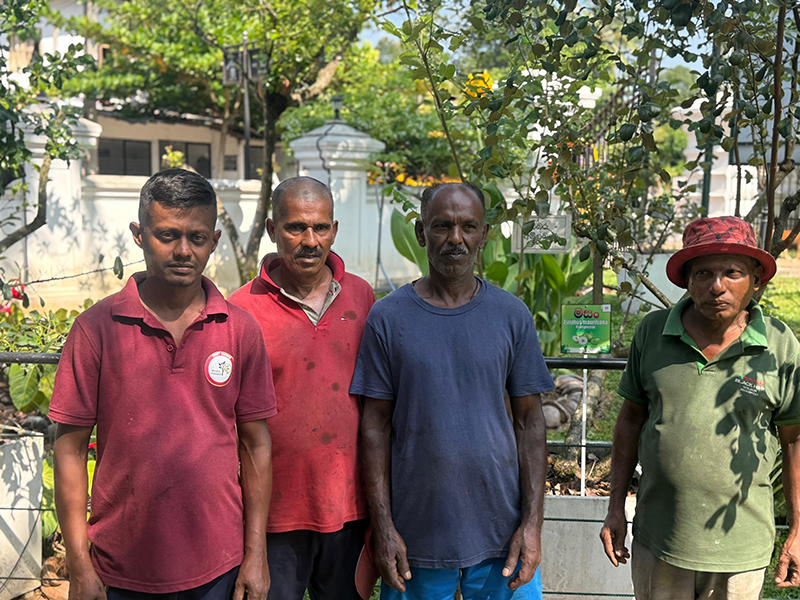
- Four workers in charge of the four zones of the plantation
-

- Siyamabalapitiya explaning the evolution of plantation


-

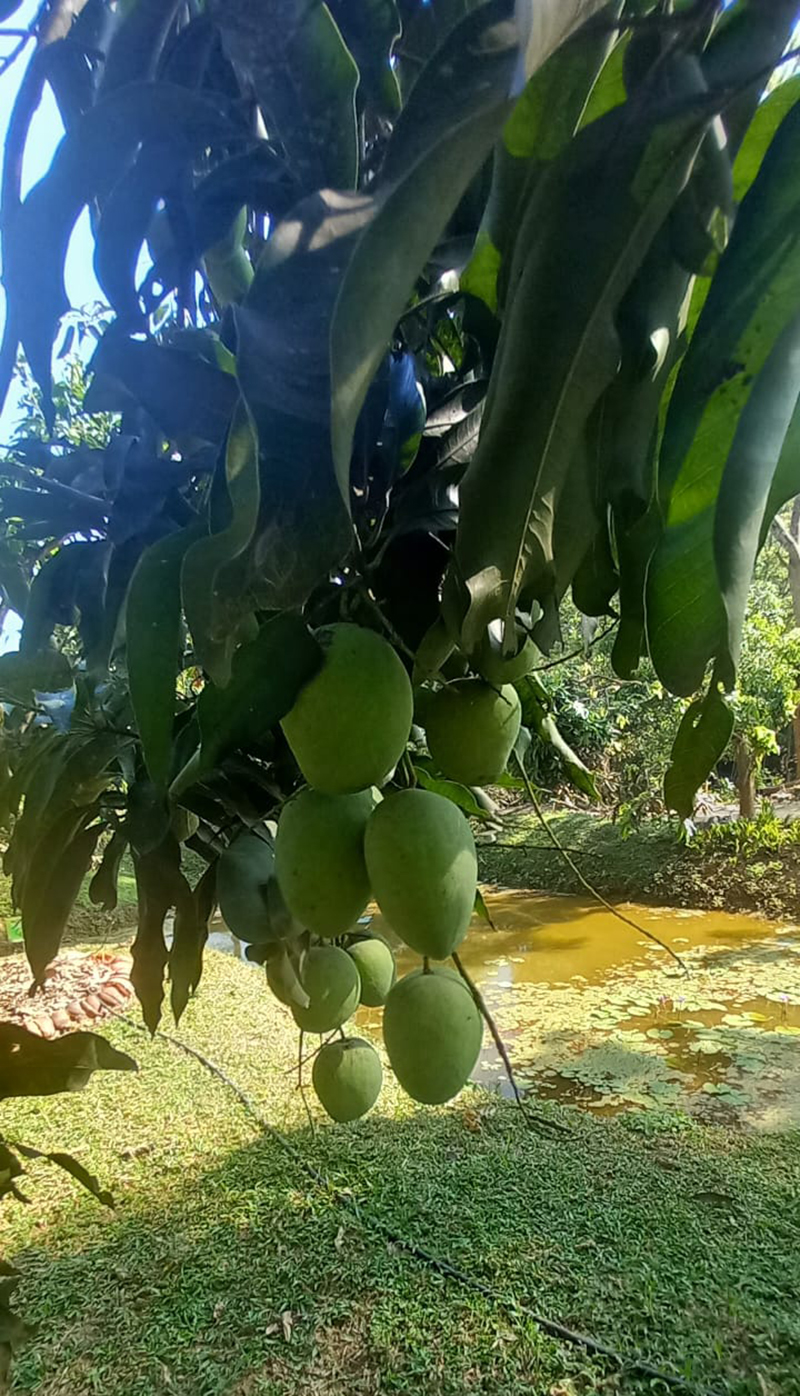
- A foreign berry plant
-

- A Bakumba plant
-
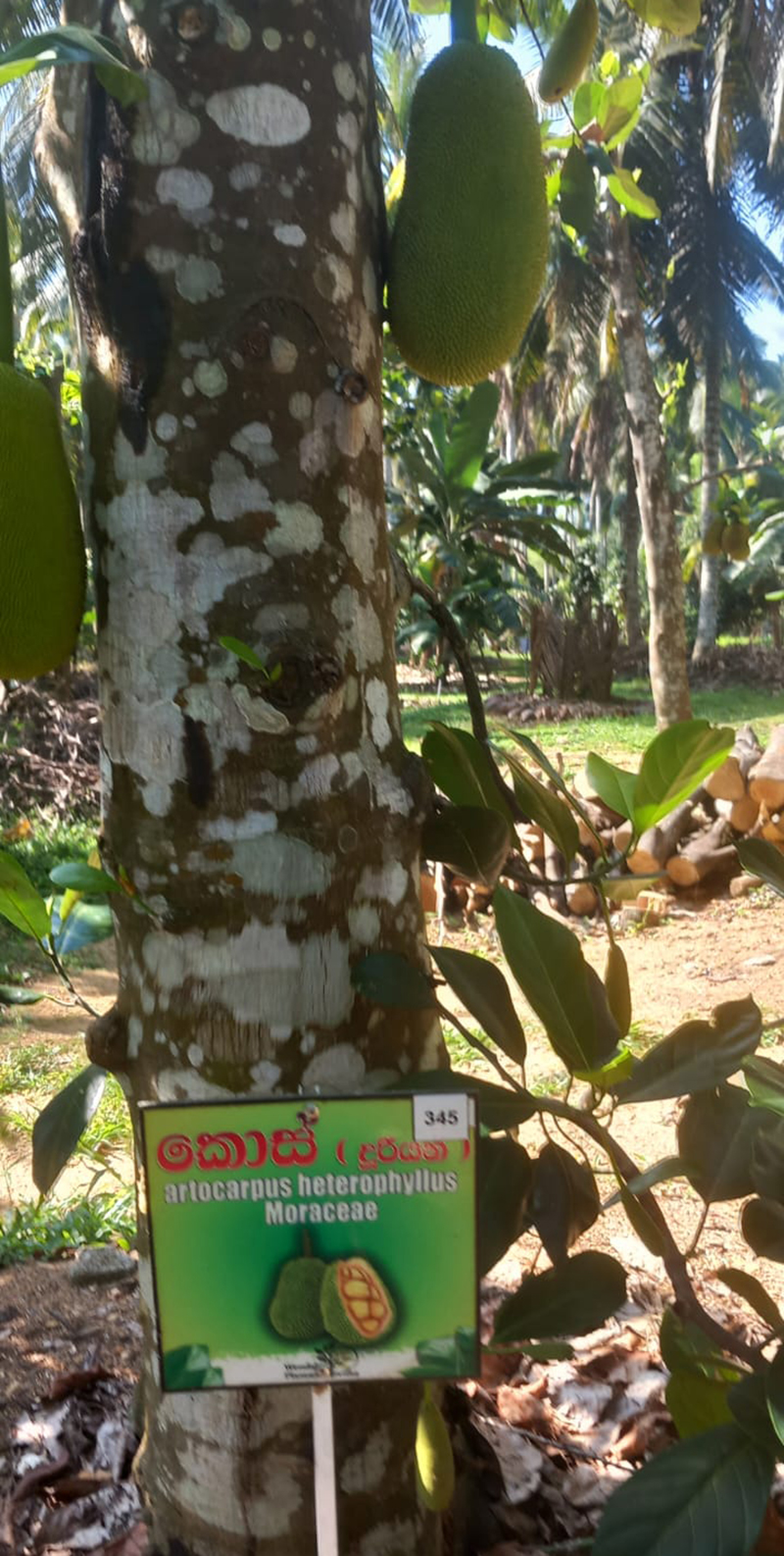
- A rare jackfruit tree

-

- Siyambalapitiya pruning Pumkin Lemon plant
-

- Siyamabalapitiya explaning the evolution of plantation

It has been reported by the international advocacy initiative, ‘Smoke Free Sweden’ (‘SFS’) that many International health experts have begun criticizing the World Health Organization (WHO) for presenting safer nicotine alternatives rather than recognizing its role in accelerating decline in smoking.
As the world’s premier technical health agency, the WHO is empowered to support strategies that reduce morbidity and mortality even if they do not eliminate the underlying behaviour. Furthermore, it should base its guidance on evolving scientific knowledge, which includes comparative-risk assessments. Equating smoke-free nicotine alternatives with combustible cigarettes, is essentially putting lives at risk, according to the health experts contacted by SFS.
The warning follows recent WHO comments suggesting that vaping and other non-combustible nicotine products are driving tobacco use in Europe. This narrative ignores real-world evidence from countries like Sweden where access to safer alternatives has coincided with record low smoking rates.
A “Smoke-Free” status is defined as an adult daily smoking prevalence below 5% and Sweden is on the brink of officially achieving this milestone. This is clear proof that pragmatic harm-reduction policies work. Sweden’s success has been driven by adult smokers switching to lower-risk alternatives such as oral tobacco pouches (Snus), oral nicotine pouches and other non-combustible products.
“Vapes and pouches are helping to reduce risk, and Sweden’s smoke-free transition proves this,” said Dr Delon Human, leader of Smoke Free Sweden. “We should be celebrating policies that help smokers quit combustible tobacco, not spreading fear about the very tools that are accelerating the decline of cigarettes.”
It is further reported by health experts that conflating cigarettes with non-combustible alternatives risks deterring smokers from switching and could slow progress toward reducing tobacco-related disease.
Dr Human emphasized that youth protection and harm reduction are not mutually exclusive.
“It is critically important to safeguard against underage use, but this should be done by targeted, risk-proportionate regulation and proper enforcement, not by sacrificing the right of adults to access products that might save their lives,” he said.
Smoke Free Sweden is calling on global health authorities to adopt evidence-based policies that distinguish clearly between combustible tobacco – the primary cause of tobacco-related death – and lower-risk nicotine alternatives.
“Public health policy must be grounded in science and real-world outcomes,” Dr Human added. “Sweden’s experience shows that when adult smokers are given legal access to safer nicotine alternatives, smoking rates fall faster than almost anywhere else in the world.”

Sameer Rizvi aces another tricky chase as Delhi Capitals floor Mumbai Indians

Sun directly overhead Dodanduwa, Rathgama, Yakkalamulla, Akuressa, Mulgirigala, Ranna, Kalamatiya and Ussangoda at about 12:13 noon today (05th April)

Showers expected in the Western, Sabaragamuwa, Central, Southern, Uva, Eastern and Northcentral provinces after 2.00 p.m.

Heat Index at Caution Level in the Western, Sabaragamuwa, Southern, Eastern, North-western, Northern and North-central provinces and in Monaragala district

Global ‘Walk for Peace’ to be held in Lanka

World Bank launches new 5-year partnership framework with Lanka

‘Dates have the highest sugar content to fight Coronavirus’

Sunday Island 27 December – Headlines

#SundayIsland 17th December – Headlines

Sunday Island – 28th March

Sunday Island Headlines – 21 March

Sunday Island – 21st February – Headlines
-

 News4 days ago
2025 GCE AL: 62% qualify for Uni entrance; results of 111 suspended
-

 News6 days ago
Tariff shock from 01 April as power costs climb across the board
-
 News7 days ago
Inquiry into female employee’s complaint: Retired HC Judge’s recommendations ignored
-
 Business5 days ago
Hour of reckoning comes for SL’s power sector
-
 Features7 days ago
New arithmetic of conflict: How the drone revolution is inverting economics of war
-

 Editorial4 days ago
Search for Easter Sunday terror mastermind
-

 Sports7 days ago
Sri Lanka’s 1996 World Cup heroes to play exhibition match in Kuala Lumpur
-

 Features6 days ago
Seychelles … here we come