
News
Forty percent drop in household income from Jun to Dec in 2022: FAO report


Four in every 10 households in Sri Lanka experienced a reduction in their incomes from June to December 2022, and one in every two households are currently relying on negative coping mechanisms to cope with the lack of food or money to buy it, a Food and Agriculture Organisation (FOA) report said. In its response overview for the period of June to December 2022, the United Nations agency said the window of opportunity to support Sri Lankan farmers and their communities is narrowly time-bound.
“Immediate action to provide farmers with quality seeds, fertilisers and pesticides will enable them to protect their livelihoods and feed their communities. It is also critical to provide the most vulnerable farmers, livestock keepers and fishers with cash assistance to enable them to restore their productive assets and fast-track their recovery,” the report said.
Noting Sri Lanka is witnessing an unprecedented currency crisis, and the situation is exacerbated by political and social turmoil, the FAO report said nearly 40 percent of the population of Sri Lanka depend on agriculture as a primary source of income. The ongoing multidimensional crisis is posing an enormous threat to their livelihoods and disrupting the national food system, it said, and agricultural production is in a downward trend since mid-2021 due to the unavailability of fertilizers and other essential production inputs; livestock keepers are unable to access feed and basic veterinary supplies; and fishers are unable to access fuel for motorised boats.
“Consequently, the supply of food in local markets is shrinking and food inflation i is soaring, reaching 90 percent in July 2022,” the report added.
Sri Lanka’s collapsing currency has pushed up the price of foods by close to 100 percent over two years with salaries not keeping up pace, making it difficult for the less affluent in particular to afford basic carbohydrates and more affluent people being deprived of access to protein.In Sri Lanka it typically takes about two years to recover from a currency crisis and real salaries to recover somewhat, analysts say.
Sri Lanka has not fully emerged from the currency crises with money still being printed in smaller volumes and a surrender requirement in place, which also creates money and alters rupee reserves of individual banks helping maintain forex shortages.
The forex shortages as well as central bank trade restrictions make it difficult to import some foods and agricultural inputs.President Ranil Wickremesinghe has called for wide support irrespective of political differences to make the government’s food security agenda a success.The President further emphasized that everyone should forget their differences and dedicate themselves to rebuilding the country’s economy.
“In the year 2023, there is a possibility of a food shortage. We started the food security program to deal with that. I suggest that a review of the implementation of this program be done again in each divisional secretariat. Here you can get new data. Accordingly, we are proceeding with the food security program in a formal manner. This program will not end after 2023. We will continue to do so. Local councils have representatives from each political party. But we all have to implement this program together,” said the President, speaking at an event on Friday December 16.
“Somehow, we have been able to provide the fertiliser needed by the farmers. With the success of the Maha season, we will have a surplus of rice in the future. We have identified problems such as insufficient storage facilities. We are also working to solve those problems. At the same time, we have taking measures to control the price of paddy,” he said.

Teachers, principals up in arms against alleged NGO driven education reforms
Teachers, principals and education professionals on Friday vowed to commence a nationwide campaign against the government’s plans to reform the education sector at the expense of what they described as cultural values.
President of the All-Ceylon United Teachers’ Association Ven Yalwala Pannasekera thera addressing a press conference yesterday said that trade unionists would join forces to urge the government to withdraw its educational reforms.
“We are ready to form a common front with education professionals, teachers and principals against this government. We demand that the government withdraw these reforms or get ready to go home,” Ven Pannasekera said.
“Some modules promote homosexuality. Contents in some of the modules being distributed have been copied from Indian text books.
We ask the government to explain why it had paid the National Education Institute curriculum designers,” Ven Pannasekera said.
Meanwhile, representatives of 16 teachers’ and principals’ unions visited the National Child Protection Authority yesterday to lodge a complaint demanding a probe into the inclusion of materials promoting homosexuality in school books.
Concerns were also raised at a National Sangha Council meeting held in Colombo last week at the Colombo Foundation Institute, organised to discuss the objectives of the proposed reforms.
Addressing the gathering, Professor Venerable Induragare Dhammaratana Thera said the reforms required extensive discussion, consultation with subject experts and consideration of the experience of senior administrators.
He warned that the proposed education reforms could trigger the biggest crisis currently facing the country. “Implementing these reforms in this manner will harm future generations and could even destroy the present government,” he said, likening the process to “forcing a round peg into a square hole.”
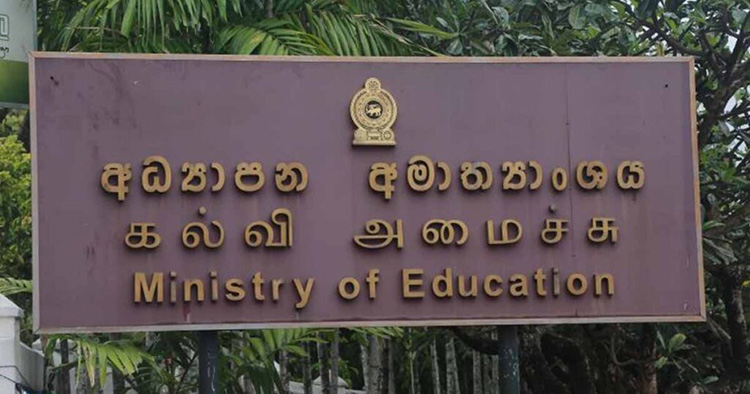
The Ministry of Education on Friday decided not to extend school hours for the 2026 academic year, citing the ongoing impact of recent disasters on schools and transport systems in several provinces.
According to the Ministry, school hours for Grades 5 to 13 will remain unchanged at 7:30 a.m. to 1:30 p.m. until both education and transport networks are fully restored.
Government schools, government-approved private schools, and pirivenas are set to begin the first term of 2026 on January 5. Students in Grades from 6 to 13 will have seven 45-minute periods a day.
Education reforms will be introduced for Grades 1 and 6 in 2026.
The Ministry confirmed that activity books for Grade 1 and learning modules for Grade 6 will be distributed before lessons begin. Textbooks for all other grades have already been fully handed out.Meanwhile, the remaining sessions of the 2025 G.C.E. Advanced Level examination are scheduled to take place from January 12 to January 20, 2026.
by Chaminda Silva ✍️

The Sri Lanka Red Cross Society will provide relief funds totaling Rs. 2,420 million to assist 20,000 families displaced and 8,000 families who have lost their livelihoods due to cyclone Ditwah.
Accordingly, the Society has arranged to give Rs. 1,620 million to 20,000 displaced families, at the rate of Rs. 85,000 per family, and Rs. 800 million to 8,000 families who lost their livelihoods, at Rs. 100,000 per family, Sri Lanka Red Cross Communications Head Navindra Senarathne told the Sunday Island on Friday.
He said the funds for the 20,000 displaced families would be distributed in three instalments.
A total of 20,000 families across the country, including 1,505 families in the Trincomalee District, have been selected for this relief, with beneficiaries identified by the decision-makers of the Sri Lanka Red Cross Society, he added.
In addition, the Society is preparing to install toilet systems in 400 safe centers and provide 15,000 sets of school equipment worth Rs. 7.5 million, Navindra Senarathne told the Sunday Island.
By Sirimantha Rathnasekera ✍️

Bangladesh look to move T20 World Cup matches from India amid Mustafizur row

Root and Brook shine before afternoon gloom ends play early

Venezuela’s Maduro arrives in New York after ‘capture’

Showers will occur at times in the Eastern and Uva provinces and in Polonnaruwa, Matale and Nuwara-Eliya district

Teachers’ unions ‘ready to bring govt. to its knees’

Education Ministry drops idea of extending school hours

‘Dates have the highest sugar content to fight Coronavirus’

Sunday Island 27 December – Headlines

#SundayIsland 17th December – Headlines

Sunday Island – 28th March

Sunday Island Headlines – 21 March

Sunday Island – 21st February – Headlines
-

 Sports7 days ago
Gurusinha’s Boxing Day hundred celebrated in Melbourne
-

 News2 days ago
Health Minister sends letter of demand for one billion rupees in damages
-
 News5 days ago
Leading the Nation’s Connectivity Recovery Amid Unprecedented Challenges
-

 Features6 days ago
It’s all over for Maxi Rozairo
-

 Opinion4 days ago
Remembering Douglas Devananda on New Year’s Day 2026
-
 News6 days ago
Dr. Bellana: “I was removed as NHSL Deputy Director for exposing Rs. 900 mn fraud”
-
 News5 days ago
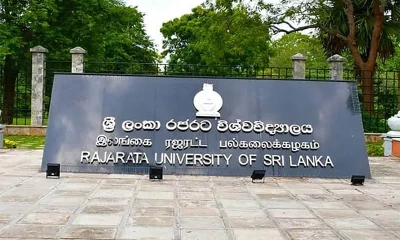
Dons on warpath over alleged undue interference in university governance
-

 Features6 days ago
Rebuilding Sri Lanka Through Inclusive Governance