
News
Field Marshal warns govt members of his physical prowess

By Saman Indrajith
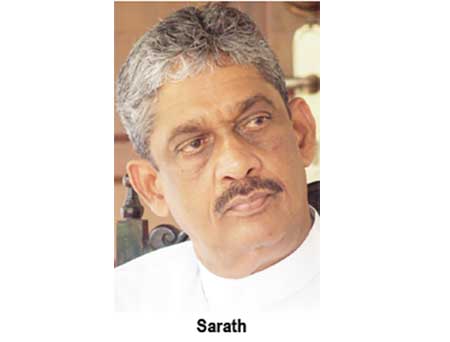
SJB Gampaha District MP Field Marshal Sarath Fonseka says that he has enough strength to take on all government members in the front row numbering 25 together single handedly in case they try to surround the Opposition MPs.
Participating in a debate at the time of adjournment of the House on the progress report of the Election Commission on Wednesday (23), Field Marshal Fonseka said so referring to a statement made on Tuesday by Agriculture Minister Mahindananda Aluthgamage that the government had a two-thirds majority in the House and the government MPs could outnumber their Opposition counterparts three to one.
Field Marshal Fonseka said: “His figures are wrong. To have that ratio you need a three-fourths of majority not two-third. This shows that there are MPs who could not receive education beyond the Grade Eight. I would like to tell the government members not to dare think of surrounding us just because you have more numbers. I single handedly can take all of those in your front row. To take on your second row, we’ll send someone of the calibre of our fellow MP Chaminda Wijesiri. We know that there are some among you who have the experience of tasting the power of his blows. For your second row, which has Dayasiri Jayasekera, who knows Karate, we can send someone such as MP Diana Gamage, because she is a black-belt holder in Karate. So do not speak of taking us on that easily. Remember we are not afraid of threats just because you have a two-thirds majority.”
MP Fonseka said that the 19th Amendment to the Constitution had progressive provisions and the attempt to undo them by the incumbent government was a threat to democracy. “I have very little experience in politics but even before entering politics the election culture in this country was not something we could be proud of. The elections after 1994 were marred by thuggery, attacks on counting centres, vote rigging, intimidation and undue influence on voters in mega scales. The Election Department was helpless. But after 2015, the Elections Commission came into being and that independent commission was given powers under the 19th Amendment to the constitution. We hope that the government rank members understand the need to safeguard those democratic mechanisms. If they are going to vote blindly and pass the 20th Amendment as it is, then they should remember they are playing the role of king Sirisangabo, who offered his head. The 20th Amendment has a provision enabling the Elections Commission to issue regulations on private media. That is not democratic. Media should be free from such regulations.”
The front row on each side of the Well in the Chamber has seats for 25 MPs.



A group of Tamil Progressive Alliance (TPA) members, including its Leader Mano Ganesan, met President Anura Kumara Dissanayake on Thursday (02) morning at the Presidential Secretariat.
Extensive discussions were held on the issues faced by the Malayagam communities, particularly in relation to education, housing and land, as well as on the urgent measures required to address these concerns. The President paid special attention to all these matters.
Attention was also drawn to the recruitment of qualified Tamil-medium teachers to address the teacher shortage in estate sector schools and this too was discussed at length.
Members of Parliament P. Digambaram and V. Radhakrishnan, along with several other party members, were present at the meeting.

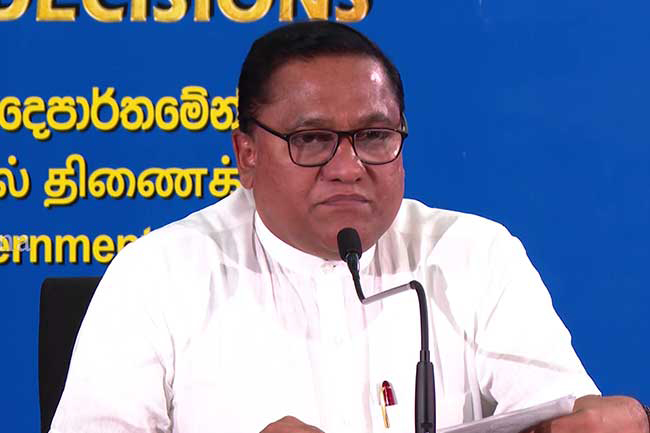
Minister of Foreign Affairs, Vijitha Herath, held talks with Deputy Foreign Minister of Russia Andrey Rudenko at the Foreign Ministry, in Colombo, on Thursday (02), with both sides reaffirming their commitment to strengthening bilateral relations.
The Sri Lanka Ministry of Foreign Affairs said the visiting Russian Deputy Minister noted that Russia regarded Sri Lanka as a long-standing friend.
Rudenko assured that Russia stood ready to support Sri Lanka when required, including in the swift supply of Russian oil to help address the current energy challenges, encouraging Russian investors to explore new opportunities in the country and promoting increased tourist arrivals.
He also expressed Russia’s readiness to provide compensation for Sri Lankan war veterans who had lost their lives in the ongoing conflict between Russia and Ukraine.
Minister Herath welcomed Russia’s willingness to assist, emphasising that Sri Lanka valued the support extended by its “old friend”, particularly at a time when the country was facing pressing energy needs.
He noted that the two countries shared nearly seven decades of diplomatic relations and said the present moment provided an opportunity to further strengthen ties, including through long-term trade agreements.
The discussions focused on enhancing cooperation in the fields of energy, investment, tourism and diplomacy, with both sides reiterating their commitment to further deepen the longstanding friendship between Sri Lanka and Russia.

Police yesterday arrested 157 foreign nationals in connection with an alleged organised online financial scam, conducted from a hotel in the Iranawila area in Chilaw.
The suspects were taken into custody during a raid carried out by the Police while they were staying at the hotel in Iranawila.
Police said the arrested group included 143 nationals from China, 13 from Bangladesh and one from Vietnam.
Investigators suspect the group had been involved in a coordinated online financial scam, targeting victims through digital platforms.
The suspects are being detained for further questioning while investigations are continuing to determine the full extent of the operation and whether additional individuals were involved.Police said further inquiries are underway.
By Norman Palihawadane

Iran executes two convicted members of banned opposition group

Afghanistan earthquake kills eight members of same family

Breakdown of the teams and groups of the FIFA World Cup in Canada, Mexico and the US after the final playoffs

365 US service members injured since start of Iran war – Pentagon

World Cup 2026: Italy’s football chief resigns after qualifying failure

Iran says it downed two US jets as search for one pilot continues

‘Dates have the highest sugar content to fight Coronavirus’

Sunday Island 27 December – Headlines

#SundayIsland 17th December – Headlines

Sunday Island – 28th March

Sunday Island Headlines – 21 March

Sunday Island – 21st February – Headlines
-

 News3 days ago
2025 GCE AL: 62% qualify for Uni entrance; results of 111 suspended
-

 News5 days ago
Tariff shock from 01 April as power costs climb across the board
-
 News6 days ago
Inquiry into female employee’s complaint: Retired HC Judge’s recommendations ignored
-
 Features7 days ago
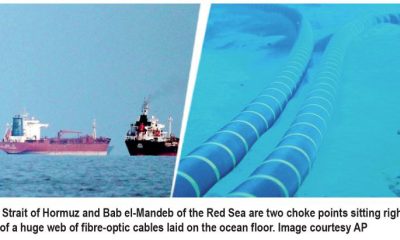
When seabed goes dark: The Persian Gulf, cable sabotage, and race for space-based monopoly
-
 Features6 days ago
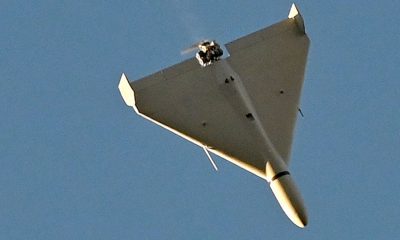
New arithmetic of conflict: How the drone revolution is inverting economics of war
-

 Editorial3 days ago
Search for Easter Sunday terror mastermind
-
 Business4 days ago
Hour of reckoning comes for SL’s power sector
-

 Sports6 days ago
Sri Lanka’s 1996 World Cup heroes to play exhibition match in Kuala Lumpur