
News
Ex-BASL chief: SL loses USD 2 bn annually due to its failure to set up foreign universities

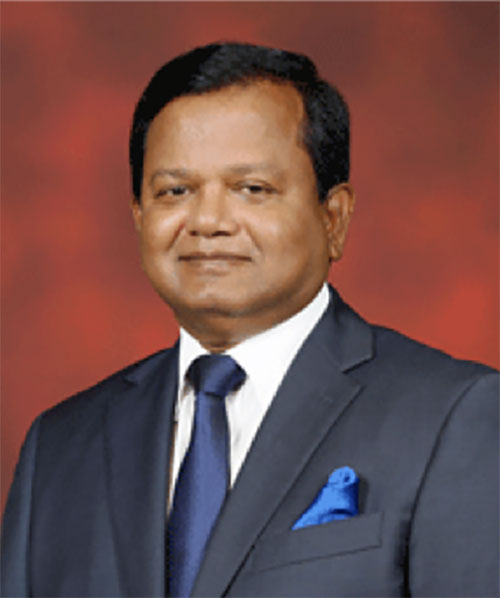
One-time President of the Bar Association Upul Jayasuriya, PC, says the country lost about USD 2 bn a year due to the failure on the part of successive governments to allow the setting up of foreign universities here. Referring to the Government Medical Officers’ Association (GMOA), Jayasuriya, who once headed the BoI said that foreign universities attracted Sri Lankan students at a tremendous expense to the national economy. At any given time, there were more than 70,000 Sri Lankan students studying overseas.
Jayasuriya said so delivering the Daya Wettasinha memorial oration organised by the Sri Lanka-Japan Friendship Society backed by the Sri Lanka-Japan Business Council, at the Sasakawa Hall.
Jayasuriya faulted successive governments for having given in to pressure from the GMOA.
Several universities had been interested in setting up universities here. The PC said: “There was a famous British university that has been allocated 20 acres of land in the Mirigama Zone. They refused to start off. There was Manipal University and Deakin University that were extremely enthusiastic in starting their universities in Sri Lanka. They were all traumatised with the actions of this Trade Union that is a law unto itself in opposing SAITM. At the moment Sri Lanka has no hope of such educational institutes starting in Sri Lanka. This would have averted the dollar drain but we could have also earned much needed foreign investments and the inflow of dollars from prospective foreign students, particularly from India. It is vital as India has no international universities granting foreign degrees. If Sri Lanka can offer these foreign degrees, Indian parents would be so happy to send their children to Sri Lanka, rather than to European destinations particularly Australia where some of them are getting brutally assaulted and undergo cultural disparities.”
Referring to the then Sri Lankan Finance Minister JRJ’s famous San Francisco speech in 1951 in support of Japan, Jayasuriya emphasised Sri Lanka had received1.35 Trillion yen loan, approximately Rs. 270 Billion as grant aid, 108 Billion Technical Cooperation in addition to about 130 Japanese investments here. Daya Wettasinha, lawyer, businessman and more than anything else was a great human being. Wettasinghe was one of the select group of Sri Lankans to receive The Order of the Rising Sun. It is the third highest order bestowed by the Japanese government.
Commenting on current crises, Jayasuriya said that though Sri Lanka brought the war to a successful conclusion in May 2009, the country wasn’t able to achieve its true potential.
“For some people, with numerous personal bodyguards round the clock, fancy vehicles acquired with public funds whisking through crowded streets… probably now they fly about in helicopters or now in private Jets….and all other unimaginable means of luxurious living. People have entered a rat race with an insatiable greed for money and power. People are also self-indulgent and revel in false valour at the expense of the innocent peasantry, who perpetually struggle to make ends meet. Some get a sadistic delight displaying their prowess and money power. Those with Aston Martins, Lamborghinis, and Porsches have no qualms about displaying their wealth, and of course we have those who purchase iconic fashion merchandise such as, Louis Vuitton, Gucci and Giorgio Armani, while bare footed children walk their way to school in the hot sun. There are those who are without furniture, toilets or even water in the school. They can barely afford their meals. Where is our development, where are we heading?”
“Where have we failed? Let’s go back a few decades. We have had an excellent civil administration, highly commendable Judiciary, Police and Public service and a top tier education system. These we inherited from our colonial forefathers. Of course we could be proud of what we inherited. But where are we today? Is it that the systems have failed or the people have failed? I would say that the systems have deteriorated and failed the people. Our values have failed. Our expectations have failed, our attitudes have failed. In short, we have failed. I don’t blame anyone but ourselves. We are all to blame for it. ‘Mea culpa!’ ‘Mea maxima culpa’ Where is the problem? How do we resolve it?”
Jayasuriya also discussed how foreign capital could be attracted by offering resident visas to those interested in spending US$ 500,000 to make Sri Lanka a second home. Similar schemes were already practiced in Malaysia with US$ 80,000 whereas earlier it was only US$30,000. Similar facilities were available in many countries in the West and East, the PC said (SF)



A group of Tamil Progressive Alliance (TPA) members, including its Leader Mano Ganesan, met President Anura Kumara Dissanayake on Thursday (02) morning at the Presidential Secretariat.
Extensive discussions were held on the issues faced by the Malayagam communities, particularly in relation to education, housing and land, as well as on the urgent measures required to address these concerns. The President paid special attention to all these matters.
Attention was also drawn to the recruitment of qualified Tamil-medium teachers to address the teacher shortage in estate sector schools and this too was discussed at length.
Members of Parliament P. Digambaram and V. Radhakrishnan, along with several other party members, were present at the meeting.

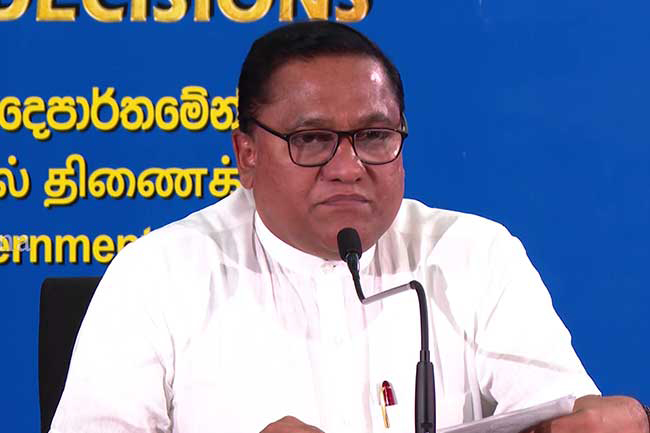
Minister of Foreign Affairs, Vijitha Herath, held talks with Deputy Foreign Minister of Russia Andrey Rudenko at the Foreign Ministry, in Colombo, on Thursday (02), with both sides reaffirming their commitment to strengthening bilateral relations.
The Sri Lanka Ministry of Foreign Affairs said the visiting Russian Deputy Minister noted that Russia regarded Sri Lanka as a long-standing friend.
Rudenko assured that Russia stood ready to support Sri Lanka when required, including in the swift supply of Russian oil to help address the current energy challenges, encouraging Russian investors to explore new opportunities in the country and promoting increased tourist arrivals.
He also expressed Russia’s readiness to provide compensation for Sri Lankan war veterans who had lost their lives in the ongoing conflict between Russia and Ukraine.
Minister Herath welcomed Russia’s willingness to assist, emphasising that Sri Lanka valued the support extended by its “old friend”, particularly at a time when the country was facing pressing energy needs.
He noted that the two countries shared nearly seven decades of diplomatic relations and said the present moment provided an opportunity to further strengthen ties, including through long-term trade agreements.
The discussions focused on enhancing cooperation in the fields of energy, investment, tourism and diplomacy, with both sides reiterating their commitment to further deepen the longstanding friendship between Sri Lanka and Russia.

Police yesterday arrested 157 foreign nationals in connection with an alleged organised online financial scam, conducted from a hotel in the Iranawila area in Chilaw.
The suspects were taken into custody during a raid carried out by the Police while they were staying at the hotel in Iranawila.
Police said the arrested group included 143 nationals from China, 13 from Bangladesh and one from Vietnam.
Investigators suspect the group had been involved in a coordinated online financial scam, targeting victims through digital platforms.
The suspects are being detained for further questioning while investigations are continuing to determine the full extent of the operation and whether additional individuals were involved.Police said further inquiries are underway.
By Norman Palihawadane

World Cup 2026: Italy’s football chief resigns after qualifying failure

Iran says it downed two US jets as search for one pilot continues

Showers above75 mm are likely at some places in the Central, Sabaragamuwa, Uva, North-central and Eastern provinces after 1.00 p.m.

Artemis II crew take ‘spectacular’ image of Earth

White House to ask Congress for record-breaking $1.5 trillion defence budget

Members of the TPA meet with President Dissanayake

‘Dates have the highest sugar content to fight Coronavirus’

Sunday Island 27 December – Headlines

#SundayIsland 17th December – Headlines

Sunday Island – 28th March

Sunday Island Headlines – 21 March

Sunday Island – 21st February – Headlines
-
 News4 days ago
Tariff shock from 01 April as power costs climb across the board
-

 News2 days ago
2025 GCE AL: 62% qualify for Uni entrance; results of 111 suspended
-
 News5 days ago
Inquiry into female employee’s complaint: Retired HC Judge’s recommendations ignored
-
 Features6 days ago
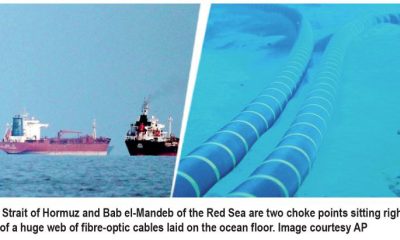
When seabed goes dark: The Persian Gulf, cable sabotage, and race for space-based monopoly
-
 Features5 days ago
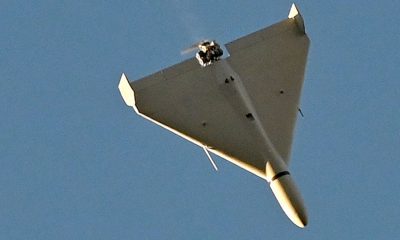
New arithmetic of conflict: How the drone revolution is inverting economics of war
-
 Business3 days ago
Hour of reckoning comes for SL’s power sector
-

 Editorial2 days ago
Search for Easter Sunday terror mastermind
-

 Sports5 days ago
Sri Lanka’s 1996 World Cup heroes to play exhibition match in Kuala Lumpur