
Features
Escalating Fertilizer Prices and Subsidy Removal

by Dr Parakrama Waidyanatha
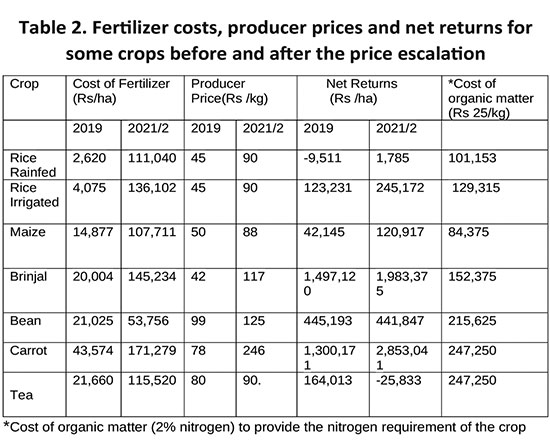
The Maha harvesting of rice is now nearing completion and the strong indications are that this season’s crop decline would be 40% to 50% due to lack of fertilizer. Concurrently, the yields of other crops too are dropping and the tea yields of 2022 could be the worst affected. According available information, whereas the 2021 producer price was only Rs90.33/kg green leaf, the cost of production was Rs94.05 and the corresponding values for 2020 were Rs92.15 and 68.18. On the other hand, increasing the purchase price of paddy to Rs 90 from about Rs 45 per kilogram, even at the prevailing high price of fertilizer, could theoretically double the net returns compared to previous years (Table 2). However all crops are yielding far less this year compared to previous years given the fertilizer scarcity and even when available, the prohibitive costs.
According to the 2021 Global Food Security rating, Sri Lanka has dropped down further from the previous position of 66th a few years ago to the 77th out of 113 countries. Of the food parameters, affordability, availability and quality, the worst decline is in the food availability index, as to be expected, with the current food shortages..
We have been hit by a ‘double whammy’. The decision to totally shift to organic farming or ‘green agriculture’, a term often proudly uttered by the Minister of Agriculture, and the total ban of chemical fertilizer imports without assessing the organic fertilizer availability. Of course the shift to ‘green agriculture’ is not for the love of ‘healthy food’, often uttered by many without knowing the scientific evidence, but because of the shortage of foreign exchange for chemical fertilizer imports. And as seen from the Table 2 below, organic fertilizer will be as costly as chemical at prevailing prices, and not all farmers have the raw material to produce their own organic matter requirements.
Escalating fertilizer prices
The key factors driving fertilizer prices up were a supply shortage in the global market and the growing costs of natural gas, which account for up to 80% of variable costs in producing nitrogenous fertilizers. Faced with the highly expensive energy resources, many European producers had to stop production as they couldn’t compete with counterparts in Russia, countries in the Persian Gulf and northern Africa. As a result, the global supply of fertilizer decreased which led to subsequent price increases. The impact of the Ukraine war is yet to be seen. The COVID epidemic, especially in the west as also the closure of some factories in the U.S due to the bad winter weather during 2021 also contributed to production shortages.
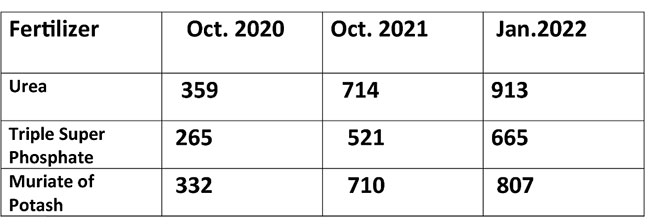
The unprecedented escalating of chemical fertilizer prices globally, as evident from the Table 1, will now make it difficult for the government to provide chemical fertilizer at heavily subsidized rates given the current foreign exchange crisis. In fact the government has, smartly lifted the ban on chemical fertilizer imports handing over the ‘baby’ to the private sector implying that if farmers want they can procure fertilizer at market prices. Then how can the President condone his faulty assertion that if he gives chemical fertilizer with one hand he will have to give the farmer a kidney with the other! Would private sector imported chemical fertilizer not cause the kidney disease? A recent report by the Health Secretary has stated that there is no evidence to implicate agrochemicals in the causation of the Rajarata kidney disease, a position that has been held by the majority of scientists but ignored by the President and the Agriculture Minister.

Table 1.Global Fertilizer Prices (USD/Mt)
The current global prices of not only ammonia and ammonia-based fertilizers(urea) but also of soluble phosphates and potash have increased by 250%.during the last 14 months!(Table 1). Increasing energy costs have also increased mining costs of potash and rock phosphate resulting in their comparable magnitude of increase as ammonium fertilizers. The forecast s that because of continuing supply chain constraints, in particular energy, the fertilizer prices will not come down in the near future.
The overall mean cost of chemical fertilizer at prevailing retail prices is about 24% of the total cost of production whereas it was only about 10% before the price escalation due essentially to subsidies and lower global fertilizer prices.
The data prior to fertilizer subsidy removal presented here are based on those published by the Department of Agriculture in 2019 as those for 2020 and 2021 are not yet available. The farm gate and retail prices of vegetables for 2021/2 were obtained from the Agrarian Research and Development Institute. The prevailing average retail fertilizer price of Rs 8,000 per 50 kg bag was used for 2021/2 calculations. In calculating the 2021/2 net returns which are hypothetical, it has been assumed that the yields were similar to those before the government’s banning of agrochemicals in April 2021. Clearly the farmers obtained much lower yields than before, but the hypothetical calculations were meant only to show that at prevailing farm gate prices, the farmers could have earned far more for many crops had they applied chemical fertilizers even at the current high retail prices. Of course the problem was that chemical fertilizer was not available until recently, and the high producer and retail prices were a result of low production.
Table 2. Fertilizer costs, producer prices and net returns for some crops before and after the price escalation
Fertilizer costs and producer prices
As evident from Table 2 data at the current farm gate (producer) prices, except for rainfed rice, tea and beans the hypothetical net returns have been much higher for the other crops in 2021/2 compared to 2019 because of substantial increase in farm gate (producer) prices consequent on the decrease in production due to fertilizer shortages and exorbitant costs apart from bad weather; and the corresponding increase in retail prices. The farm gate price of paddy increased by two fold with the government defining a paddy procurement price increase of 100%. By contrast, the mean farm gate tea price was 4% lower than the cost of production as pointed out above because of very high comparative increase in fertilizer price. Although the producer prices of brinjal, carrot and most other vegetables too increased several fold the farmers’, earnings were severely curtailed by low productivity due to unavailability of chemical fertilizer.
The writer has reservations regarding the maize yields and production costs as that is a crop cultivated in many parts of the dry and intermediate zones, especially Badulla and Moneragala with substantial returns. It may be because the Dept. of Agriculture’s return calculations are based on dry grain prices whereas a fair share of the crop is sold at comparatively high prices as tender corn cobs.
It should be noted that although, the government is vehemently promoting organic fertilizer under its so called ‘Green Agriculture’ program, except for rice and maize, it is more expensive to the producer than chemical fertilizer at prevailing prices (Table 2).
Judicious fertilizer use
Studies reveal that 60-70% of the applied nitrogenous fertilizer is lost through leaching, runoff and vaporization with most crops. Losses of some other nutrients too could be substantial though not as high as nitrogenous fertilizers. Farmers should be taught the principles of judicious fertilizer use through which substantial reduction in losses and costs could be saved. “Little and often’ is one important principle in judicious fertilizer use.
It would appear that with judicious use, especially application based on soil nutrient levels and crop demand, the fertilizer costs could be substantially reduced. Although there is some effort to promote fertilizer use based on soil and foliar analysis to determine the exacting crop nutrient requirements, it is not adequately popular because of the high analytical costs. The government should strengthen the relevant services and make them available at reasonable costs to farmers. The consequent fertilizer savings could be substantial.
Fertilizer subsidy
The fertilizer subsidy policy has been changing, especially with change of governments. The Government in 2019 continued the policy introduced during the interim Government in 2018 to provide fertilizer at the concessionary prices of a 50 kg bag of any type of straight fertilizer at Rs. 1,000 and a 50 kg bag of mixed fertilizer to Rs. 1,150.00 for crops other than paddy. The average subsidy borne by the Government on a 50 kg bag of paddy fertilizer then was around 86 percent of the market price.
A comprehensive study ( Ekanayake, H. K. J. 20060: Impact of fertilizer subsidy in paddy cultivation in Sri Lanka. Staff Studies; Central Bank of Sri Lanka, 36 (1 and 2): 73–92.) reveals that the fertilizer subsidy is not a key determinant of fertilizer usage in paddy cultivation. The study also found that there is a relatively higher correlation between fertilizer usage and paddy price than between fertilizer usage and fertilizer price. The author states that ‘the fertilizer subsidy could be withdrawn gradually over time. In its place, appropriate infrastructure and institutional facilities that are required to increase productivity in paddy cultivation and an effective mechanism for marketing the output that would result in favourable prices for paddy may be introduced for a more effective outcome’ The results of this study were also reported to be consistent with the findings of similar research in other countries.
Although the generally accepted view of economists is that governments should not indulge in business, would the above statement imply that if the Paddy Marketing Board is streamlined and effective, the paddy farmer can benefit substantially?
Further, a World Bank study(2013 ) entitled “What is the Cost of a Bowl of Rice” points out that the increase in farmers’ net income is small relative to the fiscal cost of the fertilizer subsidy, and that the government spends between Rs1.4 to 2.4 per acre to increase farm income by only a rupee per acre.
In conclusion, as evident in Table 2, the cost of the subsidized fertilizer in 2019 was 10.6% of the total cost of production that in 2022 without subsidy is 17.1%. However, because of the doubling of purchase price of paddy as also the highly escalated producer prices of other arable crops consequent on corresponding escalation of retail prices due to supply shortages, the increased fertilizer prices or subsidies had little bearing on the producer margins which were substantially higher in 2021/2 In other words, in this situation the fertilizer subsidy has no overwhelming impact on the cost of production of arable crops, and the government’s decision to ban the chemical fertilizer subsidy could lead to farmers moving towards more remunerative crops from rice, especially in the Yala season, in the Dry Zone, when it is more practical. However, the high retail prices is a huge burden to the consumer.
As pointed out above the increased cost of production by 4% over the producer price is would be devastating to the tea industry. The exorbitant fertilizer costs is reducing tea productivity substantially and the government should put in place either a price support scheme for the producer or a fertilizer subsidy which should only be 1-2% of the tea export earnings.
Escalated fertilizer prices should make rain fed rice farming especially in the wet zone unprofitable as seen in Table 2, implying that these paddy fields should be diversified into more profitable crops. In any case wet zone contributes only an insignificant quantity of rice to the national supply.


 Imagine you are 58 years old, financially stable with a decent pension plan, and finally ready to build your dream home in the suburbs of Colombo. You walk into a bank, application in hand, only to be told: “Sorry, your repayment period would extend past 60. We can’t help you”. In Sri Lanka, this scenario plays out daily, leaving thousands of mature, creditworthy citizens locked out of homeownership. But, step outside our shores, you’ll find a drastically different story.
From the gleaming towers of Singapore to the countryside cottages of the United Kingdom, older borrowers aren’t just tolerated; they’re actively courted by lenders who understand that age doesn’t determine creditworthiness. While Sri Lankan banks remain trapped in outdated policies that effectively discriminate against anyone over 50, the rest of the world has moved on, creating flexible, dignified pathways for seniors to access home loans.
Role of the Central Bank and the Government
The Central Bank of Sri Lanka has failed in its fiduciary duty by not directing financial institutions to refrain from arbitrarily denying home loans, solely on the basis of age. The Ministry of Finance, therefore, the government, is equally responsible for this failure.
This regulatory vacuum enables systematic discrimination against creditworthy older citizens, contradicting modern banking principles and harming an ageing population desperately needing progressive, not punitive, financial policies.
The Global Picture: Where Age is Just a Number
Many advanced economies, such as the United States and Canada, etc., there is no maximum age limit, whatsoever, for obtaining a 30-year mortgage. The Equal Credit Opportunity Act explicitly prohibits age discrimination, meaning an 80-year-old American can walk into a bank and apply for the same three-decade loan term as a 30-year-old, provided they meet income and credit requirements. Lenders evaluate based on current financial stability, not birth certificates. A 65-year-old Canadian with a solid pension can secure a mortgage extending well into their seventies, with the understanding that income, not age, determines repayment capacity.
Australia sets the typical retirement age benchmark at 65-75, and borrowers, over 65, can still obtain mortgages by demonstrating an exit strategy; a credible plan for repayment that might include downsizing, superannuation funds, or ongoing retirement income. The system acknowledges that life doesn’t end at 60, and neither should financial opportunity.
Global Home Loan Conditions:
A Comparative Analysis
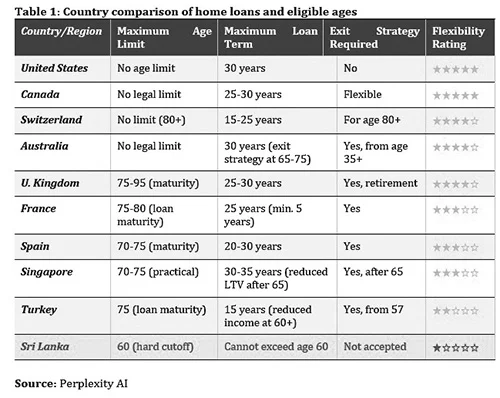
The following table ranks countries from most to least affordable for older home loan applicants, based on maximum age limits, flexibility of terms, and accessibility of financing (Table 1).
What Makes These Systems Work?
The countries at the top of our affordability ranking share several key characteristics. First, they recognise that retirement doesn’t mean financial incapacity. Banks in these countries evaluate total financial health, not just employment status.
Second, they embrace the concept of exit strategies, in Australia, for instance, acceptable exit strategies include downsizing property, selling investment assets, or using superannuation (retirement) funds. These strategies are actually considered and evaluated, not dismissed out of hand. Australian lenders assess whether someone’s superannuation balance is sufficient to clear the debt, or if their investment property provides adequate cash flow. It’s a conversation, not a closed door.
Third, many of these countries offer specialised products for older borrowers. The UK, for example, has retirement interest-only mortgages where borrowers pay only interest during their lifetime, with the principal cleared when the property is eventually sold.
Australia provides reverse mortgages for those aged 60 and above. Under this arrangement, the bank pays the homeowner, rather than the homeowner paying the bank, using the house as security. The full outstanding balance is then recovered when the property is eventually sold.
These may not be perfect solutions, but they represent creative thinking about how to serve an ageing population’s housing needs.
The Hidden Cost of Age Discrimination
Sri Lanka’s rigid age-60 cutoff carries consequences that ripple far beyond individual borrowers. In a nation where life expectancy now exceeds 77 years, we’re telling people they are 17 years of ‘too old’ to be trusted ahead of them. This isn’t just unfair; it’s economically counterproductive.
Consider the broader impact. Sri Lanka has one of Asia’s fastest-aging populations. By 2050, one in four Sri Lankans will be over 60. These aren’t economic liabilities; many are professionals with decades of experience, stable incomes, and substantial assets. A 58-year-old doctor with thriving practice and pension security poses less default risk than a 28-year-old in an uncertain job market, yet our banking system treats them as if the opposite were true.
Learning from Singapore: A Regional
Success Story
We don’t need to look to distant Western nations for alternatives. Singapore, our regional neighbour facing similar demographic challenges, has crafted a more balanced approach. While Singapore’s Monetary Authority hasn’t imposed a hard age limit, banks do apply careful scrutiny to loans extending past age 65.
A Singaporean borrower, over 65, can still obtain financing, but with reduced loan-to-value ratios. If you’re buying a property worth one million dollars and you’re under 65, you might borrow up to 75 percent. Over 65, that drops to 60 percent. It’s more conservative, certainly, but it preserves opportunity.
This approach acknowledges risk without eliminating possibility. It says to older borrowers: Yes, we’ll lend it to you, but we need you to have more equity in the game. Compare this to Sri Lanka’s approach, which effectively says: “We don’t care how much equity you have or how stable your income is, you’re too old”.
A Path Forward for Sri Lanka
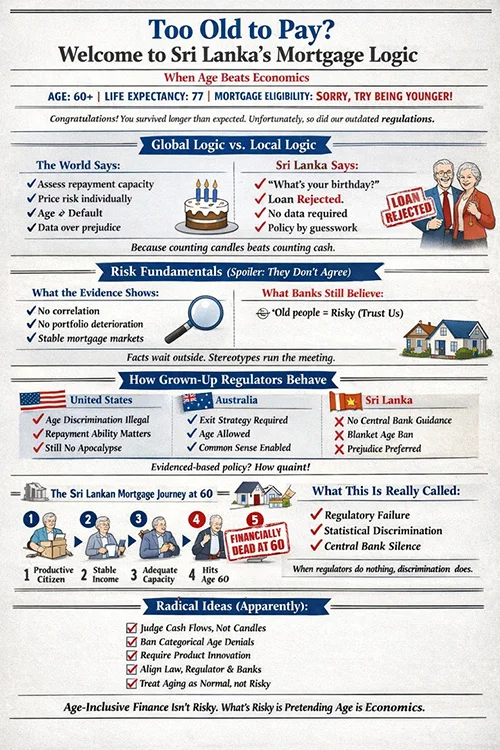 The Central Bank of Sri Lanka could issue guidelines similar to Singapore’s loan-to-value adjustments. For borrowers whose loan terms extend past 65, reduce the maximum LTV from 90 percent to 70 or 75 percent.
This protects banks from excessive risk while allowing creditworthy older borrowers to access financing. It’s a middle ground that respects both prudent lending standards and individual dignity.
Additionally, Sri Lanka could develop specialised products for its ageing population. Retirement interest-only loans, similar to those in the UK, could serve retirees who have substantial home equity but limited monthly income. Reverse mortgages, properly regulated with strong consumer protections, could help elderly Sri Lankans tap into home equity without monthly payments.
Beyond Banking: A Cultural Shift
Ultimately, changing Sri Lanka’s approach to older borrowers requires more than policy adjustments; it demands a cultural reckoning with how we value our ageing citizens. The countries that lead in age-friendly lending, the United States, Canada, Australia, share a broader commitment to recognising that people can remain economically active and financially responsible well into their later years.
These nations have moved beyond viewing retirement as an endpoint and recognised it as a transition. A 65-year-old today might have 20 or more active years ahead, years in which they’ll continue working part-time, managing investments, drawing stable pensions, and yes, making mortgage payments. Our banking sector needs to catch up to this reality.
Conclusion: Time for Change
As our table demonstrates, Sri Lanka stands alone at the bottom of the global ranking for age-friendly home lending. We’re more restrictive than Turkey with its 15-year maximum terms, more inflexible than Singapore with its sliding loan-to-value scales, and incomparably more rigid than the United States, Canada, or Switzerland, where age barely factors into lending decisions at all.
This isn’t about being soft on risk or abandoning prudent lending standards. Countries with no age limits still assess income, evaluate debt-to-income ratios, and verify creditworthiness. They simply don’t use age as a crude proxy for financial competence. The initiative lies with the Ministry of Finance, which must direct the Central Bank accordingly.
For Sri Lanka’s 58-year-old aspiring homeowner, the current system isn’t just frustrating; it’s a form of systematic discrimination that would be illegal in most developed economies. As our population ages and life expectancy increases, maintaining this policy becomes increasingly untenable. The question isn’t whether Sri Lankan banks will change their approach to older borrowers, but when and how many dreams will be deferred or destroyed in the meantime.
The world has shown us better ways forward. It’s time Sri Lanka joined the 21st century in recognising that 60 isn’t the end of financial opportunity for many, it’s just the beginning.
(The writer, a senior Chartered Accountant and professional banker, is Professor at SLIIT, Malabe. The views and opinions expressed in this article are personal.)
This is an adapted version of the Bishop Cyril Abeynaike Memorial Lecture delivered on 14 June 2025 at the invitation of the Cathedral Institute for Education and Formation, Colombo, Sri Lanka.
(Continued from yesterday)
The public are entitled to expect their public servants to be intrinsically committed to the truth. From a consequentialist perspective, to secure public trust, public office must be oriented towards justice. Public officers ought to lend their mind to responding to the injustices that they can address within their mandate. This is precisely what Lalith Ambanwela did. His job was to audit the accounts, which he did truthfully and thereby revealed injustices. If he had paused to worry about the risks involved or if he had wondered whether he could have rid the entire system of corruption, the obvious answer to that would have stopped him from taking any truthful action. Rather, he responded to the injustice that he saw, in a truthful manner, thereby improving the trust the public could have in his office.
Notwithstanding the Ambanwela example, one may still ask, in a place like Sri Lanka, what is the point in a single public official being truthful in a context where the problems are institutional, systemic, generational and entrenched – such as corruption or abuse of power? Many of us are familiar with the line of reasoning which suggests that there is no point in being truthful as a single individual, at any level of public service- there will be no impact except for trouble and stress; that one person cannot change systems; that one must wait for a more suitable time; that one must be strategic; that one must think of one’s children safety and future; and that one must be cautious and not attract trouble. Women, in particular, are told – do not be difficult or extreme, just let this go because you cannot change the world.
This is where we come back to the intrinsic justification for truthfulness and a Christian perspective helps us understand the need to cultivate such an intrinsic motivation. The commitment to truthfulness, the Christian faith suggests, is not subject to whether the consequences are palatable or not, as to whether you may be successful or not, but rather, regardless of those consequences. But to sustain such a commitment to truthfulness, I think we need a nurturing environment – a point which I do not have time to speak to today.
Before moving to the second attribute, which is rationality, I want to mention a few other points that I will not be dealing with today. We need to acknowledge that there can be different approaches to discovering the truth and there can be, at least in some instances, different truths. This is reflected in the fact that we have four Gospels that account for the life and ministry of Jesus, reminding us that pursuing the truth has its own in-built challenges. Furthermore, truth is inter-dependent with many other attributes, including trust and freedom.
·
1. Rationality
I now turn to rationality, the second attribute that I think is necessary for securing public trust in public office. In public law, which is the area of law that I specialise in, rationality is a core value and a foundational principle. In contrast, it is fair to say that religion is commonly understood as requiring a faith-based approach – often considered to be the anti-thesis of rationality. However, the creation account in the Bible suggests to us that we were created in the image of God and that at least one of the attributes of human nature is rationality. Furthermore, it has been argued that even Science, generally considered to be a discipline based on rationality and objectivity, is also ultimately based on assumptions and therefore on belief. A previous lecture in this lecture series, by Prof Priyan Dias, explored these ideas in detail.
In my study of public law and in my own experiences in exercising public power, I have observed, of myself and of others like me, that cultivating rationality and maintaining a commitment to it, is a challenge. The need for rationality arises when we are given discretion. Academics, for instance, are given discretion in grading student exams or when supervising doctoral students. Members of the judiciary exercise significant discretion in hearing cases. In Sri Lanka’s Constitutional Council, the members have discretion to approve or disapprove the nominations made by the President to constitutional high office including to the office of the Chief Justice and Inspector General of Police. As I mentioned earlier, where there is discretion, the law requires the person exercising that discretion to be rational.
How should public officials practice rationality? In my view, there are five aspects to practicing rationality in decision-making. First, public officials ought to be able to think objectively about each decision they are required to make. Second, to think objectively, we have to be able to identify the purpose for which discretionary power has been given to us. Third, where necessary, we ought to consult others and/or seek advice and fourth, we have to be able to resist any pressure that might be cast on us, to be biased. Fifth, we should have reasons for our decision and consider it our duty to state those reasons to the world at large.
Let me say a bit more about these five aspects. When, as public officials, we exercise discretionary power, we ought to cultivate the habit of separating the personal from the professional. In public law we say that we should adopt the perspective of a fair minded and reasonable observer. But we know that our own situations often shape even our very idea of objectivity. For example, if a decision-making body comprises only men, or if a public institution has been only headed by men or has very few women at decision-making levels, objectivity could very well lead to decision-making that does not take account of the different issues that women face. All this to say, that objectivity is not simply the absence of personal bias but a way of making decisions where a public official is committed to taking account of all relevant perspectives and thinking rationally about them. No easy task, but that, I think, is what is required of public officials who seek to secure public trust.
The second aspect to rationality is having an appreciation and commitment to the purpose for which discretion has been vested in us. To do so, as public officials, whether we like it or not, we need to have some appreciation for the legal or policy basis on which discretionary power has been vested in us. You may think that this makes the job easier for lawyers. Well, I can tell you that it has not been uncommon for me to be in decision-making situations where even lawyers do not know or have not done their homework to understand what the law requires of us. Recall here the second example I cited, that of Thulsi Madonsela, the former Public Protector of South Africa. She was very clear about the purpose of her office – to ensure accountability. The rationality of her reports on the excessive spending on the President’s house and the report on state capture, have withstood the test of time and spoken truth to power, rationally.
Permit me to make a further point here. The law itself can, and, sometimes is, unjust or unclear. In such contexts, what is the role of a public official? In Sri Lanka, only the Parliament can change laws. Those who hold public office and who derive power from a specific law can only implement it. But and this is very significant, almost always, public officials are required to interpret the law in order to understand its purpose, scope etc. For instance, in Sri Lanka, the law does not lay down the minimum qualifications for several key constitutional offices. The nomination of persons to these offices is through a process of convention, that is to say practice. In my view, this is far from desirable. However, while the law remains this way, the President has the discretion to nominate persons to these constitutional offices and the Constitutional Council is required to approve or disapprove such nominations. The lack of clarity in the relevant constitutional provisions casts a heavy duty on both the President and the Constitutional Council to ensure that they all exercise the discretion vested in them, for the purpose for which such discretion has been given. To do so, both the President and the Council ought to have an appreciation for each of these constitutional high offices, such as that of the Attorney-General or Auditor General and exercise their discretion rationally for the benefit of the people.
Consulting relevant parties and obtaining advice is the third aspect of rationality that I identified. It is not unusual for public officials to consult or obtain advice. Complex decisions are often best made with feedback from suitably qualified and experienced persons. who will share their independent opinion with you and where necessary, disagree with you. However, what I have observed in my work so far is the following. Public officials who seek advice, often select other public officials or experts who they like, or ones with whom they have a transactional relationship or ones who may not think differently from them. Correspondingly, the advice givers, often public officials themselves, seek to agree and please (or even appease) rather than give independent, subject based rational advice. This type of advice subverts the purpose of the law, bends it to political will and is disingenuous. I am sure, we can all think of examples from Sri Lanka where this has happened, sometimes even causing tragic loss of life or irreversible harm to human dignity.
Permit me to give you a personal example which is now etched in my mind. In November, 2023, the then President proposed to the Parliament that due to the non-approval of a nomination he had made to judicial office, that a Parliamentary Select Committee should be appointed to inquire into the Constitutional Council (The Sunday Times 26 November 2023). Feeling overwhelmed by the prospect of being hauled before a Parliamentary Select Committee while also recalling experiences of some public officials before such proceedings, the day after this announcement was made, I sat at my desk and typed out my letter of resignation (Daily Mirror 23 November 2023). I then rang up one of my lawyers to discuss this. I told him that I am resigning as I could not take what was to come. He responded very gently and made two points: 1) that I ought to not resign and need to see this through, whatever the process might entail and 2) that he and others will stand by me every step of the way. As you can imagine, that was not what I wanted to hear and it distressed me even more. Today, I recall that conversation with much humility and appreciation. That advice was certainly not what I wanted to hear that night but most certainly what I needed to hear.
The fourth aspect of rationality is resisting pressure which I will address later.
I will only speak briefly on the fifth aspect of rationality – that of having and stating reasons for decisions. In my view, if a public official is not able to provide reasons for a decision, it is a good indication of the need to rethink that decision. The external dimension of this aspect is one we all know. When a public official exercises public power, they are obliged to explain the reasons for their decisions. This is essential for securing the trust of the people and they owe it to us because they exercise public power, on our behalf. It goes without saying that public officials and the public should know the difference between rational reasons and reasons which are disingenuous – reasons which seek to hide rather than reveal.
So, to sum up on the points I made about rationality, I highlighted five features of this attribute, being objective in decision-making, being limited and guided by the purpose for which discretionary power has been given, consulting and/or seeking honest and expert-based advice, resisting any pressure to be biased and recording reasons for decisions. (To be continued)
by Dinesha Samararatne
Professor, Dept of Public & International Law, Faculty of Law, University of Colombo, Sri Lanka and independent member, Constitutional Council of Sri Lanka (January 2023 to January 2026)

The impact of Cyclone Ditwah was asymmetric. The rains and floods affected the central hills more severely than other parts of the country. The rebuilding process is now proceeding likewise in an asymmetric manner in which the Malaiyaha Tamil community is being disadvantaged. Disasters may be triggered by nature, but their effects are shaped by politics, history and long-standing exclusions. The Malaiyaha Tamils who live and work on plantations entered this crisis already disadvantaged. Cyclone Ditwah has exposed the central problem that has been with this community for generations.
A fundamental principle of justice and fair play is to recognise that those who are situated differently need to be treated differently. Equal treatment may yield inequitable outcomes to those who are unequal. This is not a radical idea. It is a core principle of good governance, reflected in constitutional guarantees of equality and in international standards on non-discrimination and social justice. The government itself made this point very powerfully when it provided a subsidy of Rs 200 a day to plantation workers out of the government budget to do justice to workers who had been unable to get the increase they demanded from plantation companies for nearly ten years. The same logic applies with even greater force in the aftermath of Cyclone Ditwah.
A discussion last week hosted by the Centre for Policy Alternatives on relief and rebuilding after Cyclone Ditwah brought into sharp focus the major deprivation continually suffered by the Malaiyaha Tamils who are plantation workers. As descendants of indentured labourers brought from India by British colonial rulers over two centuries ago, plantation workers have been tied to plantations under dreadful conditions. Independence changed flags and constitutions, but it did not fundamentally change this relationship. The housing of plantation workers has not been significantly upgraded by either the government or plantation companies. Many families live in line rooms that were not designed for permanent habitation, let alone to withstand extreme weather events.
Unimplementable Promise
In the aftermath of the cyclone disaster, the government pledged to provide every family with relief measures, starting with Rs 25,000 to clean their houses and going up to Rs 5 million to rebuild them. Unfortunately, a large number of the affected Malaiyaha Tamil people have not received even the initial Rs 25,000. Malaiyaha Tamil plantation workers do not own the land on which they live or the houses they occupy. As a result, they are not eligible to receive the relief offered by the government to which other victims of the cyclone disaster are entitled. This is where a historical injustice turns into a present-day policy failure. What is presented as non-partisan governance can end up reproducing discrimination.
The problem extends beyond housing. Equal rules applied to unequal conditions yield unequal outcomes. Plantation workers cannot register their small businesses because the land on which they conduct their businesses is owned by plantation companies. As their businesses are not registered, they are not eligible for government compensation for loss of business. In addition, government communication largely takes place in the Sinhala language. Many families have no clear idea of the processes to be followed, the documents required or the timelines involved. Information asymmetry deepens powerlessness. It is in this context that Malaiyaha Tamil politicians express their feeling that what is happening is racism. The fact is that a community that contributes enormously to the national economy remains excluded from the benefits of citizenship.
What makes this exclusion particularly unjust is that it is entirely unnecessary. There is anything between 200,000-240,000 hectares available to plantation companies. If each Malaiyaha Tamil family is given ten perches, this would amount to approximately one and a half million perches for an estimated one hundred and fifty thousand families. This works out to about four thousand hectares only, or roughly two percent of available plantation land. By way of contrast, Sinhala villages that need to be relocated are promised twenty perches per family. So far, the Malaiyaha Tamils have been promised nothing.
Adequate Land
At the CPA discussion, it was pointed out that there is adequate land on plantations that can be allocated to the Malaiyaha Tamil community. In the recent past, plantation land has been allocated for different economic purposes, including tourism, renewable energy and other commercial ventures. Official assessments presented to Parliament have acknowledged that substantial areas of plantation land remain underutilised or unproductive, particularly in the tea sector where ageing bushes, labour shortages and declining profitability have constrained effective land use. The argument that there is no land is therefore unconvincing. The real issue is not availability but political will and policy clarity.
Granting land rights to plantation communities needs also to be done in a systematic manner, with proper planning and consultation, and with care taken to ensure that the economic viability of the plantation economy is not undermined. There is also a need to explain to the larger Sri Lankan community the special circumstances under which the Malaiyaha Tamils became one of the country’s poorest communities. But these are matters of design, not excuses for inaction. The plantation sector has already adapted to major changes in ownership, labour patterns and land use. A carefully structured programme of land allocation for housing would strengthen rather than weaken long term stability.
Out of one million Malaiyaha Tamils, it is estimated that only 100,000 to 150,000 of them currently work on plantations. This alone should challenge outdated assumptions that land rights for plantation communities would undermine the plantation economy. What has not changed is the legal and social framework that keeps workers landless and dependent. The destruction of housing is now so great that plantation companies are unlikely to rebuild. They claim to be losing money. In the past, they have largely sought to extract value from estates rather than invest in long term community development. This leaves the government with a clear responsibility. Disaster recovery cannot be outsourced to entities that disclaim responsibility when it becomes inconvenient in dealing with citizens of the country with the vote.
The NPP government was elected on a promise of system change. The principle of equal treatment demands that Malaiyaha Tamil plantation workers be vested with ownership of land for housing. Justice demands that this be done soon. In a context where many government programmes provide land to landless citizens across the country, providing land ownership to Malaiyaha Tamil families is good governance. Land ownership would allow plantation workers to register homes, businesses and cooperatives and would enable them to access credit, insurance and compensation which are rights of citizens guaranteed by the constitution. Most importantly, it would give them a stake that is not dependent on the goodwill of companies or the discretion of officials. The question now is whether the government will use this moment to rebuild houses and also a common citizenship that does not rupture again.
by Jehan Perera

Dry weather will prevail in most parts of the island

Nigeria president ‘in great shape’ after falling at Turkey reception

Spain plans to give half a million undocumented migrants legal status

Devine denies Delhi Capitals once again in final over

Four Chief Prelates urge President to appoint NAO official as Auditor General

PM pushes for expansion of skills and training at Davos confab

‘Dates have the highest sugar content to fight Coronavirus’

Sunday Island 27 December – Headlines

#SundayIsland 17th December – Headlines

Sunday Island – 28th March

Sunday Island Headlines – 21 March

Sunday Island – 21st February – Headlines
-
 Business2 days ago
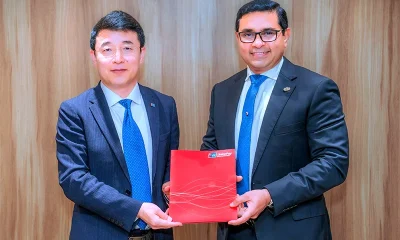
ComBank, UnionPay launch SplendorPlus Card for travelers to China
-
 Business3 days ago
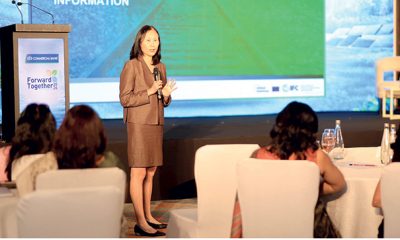
ComBank advances ForwardTogether agenda with event on sustainable business transformation
-

 Opinion6 days ago
Remembering Cedric, who helped neutralise LTTE terrorism
-

 Business6 days ago
CORALL Conservation Trust Fund – a historic first for SL
-
 Opinion3 days ago
Conference “Microfinance and Credit Regulatory Authority Bill: Neither Here, Nor There”
-

 Opinion5 days ago
A puppet show?
-
 Opinion2 days ago
Luck knocks at your door every day
-
 Features5 days ago
‘Building Blocks’ of early childhood education: Some reflections