
Business
Eran outlines practical solutions aimed at resolving corruption and other issues

Continued From Yesterday
A National Land Bank
Another huge barrier you face when you are in business is, basically getting some land to set up a factory, industry or even an office. I am a person who came from your side (private sector) to this side (public sector) and I can share my view on this area of activity of obtaining land for a Multi model Transport Hub. I had to get involved with the UDA, CGR, CTB, Municipal Council, the state authorities; just to get a plot of land sorted out and it took nearly two years.
The President the other day said a National Land Council will be set up and a national land policy will be adopted. What I ask is, do it quickly rather than allow time to pass. We are taking it beyond that and we will create a National Land Bank. This is one of the huge obstacles, the businesses in our country face. That is why we want to make sure that we go in this direction.
Fuel and Energy issues
The other issue you are currently facing is fuel and energy. No easy solution and payment cannot be made as there is an immediate dollar shortage in the country. A few months ago MP Harshana Rajakaruna and I were at the COP – 27 meeting in Egypt where the President was in attendance at the meeting of leaders of countries meeting on energy and the environment. We were there as Members of Parliament with other Members of Parliament of South Asian countries. One of the things we don’t openly talk about is, we have a huge potential in sustainable energy; our policy is to open a system. Sri Lanka’s biggest hurdle is that we have closed our borders and we need to open them. Bigger issue is we have closed our minds and we have to open our minds and think out of the box.
Therefore, this potential can’t be tapped unless we have foreign investments and we heard our political parties saying that foreign investment will not be welcomed in the energy sector. What kind of nonsense is that? We are never going to do it with our savings because we know about our debt problem. Therefore, we have to open it up for foreign investment. I can’t understand their logic; what are we talking about here is solar energy and wind energy. We are selling the resources. Therefore we have to open up. We have so much of potential. Harshana and I had discussions with India, Nepal, Bangladesh and Bhutan. Sri Lanka’s needs can be met by more than that, we could even become an exporter of energy. Therefore we need to move in that direction.
Legal process
Other issues businesses have are legal issues. I must confess upfront I am not a lawyer, not a legal person. But there is a lot that has been written. Fair and equal treatment is absolutely important. Businesses also need guarantees against appropriations. When I was in Parliament first in 2010 – 2015, it was awful to see what the then government did.
The private sector lost confidence. We have constitutional guarantees. But despite the constitutional guarantees unlawful expropriation is a predominant concern of the private sector. State has the right to regulate, but not to unlawfully or indirectly expropriate. Fair treatment must be ensured and we will work on it.
We need to be seen as a reliable country where local and the foreign businesses actually can deal with us. This needs a lot of consultations on how we are going to do this. We need to make Sri Lanka a Centre for Arbitration in the region to move in this direction.
Centralised approvals for local BOIs
Why only the concept for foreign investments, why haven’t we thought about it? Several years ago when I was a banker I was asked how to develop ICT. I was not an ICT man but I was a developer. I was ask to take over the ICT. I went and looked at it. There were more drivers and clerks than ICT people there. I came up with a recommendation to shut it down and that is how the ICTA was started. Some of these reorganizations will have to be radical. I will give an indication that we will do the reforms; starting a new BOI for local businesses. We have to be radical in our thinking if we want to enable this country to go ahead. These are not new but other countries have done these things. Therefore, these things can be done.
Foreign Direct Investment (FDI)
Our foreign policy is that of an independent state. I like the old language that was used by Madam Sirimavo Bandaranaike. A Non – Aligned country. Taking into consideration the security concerns of our neighbour India, the closed proximity we have, we have to work intelligently. But we are an independent state. That is our foreign policy. In this foreign policy we don’t care where the investment comes from. Rule of Law will be paramount. We have to have an empowered BOI. Exports will be given primacy. Value addition to high- end services, basically high tech manufacturing institutions, will be relooked at.
SOEs
Harsha De Silva M.P gave the staggering statistics of State Owned Enterprises. I remember a former Prime Minister called me one day and said he wants to put Sri Lankan Airlines under me. I said Sir, wait a minute. I don’t want it. He looked very puzzled. He asked why? I said; Sir, there is no point in giving me the things that cannot be overturned by me. Everybody looked shocked. We have to stop fooling ourselves.
SoEs need to be reformed. I am going to tell you what our policies are. Our philosophy is limited government ownership in strategic areas. There are strategic areas, such as, finance, food and energy. But you know to do things better. I don’t think the government needs to be involved. You are the entrepreneur, you know the market you know better, therefore, you should be doing things. Now the number of SOEs have risen from 105 to 250.And the losses have risen to more than a trillion rupees. We believe in Public -Private Partnerships. We looked at various models of PPP.
We see now the institutions are put under different ministries and the ministers are managing them through their secretaries, like chief executives giving instructions to commercial enterprises. We want to move away from that. We want to take the people who know what to do to be in-charge of them. That is why that structure is important and the businesses can lead those structures. One more thing, bankruptcy can also be avoided. Therefore, we need a law on bankruptcy and on reorganizing bankruptcy. Preliminary work was done and the AGs Dept. played a key role in it.
Diaspora
We need to take this country to the next level. It is not going to be easy. I think we have a 2- 3 year struggle on our hands. Stabilization first, as Dr. Harsha said. If I use the word diaspora here, this word has been redefined with Sri Lanka’s conflict in mind. That is why I purposely use the words Overseas Sri Lankans. Sri Lankans living overseas are not a liability; they are one of the biggest assets this country has. Their educational level is very high, they have the technology and the foreign currency, so many huge advantages and we want to welcome them here. If they decide to have dual citizenship they will be given it. Their 2nd generation born abroad will be given permanent residence and we will open our doors to them and their investment. Why should we close the door on these biggest assets we have?
Education for all
Physical location is a great advantage this country has. We are the hub of the Indian sub-continent in education and human resources. Airport, ports, logistics are available.
SJB policy is that every child in this country must have access to higher education.
Though education is a public good the supplier need not necessarily be the government. Private sector too can be a supplier.
Two private sector medical colleges opened by the private sector previously were shut down due to protests by left wing political parties who are against private sector contributions towards education.
The responsibility of the government is regulation in providing education.
We want to preserve our societies and families. We don’t want our youngsters going abroad, looking for greener pastures or for shelter in other countries. This not only about the economy but also about values culture, family society etc.






For Daham Perera, a December birthday celebration this year became something far more meaningful than cake, candles or gatherings with friends. Instead, it turned into a deeply personal act of solidarity with a country he calls his motherland.
Perera, a young environmental enthusiast based in Los Angeles, says his bond with Sri Lanka remains unbroken despite living thousands of miles away. “Although I live in America, my parents and all my relatives live in beautiful Sri Lanka. That connection is something I carry with me every day, he said.
Having visited Sri Lanka in August, Perera spent weeks traveling across the island, reconnecting with relatives and visiting historical and environmentally significant sites. “I saw the true beauty of Sri Lanka – its people, its biodiversity, and its rich heritage. Those memories are among the most beautiful in my life, he recalled.
That joy, however, was short-lived. Soon after his return, the devastating Ditwah cyclone struck the island, leaving a trail of destruction. Homes were damaged, livelihoods disrupted and families displaced. “When I saw images of my friends losing their homes, books soaked in mud, clothes ruined by floodwaters, I felt a pain I cannot put into words, Perera said.
As an environmentalist, the damage to Sri Lanka’s fragile ecosystems troubled him deeply. “Sri Lanka’s biodiversity is priceless. When disasters like this strike, it is not just people who suffer, but forests, wildlife and entire ecosystems that take years to recover, he noted.
With his birthday falling on December 9, Perera made an unconventional decision. “Normally, my father and I celebrate our birthdays by going to the temple and spending time with friends. But this year, celebrating didn’t feel right when my people were suffering, he explained. “I kept asking myself—what can I do, even from afar?”
The answer was simple but powerful. Perera chose to donate all the money he had saved for his birthday celebrations, along with additional contributions from his family, towards relief efforts in Sri Lanka. “Economic support at times like this is critical. Even a small contribution can help a family rebuild, restart a livelihood, or regain dignity, he said.
The donation was formally handed over to Sri Lanka’s Consul General in Los Angeles, Charith Yattegoda, at the Consulate premises. For Perera, the gesture carried deep emotional significance. “If I can replace my personal happiness with smiles on the faces of people back home, that is the most beautiful birthday I could ever celebrate, he reflected.
He describes the letter of appreciation he received in return as his most treasured gift. “That thank-you letter is not just paper. It is a reminder that loving your country means standing by it in its darkest moments. It will always remain one of the most meaningful keepsakes of my life, Perera said.
Perera hopes his story will inspire other young Sri Lankans living overseas to stay connected and give back. “Distance should never weaken our responsibility. Supporting Sri Lanka—its people, its economy, and its environment—is something we can all do, no matter where we live, he added.
In turning a birthday into an act of compassion, Daham Perera has offered a quiet but powerful reminder: sometimes, the greatest gifts are the ones we give away.
By Ifham Nizam
Business
John Keells Foundation partners Sri Lanka Police in combatting violence against women and children

As part of its ongoing commitment to combat violence against women and children towards empowering a healthy and progressive nation, John Keells Foundation (JKF) continues to empower law enforcement agencies through Project WAVE (Working Against Violence through Education) – its flagship of over ten years – to combat gender-based violence and child abuse.
These activities include a strategic collaboration through which JKF supported the Sri Lanka Police to enhance their response to crimes involving women and children through the sponsorship of a global cutting-edge investigative software for use in the Cyber Investigation Unit (CIU) at the Bureau for the Prevention and Investigation of Abuse of Children and Women (BPIACW). The software enables officers to analyse and connect data efficiently, strengthening their ability to investigate and prevent online exploitation and related offences. BPIACW reported that the new platform had directly contributed to a significant and measurable improvement in their investigative capacity, recording the rescue of 22 children, the arrest of 21 suspects, and the filing of 111 cases in courts within the first year of its deployment.
Speaking on the partnership with JKF, Deputy Inspector General of Police – Ratnapura, and Former DIG – Children & Women Abuse Prevention 8 Investigation Range, Renuka Jayasundara said, “We extend our sincere gratitude to JKF for your steadfast partnership and for serving as a cornerstone of our efforts to strengthen child protection services through Project WAVE. Your contribution is making a tangible and quantifiable difference as evidenced by the growing numbers of successful investigations and legal referrals.”
Beyond technological support, JKF has also conducted a series of Train-the-Trainer (ToT) programmes, to improve the ability of officers to respond to GBV and CP in a sensitive and effective manner. The sixth such ToT was conducted from 24th to 26th of September 2025 for the benefit of nominated officers of the Homagama, Kaduwela and Maharagama police divisions. To date, 162 officers across 60 police stations have been impacted.
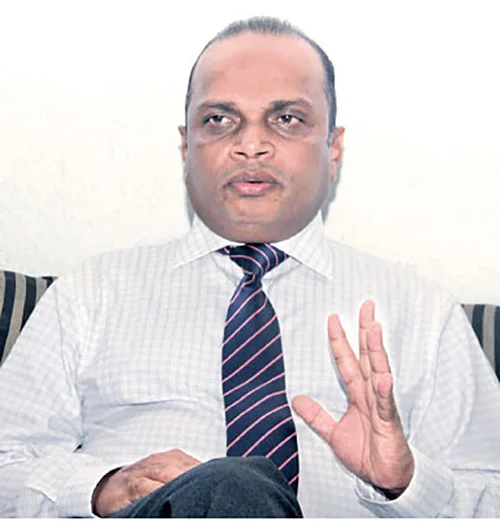
The Sri Lanka Australia–New Zealand Business Council (SLANZBC) has extended its profound gratitude to both the Australian and New Zealand governments for the generous and timely assistance provided to Sri Lanka during the recent flood devastation.
Chandana Amaradasa, SLANZBC president, noted that both governments donated one million dollars each, in their respective currencies, at a critical moment for Sri Lanka — support that will play a significant role in helping communities rebuild their livelihoods.
The government of New Zealand has pledged NZ$1 million to support humanitarian relief efforts in Sri Lanka following Cyclone Ditwah.
This assistance will be channeled through an international
humanitarian partner to strengthen ongoing rescue and relief operations.
Similarly, the Australian government announced on November 30, 2025 that it will provide AUD 1 million in humanitarian aid to bolster Sri Lanka’s response to Cyclone Ditwah.
These compassionate and timely gestures, Amaradasa said, once again demonstrate the unwavering commitment of both countries to stand beside the Sri Lankan people in times of crisis. He also recalled that
Australia and New Zealand have consistently supported Sri Lanka, stepping forward during previous national emergencies as well.
Today’s humanitarian assistance further reaffirms the depth of these longstanding relationships and the true spirit of friendship that binds the nations — a bond built on mutual respect, shared values and enduring goodwill.
“Our association deeply appreciates this kind and meaningful support and remains committed to fostering even closer ties between the people of Sri Lanka, New Zealand, and Australia, he added.
By Hiran H Senewiratne

Trump files $5bn defamation lawsuit against BBC over Panorama speech edit

UK and South Korea strike trade deal

Rob Reiner’s son Nick arrested for murder after director and wife found dead

70,297 persons still in safety centers

Showers will occur at times in the Northern, North-Central, Eastern, Uva and Central provinces

MEPA to crack down on marine polluters

‘Dates have the highest sugar content to fight Coronavirus’

Sunday Island 27 December – Headlines

#SundayIsland 17th December – Headlines

Sunday Island – 28th March

Sunday Island Headlines – 21 March

Sunday Island – 21st February – Headlines
-
 Features7 days ago
Finally, Mahinda Yapa sets the record straight
-
 Features7 days ago
Handunnetti and Colonial Shackles of English in Sri Lanka
-
 Business5 days ago
Cabinet approves establishment of two 50 MW wind power stations in Mullikulum, Mannar region
-
 News6 days ago
Gota ordered to give court evidence of life threats
-

 Features6 days ago
Cliff and Hank recreate golden era of ‘The Young Ones’
-
 Features6 days ago
Sri Lanka and Global Climate Emergency: Lessons of Cyclone Ditwah
-
 Opinion7 days ago
A national post-cyclone reflection period?
-

 Latest News6 days ago
Sri Lanka squad named for ACC Men’s U19 Asia Cup