
Latest News
Economic stabilization process and relief packages to people to continue

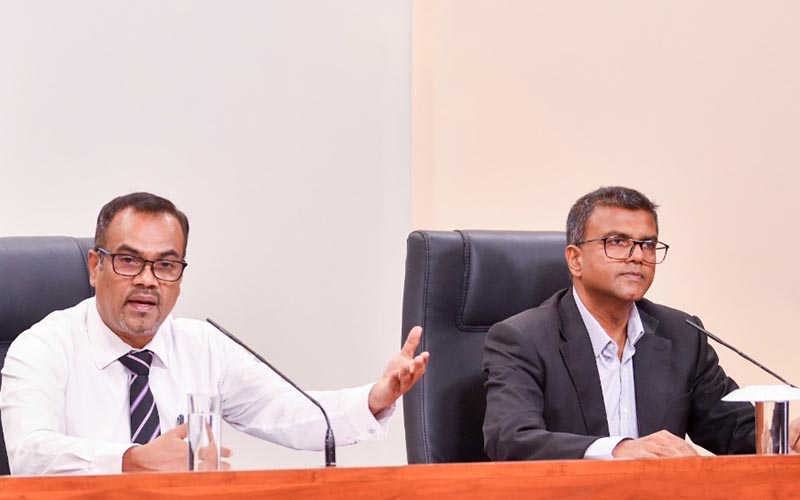
A press briefing on the economic stabilization process and the proposed relief packages for the public was held on Thursday (26) at the Presidential Media Center (PMC).
Minister of Labor and Deputy Minister of Economic Development, Dr. Anil Jayantha Fernando, along with Deputy Minister of Finance and Planning, Dr. Harshana Suriyapperuma, attended the briefing.
The media statement released during the press briefing is as follows:
Press Statement on the Economic Stabilization Process and Relief Packages to people.
1. Economic Stabilization
Economic stabilization is key to take the country out of abyss created by past regimes. At the time the government assumed office those who are responsible for the crisis had unilaterally suspended external debt servicing in April 2022, entered into IMF program for Extended fund facility (EFF) of approximately USD 3 billion over a period of 4 years to be received in 8 installments, and paddled through the IMF program and debt restructuring process in line with debt sustainability analysis connected to it. The delayed and complex nature of the debt restructuring process incurred additional costs to the country and created additional burden on the people. However after, considering both pros and cons of the context prevailed at that time in terms of social, political and economic perspective, the government proceeded with the options in the best interest of the people of the country.
Accordingly, it was possible to reach the staff-level agreement of the third review on 26th November 2024, in line with the program parameters, and government revenue measures with appropriate engagement, and timely facilitation. In the lead-up to the board approval from the IMF, the government is engaging with necessary stakeholders to obtain the next tranche of the EFF.
Debt Restructuring
It consists of both domestic and external restructuring. Domestic debt restructuring was completed in July 2023. External restructuring excludes multilateral creditors on various ground and arguments. The rest consists of official bilateral debt and private ISB holders.
Bilateral Debt
The bilateral debt is dealt with the Official Creditor Committee (OCC) co-chaired by France, India and Japan representing 17 countries, China Exim Bank, China Development bank, other official creditors (Kuwait, Saudi Arabia, Iran and Pakistan) and other commercial creditors.
OCC had agreed to the terms and conditions in June 2024 and the loans with China Exim bank had already been restructured in October 2023 within the agreed framework, ensuring comparability of treatment (CoT). Except the other official creditors (Kuwait, Saudi Arabia, Iran and Pakistan) accounting roughly USD 300 million representing about 1% total external debt subject restructuring , all other bilateral creditors have already agreed for restructuring within the agreed framework.
ISB Creditors
Much delayed ISB restructuring had passed several stages of negotiations with agreements, disagreements, changes to proposals, adjustments in line with DSA and IMF consents, had finally agreed in principle (AIP) on 19 September 2024 just two days prior to the presidential election. Ad Hoc Group (AHG) and Local banking consortium represent ISBs which account for USD 14.2 billion including a past due interest of USD 1.7 billion.
By prioritizing and facilitating actions in a timely manner, the new government has demonstrated a strong political commitment to steering the country toward economic stability. These efforts toward financial stability have been independently acknowledged by third parties, including rating agencies which have upgraded the ratings by several notches, which was only possible due to the correct prioritization and implementation of economic stabilization measures. Hence, the government continued with the restructuring process and facilitated it to ensure the successful completion of the issuance of new bonds for the exchange of existing ones on 20th December 2024 in order to achieve the critical objective of stabilizing the economy in pursue of navigating the country with the growth and development trajectory towards a thriving nation and beautiful life.
2. SME Sector Facilitation
2.a.1. Parate Extension
Instead of merely postponing the Parate execution date, the government engaged with stakeholder groups to ensure acceptable solutions was found for this long-standing issue. As a result, the Parate execution has now been extended until 31st March 2025.
2.a.2. Relief Package
The relief for businesses is not only in the form of an extension of time. Based on data provided by the Central Bank, 99% of borrowers with outstanding capital of less than 25 million rupees in restructured loans have been granted a 12-month extension to renegotiate with banks and agree on a settlement path. Borrowers with debts between 25,000,000 and 50,000,000 rupees have been granted a 9-month extension, while all other borrowers are entitled to a 6-month extension. This relief package, proposed by the government and to be implemented through the Central Bank, also includes several other important measures, such as easing the credit rating status, extending the repayment period, offering low interest rates for restructured debt, and providing a transparent mechanism to resolve valuation disputes.
This package aims to ensure that the SME sector can actively contribute to the economy.
2.b. School Stationery Assistance for School Children
2.b.1. Children in the Aswesuma Families
To ease the burden on parents from vulnerable groups in society, Rs. 6,000 per child has been allocated to purchase essential school books and stationery for the upcoming school term. Children from Aswesuma recipient families will begin receiving this benefit shortly.
2.b.2. Children Not Receiving Aswesuma
Children from families who are not currently receiving Aswesuma but are facing economic hardship will also be provided with this benefit, based on recommendations from the Ministry of Education. It is expected that the process will be finalized soon, and the disbursement scheme will start within a few days, ensuring that all deserving children facing economic hardship receive assistance.
[PMD]


Bus fares have been increased by 12.19% with effect from midnight today [23rd March 2026].
The minimum fare will be increased from Rs 27 to Rs 30 while the maximum fare of Rs2159/- will be increased to 2422/-
Latest News
Public will not be served as Computer system failure at Department of Registration of Persons
The Acting Commissioner General of Registration of Persons has announced that due to an unexpected failure of the computer system of the Department of Registration of Persons, all services, including the one day service will not be held on Tuesday (24th March) at the Head Office and all Provincial offices.

Latest News
Trump says he is postponing strikes on Iran power plants after ‘productive’ talks on ending war
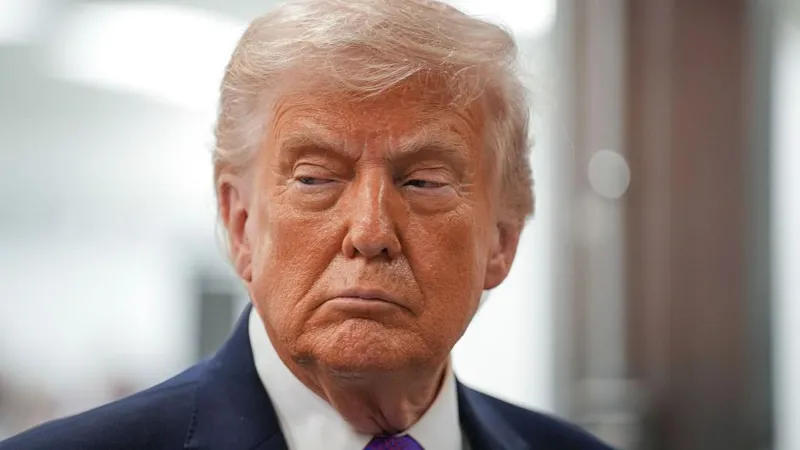
Donald Trump says the US and Iran have held talks on the “complete and total resolution of hostilities” in the Middle East
He says that, as a result of the talks, he has postponed threatened strikes on Iranian power plants and oil and gas fall immediately after.
On Saturday night, Trump had given Iran a 48 hour deadline to reopen the Strait of Hormuz. – or, he said, the US would “obliterate” Iranian power plants
An Iranian news agency quotes an unnamed source saying there have been no talks between Teheran and Trump.
Earlier, the UK’s Keir Starmer and Trump agreed that reopening the Strait of Hormuz is “essential to resume global shipping” during a call late on Sunday according to Downing Street
Meanwhile, the Israel Defense Forces (IDF) says it expects to face ‘several more weeks of fighting against Iran and Hezbollah in Lebanon
(BBC)

Two killed when Air Canada jet hits fire truck at NYC’s LaGuardia Airport

Bus fares increased by 12.19% from midnight today [23]
Public will not be served as Computer system failure at Department of Registration of Persons

Trump says he is postponing strikes on Iran power plants after ‘productive’ talks on ending war

Asia stocks slide as US and Iran threaten to escalate war

Heat Index at Caution Level in the Western, Sabaragamuwa, Southern and North-western provinces and in Anuradhapura, Mannar and Vavuniya districts

‘Dates have the highest sugar content to fight Coronavirus’

Sunday Island 27 December – Headlines

#SundayIsland 17th December – Headlines

Sunday Island – 28th March

Sunday Island Headlines – 21 March

Sunday Island – 21st February – Headlines
-

 News6 days ago
CIABOC questions Ex-President GR on house for CJ’s maid
-

 News7 days ago
Sri Lankan marine scientist Asha de Vos honoured at UNGA opening
-

 News7 days ago
Australian HC debunks misleading travel risk claims for Sri Lanka
-

 News5 days ago
Bailey Bridge inaugurated at Chilaw
-

 News5 days ago
Pay hike demand: CEB workers climb down from 40 % to 15–20%
-

 News4 days ago
CIABOC tells court Kapila gave Rs 60 mn to MR and Rs. 20 mn to Priyankara
-

 Editorial6 days ago
Couple QR-based quota with odd-even rationing
-

 News3 days ago
Colombo, Oslo steps up efforts to strengthen bilateral cooperation in key environmental priority areas