
News
Easter Sunday probe: CB not informed of Rs 4 bn Hizbullah et al received from overseas

By Rathindra Kuruwita
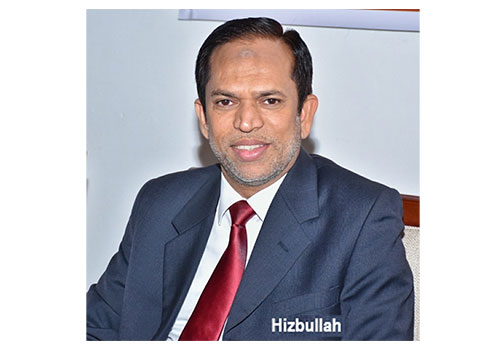
Two current accounts, operated by former Eastern Province Governor M. L. A. M. Hizbullah and others at the Bank of Ceylon (BoC) branch at Kollupitiya, had received foreign funding close to Rs. 4 billion within three years, the Presidential Commission of Inquiry (PCoI) probing the Easter Sunday attacks was informed yesterday.
It was also revealed that the BoC had not informed the Central Bank of Sri Lanka (CBSL) of those transactions although it was required to do so in respect of foreign transactions over one million rupees.
Ms I.C.K. Kannangara, former Manager of the BoC Kollupitiya branch, told the PCoI that foreign funds had been sent the two accounts from 2016 to 2019.
Kannangara said that one account, for Sri Lanka Hira Foundation had received Rs. 313,128,281.59. The funds had been received in 12 separate transactions between March 11, 2016 and April 24, 2019. While a significant portion of the funds came from Ali Abdullah Al Juffali inheritance, Rs. 284.8 million, the rest of the funding came from Siddique and Diana Osmond and Credential Limited from London. Al Juffali family is one of the richest Saudis with an estimated worth of $19.8 billion.
Hizbullah, Abdul Samsudeen and Faleel Mohommad operated this account, opened on August 18, 1993 in the name of a social service organisation. However it was only on September 09, 1993 that Sri Lanka Hira Foundation had been certified by the Department of Social Services. Kannangara responding to a question posed by the Commissioners admitted that allowing the foundation to open a bank account without the proper registration was irregular.
The Batticaloa Campus Private Limited had received Rs. 3.65 billion from Ali Abdullah Al Juffali inheritance between March 04, 2016 and June 07, 2017, the commission was informed.
The funds had been credited on seven separate occasions. The dates and details of these transactions are as follows: Rs. 695.8 million on March 04, 2016, Rs. 546.1 million on May 05, 2016, Rs. 526.9 million on August 03, 2016, Rs. 424.6 million on October 05, 2016, Rs. 541.4 million on an undisclosed date, Rs. 458 million on March 04, 2017 and Rs. 450.2 million on June 07, 2017.
Commissioners then asked Kannangara if she had been aware of the Central Bank of Sri Lanka (CBSL) rule making mandatory for financial institutions to inform the CBSL’s Financial Intelligence Unit of Sri Lanka (FIU) if they received a cash transactions and/or electronic funds transfers of an amount exceeding rupees one million (Rs. 1,000,000), or its equivalent in any foreign currency. Kannangara answered in the affirmative.
“In this case a number of transactions over one million rupees have taken place, but you inform the FIU?” the Senior State Counsel leading the evidence asked
Kannangara said that it was the Chief Compliance Officer of BoC who usually contacted the FIU. The Kollupitiya Branch had already identified the two accounts as high risk accounts, the witness said.
Kannangara said: “There were significant transactions and in 2016 and 2017, we informed the Chief Compliance Officer of BoC that special attention must be paid. The Chief Compliance Officer asked us to submit all documents and we did. However, on both occasions, the Headquarters decided that these accounts are not suspicious.”
Therefore, BoC had not reported the accounts to the FIU of CBSL before the Easter Sunday attacks, she said.
“When you spoke to the Chief Compliance Officer about these accounts, were the name of a particular person mentioned?” a Commissioner asked the witness.
Kannangara said: “Yes, Hizbullah’s name was mentioned. He was a Governor at that time.”
A commissioner asked, “Did that play a role in deciding that the accounts were not suspicious? How did you know that the money was being used to build a campus?”
“We saw media reports,” she said. The witness is to provide information on three more bank accounts operated by Hizbullah at the BoC Colpetty Branch.




The Cabinet of Ministers granted their concurrence to the resolution furnished by the Minister of Youth Affairs to appoint S. Achchudan of Special Grade of Sri Lanka Administrative Service, who is currently serving as an Additional Commissioner of Elections at the Elections Commission who is
recommended by the panel of interviewers to the post of Director General of the Sports Development Department with effect form 01.01.2026.

The Cabinet of Ministers granted approval to the proposal furnished by the Minister of Environment to publish the draft bill of the National Environment (Amended) Act in the government gazette notification and subsequently to submit the same to the Parliament for its concurrence.
The Cabinet of Ministers has approved the proposal presented by the Minister of Buddhism, Religious, and Cultural Affairs to provide tax relief on imported dates received as donations or gift for Ramadan.
This year’s Ramadan fasting season is scheduled to begin on 19-02-2026 and end on 21-03-2026.

Shafali, Renuka close in on top five in ICC T20I rankings

S. Achchudan appointed as Director General of the Sports Development Department.

Amendment of the National Environment Act No. 47 of 1980
Tax relief for Dates received as donations or gifts for Ramadan
Cabinet nod to establish the Sri Lanka Industrial Transformation and innovation Authority
Temporary employment of Sri Lankan labour in the State of Israel

‘Dates have the highest sugar content to fight Coronavirus’

Sunday Island 27 December – Headlines

#SundayIsland 17th December – Headlines

Sunday Island – 28th March

Sunday Island Headlines – 21 March

Sunday Island – 21st February – Headlines
-

 News6 days ago
British MP calls on Foreign Secretary to expand sanction package against ‘Sri Lankan war criminals’
-
 News5 days ago
Street vendors banned from Kandy City
-
 Sports6 days ago
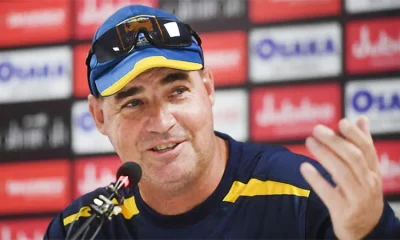
Chief selector’s remarks disappointing says Mickey Arthur
-

 Opinion6 days ago
Disasters do not destroy nations; the refusal to change does
-

 News7 days ago
Sri Lanka’s coastline faces unfolding catastrophe: Expert
-

 News5 days ago
Lankan aircrew fly daring UN Medevac in hostile conditions in Africa
-
 Midweek Review7 days ago
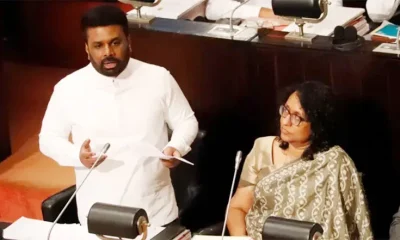
Year ends with the NPP govt. on the back foot
-

 Sports2 days ago
Gurusinha’s Boxing Day hundred celebrated in Melbourne