
Features
‘DOC CALL 247’

A telephonic Labour Of Love from Sri Lanka Medical Association
The Sri Lanka Medical Association (SLMA), the premier non-political, non-trade union, academic organisation of all doctors in Sri Lanka, has embarked on an initiative to provide the much-needed individual and confidential advice and guidance exclusively on COVID-19, to the general public through all mobile networks and the Sri Lanka Telecom Land-based telecommunication portal.
In these dark days of despair due to all kinds of vagaries of this nasty coronavirus that causes COVID-19, the SLMA realised that a crying need of the hour is to provide accurate information and advice to our countrymen and women from all corners of this resplendent isle regarding this pandemic, at the press of a few buttons of a telephone.
The SLMA introduced this project just about 10 days ago with assistance from SLT-Mobitel mobile network. Mobitel is the pioneering architect of the logistics of the venture and we are most grateful to them for their benevolence and generosity in this effort.
 Following the initial groundwork and logistics being finalised, the SLMA invited other mobile telecommunication providers to join this humanitarian venture. It is to the eternal credit of all other mobile telecommunication providers; Dialog, Airtel and Hutch, that they very readily and most willingly agreed to join this benevolent scheme as a service to our nation. They too need to be applauded for their commitment and big-heartedness in supporting to the hilt, this initiative commenced by the SLMA.
The telephone number to be dialled from ANY MOBILE PHONE is 247 and from a Sri Lanka Telecom Land-line, it is 1247. As the number implies it is a twenty-four hour, seven days of the week service, made available in Sinhala, Tamil and English. Each call is limited to a maximum of 10 minutes and if the subscriber so wishes to do, at the end of the maximum time, he or she could dial the number again but we cannot guarantee that they will be connected to the original recipient of the first call.
It is a completely toll-free service with no cost whatsoever to the subscriber taking the call from any of the participating networks. The operators of the system will forward the call to a qualified doctor who would try his or her best to help the subscriber. The Committee of the SLMA entrusted with this task has even burned mid-night oil through a Zoom link in a committed effort to help and train the doctors to provide their best services in this endeavour. The doctors who have volunteered to provide this service have elected to do it completely free-of-charge in a committed effort to pay back at least some of the debt that we owe to the people of our country who sponsored our education and professional advancement. The response from the doctors of the SLMA membership has been absolutely magnificent but I am compelled to record here that we do need even more doctors to participate in this endeavour as we are likely to have a virtual tsunami of calls in the not-too-distant future. I do cordially invite every member of the SLMA to help us in this task as even an hour spent from time to time by opting into the system may help to save lives.
The basic grid system has now evolved into a network with Suwa Seriya Ambulance Service and the entire endeavour has the approval and blessings of the Ministry of Health. Through this venture, we hope to provide advice even to COVID-19 patients who are confined to their homes in home-care, who would then be able to get state-of-the-art medical information and advice from doctors. This is a service that is complementary to other official helplines and services available to our people.
This initiative of the SLMA stands out from our usual work but is quite valuable to the community at large, judging by the experience that we have gained over the last few days. Many of the subscribers need accurate advice, guidance and even reassurance. We do believe that we have been able to help the citizens of this country, the hospital system, the community health services and the Ministry of Health by contributing towards a reduction of the mental and physical burden of all concerned. Those who have used this service have so far been extremely appreciative of all our efforts.
This venture on the part of the SLMA is coordinated by a committee of dedicated medical professionals, consisting of Dr Ruvaiz Haniffa, Professor Indika Karunathilake, Dr Sajith Edirisinghe and a whole host of others, too numerous to mention, under the auspices and guidance of Dr Padma Gunaratne, the President of SLMA and Dr Sumithra Tissera, the Honorary Secretary of the SLMA. I take no special credit for this venture except perhaps for being the mouth-piece of the initiative.
We earnestly appeal to our people to make use of this facility ONLY FOR COVID RELATED MATTERS but not to burden us with unrelated calls and nuisance endeavours. They need to keep in their mind that misdemeanours of such nature would only prevent another needy person from contacting us.
As the title of this article clearly states, it is indeed a labour of love on the part of the SLMA. Our fervent wish is that it would go from strength to strength and be a beacon of hope for the people of our land. Let it be a guiding light of succour to the needy.

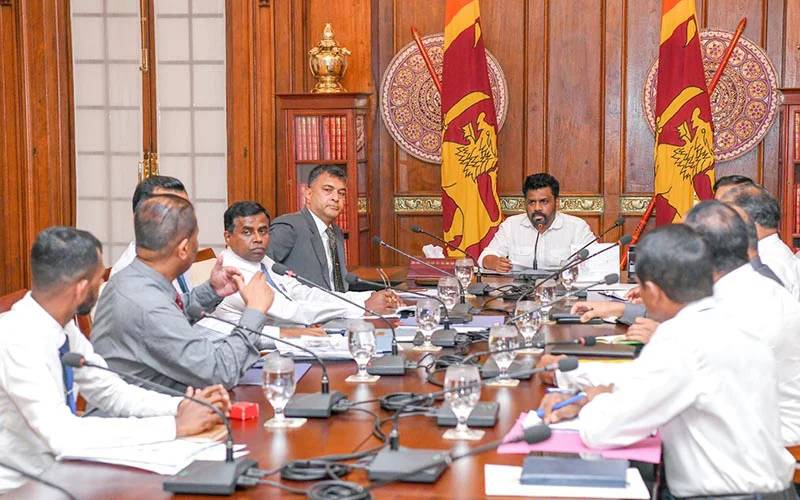
The government is rebuilding the cyclone-devastated lives, livelihoods and infrastructure in the country after the immense destruction caused by Cyclone Ditwah. President Anura Kumara Dissanayake has been providing exceptional leadership by going into the cyclone affected communities in person, to mingle directly with the people there and to offer encouragement and hope to them. A President who can be in the midst of people when they are suffering and in sorrow is a true leader. In a political culture where leaders have often been distant from the everyday hardships of ordinary people, this visible presence would have a reassuring psychological effect.
The international community appears to be comfortable with the government and has been united in giving it immediate support. Whether it be Indian and US helicopters that provided essential airlift capacity or cargo loads of relief material that have come from numerous countries, or funds raised from the people of tiny Maldives, the support has given Sri Lankans the sense of being a part of the world family. The speed and breadth of this response has contrasted sharply with the isolation Sri Lanka experienced during some of the darker moments of its recent past.
There is no better indicator of the international goodwill to Sri Lanka as in the personal donations for emergency relief that have been made by members of the diplomatic corps in Sri Lanka. Such gestures go beyond formal diplomacy and suggest a degree of personal confidence in the direction in which the country is moving. The office of the UN representative in Sri Lanka has now taken the initiative to launch a campaign for longer term support, signalling that emergency assistance can be a bridge to sustained engagement rather than a one-off intervention.
Balanced Statement
In a world that has turned increasingly to looking after narrow national interests rather than broad common interests, Sri Lanka appears to have found a way to obtain the support of all countries. It has received support from countries that are openly rivals to each other. This rare convergence reflects a perception that Sri Lanka is not seeking to play one power against another, and balancing them, but rather to rebuild itself on the basis of stability, inclusiveness and responsible governance.
An excerpt from an interview that President Dissanayake gave to the US based Newsweek magazine is worth reproducing. In just one paragraph he has summed up Sri Lankan foreign policy that can last the test of time. A question Newsweek put to the president was: “Sri Lanka sits at the crossroads of Chinese built infrastructure, Indian regional influence and US economic leverage. To what extent does Sri Lanka truly retain strategic autonomy, and how do you balance these relationships?”
The president replied: “India is Sri Lanka’s closest neighbour, separated by about 24 km of ocean. We have a civilisational connection with India. There is hardly any aspect of life in Sri Lanka that is not connected to India in some way or another. India has been the first responder whenever Sri Lanka has faced difficulty. India is also our largest trading partner, our largest source of tourism and a significant investor in Sri Lanka. China is also a close and strategic partner. We have a long historic relationship—both at the state level and at a political party level. Our trade, investment and infrastructure partnership is very strong. The United States and Sri Lanka also have deep and multifaceted ties. The US is our largest market. We also have shared democratic values and a commitment to a rules-based order. We don’t look at our relations with these important countries as balancing. Each of our relationships is important to us. We work with everyone, but always with a single purpose – a better world for Sri Lankans, in a better world for all.”
Wider Issues
The President’s articulation of foreign relations, especially the underlying theme of working with everyone for the wellbeing of all, resonates strongly in the context of the present crisis. The willingness of all major partners to assist Sri Lanka simultaneously suggests that goodwill generated through effective disaster response can translate into broader political and diplomatic space. Within the country, the government has been successful in calling for and in obtaining the support of civil society which has an ethos of filling in gaps by seeking the inclusion of marginalised groups and communities who may be left out of the mainstream of development.
Civil society organisations have historically played a crucial role in Sri Lanka during times of crisis, often reaching communities that state institutions struggle to access. Following a meeting with CSOs, at which the president requested their support and assured them of their freedom to choose, the CSOs mobilised in all flood affected parts of the country, many of them as part of a CSO Collective for Emergency Response. An important initiative was to undertake the task of ascertaining the needs of the cyclone affected people. Volunteers from a number of civil society groups fanned out throughout the country to collect the necessary information. This effort helped to ground relief efforts in real needs rather than assumptions, reducing duplication and ensuring that assistance reached those most affected.
The priority that the government is currently having to give to post-cyclone rebuilding must not distract it from giving priority attention to dealing with postwar issues. The government has the ability and value-system to resolve other national problems. Resolving issues of post disaster rebuilding in the aftermath of the cyclone have commonalities in relation to the civil war that ended in 2009. The failure of successive governments to address those issues has prompted the international community to continuously question and find fault with Sri Lanka at the UN. This history has weighed heavily on Sri Lanka’s international standing and has limited its ability to fully leverage external support.
Required Urgency
At a time when the international community is demonstrating enormous goodwill to Sri Lanka, the lessons learnt from their own experiences, and the encouraging support they are giving Sri Lanka at present, can and must be utilised. The government under President Dissanayake has committed to a non-racist Sri Lanka in which all citizens will be treated equally. The experience of other countries, such as the UK, India, Switzerland, Canada and South Africa show that problems between ethnic communities also require inter community power sharing in the form of devolution of power. Countries that have succeeded in reconciling diversity with unity have done so by embedding inclusion into governance structures rather than treating it as a temporary concession.
Sri Lanka’s present moment of international goodwill provides a rare opening to learn from these experiences with the encouragement and support of its partners, including civil society which has shown its readiness to join hands with the government in working for the people’s wellbeing. The unresolved problems of land resettlement, compensation for lost lives and homes, finding the truth about missing persons continue to weigh heavily on the minds and psyche of people in the former war zones of the north and east even as they do so for the more recent victims of the cyclone.
Unresolved grievances do not disappear with time. They resurface periodically, often in moments of political transition or social stress, undermining national cohesion. The government needs to ensure sustainable solutions not only to climate related development, but also to ethnic peace and national reconciliation. The government needs to bring together the urgency of disaster recovery with the long-postponed task of political reform as done in the Indonesian province of Aceh in the aftermath of the 2004 tsunami for which it needs bipartisan political support. Doing so could transform a national tragedy into a turning point for long lasting unity and economic take-off.
by Jehan Perera

Lessons from Ditwah:
Fifteen days after Cyclone Ditwah tore through the country, the floodwaters have receded and the immediate shock has given way to reflection. As of December 14, 2025, the bodies recovered from landslides have been laid to rest, survivors, whose homes were wiped out, are sheltered in Suraksha centres, and daily life has begun to inch forward. Roads, nearly 80 percent of them, have been reopened, power and water restored, and communities, through individual resolve and collective effort, have cleared homes and roads, even as heaps of damaged belongings still line the roadsides. Now, as the initial dust settles, the nation stands at a critical moment: beyond recovery, it is time to confront the deeper structural weaknesses laid bare by Ditwah.
Cyclone Ditwah has emerged as a defining test for Sri Lanka, both for the newly elected NPP government, facing its first major natural disaster, and for a nation still recovering from the economic collapse of 2022 and navigating the constraints of an IMF bailout programme. The storm not only challenged the country’s disaster-response machinery but also revealed the resilience of its people, the strengths of its leadership, and the gaps that must be urgently addressed as climate-related catastrophes become increasingly frequent.
Presidential Leadership in Times of National Crisis
From the earliest hours of the cyclone’s impact, President Anura Kumara Dissanayaka took an active and visible role in directing the government machinery. His rapid mobilisation of state institutions, technical agencies, and the Armed Forces helped Sri Lanka confront a multi-layered and complex emergency that spanned damaged roads, disrupted power lines, unsafe water supplies, landslides, and widespread displacement. The administration’s coordination, during these initial hours, set the tone for what became one of the most intensive emergency-response efforts in recent years. Mobilising and coordinating government institutions solely through presidential initiative is not an ideal administrative practice. A resilient state must, instead, ensure that its institutions are structurally prepared to act seamlessly when disaster strikes, closing the systemic gaps exposed by Cyclone Ditwah.
The President’s visits to all affected districts strengthened on-the-ground coordination by bringing together district coordinating committees, public officials, political representatives, and community organisations to align relief and reconstruction with local realities, while also helping to identify bottlenecks and clarify institutional responsibilities. However, these same district-level meetings exposed serious shortcomings in disaster governance: weak inter-agency communication, unclear response mandates, gaps in early-warning systems, and uneven political leadership at the local level. In several instances, critical information failed to reach the right actors in time, and some elected representatives were slow to engage, prompting the President to direct provincial governors to personally assess landslide-prone areas—underscoring the urgent need for a more robust, integrated disaster-management framework and stronger local political participation during crises.
Cyclone Ditwah serves as a powerful reminder that Sri Lanka must prepare better, long before the next storm arrives. Effective disaster response depends not only on the commitment of the central government and security forces but also on pre-trained communities and seamless cooperation between agencies at every administrative tier. This article seeks to contribute to a constructive national conversation on the lessons learned from Cyclone Ditwah. The intention is not to assign blame but to highlight the insights necessary to build a more resilient, better-coordinated system capable of protecting lives and livelihoods in the face of future disasters.
Equally notable was the spontaneous civic mobilisation that unfolded across the country. Communities self-organised to clear debris, distribute food, assist vulnerable families, and provide temporary shelter, demonstrating a deep social solidarity that often surfaces during national crises. In many affected districts, local volunteers were the first to reach remote or isolated areas, complementing government and military operations.
Rethinking Responses to Recurrent Climate Emergencies
Sri Lanka is no stranger to weather-related disasters, and Cyclone Ditwah is neither the first nor the last event the nation will confront. Over the past decade alone, the country has endured floods, landslides, droughts, and cyclones of varying intensity. These recurring emergencies underscore an undeniable truth: climate-related shocks are now a structural part of Sri Lanka’s future, demanding a disaster-management system that is agile, integrated, and continuously updated.
After the devastation of the 2004 Indian Ocean tsunami, Sri Lanka invested significant effort in building its institutional infrastructure for disaster risk reduction. Agencies were established, frameworks were drafted, and early-warning mechanisms were introduced with the hope of preventing a repeat of such a tragedy. Yet the experience of Cyclone Ditwah has revealed that many of these institutions have become moribund—functioning in isolation, following outdated protocols, and lacking the coordination needed for an effective national response. While the systems technically exist, they are not fully aligned with the mission they were created to serve. Too many agencies operate within narrowly defined mandates and fail to communicate or integrate their work with related entities. This siloed approach weakens the overall national response and limits the ability of institutions to mobilise collectively when disaster strikes.
Once again Ditwah highlighted the need for reliable early-warning system that requires constant technological upgrading. A robust interface between technology and institutional networks is essential. Advanced and accessible communication technologies—early-warning systems, mobile alerts, satellite data, and community-level dissemination platforms— should play a crucial role in transforming timely information into effective action. Timely alerts, data-sharing mechanisms, communication networks, and community-level outreach must keep pace with global standards and evolving climatic threats. The gaps observed during Cyclone Ditwah indicate that Sri Lanka’s early warning systems need stronger digital infrastructure, better interoperability, and clearer channels for dissemination to all communities, especially those in vulnerable zones. Disaster risk management cannot rely solely on community participation.
Building a Disaster Management Architecture
Sri Lanka gained independence in 1948 in the aftermath of the devastating island-wide floods in 1947. Since then, the country has repeatedly faced severe natural disasters—particularly windstorms and floods—in 1957, 1964, 1969, 1976, 1986, and 1989. Yet, despite this long and painful history, no single, dedicated institutional mechanism existed, within the state, to manage disaster-related activities, until the mid-1990s. Responsibility for disaster response remained fragmented across multiple agencies, largely operating under the broad and limited mandate of social services.
A decisive institutional shift began in 1994 with the establishment of the National Disaster Management Centre (NDMC) by President Chandrika Bandaranaike Kumaratunga, under the Ministry of Social Welfare. The NDMC was tasked with coordinating disaster preparedness, mitigation, emergency response, recovery, and long-term rehabilitation and development. It also initiated the development of a comprehensive legal and policy framework for disaster management. By 2000, the NDMC had completed draft versions of the Disaster Management Bill and the National Disaster Management Plan. However, these initiatives stalled and were never formally adopted following the change of government in 2001.
The catastrophic human, economic, and social consequences of the 2004 Indian Ocean Tsunami starkly exposed the limitations of this incomplete framework and underscored the urgent need for a systematic and comprehensive approach to disaster management. In response, disaster preparedness was elevated to a national priority, and on 10 February, 2005, a bipartisan Parliamentary Select Committee was appointed. Its mandate was to examine gaps in preparedness revealed by the Tsunami of 26 December, 2004, assess the absence of effective early-warning mechanisms, and recommend measures to strengthen institutional readiness and reduce the impact of future natural disasters.
The Parliamentary Select Committee met 28 times and produced a wide-ranging report within a short span, marking a decisive policy moment in Sri Lanka’s approach to disaster management. Its findings laid bare deep structural weaknesses in hazard mapping and risk assessment, preparedness, early-warning systems, mitigation, emergency response, and public awareness. Acting on these recommendations, Parliament enacted the Sri Lanka Disaster Management Act, No. 13 of 2005—finally providing a legal foundation for coordinated disaster governance.
The Disaster Management Act of 2005 brought forward significant changes in the institutional framework for disaster management. It created the National Council for Disaster Management (NCDM), a high-level political body, chaired by the President, with the Prime Minister as Vice Chair, and established the Disaster Management Centre (DMC) as the country’s lead implementing agency. The DMC was mandated to coordinate disaster risk reduction at national and sub-national levels, supported by Disaster Management Committees at district and divisional levels. A dedicated Cabinet Ministry of Disaster Management and Human Rights followed in 2006, later streamlined as the Ministry of Disaster Management in 2010. On paper, this architecture promised coherence, authority, and reach.
Parallel to the setting up of new institutional framework for disaster management, the process of disaster management policy planning and policy formulation has taken a new turn. ‘The Disaster Management Policy of 2010’, prepared by DMC, in 2010, was adopted as the main policy line for disaster management. Furthermore, DMC developed ‘The National Disaster Management Plan of 2013-2017’(NDMP) in 2014 as the overall guiding document covering intended activities of the major phases–mitigation, preparedness, emergency operations and post disaster activities, such as relief, recovery and reconstruction. Training, public awareness and education are also covered in the above phases. It envisaged a multi-sector approach in which involvement of NGOs and CBOs are expected to translate policies into tangible action. Further, in 2014, NCDM approved the Sri Lanka Comprehensive Disaster Management Programme (SLCDMP) for 2014-2018 to reduce disaster and climate risks by minimising impacts on people, properties, and the economy. SLCDMP also presented a comprehensive roadmap to improve capacity of local level operators by institutionalising local level support in its planning. It was prepared by the National Disaster Management Coordinating Committee (NDMCC), a multi-stakeholder national platform, established in November 2007 who also plays a key role in implementing disaster risk reduction strategies in the country. This is a clear manifestation of confusion and duplication of disaster management work.
Technological and informational capacities improved with the establishment of a Disaster Information System in 2008, supported by UNDP, and the gradual rollout of nationwide early-warning systems. Responsibility for hazard monitoring was formally vested in the Meteorological Department and the Geological Survey and Mines Bureau, operating through the Disaster Management Centre’s Emergency Operations Centre. While these developments marked genuine progress, their effectiveness has remained uneven in practice. International partners, such as UNDP, have produced extensive analyses and recommendations, but ultimate responsibility of implementation rests with domestic institutions. The core problem lies not in the absence of information, but in weak implementation, limited inter-agency cooperation, and persistent administrative inaction.
Fragmented Institutions and the Cost of Poor Coordination
At the heart of these shortcomings are deeper features of Sri Lanka’s political and administrative culture. Disaster management has frequently been treated as a politically advantageous domain—offering visibility and access to state resources—resulting in its fragmentation across multiple ministries and agencies. This dispersion undermines integrated planning, weakens accountability, and hampers coordination precisely when speed and clarity are most critical. The consequences of inadequate preparedness, poor inter-agency coordination, and inconsistent public messaging have repeatedly emerged during major crises. This was evident in the MV X-Press Pearl disaster in May 2021, where information on hazardous cargo damage was not shared across agencies. Similarly, the lack of inter-agency communication was a prominent issue during Cyclone Ditwah in December 2025.
Technological and informational capacities improved with the establishment of a Disaster Information System in 2008, supported by UNDP, and the gradual rollout of nationwide early-warning systems. Responsibility for hazard monitoring was formally vested in the Meteorological Department and the Geological Survey and Mines Bureau, operating through the Disaster Management Centre’s Emergency Operations Centre. However, their effectiveness has remained uneven in practice.
International partners, such as UNDP and other multi-lateral agencies, have produced extensive analyses and recommendations, but ultimate responsibility of implementation rests with domestic institutions. The core problem lies not in the absence of information and recommendations , but in weak implementation, limited inter-agency cooperation, and persistent administrative inaction.
NGOs: Critical Actors with Structural Limits
Another critical dimension of Sri Lanka’s disaster-management landscape is the prominent role played by non-governmental organisations (NGOs) and, to a lesser extent, private-sector institutions across almost every phase of the disaster-management cycle. Their contribution is especially visible at the community level, where state reach is often limited. It is, however, important to distinguish between spontaneous voluntary community action and the more structured, project-driven modes of operation, typical of NGOs. This distinction does not diminish the importance of NGOs; rather, it helps clarify both their strengths and their limitations within a national disaster-management framework.
NGO engagement is particularly valuable in Community-Based Disaster Risk Management (CBDRM), where sustained local participation is essential. Through CBDRM initiatives, NGOs help Disaster-Risk Communities identify, analyse, and monitor risks, develop locally appropriate mitigation strategies, and strengthen coping capacities. Many international humanitarian organisations coordinate their work through the UN Humanitarian Country Team, while several local initiatives demonstrate the transformative potential of community-centred action. The Community Tsunami Early-Warning Centre (CTEC) in Peraliya, established with the support of two foreign donors and a Sri Lankan medical doctor, is a notable example. Equipped with round-the-clock internet-linked computers receiving real-time alerts from the US Geological Survey, CTEC has built a network of 30 focal points across the Galle District, each comprising 10 village representatives—illustrating how informed communities can play a frontline role in risk mitigation.
The Sarvodaya Community Disaster Risk Management Centre in Moratuwa further underscores the constructive role NGOs can play. Sarvodaya has worked to establish disaster-management committees linked with government district-level officers, strengthening coordination between communities and the state. In partnership with LIRNEasia, it has also developed early-warning systems designed to deliver alerts directly to households. With more than 50,000 community-based organisations, Sri Lanka possesses a potentially powerful grassroots network capable of making a decisive impact on disaster preparedness, response, and recovery. These organisations have been tasked with identifying vulnerable groups within their communities and ensuring their protection during emergencies—a role they performed actively in the aftermath of the 2004 Tsunami.
Yet, despite this potential, Sri Lankan NGOs, as a sector, suffer from persistent structural weaknesses. Many remain heavily dependent on international donor funding and tend to become inactive once external financing diminishes. Over time, this has led to cycles of intense activity during high-profile disasters, followed by organisational stagnation and decline. Unless NGO engagement is better integrated into long-term national planning, supported by stronger domestic institutional linkages and sustainable funding mechanisms, their contribution will remain episodic rather than transformative.
Early Warning Systems: From Forecasting to Community Action
The recent experience of Cyclone Ditwah has once again underscored the critical importance of effective early warning systems in mitigating the impact of natural disasters. Sri Lanka’s vulnerability to such events was starkly evident during the 2004 Indian Ocean Tsunami. The first tsunami waves hit the eastern coast of Sri Lanka at approximately 6.40 a.m. on 26th December, about one hour and forty minutes after the earthquake. A secondary wave struck approximately 20 minutes later. The western coastal area was hit by the tsunami waves much later. The tsunami hit the southern coastal city of Hambantota at about 9.10 a.m. and Peraliya on the south-western coast, where the train tragedy took place, at 10.10 a.m., three and a half hours after the first wave, the tsunami hit the eastern coast of Sri Lanka. If an emergency disaster early-warning communication system were in place, at least a part of the human disaster on the Western coast could have been avoided. More than two decades later, Ditwah revealed that preparedness remains inadequate, and simply issuing statements from government agencies is insufficient. Early warnings must be actively communicated to communities, accompanied by clear action plans implemented by relevant authorities, to ensure people are informed, prepared, and able to respond effectively to impending disasters.

A landslide
Cultural and Ethnic Sensitivity in Disaster Response
One of the most important lessons highlighted by Cyclone Ditwah is the critical need for inclusivity and sensitivity in a multi-ethnic, post-conflict society like Sri Lanka. Emerging from the ashes of a devastating ethnic conflict, the country must ensure that national unity and ethnic harmony remain central to every policy and action, especially during crises. Ditwah revealed that some state institutions are not yet fully equipped to operate effectively in a multi-ethnic, multi-linguistic environment. Crucial notices and statements were, at times, released solely in Sinhala, in violation of the language policy enshrined in the Constitution. While practical administrative challenges may exist, it is the responsibility of political leadership to ensure that these requirements are addressed proactively. When vital information fails to reach communities in their own languages during emergencies, those communities would experience alienation and discrimination, with potentially grave consequences. In a multi-ethnic, post-conflict society, sensitivity to ethno-political dynamics is not optional—it is imperative across all phases of disaster management: preparedness, emergency response, and post-disaster recovery.
The real challenge begins now, and Sri Lanka cannot afford complacency. Resettling displaced and vulnerable communities is a formidable task that demands more than community goodwill—government institutions must bear the brunt of these responsibilities. Piles of spoiled food and debris left unattended in cities can quickly create serious public health hazards, underscoring the need for swift and organised action. With the North-Eastern Monsoon approaching, the country must be prepared for any eventuality.
Foreign Humanitarian Assistance and Its Geopolitical Dimensions
Sri Lanka did not stand alone in the wake of Ditwah. The country received substantial international assistance—not only in emergency humanitarian relief, but also in expertise, equipment, and resources for recovery and reconstruction. This support reflects the goodwill Sri Lanka continues to command globally, while also underscoring the need for credible and efficient domestic systems capable of coordinating effectively with foreign partners. At the same time, emergency relief is never geopolitically neutral. Sri Lanka must therefore approach foreign disaster assistance with a clear understanding of its national interests—without retreating into a besieged mentality. Instead, the challenge is to manage geopolitical competition to our advantage through an approach of omni-enmeshment: engaging all major powers simultaneously through dense networks of cooperation, institutions, and partnerships, creating mutual stakes and reducing the likelihood of strategic pressure or conflict.
Rethinking Development Strategies under Climate Stress
Beyond immediate relief, Cyclone Ditwah forces us to rethink the development model we are pursuing. Decades of deforestation and unplanned urban expansion have amplified the country’s vulnerability: between 1990 and 2010, Sri Lanka lost an average of 24,500 hectares of forest per year, totaling nearly 21 percent of its forest cover (Sri Lanka Forest Information and Data, The Rainforest S.). Forests once absorbed and regulated rainwater, but their loss has accelerated floods, triggered landslides, and intensified droughts, while impervious urban surfaces exacerbate flash flooding. The country is now paying the price for these environmental and planning failures, making comprehensive, forward-looking strategies a matter of urgent necessity.
Lessons from Ditwah and the Path Forward
Cyclone Ditwah is more than a weather event—it is a wake-up call that Sri Lanka must strengthen its resilience against future disasters. Fragmented responsibility, weak inter-agency coordination, and inconsistent communication are vulnerabilities that put lives and livelihoods at risk. We are compelled to face the challenges posed by extreme weather events repeatedly in the future. Learning and applying the lessons of Cyclone Ditwah is crucial for political leaders, state institutions, NGOs, and communities alike. Only by building a culture of preparedness, accountability, and coordination can the nation shift crisis response from reactive improvisation to proactive, life-saving action.
Prof. Gamini Kerawella can be accessed through keerawellag@gmail.com
by Prof. Gamini Keerawella

The Malimawa government has been in power only for about one year. So, we cannot say that they are not competent or able to develop the country, or that they are corrupt or less corrupt compared to the Yahapalanaya or the Rajapaksa Regimes whose records within their initial years were “not dissimilar”.
The Yahapalanaya Govt., and the Rajapakasa government in their initial years (and in fact throughout) had to face various natural and other disasters.
In 2005 Rajapaksas were still dealing with the December 2004 Tsunami, and the onslaught of the LTTE, attempted assassinations of Fonseka and Gota, followed by the Mavil Aru sluice gate closure and the launching of the Eelam war IV. Key natural disasters during their period included the following.
2006 Floods: Sri Lanka experienced floods during both the first inter-monsoon season and the second inter-monsoon season.
2008 Floods: More flood events were recorded, particularly in November, affecting thousands of people.
2010 Floods: Heavy monsoon rains in May caused flash floods, high winds, and landslides across 13 districts.
January 2011 Floods: This was a major event where heavy monsoon rains affected an estimated 1.8 million people and destroyed vast amounts of agricultural land, including rice fields. President Rajapaksa could not visit the affected areas due to the severity of the floods.
2012 Drought and Floods: A drought starting in late 2011 and lasting through 2012 dried water reservoirs and safe drinking water availability for around 1.8 million people. This was followed by floods.
2013 and 2014 Landslides and Floods: These years saw more heavy rainfall, floods and landslides killing dozens of people due to early-warning system failures. A major landslide occurred in October 2014 in Meeriyabedda. This was also a period when Ven. Ratana, Dr. Channa Jayasumana and others were becoming very active in undermining the agricultural sector with their hair-brained ideas.
The government established the Disaster Management Act of 2005, No. 13. It helped to better prepare for such events, although implementation faced challenges.
When Yahapanaya came to power, the tropical Storm Roanu brought heavy monsoon rains and caused the worst flooding in Sri Lanka in 25 years. The disasters resulted in over 100 deaths, left many missing, affected nearly half a million people, and damaged over 58,000 houses. The economic damage was substantial, particularly to agriculture and infrastructure. Then the
A second major disaster occurred in May 2017, worsened by the precursor to Cyclone Mora. This disaster affected 15 districts, killed over 200 people, and displaced hundreds of thousands.
Today, the country is in dire straits after the Ditwah cyclone. Curiously enough, the Malimawa faced with Ditwah did not implement the Disaster management mechanism (2005, Act.13) set up in 2005.
Today the Malimawa hands are tied down by the IMF agreements that they have been forced to accept (and here there was no other option as no country came forward to provide an over-arching loan). So, Sri Lanka is like a log caught by the forces of international trade and carried along by the current, with no independent strength of its own (because of JRJ’s open economy which boosted the wealth, but at the same time squashed the rise of local industries).
A significant worry is that the Malimawa government has not launched or even proposed any long-term development projects of any consequence, except for mere cursory statements at the manifesto level. This is the worrying thing that Sri Lankans need to look at.
However, it could be argued that the current government SHOULD be encouraged to stay in power (instead of pulling it down) because elections are very costly, disruptive, and even if a new government comes in, they still have to follow the IMF and World-Bank dictated policies that hit Sri Lanka after the declaration of bankruptcy during Gotabhaya’s time.
It could also be argued that if the Malimaawa continues to govern, then it will mess things up even more. If that be so, it may ensure their doom in the next round of elections.
A new government at any time will take another year or even more to learn the ropes, and one may ask if the country could afford that. Public opinion seems to hold that the old leaders (of the UNP, SLFP, or Pohottuwa) are now like spent tea, rotten, useless, and cannot and should not be brought back, even though the strong corruption charges leveled at them by the Malimawa leaders during the election have not led to court cases. The leaders in waiting, like Sajith or Namal, are not yet seen to be inspiring the public in any significant way.
People who can influence the government should try to help it launch some long-term projects that could fall into place as the IMF-controlled period wanes. This is true, irrespective of which government is in power, given the current circumstances facing Sri Lanka.
That is, there are things that the private sector alone cannot do, that only a government can do.
For instance, (i) Planning to achieve self-sufficiency in energy by developing alternative energies, biofuels etc. (ii) Planning to achieve self-sufficiency in basic food stuffs, establishing an infrastructure for their distribution and sale. (iii) Exploitation of critical minerals available in the country but requiring significant capital investments and overcoming complex environmental issues. (iv) Re-development of infrastructure (power grid, roads, high-speed railways instead of the old snail rails of the British era), taking account of the fact that the country must be ready for future weather disasters of much higher magnitude than Ditwah. This last need is presumably being considered by the government right now, and one may say it will take months to do new land surveys of the damage and create new plans. Finding the money may take longer. However, the plans must come before the funding.
Is the Malimava government capable of rising to the occasion, or has it lost the compass and is drifting in the doldrums, is a question that one cannot easily answer. Unfortunately, the general levels of optimism and enthusiasm of the public towards the government seem to have decreased significantly and the government must wake up to the reality.
By Chandre Dharmawardana
chandre.dharma@yahoo.ca

Trump files $5bn defamation lawsuit against BBC over Panorama speech edit

UK and South Korea strike trade deal

Rob Reiner’s son Nick arrested for murder after director and wife found dead

70,297 persons still in safety centers

Showers will occur at times in the Northern, North-Central, Eastern, Uva and Central provinces

MEPA to crack down on marine polluters

‘Dates have the highest sugar content to fight Coronavirus’

Sunday Island 27 December – Headlines

#SundayIsland 17th December – Headlines

Sunday Island – 28th March

Sunday Island Headlines – 21 March

Sunday Island – 21st February – Headlines
-

 Features6 days ago
Finally, Mahinda Yapa sets the record straight
-
 Features6 days ago
Handunnetti and Colonial Shackles of English in Sri Lanka
-
 Business5 days ago
Cabinet approves establishment of two 50 MW wind power stations in Mullikulum, Mannar region
-
 News5 days ago
Gota ordered to give court evidence of life threats
-

 Features5 days ago
Cliff and Hank recreate golden era of ‘The Young Ones’
-
 Features5 days ago
Sri Lanka and Global Climate Emergency: Lessons of Cyclone Ditwah
-
 Opinion6 days ago
A national post-cyclone reflection period?
-

 Latest News6 days ago
Sri Lanka squad named for ACC Men’s U19 Asia Cup