
Editorial
Diana Gamage and Ajahn Brahm

Tourism State Minister Diana Gamage, whose eligibility to remain a Member of Parliament has remained an open question for a long time now since she ceased her allegiance with the Samagi Jana Balavegaya (SJB) on whose National List she entered the legislature in 2020, was back in the news last week. The Appeal Court determination of an action challenging her continuance as an MP, that was due to be delivered on Tuesday, has now been postponed for July 25 by a two-judge bench. This made front page news nationally.
No reason for the delay has been publicly adduced. While it is not uncommon for the courts to sometimes reserve judgment sine die, it is less frequent for dates specified for delivery of such orders being further delayed. However that be, those anxious to know – and there are many such – whether a second glamorous lady MP was being ejected from the legislature (well know actress Geetha Kumarasinghe was the first) will now have to wait longer to get an answer.
Gamage, once called Princess Diana in parliament by her boss Minister Harin Fernando, has been a controversial figure. When UNP leader Ranil Wickremesinghe and his deputy, Sajith Premadasa, parted company before the last parliamentary election, the then unrecognized SJB had to acquire an already recognized party to field its candidates at those hustings.
This was provided by Gamage and her husband, Senaka de Silva, a retired military officer who was a key ally of General Sarath Fonseka when he ran for president. No doubt Gamage’s appointment to the House on the SJB National List and her appointment as Deputy Secretary or that party was part of that arrangement. As recently as last week, SJB General Secretary Ranjith Madduma Bandara claimed in parliament that Gamage does not hold party office citing the Election Commission’s website as evidence.
Madduma Bandara went so far as saying that the SJB made a mistake in acquiring a party “from people who make faked documents.” He said that buyers examine the pedigree “even before buying a dog.” But apart from admitting the “mistake,” he didn’t elaborate on his party’s failure if not culpability. However that be, the public are entitled to know in what manner the continuing problem of the long list of parties officially recognized by the election authorities is going to be resolved once and for all. There is no escaping the reality that the recognition of factually non-existent ‘ghost’ parties enable shady arrangements that have been made time and again for opportunistic reasons.
The SJB today no doubt wishes to see the back of Diana Gamage who claims “ownership” of that party not only from its list of office bearers but from parliament as well. Although there are provisions in the law to disqualify MPs who had entered the legislature under the proportional representation system from continuing to sit and vote in parliament after being expelled by their parties, this provision has not been successfully invoked for a very long time. The reason for this has been attributed to a past judgment of the Sarath Silva Supreme Court.
Former President Gotabaya Rajapaksa went through a long drawn process to renounce his U.S. citizenship to successfully run for president in November 2019. Given the way events played out and the difficulty he had in finding a permanent domicile after his unceremonious departure from office last year, he may well be regretting that decision or even enjoying that “one crowded hour of glorious fame” rather than an age without a name. In this case though he did have a long tenure as a war-winning Defence Secretary.
GR eventually returned home to the lavish pension and perquisites this bankrupt country accords its past rulers. There have been recent reports that Rajapaksa has now been assigned a second government bungalow, previously used by the foreign minister as his official residence. This was because the first at Malalasekera Mawatha was deemed “too noisy.” The aragalaya did get rid of Gotabaya and Mahinda Rajapaksa, but the much yearned for system change was not to be. Business continues as usual as far as our politicians are concerned.
The headline for this commentary was purely applied to describe the content of this editorial and not compare two personalities. There obviously can be no comparison between the two personalities named. Ajahn Brahm is a highly accomplished Buddhaputra and this country was privileged to host him for nine days recently. His visit gave boundless joy to thousands of Buddhists able to benefit from both his wisdom and his presence. The spot of dung so often polluting the pot of milk in this country unfortunately turned up when Ajahn’s departure for Australia via Singapore was delayed for as long as 12 hours. This was as a result of the anxiety of officials to stooge political panjandrums at the expense of looking after the venerable monk.
His reaction to the incident over which the president is reported to have ordered an inquiry was typical of the bigness of the man. He didn’t want fault finding or punishment imposed on whoever culpable and advised focus on what really matters. We are sure that Ajahn did not seek VIP lounge facilities or privileges for himself. These were probably arranged without his knowledge. If he was not in the VIP lounge and not at the mercy of those responsible for his misadventure, he would most probably have not missed his flight. There are many lessons for all of us to learn from Ajahn Brahm. Among these are the spirit of generosity he has demonstrated and the ability not to dwell on irritants that are past.









Past several months have seen some former ministers and ex-state officials being remanded and denied bail ‘to prevent interference with evidence-gathering processes and the intimidation of witnesses. Some of the offences they are charged with were allegedly committed years ago during previous governments. It is while in power that transgressors can cover their tracks by suppressing or eliminating evidence and influencing or intimidating witnesses. Those who are facing legal action for corruption must have resorted to such tactics while their parties were in power. The venal state officials accused of having aided and abetted such alleged transgressions for personal gain, too, must have done likewise. It is therefore doubtful whether holding them on remand for extended periods at present serves the intended purpose.
Politicians and officials should be arrested and remanded immediately after their transgressions come to light if interference with evidence and the intimidation of witnesses are to be prevented. If investigations had been launched into numerous corrupt deals exposed during the Mahinda Rajapaksa government, it would have been possible to bring those responsible for them to justice. Most members of that administration have got away with their corrupt deals.
Various international organisations campaigning against corruption, money laundering, etc., particularly Transparency International, the National Anti-Corruption Commission of Australia, and the United Nations Office on Drugs and Crime, have stressed the importance of swift probes. They have pointed out that investigating corruption immediately after instances thereof come to light is essential for multiple reasons. Early investigations help preserve evidence and deter concealment, which is very common in Sri Lanka. Corrupt politicians are known to hide documents, destroy records or influence witnesses, especially when they are in power. Evidence can be made to disappear making it harder for investigators to get at the truth if investigations are delayed. Equally, prompt investigations are a prerequisite for maintaining public trust in institutions, such as the Commission to Investigate Allegations of Bribery or Corruption, and the rule of law. Protracted delays in conducting investigations invariably create the impression that the system is corrupt, ineffective and biased. Early action increases the chances of successful prosecution and deterrence.
It is against this backdrop that several damning allegations of corruption against the incumbent government should be viewed. The JVP/NPP came to power, promising what it described as ‘a system change’ to eliminate bribery and corruption and other such social evils. But it is apparently emulating its predecessors in handling allegations against its senior members. It vilifies whistle-blowers, denies allegations and delays investigations. Worse, the CID is headed by a prominent member of the Retired Police Collective of the NPP, and its integrity is therefore compromised.
A huge stock of coal imported for power generation has been found to be substandard. The low calorific value of the coal has resulted in low power output per tonne, and engineers have warned that the use of low-quality coal could damage the machinery of the Norochchoalai power plant. Staggering losses the Ceylon Electricity Board has suffered by importing substandard coal are expected to be passed on to the public in the form of tariff hikes. The government is accused of having interfered with the tender process to facilitate the registration of the company which supplied the low-quality coal. What needs to be done immediately is to probe the allegation that the bidding process was delayed to enable the supplier concerned to be registered. A delay in launching an investigation into the alleged coal procurement racket will help the culprits cover their tracks.
A Parliamentary Select Committee (PSC) probe has been launched into the green-channelling of as many as 323 red-flagged freight containers through the Colombo Port in January 2025. The uninspected cargo may have included narcotics and lethal weapons, the Opposition has claimed. It has been alleged that the high-risk containers were released at the behest of a powerful minister. So, one can argue that the government helped cover his tracks before launching a parliamentary probe. Only the naïve will expect a PSC, dominated by the NPP MPs and headed by a minister, to reveal anything that is detrimental to the interests of the NPP government.
Keheliya Rambukwella was arrested over a procurement racket in the Health Ministry while he was a minister in the previous government. True, that beleaguered administration had to throw him to the wolves for want of a better alternative. But the fact remains that his arrest and remand helped protect the evidence-gathering process, among other things. Why no arrests have been made over the release of 323 high-risk containers without Customs inspection, and the procurement of substandard coal, under the ‘clean’ NPP government, is the question.

Saturday 31st Junuary, 2026
The government has ignored the ultimatum given by the Government Medical Officers Association (GMOA). Its intransigence will only drive the protesting doctors to intensify their trade union action, causing more suffering to patients.
The government has launched a propaganda campaign to turn public opinion against the GMOA by claiming that the doctors are demanding pay hikes with no heed for the economic difficulties caused by Cyclone Ditwah. It has stretched the truth to bolster its claims, suppressing the fact that the protesting doctors have softened their stand and expressed their willingness to give up their trade union action if the government addresses the issues the resolution of which does not cost the state coffers anything. According to media reports, their demands include the establishment of a special service minute for doctors, enhancing the disturbance, availability, and transport allowance, converting the extra duty allowance into a fixed one, and the implementation of a written agreement with the Health Minister on resolving issues regarding a research allowance and transport.
What the government should do to prevent disruptions to the health sector is to bring the GMOA to the negotiating table forthwith and work out a compromise formula. But it has succumbed to the arrogance of power, which drives strong governments to bulldoze their way through. Health Minister Dr. Nalinda Jayatissa has told the doctors that it’s his way or the highway.
The government is apparently cherishing the delusion that since it has a steamroller majority in Parliament, it can do as it pleases, and others have to obey its dictates. Let it be warned that it is inviting trouble. Mandates come with short lifespans, and hubris and downfall are neighbours. Its efforts to neutralise the GMOA have galvanised other health sector trade unions into joining forces; they know that if the government succeeds in flooring the GMOA, so to speak, they will have no chance whatsoever of winning their demands. It is popularly said in this country that “one who lays one’s hands on the gourd does not spare the pumpkin”. In fact, that seems to be the government’s strategy. It is dealing with protesting trade unions in such a way as to deter others from launching labour struggles. It has chosen to ignore a hunger strike by the Development Officers (DOs), attached to the state-run schools; they demanding that they be absorbed into the teacher service. The protesters campaigned hard for the JVP/NPP in the 2024 elections, expecting their fair demand to be met. These graduates have worked as teachers for about seven years, and there is no reason why the government cannot appoint them as teachers; they can be further trained, if need be, after being appointed as teachers. The DOs have received the typical karapincha (curry leaves) treatment from the government they helped elect—they have been used and discarded. The government has shown a callous disregard for not only their career prospects but also their dear lives. The DOs were informed yesterday evening that they could meet President Anura Kumara Dissanayake on Tuesday (03 Feb). But NPP MP Chandna Sooriyaarachchi revealed to the media yesterday that all arrangements had been made for a competitive examination to be held soon!
The GMOA used to give short shrift to other health sector trade unions, and go to the extent of being critical of their labour struggles. It was labouring under the misconception that the state health institutions could operate without other categories of workers. They even sought to establish what may be described as a health sector trade union hierarchy modelled on the four-varna caste system, and place themselves at the top. Now, they have realised the need to cooperate with other trade unions instead of confronting them.
If the health sector trade unions close ranks, they will stand a better chance of winning their demands, and labour unions in other sectors will follow suit to boost their bargaining power. The government continues to provide its political opponents and trade unions with rallying points. Governments intoxicated with power think no end of themselves and behave like aggressive drunkards in shebeens only to receive sobering knocks in elections.

Friday 30th January, 2026
Time was when governments inveighed against the JVP for instigating strikes in vital sectors to further its political interests. Today, a JVP-led government is accusing its political rivals of manipulating trade unions to advance their political agendas on the pretext of championing workers’ rights. Following the 2024 regime change, it was widely thought that the country would at last be free from strikes as the JVP, the main instigator of strikes, had gained state power. During the initial phase of the JVP-NPP rule, all was quiet on the trade union front, but labour disputes began to manifest themselves thereafter.
Development Officers (DOs), attached to the state-run schools, have been protesting near the Presidential Secretariat, Colombo, for four days, demanding that they be absorbed into the teacher service without being made to sit a competitive examination. Some of them were on a hunger strike at the time of writing, claiming that the government had denied them an opportunity to be heard.
The NPP administration is thought to be in a straitjacket where state sector recruitment is concerned. It has to curtail government expenditure in keeping with the IMF bailout conditions. But pressure is mounting on it to fulfil its pledges to the unemployed graduates and the DOs, who campaigned hard for the JVP/NPP in the 2024 presidential and parliamentary elections. In 2024, a few weeks after forming a government, the NPP had a DOs’ protest near the Education Ministry in Battaramulla dispersed by the police!
The state service, bursting at the seams, has become a main source of employment for ruling party supporters over the past several decades. Sri Lanka currently has about 1.5 million public sector employees, with the workforce having doubled over the past one and a half decades. Although there is one public official for every 14 citizens, the efficiency of the state service remains extremely low. Only the UNP-led UNF government (2001-2004) sought to address this issue and curtailed state sector recruitments. But the then President Chandrika Bandaranaike Kumaratunga sacked that government, and the SLFP-led UPFA, which came to power by winning the 2004 general election, upended the UNF’s recruitment policy and resumed making political appointments in the state sector.
By some quirk of fate, the JVP, which pressured all previous governments to employ graduates in the state sector, is now under fire for not recruiting some graduates as teachers.
Opinion may be divided on the protesting DOs’ demand at issue. But it defies comprehension why the government wants them to sit a competitive examination, for they have worked as teachers for years. They have had hands-on experience in schools, and the question is why they are not appointed as teachers straightaway.
The government, which claims to espouse Marxism, ought to talk to protesters and strikers instead of trying to intimidate them into submission. Let it be repeated that in the past, the JVP was behind almost all strikes, demanding solutions to workers’ problems. Unfortunately, it is now riding roughshod over trade unions and workers. It is playing a game of chicken with the Government Medical Officers’ Association (GMOA), and the protesting doctors have given Minister of Health Dr. Nalinda Jayatissa 48 hours to address their problems or face the consequences. It is hoped that he will invite the doctors on the warpath to the negotiating table and try to avert a health sector strike.
There is no way hospitals can function during a doctors’ strike, and it will be a mistake for the government to wait, expecting the GMOA to blink first. It must get protesters, including doctors and the DOs around the table, and have a serious discussion on the unresolved issues that have driven them to resort to trade union action.

Browns Hotels & Resorts brings a century of tea heritage to life at Newburgh Ella

NDB recognised as best women-friendly workplace

Bitget hits $18B in tokenised stock trading as institutions drive growth

DIMO lights up SSC for international day -night cricket

India cap off WC preparation with Kishan ton, Arshdeep fifer

MullenLowe Sri Lanka appoints Harendra Uyanage as Chief Creative Officer

‘Dates have the highest sugar content to fight Coronavirus’

Sunday Island 27 December – Headlines

#SundayIsland 17th December – Headlines

Sunday Island – 28th March

Sunday Island Headlines – 21 March

Sunday Island – 21st February – Headlines
-
 Business7 days ago
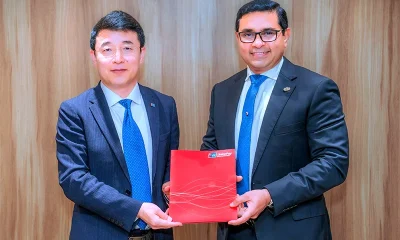
ComBank, UnionPay launch SplendorPlus Card for travelers to China
-
 Business4 days ago
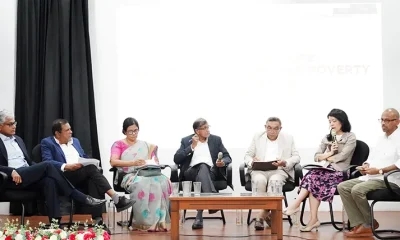
Climate risks, poverty, and recovery financing in focus at CEPA policy panel
-
 Opinion3 days ago
Sri Lanka, the Stars,and statesmen
-

 Business2 days ago
Hayleys Mobility ushering in a new era of premium sustainable mobility
-
 Opinion7 days ago
Luck knocks at your door every day
-
 Business2 days ago
Advice Lab unveils new 13,000+ sqft office, marking major expansion in financial services BPO to Australia
-

 Business2 days ago
Arpico NextGen Mattress gains recognition for innovation
-
 Business1 day ago
Altair issues over 100+ title deeds post ownership change