
News
DG National Security Studies warns: Hasty recognition of Taliban likely to send wrong signal to Tamil and Muslim communities here

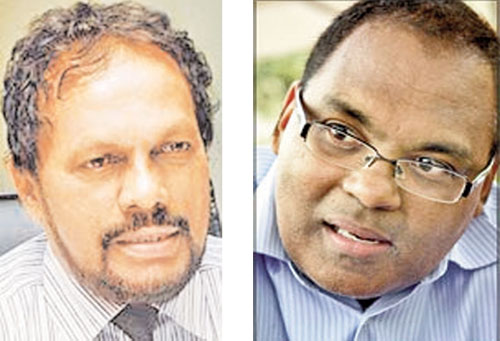
Recommends nothing short of death penalty for terrorism
By Shamindra Ferdinando
Director General of Institute of National Security Studies Sri Lanka (INSSSL) Prof. Rohan Gunaratne says hasty recognition of the illegitimate Taliban administration would be inimical to Sri Lanka.
Prof. Gunaratne asserts that consequences of such a move would be catastrophic and may result in domestic challenges to the government.
In an exclusive interview on ‘Hide Park’ on Derana 24×7 recently, Prof. Gunaratne, the author of ‘Afghanistan After the Western Drawdown’ explained how a wrong move on Sri Lanka’s part vis-a-vis Afghanistan could give a wrong signal to both Tamil and Muslim communities here as well as to the international community.
Pointing out that Taliban hadn’t regained power through an internationally accepted election, Prof. Gunaratne who earlier had the opportunity to interview senior Taliban figures emphasized the responsibility on the part of the current government to await the UN’s response to the developments in Afghanistan.
Gunaratne succeeded Asanga Abeygoonasekera as DG of INSSSL, which comes under the purview of the Defence Ministry. The change took place in the wake of the 2019 presidential election. Abeygoonasekera, who contested the Gampaha district at the 2015 general election on the UNP ticket had been the founding DG of the outfit established by then President Maithripala Sirisena and later became an advisor to Opposition Leader Sajith Premadasa.
Declaring that Taliban hadn’t changed and essentially remained an extremely violent outfit among international coalition of terrorist organizations, Prof. Gunaratne advocated toughest possible measures against terrorism.
The academic emphasized; “Nothing short of death penalty for terrorism. The government should consider, at least at this stage, especially after developments in Afghanistan and the continuing presence of Islamic State in Syria and Iraq, how to deal with the situation.”
Gunaratne asserted the importance of the government reaching consensus on what he called proper legal and policy framework to manage external threats.
Prof. Gunaratne appeared on Derana 24×7 before the Islamic State mounted a suicide attack just outside the Kabul airport compound. The single blast claimed the lives of nearly 180 persons, including 13 US personnel.
Prof. Gunaratne advised that Sri Lanka shouldn’t recognize any group that hadn’t gained power through constitutional means. The official stressed the importance of having a proper general election in Afghanistan, formation of an all-inclusive government followed by UN recognition before Sri Lanka decided on the issue at hand.
Gunaratne, who first cut his teeth as a journalist in the now defunct Sun newspaper in the early ‘80s emphasized the need to examine carefully what was going on there before Sri Lanka recognized the Taliban whom he categorized as new actors.
During the interview Prof. Guneratne made reference to the Islamic State as the party behind those who carried out the 2019 Easter Sunday carnage here blamed primarily on the NTJ (National Thowheed Jamaat) now a proscribed group.
About a week ago Illankai Thamil Arasu Kadchi (ITAK) member and Jaffna District TNA lawmaker S. Sridharan compared the Taliban’s triumphant return to Kabul and the Tamil community’s struggle here. The MP’s declaration didn’t receive the backing of his party.
Former Director General of Presidential Media Division (PMD) and the incumbent Director General of the Government Information Department Mohan Samaranayake told ITN yesterday (29) that recognition of a country by a particular government would depend on its agenda. Samaranayake was responding to the interviewer’s query regarding China quite clearly indicating its desire to work with the Taliban.
Samaranayake, formerly with the UN mission in Colombo said that recognition of Afghanistan would largely depend on five permanent members of the UN Security Council comprising the US, Russia, China, UK and France.
Both Prof. Gunaratne and Samaranayake found fault with US strategy vis-a-vis Afghanistan with the former alleging that the failure on the part of successive US political leaderships though the US military enjoyed superiority over any other military.
Samaranayake discussed the challenge experienced by China and Pakistan in the wake of rapid changes in Afghanistan. ITN interviewed Samaranayake close on the heels of a devastating Islamic State attack directed at Afghans seeking to leave the country and the withdrawing Americans.
Sri Lanka’s Ambassador in Kabul retired Navy Chief Admiral Piyal de Silva returned to Colombo before the fall of President Ghanis’s administration clearly kept afloat with the military muscle of US and its NATO allies. Admiral Silva succeeded retired Air Marshal Gagan Bulathsinhala following the 2019 presidential election.
Diplomatic sources say both Pakistan and China appeared to have adopted a sort of soft approach towards Taliban and are working with the new leadership. Recently, Afghanistan developments had been taken up when Pakistan High Commissioner in Colombo Maj. Gen. (retd) Muhammad Saad Khattak met newly appointed Foreign Minister Prof. G.L. Peiris at the Foreign Ministry, where the Pakistanis gave an assurance on the safety of Lankans in Afghanistan on behalf of Taliban according to a statement issued by the Foreign Ministry.
The statement quoted HC Khattak as having told Prof. Peiris that Pakistan has received an assurance from the Taliban as regards the safety of foreign nationals in Afghanistan and also made a pledge that rights of women and children would be protected. The High Commissioner also said Pakistan hoped that Afghanistan would soon establish a peaceful government structure and integrate with the rest of the world.
Former Premier and the UNP leader Ranil Wickremesinghe has warned against hasty recognition of Taliban. Former PA National List lawmaker and Sri Lanka’s former Ambassador to Iran M.M. Zuhair, PC, strongly criticized the UNP’s stand.
The US led NATO forces evicted the Taliban from Kabul in late 2001 following 9/11 Al Qaeda attacks on the US. Foreign forces reached agreement with Taliban on the basis of Doha talks initiated during the previous Trump administration. Foreign forces are scheduled to complete their withdrawal on August 31.


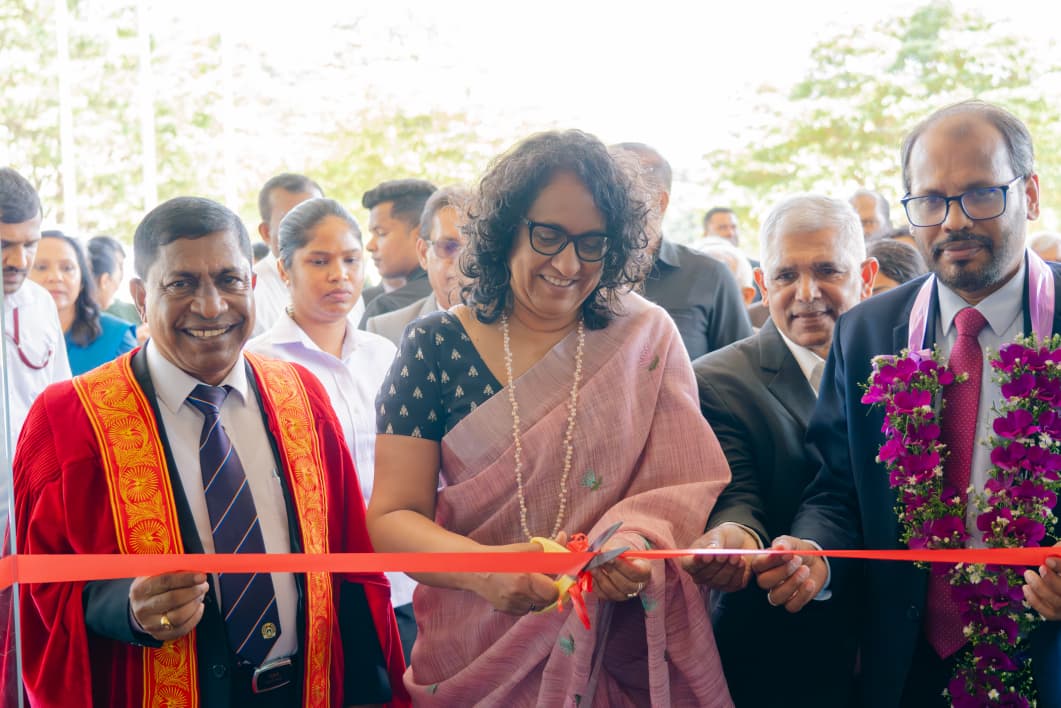
Prime Minister Dr. Harini Amarasuriya stated that promoting the local industrial sector is one of the key priorities of the Government.
The Prime Minister made these remarks while attending the official opening ceremony of the INCO 2026 Industrial Exhibition on 13 th of March, which is being held for the 20th consecutive year at the BMICH Exhibition Center.
The INCO 2026 Industrial Exhibition, organized by the Institution of Incorporated Engineers, Sri Lanka (IIESL), will be held from March 13 to 15.
Addressing at the event, Prime Minister stated:
“The engineering sector is a key driving force in addressing practical challenges faced by a country while enhancing efficiency and safety. In particular, the contribution extended by exhibitions of this nature encourages the student community to engage in innovation.
The Government has implemented several measures to accelerate the country’s industrial development. Notably, the National Industry Information System (NIIS) has established a centralized digital platform to collect data related to the country’s economic and industrial activities. The Government is also taking steps to provide necessary financial support to industrialists through Revolving Funds.
It is also noteworthy that this year’s exhibition has attracted international participation, creating opportunities for local entrepreneurs to explore new markets and gain exposure to international technologies. With the participation of engineers, students, and entrepreneurs, this exhibition marks an important step toward the country’s industrial future”.
The event was attended by the Chairman of the Export Development Board Mangala Wijesinghe, Chairman of the National Paper Company Limited Upali Rathnayake, President of the Institution of Incorporated Engineers, Sri Lanka Engineer Ananda Gunawardena, along with local and foreign investors, entrepreneurs, and industrialists.

(Prime Minister’s Media Division)


Chief Magistrate draws CB attention to massive drain in foreign exchange through cryptocurrency deals
Colombo Chief Magistrate Asanga S. Bodaragama yesterday observed that loopholes in actions carried out by State financial institutions, under the Foreign Exchange Act, had enabled funds in Sri Lanka to be transferred overseas, through cryptocurrency transactions.
The Magistrate said immediate steps should be taken to curb such activities and to educate the public, and directed that the matter be brought to the attention of the Central Bank of Sri Lanka.
He noted that cryptocurrency transactions carried out, using modern technology without approval from the Central Bank, had taken place without adequate public awareness, adding that incidents of the nature were increasingly being reported before courts.
The Magistrate observed that investigations into such incidents appeared to be confined to court proceedings alone and emphasised that the Central Bank, as the country’s principal financial regulator, together with other relevant institutions, should take appropriate measures and raise public awareness in the interest of the public and the country.
He also said the Criminal Investigation Department and the Central Bank should take steps to educate the public on such financial frauds and introduce a proper mechanism to address the issue.
The court further observed that many individuals had exploited loopholes in the Foreign Exchange Act and related procedures to commit financial fraud, and stressed that the Central Bank should take necessary action upon being apprised of such matters.
The Magistrate made these observations when a case relating to an alleged Rs. 290 million fraud at a well-known private bank was taken up before court yesterday. The suspects are alleged to have fraudulently obtained public funds through cryptocurrency transactions using accounts on Binance.
The Magistrate also directed the Criminal Investigation Department to expedite investigations into the disappearance of Rs. 290 million and report progress to court.Observing that the incident was not an ordinary case, the Magistrate instructed the CID to take prompt action to prevent similar frauds carried out through Binance platforms.
Making further observations, the Magistrate noted that the suspects had been produced before court, over the past three months, in connection with the incident, and stressed that investigations should be completed promptly by gathering all relevant information.
He earlier observed that the case did not involve a minor offence, such as ordinary theft, but a serious matter concerning the fraudulent misappropriation of public funds, through Binance accounts, and emphasised the need for swift action to prevent such crimes.
Nineteen suspects, connected to the incident, had earlier been remanded and subsequently released on bail.
The case was fixed to be called again on 15 May .

The Sri Lanka Computer Emergency Readiness Team (SLCERT) has issued a public advisory urging internet users to exercise caution when engaging with online advertisements in the run-up to the festive season.
Senior Information Security Engineer at SLCERT, Charuka Damunupola, said that several incidents of online scams had already been reported to the organisation during the first two months of this year.
He warned that with the approaching Sinhala and Tamil New Year, the risk of fraudulent advertisements and malicious links, appearing online, was likely to increase, often disguised as discount offers, cash prizes, or special promotional deals.
Damunupola noted that such links frequently redirect users to fraudulent websites designed to harvest personal information and other sensitive data.
He further cautioned that during the Vesak and Poson festive periods, scammers may attempt to collect user data through deceptive schemes promoted under various guises, including campaigns such as ‘Poson Maha Data Dansala.’
SLCERT has, therefore, urged the public to remain vigilant and exercise caution when clicking on unsolicited links or advertisements encountered online.

Agha calls for ‘sportsman spirit’ after controversial dismissal

US embassy in Baghdad hit by strike as Trump says military targets ‘obliterated’ on Iran’s key oil island

Showers or thundershowers will occur at several places in the Western, Sabaragamuwa, Central, North-western and Uva provinces and in Galle, Matara, Mannar and Anuradhapura districts after 2.00 pm.

Bahrain & Saudi Arabia Grands Prix to be cancelled

Pink Floyd guitar sold for record-breaking $14.6m

Promoting Local Industries is a key priority of the Government – PM

‘Dates have the highest sugar content to fight Coronavirus’

Sunday Island 27 December – Headlines

#SundayIsland 17th December – Headlines

Sunday Island – 28th March

Sunday Island Headlines – 21 March

Sunday Island – 21st February – Headlines
-

 News6 days ago
Repatriation of Iranian naval personnel Sri Lanka’s call: Washington
-
 Features6 days ago
Winds of Change:Geopolitics at the crossroads of South and Southeast Asia
-

 News5 days ago
Prof. Dunusinghe warns Lanka at serious risk due to ME war
-

 Sports4 days ago
Royal start favourites in historic Battle of the Blues
-

 Sports3 days ago
The 147th Royal–Thomian and 175 Years of the School by the Sea
-

 News3 days ago
Historic address by BASL President at the Supreme Court of India
-
 Business7 days ago
Seven decades of sartorial excellence: The legacy of Linton Master Tailors in Kandy
-

 News4 days ago
CEBEU warns of operational disruptions amid uncertainty over CEB restructuring