Connect with us

News

Contrast between Jaffna and Mullaitivu

Published

on

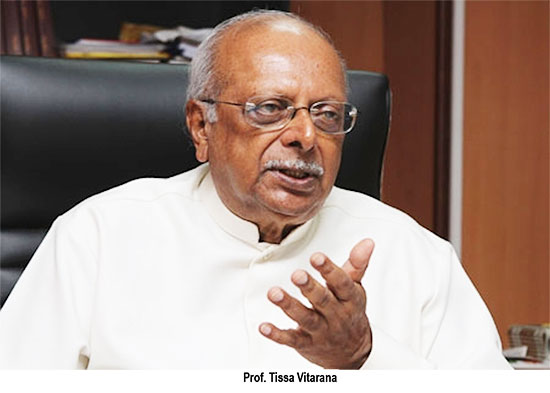
by PROF.TISSA VITARANA

I visited the Northern Province from Feb. 25-28 starting at Pudukudiruppu in Mullaitivu, where the final stages of the battle against the LTTE was fought. About 50 people, both men and women were present for nearly two hours and their representative in the Pradeshiya Sabha, Johnson, and I made the initial speeches, lasting over one hour, followed by an interesting discussion.

The poverty and hardship of the people was heartrending. I doubt whether they had a proper daily meal. But Covid-19 was not a problem. The main health problem was hunger and starvation. Comrade Johnson had used his small grant from the Pradeshiya Sabha to provide them with some basic needs, like food and medicines. The men and women were thin and underfed.

This contrasted sharply with Jaffna that I went to soon after the meeting. It was another world, like Colombo. The people were well nourished, well dressed and there were plenty of vehicles on the road. However like Johnson our party organizer for the Jaffna District, Comrade Morgan, who was well fed but simply dressed, had a common complaint.

This was the attitude of the majority of public servants. Rather than servicing the public their focus was personal advancement of themselves and their kith and kin. The people in Jaffna made up for the resultant poverty through the financial contribution sent to them by their relatives abroad, the diaspora.

Unfortunately the poor people of Pudukudirippu had no diaspora to support them. They were at the mercy of the bureaucrats, specially in Pudukudiruppu, who also seem to have no heart. The latter situation appears to be widespread in the Northern Province, from the information that I received.

Like in the South the high cost of living is affecting the whole North and the problem of poverty, hunger and malnutrition is widespread. Unfortunately the neoliberal mind set (each for himself even at the expense of all others) is also entrenched. The need for collective action and cooperation to help each other, as much as in the South, needs to be revived in the North as well.

The Lanka Sama Samaja Party (LSSP) has to fight for this revival in the North as well as in the South. It is also unfortunate that there is a tendency among some sections in the North to blame the Government for their plight, and some politicians utilize this to their advantage, giving it a communal twist. I appeal to the Government to admit the extent of the economic crisis in the country and win the confidence of the people by having a clear cut plan of action to emerge from the crisis.

This is nothing to be ashamed of as it is a part of a global economic crisis that affects small economies like Sri Lanka, worse than better-off countries. This is what Dr.N.M. Perera did as Finance Minister during the more severe economic crisis that occurred in 1972. He won the confidence of the people by outlining a plan of action, including belt tightening, restriction of imports and dire punishment for corruption etc.

I am afraid this is lacking today. People are confused as they see that the Government is carrying on as if everything is normal and that there is no need for a period of austerity. If this continues without a clear plan for the revival of the economy and no action is taken to bring down the cost of living, an explosive situation might take place at any moment both in the South and the North and this may once again take on a racial character.

During my discussion with our party supporters and intellectuals including members of the other political parties that attended the successful final meeting at Veerasingham Hall in Jaffna, they expressed their biggest fear as being the removal of the 13th Amendment of the present Constitution, when forming the new Constitution promised by the President. In short the people in the North valued the devolution of power that resulted from the 13th Amendment and felt that both neglect of duty and the abuse of bureaucratic power could be ended only by the proper devolution of power.

The members of the head table at the final meeting at the Veerasingham Hall (eminent Prof. Balasundaram Pillai, a respected retired judge and an eminent lawyer) in their speeches emphasizing the importance of proper devolution of power. In fact they made reference to the All Party Representatives Committee (APRC) Report, which I happened to chair, as a suitable solution to the ethnic problem that should be an integral part of the forthcoming Constitution.

The learned retired judge said that he himself preferred to go further and have a federal state for the North and East. But he was prepared to see how the APRC proposals would work out before taking such a decision. It was evident to me after all the discussions I had that any move to remove the 13th Amendment would be a trigger for the rebirth of the LTTE and even a resumption of war. India is totally committed to the implementation of proper devolution and they too are bound to intervene if there are any such moves.

The other major issue affecting the ordinary people is the problem of debt. It too is widespread and because of the problem of single parent families, where the father has been killed, the women have been forced to have an added source of income, even if they have a plot of land. They have obtained loans from private micro credit sources to buy sewing machine etc. But with their low income and the high interest rates they are caught in a debt trap and are at the mercy of the creditor. It was sad to hear how many women are being forced to submit to granting sexual favors when they failed to make the payment on time.

There are some others who have started to build their own houses with the initial Rs.250,000/- from the total loan of Rs.500,000/- promised to them. But the balance Rs.250,000/- has not been given since the present Government came into office. They contrive to live in the half constructed houses get in wet in the rain and scorched by the sun. I appeal to the Government on behalf of the LSSP to ensure that all of them get the balance Rs.250,000/-, putting an end to their suffering. I was told that over 65,000 families are placed in this unfortunate situation. It was welcome news to learn that the Government has developed several tanks to supply water for agriculture. I was also informed that among the settlers the Tamil people of the area are not being given a fair share of the land.

The other problem that has become a menace is that of the large number of unemployed youth. Many of them have even lost any prospect of getting a job. They have fallen into the clutches of members of the underworld and have become drug addicts, drug traffickers and even turned to organized crime. There are reports of ladies who have lost their gold chains when they go to the markets.

Among the other issues that were raised was the fact that there were many vacancies in the Public Service which could be filled by competent Tamil officers. But they were been overlooked and non-Tamil officers were being appointed, even when they had lesser qualifications. There was also allegations of sections of the police who were not maintaining law and order as they should, basically expecting bribes.

There was also much dissatisfaction with the Government over the fact that earlier Government institutions like the Cement Corporation and many Salterns were lying idle. If they were revived they would reduce the level of unemployment.

Finally I must mention the strong opposition to the poaching of fish, specially bottom trawling, that is being practiced by Indian fishermen. They urged me to take this matter up with the Minister concerned and to get the Sri Lankan Government to take strong deterrent action against this practice.



Continue Reading
Click to comment

Leave a Reply

Your email address will not be published. Required fields are marked *

News

Officials of NMRA, SPC, and Health Minister under pressure to resign as drug safety concerns mount

Published

on

Mounting concerns over drug safety and regulatory oversight have triggered strong calls from medical professionals and trade unions for the resignation of senior officials at the National Medicines Regulatory Authority (NMRA) and the State Pharmaceutical Corporation (SPC), following patient deaths, allegedly linked to the administration of Ondansetron injections.

Medical and civil rights groups say the incident has exposed deep systemic failures in Sri Lanka’s drug regulatory framework, with critics warning that the collapse of quality assurance mechanisms is placing patients’ lives at risk.

The Medical and Civil Rights Professional Association of Doctors (MCRPA), and allied trade unions have accused health authorities of gross negligence and demanded the immediate resignation of senior NMRA and SPC officials.

MCRPA President Dr Chamal Sanjeewa said the Health Ministry, NMRA and SPC had collectively failed to ensure patient safety, citing, what he described as, a failed drug regulatory system.

“These are not isolated incidents. Over the past two years, more than 100 batches of medicines, imported from India, have been either temporarily, or permanently, withdrawn due to quality concerns,” he said.

The controversy intensified after the NMRA announced the temporary withdrawal of several batches of Ondansetron Injection USP 8 mg/4 ml (Ondanman 8), manufactured by Maan Pharmaceuticals Ltd., India, following reports of serious adverse reactions and at least one confirmed death at the Infectious Diseases Hospital (IDH). Social media reports have also claimed two deaths at the National Hospital, Kandy, though these have not been officially confirmed.

The NMRA subsequently ordered hospitals nationwide to suspend the use of 10 injectable medicinal products until their manufacturing processes are verified to meet required safety and quality standards.

NMRA Chairman Dr Ananda Wijewickrema said the decision followed recommendations made by the authority’s Safety and Risk Evaluation Subcommittee on 16 December, 2025, in response to continuing reports of adverse drug reactions, including fatal cases.

An urgent circular was issued to PTC Medical (Pvt.) Ltd.,

instructing the company to immediately withhold all parenteral products manufactured by MAAN Pharmaceuticals Ltd of India, pending further investigations. PTC Medical is the market authorisation holder for the products in question.

Dr Wijewickrema clarified that while the reported death at IDH occurred after the administration of Ondansetron, a direct causal link to the drug has not yet been conclusively established. However, he said the precautionary withdrawal was necessary in the interest of patient safety.

Further laboratory testing is currently underway at the National Medicines Quality Assurance Laboratory (NMQAL) to assess the quality, safety and efficacy of the affected products.

Dr Sanjeewa added that the drugs currently under suspension included essential medicines such as antibiotics, Ondansetron for vomiting, Haloperidol for psychiatric and seizure-related conditions, and Iron Sucrose for iron deficiency. Most of the affected products, he said, were imported between 2024 and 2025.

He also criticised the continued use of senior officials allegedly responsible for regulatory lapses, arguing that accountability must extend to the political leadership.

“The Minister says these medicines were imported under previous governments. But the same officials responsible for this criminal mishap are still in office. If he continues to be served by errant officials, the Minister, too, must bear responsibility,” Dr Sanjeewa said, calling for the resignation of Health and Mass Media Minister Dr Nalinda Jayatissa.

The MCRPA announced that it would lodge a formal complaint with the Criminal Investigation Department (CID) today (18), seeking a criminal probe into the matter.

Medical associations have also raised alarm over regulatory changes that allow medicines approved under Indian Pharmacopoeia (IP) standards to be used in Sri Lanka without mandatory local retesting.

Dr Sanjeewa said that after the current government assumed office, provisions were introduced permitting the direct use of IP-approved medicines in the state hospital system, bypassing additional local quality testing.

“This has created a dangerous loophole. Imported medicines must be retested locally before they are administered to patients,” he said, urging authorities to urgently reinstate local verification procedures.

Deputy Minister of Health Hansaka Wijemuni told the media that investigations were ongoing into the specific batch of Ondansetron under scrutiny, following reports of two deaths that raised safety concerns.

Suspicion intensified after a patient died on 12 November. A medical specialist at the National Hospital, Kandy, conducted laboratory tests and shared findings that prompted the NMRA to immediately suspend the relevant batch nationwide.

The Government Medical Officers’ Association (GMOA) confirmed that the use of the affected Ondansetron batch had been suspended across the country.

GMOA Spokesman Dr Chamil Wijesinghe said investigations at the National Hospital, Kandy, identified the drug as a quality failure after several patients developed adverse reactions.

Sri Lanka records between 80 and 100 cases of substandard or low-quality medicines annually, he said, stressing the need to determine whether such failures arise from manufacturing defects, poor storage and transportation, or inadequate regulatory screening at entry points.

“When medicines enter the country, NMRA laboratories are responsible for testing them. If quality failures are detected later, serious questions arise about whether proper checks were conducted in the first place,” Dr Wijesinghe said.

by Sujeewa Thathsara and Chaminda Silva

Continue Reading

News

China pledges full support for Lanka’s recovery

Published

on

China has pledged its full support to Sri Lanka’s economic and social recovery efforts in the wake of Cyclone Ditwah, expressing confidence in the country’s rapid recovery under President Anura Kumara Dissanayake’s leadership.

Wang Dongming, Vice Chairman of the Standing Committee of the National People’s Congress of China, conveyed this assurance during a meeting with President Dissanayake at the Presidential Secretariat.

The meeting took place as part of Wang’s official visit to Sri Lanka, the President’s Media Division said.

“The Chinese Government and people are deeply saddened by the disaster and acted swiftly to provide relief assistance,” Wang said.

He said that the purpose of the visit was to strengthen longstanding economic, cultural, and diplomatic ties between the two countries.

President Dissanayake thanked China for its immediate response and support, including material and financial assistance for communities affected by the cyclone. He also requested technical assistance from the Chinese Government, specifically for the restoration and reconstruction of Sri Lanka’s damaged railway network.

Briefing the Chinese delegation on the disaster situation and recovery efforts, the President said the government’s immediate priorities include rescue operations, relocation of affected individuals, and provision of essential services such as food and healthcare. He added that a structured programme is now underway to restore livelihoods and return life to normalcy in impacted areas.

The Chinese delegation included senior officials such as Lu Xinshe, Chairman of the Environmental Protection and Resources Conservation Committee, and Wang Ke, Vice Chairman of the Foreign Affairs Committee and Deputy Head of the China–Sri Lanka Friendship Group. Also in attendance were Tan TianXing, Tang Jian, Yang Yin, Sha Long, and Chinese Ambassador Qi Zhenhong.

Minister of Labour and Deputy Minister of Finance and Planning Dr. Anil Jayantha Fernando, Secretary to the President Dr. Nandika Sanath Kumanayake, and Senior Additional Secretary Roshan Gamage were also present.

Continue Reading

News

Pope fires broadside: ‘The Holy See won’t be a silent bystander to the grave disparities, injustices, and fundamental human rights violations’

Published

on

Ambassador Himalee Arunatilaka presenting credentials to His Holiness Pope Leo XIV

SL Ambassador among those who presented their credentials

Sri Lanka’s Permanent Representative to the UN in Geneva, Himalee Arunatilaka, who is concurrently accredited to the Holy See, presented credentials to Pope Leo XIV, at a ceremony held at the Apostolic Palace, in the Vatican, on 06 December, 2025. The ceremony was attended by high officials of the Vatican where non-resident Ambassadors of Uzbekistan, Moldova, Bahrain, Sri Lanka, Pakistan, Liberia, Thailand, Lesotho, South Africa, Fiji, Micronesia, Latvia and Finland presented credentials.

The text of the press release issued by the Embassy of Sri Lanka to the Holy See Geneva: “Welcoming the newly accredited Ambassadors to the Holy See during the Jubilee Year of Hope, Pope Leo XIV highlighted that ” peace is not merely the absence of conflict, but an active and demanding gift”, which is all the more urgent “as geopolitical tension and fragmentation continued to deepen”. The Holy Father further affirmed that “the Holy See will not be a silent bystander to the grave disparities, injustices, and fundamental human rights violations”. He emphasised the need to be attentive to those in poor and vulnerable situations or are “pushed to the margins of society”.

The Pope underlined that constructive relations between the Holy See and the respective nations of the newly appointed Ambassadors, can help in addressing these concerns, and expressed the hope that such cooperation will contribute to “a renewed spirit of multilateral engagement at a moment when it is sorely needed, revitalising those international bodies established to resolve disputes among nations.”

Ambassador Arunatilaka conveyed the warm greetings and best wishes of President Anura Kumara Dissanayake and sought that the Holy Father keeps Sri Lanka in his prayers as the country recovers from the disaster situation following Cyclone Ditwah.

On the sidelines of the credentials ceremony, separate meetings were held with Secretary of State, Cardinal Pietro Paroline, and Secretary for Relations with States and International Organisations, Archbishop Paul Gallager. During these meetings Ambassador Arunatilaka briefed on the scale of the destruction caused by the cyclone, while also acknowledging the humanitarian assistance provided by the Catholic Church, through Caritas Sri Lanka.

Migration, disarmament and inter-religious dialogue were highlighted as issues of common interest and concern in the bilateral relations.

Archbishop Gallager recalled with appreciation the high-level engagements in Sri Lanka and the warm hospitality accorded, during his visit to Sri Lanka in November 2025 to commemorate the 50th anniversary of diplomatic relations between Sri Lanka and the Holy See.

Continue Reading

Trending