
Features
CONCLUSION: MISSIONS OF A GLOBAL PROFESSOR : CONFESSIONS OF A GLOBAL GYPSY


Dr. Chandana (Chandi) Jayawardena DPhil
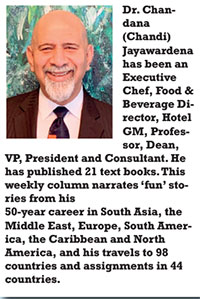
President – Chandi J. Associates Inc. Consulting, Canada
Founder & Administrator – Global Hospitality Forum
chandij@sympatico.ca
Struggling with Doctoral Studies
By 1998, I was struggling with my doctoral research. By then I realized that doing a Ph.D. in the midst of a busy hotel career, at times demanding 16-hour work days, was nearly impossible. I was thinking of a way to find the time to continue my doctoral research, but could not figure out a practical way to manage my busy schedule in order to do all the things I loved doing.
Every Wednesday, I hosted a carefully selected dozen VIPs from Jamaica for an informal cocktail reception at the General Manager’s apartment at Le Meridien Jamaica Pegasus Hotel. That type of PR with a personal touch, worked well in Jamaica. One day, an invitee for a such reception was an old friend of mine from my time in Guyana, Professor Dr. Kenneth Hall. He had been recently appointed as the Pro-Vice Chancellor of the University of West Indies (UWI), and the Principal of its main campus. Later he became the Governor General of Jamaica and was knighted by the Queen of the United Kingdom, as Sir Kenneth.
During that reception in 1998, having accidentally noticed the five books I had co-authored or edited up to that time, Professor Hall was amazed. “Chandi, I did not know that you, in addition to being a busy hotelier, also had been an academic, researcher and writer!” I casually mentioned to him about my post-secondary full-time and part-time teaching in Sri Lanka, the United Kingdom (UK), Switzerland and Guyana. He also asked questions about my time in four European countries, 16 years prior, on an UNDP/ILO Fellowship on Pedagogical Teaching and Training Methodology.
The very next day, Professor Hall sent one of UWI Deans with an excellent offer for me to join them as Senior Lecturer (Associate Professor) in Tourism Management. They offered me an excellent salary and benefit package including a four-bedroom bungalow near the main campus, and lot of free time to finish my doctoral studies in UK. I negotiated two years of sabbatical leave from Forte PLC in England, and accepted the offer from UWI.
In addition to doctoral research in England, I also enrolled for a second Ph.D. in Sustainable Tourism Development at UWI. With that, I became a full-time educator and doctoral researcher, at the first regional university of the world – UWI, which had been established by University of London, UK, as an affiliated institution in 1948. Professor Hall became my new mentor and helped me to progress rapidly in the academic world. I co-authored two significant articles on ‘Caribbean Tourism’ with Professor Hall and the Secretary General of the Caribbean Tourism Organization (CTO) – Dr. Jean Holder.
Developing the first Master’s Degree in Tourism in the Caribbean
Within three months of joining UWI, I was given an exciting additional job – to develop the first Master’s degree in Tourism & Hospitality Management in the Caribbean. It was funded by the European Union, and required me to travel around the Caribbean. I was able to do research and interview leaders of tourism in most of the 32 countries in the Caribbean. Within a year I launched the master’s degree as the founding Programme Leader/Academic Director. In addition, I also worked as the Coordinator of the Tourism Stream of their MBA Program, and the Marketing Course Coordinator for the School of Management, which had 2,000 students.
Through my new research focus, I gradually became an expert on Caribbean Tourism. In 2000, soon after I completed my doctoral studies in UK, UWI awarded me a prestigious post-doctoral research fellowship on ‘Caribbean Tourism’. After that, I resigned from Forte PLC, in spite of an attractive offer to become the General Manager of a 750 roomed Le Meridien Hotel by the Red Sea in Egypt.
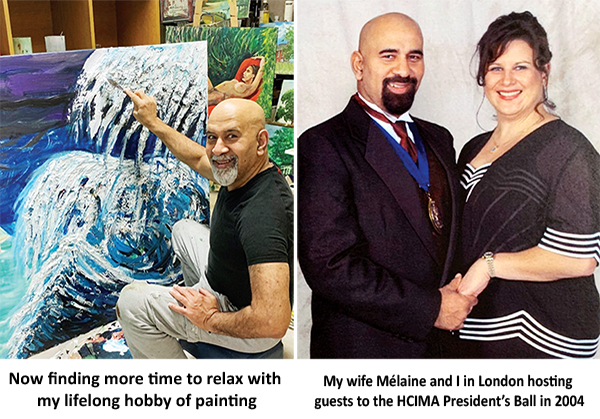
To improve my teaching, I did further studies in 2000, and became a Certified Hospitality Educator (CHE) in USA. I firmly believed that, “those who dare to teach should never cease to learn.” I also spent time studying visual art at the University of Guyana, and Edna Manley College of the Visual and Performing Arts in Jamaica. Finally, I gained two qualifications in fine art and painting from George Brown College in Canada. I thoroughly enjoyed those study programs.
During my five years at UWI, I edited six books on ‘Caribbean Tourism’, while presenting regularly at Caribbean academic conferences. UWI was pleased with my contributions to the body of knowledge in Caribbean Tourism, the main industry of this most tourism-depended region in the world. I became very active in scholarly publications, with over 100 journal articles, and in 2022, I published my 23rd book in the UK.
Moving to Canada as a Professor
The academic world opened many new doors for me. In 2001, I went to Canada on an UWI-Ryerson University one-year faculty exchange special agreement, as a Visiting Professor of Ryerson University. There, apart from teaching, my key contribution was to create a research and publication culture within the university’s School of Hospitality and Tourism Management (established in 1946 as the first hotel school in Canada). I organized a couple of round tables with the tourism industry and education leaders of Canada, and focused on publishing articles and journal issues dedicated to tourism and hospitality management in Canada.
Developing ‘In-company’ Graduate Programs for Senior Managers
I also did part-time concurrent work for an amazing consortium of leading business schools around the world – International Management Centres Association (IMCA), headquartered in UK. Their non-doctoral degree granting hub was set up in Boulder, Colorado, USA. It was an early virtual university. As doctoral programs were accredited by the British Accreditation Council for Independent Further and Higher Education, those were awarded in UK.
I learned a lot about the business of higher education from IMCA, and from two of their subsidiaries – IMCA Socrates Limited in UK and the Canadian School of Management. I commenced with them in 1998 as an Associate Professor and by 2001 was promoted as a professor. In addition, by 2003, I was promoted as a Vice President of both organizations. I was responsible mainly for market development and setting up ‘in-company’ graduate programs for managers in large organizations and trade associations in the Tourism and Hotel Industry in Jamaica, Barbados, Canada etc. I also did some part-time on-line teaching for University of Surrey in UK. The icing on the cake was a few prestigious awards in recognition of my contributions.
Elected President of HCIMA, UK
From 2001, for five years I was elected, through an international vote, to the executive council of the world’s largest, professional body for hospitality managers – Hotel Catering International Management Association (HCIMA) in UK. HCIMA was also the largest accrediting body for education programs in hospitality management in the Commonwealth. The Leadership team of HCIMA was responsible for 15,000 members (Hospitality Managers) from 104 Countries. Towards the end of my five years in the executive council, we initiated a re-branding of HCIMA to the Institute of Hospitality, UK. Throughout an 85-year history, I was the only non-European to be elected as the President of HCIMA. I was also the Chairman of the company – HCIMA Ltd., UK.
Joining Ontario Community College system
In 2005, I joined the Ontario Community College system which has 24 colleges as degree granting institutions. Initially I worked as a Professor and Program Coordinator at Niagara College. As teaching at colleges is much different from teaching at universities, I completed a ‘College Educator’ training program over three summers.
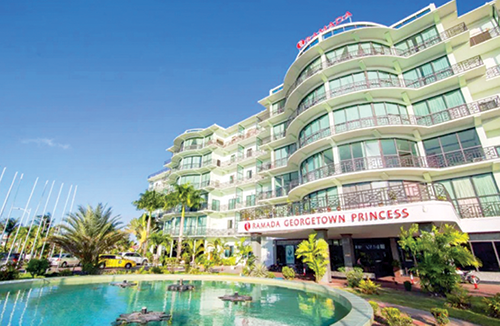
During my time at Niagara College, I was released for a short period to undertake a high-level consulting assignment offered by the government of Guyana. In this assignment, my main contribution was opening the largest hotel in Guyana – Buddy’s International (today, Ramada Georgetown Princess) as the General Manager in 2007.
Becoming a College Dean
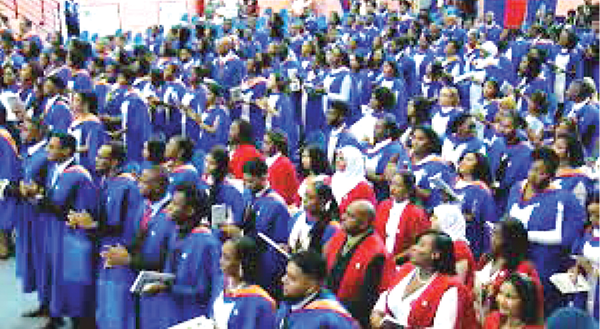
In 2007, I was recruited as a Dean to George Brown College in Toronto. There, for five years from 2007 to 2012, as Associate Dean, I was responsible for all academic aspects of the largest faculty of Tourism, Events, Hospitality Management and Culinary Arts in Canada. I was trained as a Dean by an experienced and highly innovative Dean – John Walker.
My responsibilities included leading three schools with three Academic Chairs, 60 full-time Professors (and 200 part-time Instructors) and an academic budget of $30 million. Within five-years we increased our student enrolments from 2,400 to 3,300 full-time students and 8,500 continuing education registrants (equivalent to another 1,700 full-time students) in our centre. At George Brown College I improved my knowledge about innovation in post-secondary education. I was responsible for applied funded research and publishing.
In addition, I also held responsibility for the centre’s enrolment plans, business plans, academic strategies, key performance indicators, student success programs, 17 program advisory committees (with over 155 industry partners), program portfolio analysis, program development, program reviews, program pathways, faculty development, and editing annual innovation reports. I was also involved in some aspects of 10 academic partnerships in China, India, Brazil, Panama, Italy and France.
Visions of a Global Citizen – Consulting
In 2012, I was recruited as the Dean for Business and Hospitality at the Vancouver Community College, British Columbia. Due to family commitments, however, we decided not to move from Ontario to British Columbia. I decided to set up my consulting firm in the same year, while spending more time with the family and on my hobbies of academic publishing and visual art. I held a large number of solo art exhibitions and took part in many group art shows.
Since 2012, my consulting firm has handled over 40 assignments. Including the consulting assignments I did prior to that, I was fortunate enough to have contracts with over 50 organizational clients. These clients included the European Union, USAID, Caribbean Tourism Organization, Amazon Corporate Treaty Organization, Government of Guyana, Sri Lanka Tourism Development Authority, Jamaica Hotel & Tourist Association, Barbados Hotel & Tourism Association, Heads of Hospitality & Tourism Ontario, Canada, Sri Lanka Institute of Tourism & Hotel Management, Forte Hotels, UK, Sandals Resorts, Jamaica, Sandy Lane Hotel, Barbados, and a few community colleges in Canada and many hotels in Sri Lanka.
Since 2014, I have co-chaired a highly successful, annual event – The International Conference on Hospitality and Tourism Management (ICOHT). I continue to write and publish and to also serve on the editorial advisory boards for two British and South American academic journals. I also teach the masters’ degree students of the Tourism Economics and Hospitality Management program at the University of Colombo. These activities help me to keep busy and do work that will benefit many others.
Team Building Through Art and Keynoting
Some of the seminars I conducted, commenced with my new concept of ‘Team Building Through Art’. I used this as the ice-breaker, and encouraged the participants to create group art work using the talents of team members. This concept has been very popular and useful.
Mastering Bridge
I also learnt to play bridge nine years ago, and progressed rapidly in this Olympic-recognized sport. I managed to earn four North American qualifications in bridge – Certified Club Director, Accredited Bridge Teacher, Diploma in Duplicate Bridge, and Silver Life Master. I regularly run bridge courses for beginners and intermediate players. I also organize various Bridge events and act as a Tournament Chair. I direct two games a week and compete at bridge clubs three times a week. As the old saying goes: “All work and no play, makes Jack a dull boy”.
Learning, playing, winning, directing, teaching and leading in my new hobby – Bridge
Change of Life’s Purpose
From early 2020, due to the pandemic, my consulting business activities were drastically reduced. While the world was struggling to comprehend the danger of COVID-19, my wife Mélaine was rushed to the hospital. She had never been sick in her life before that. A few hours later we heard the results of the CT scan at the emergency room. The doctor who came into Mélaine’s hospital room knelt down before giving us the shockingly bad news. Mélaine had pancreatic cancer and would have a maximum of eighteen months to live. That changed my attitude about life and priorities. During the next one and half years, I realized that my new role as the key caregiver to my dear wife would be the most important job I have ever done. Everything else were dropped or placed on a back burner.
I have realized that life should not be about working in a rat race, but doing things you love. I now lead a simple life doing what I like, when I feel like doing it. These include painting, writing, poetry, coaching, teaching, cooking and playing Bridge. I re-commenced my global travels in December 2022. This year I am hoping to reach my long-time goal of visiting 100 countries. I plan to visit two more countries, to tick that item off my bucket list.
Thank You!
Last week’s 90th episode and this final 91st episode of the ‘CONFESSIONS OF A GLOBAL GYPSY’ column, provided the concluding narration. In addition, during the last 27 months, I also published nine other special feature articles on Sunday Island. I thank you for reading those 100 articles. I enjoyed sharing my personal stories with you.
“The World continues to be my Oyster…”


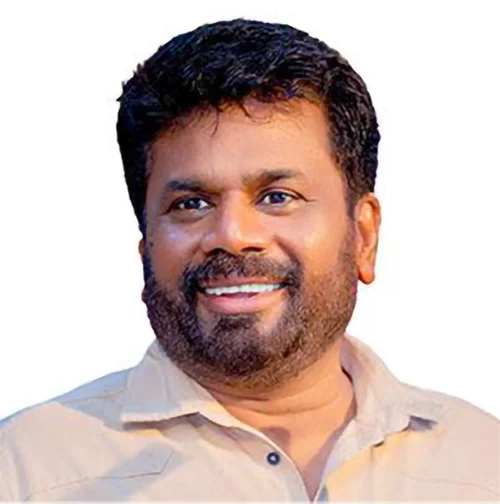
President Anura Kumara Dissanayake has been investing his political capital in going to the public to explain some of the most politically sensitive and controversial issues. At a time when easier political choices are available, the president is choosing the harder path of confronting ethnic suspicion and communal fears. There are three issues in particular on which the president’s words have generated strong reactions. These are first with regard to Buddhist pilgrims going to the north of the country with nationalist motivations. Second is the controversy relating to the expansion of the Tissa Raja Maha Viharaya, a recently constructed Buddhist temple in Kankesanturai which has become a flashpoint between local Tamil residents and Sinhala nationalist groups. Third is the decision not to give the war victory a central place in the Independence Day celebrations.
Even in the opposition, when his party held only three seats in parliament, Anura Kumara Dissanayake took his role as a public educator seriously. He used to deliver lengthy, well researched and easily digestible speeches in parliament. He continues this practice as president. It can be seen that his statements are primarily meant to elevate the thinking of the people and not to win votes the easy way. The easy way to win votes whether in Sri Lanka or elsewhere in the world is to rouse nationalist and racist sentiments and ride that wave. Sri Lanka’s post independence political history shows that narrow ethnic mobilisation has often produced short term electoral gains but long term national damage.
Sections of the opposition and segments of the general public have been critical of the president for taking these positions. They have claimed that the president is taking these positions in order to obtain more Tamil votes or to appease minority communities. The same may be said in reverse of those others who take contrary positions that they seek the Sinhala votes. These political actors who thrive on nationalist mobilisation have attempted to portray the president’s statements as an abandonment of the majority community. The president’s actions need to be understood within the larger framework of national reconciliation and long term national stability.
Reconciler’s Duty
When the president referred to Buddhist pilgrims from the south going to the north, he was not speaking about pilgrims visiting long established Buddhist heritage sites such as Nagadeepa or Kandarodai. His remarks were directed at a specific and highly contentious development, the recently built Buddhist temple in Kankesanturai and those built elsewhere in the recent past in the north and east. The temple in Kankesanturai did not emerge from the religious needs of a local Buddhist community as there is none in that area. It has been constructed on land that was formerly owned and used by Tamil civilians and which came under military occupation as a high security zone. What has made the issue of the temple particularly controversial is that it was established with the support of the security forces.
The controversy has deepened because the temple authorities have sought to expand the site from approximately one acre to nearly fourteen acres on the basis that there was a historic Buddhist temple in that area up to the colonial period. However, the Tamil residents of the area fear that expansion would further displace surrounding residents and consolidate a permanent Buddhist religious presence in the present period in an area where the local population is overwhelmingly Hindu. For many Tamils in Kankesanturai, the issue is not Buddhism as a religion but the use of religion as a vehicle for territorial assertion and demographic changes in a region that bore the brunt of the war. Likewise, there are other parts of the north and east where other temples or places of worship have been established by the military personnel in their camps during their war-time occupation and questions arise regarding the future when these camps are finally closed.
There are those who have actively organised large scale pilgrimages from the south to make the Tissa temple another important religious site. These pilgrimages are framed publicly as acts of devotion but are widely perceived locally as demonstrations of dominance. Each such visit heightens tension, provokes protest by Tamil residents, and risks confrontation. For communities that experienced mass displacement, military occupation and land loss, the symbolism of a state backed religious structure on contested land with the backing of the security forces is impossible to separate from memories of war and destruction. A president committed to reconciliation cannot remain silent in the face of such provocations, however uncomfortable it may be to challenge sections of the majority community.
High-minded leadership
The controversy regarding the president’s Independence Day speech has also generated strong debate. In that speech the president did not refer to the military victory over the LTTE and also did not use the term “war heroes” to describe soldiers. For many Sinhala nationalist groups, the absence of these references was seen as an attempt to diminish the sacrifices of the armed forces. The reality is that Independence Day means very different things to different communities. In the north and east the same day is marked by protest events and mourning and as a “Black Day”, symbolising the consolidation of a state they continue to experience as excluding them and not empathizing with the full extent of their losses.
By way of contrast, the president’s objective was to ensure that Independence Day could be observed as a day that belonged to all communities in the country. It is not correct to assume that the president takes these positions in order to appease minorities or secure electoral advantage. The president is only one year into his term and does not need to take politically risky positions for short term electoral gains. Indeed, the positions he has taken involve confronting powerful nationalist political forces that can mobilise significant opposition. He risks losing majority support for his statements. This itself indicates that the motivation is not electoral calculation.
President Dissanayake has recognized that Sri Lanka’s long term political stability and economic recovery depend on building trust among communities that once peacefully coexisted and then lived through decades of war. Political leadership is ultimately tested by the willingness to say what is necessary rather than what is politically expedient. The president’s recent interventions demonstrate rare national leadership and constitute an attempt to shift public discourse away from ethnic triumphalism and toward a more inclusive conception of nationhood. Reconciliation cannot take root if national ceremonies reinforce the perception of victory for one community and defeat for another especially in an internal conflict.
BY Jehan Perera
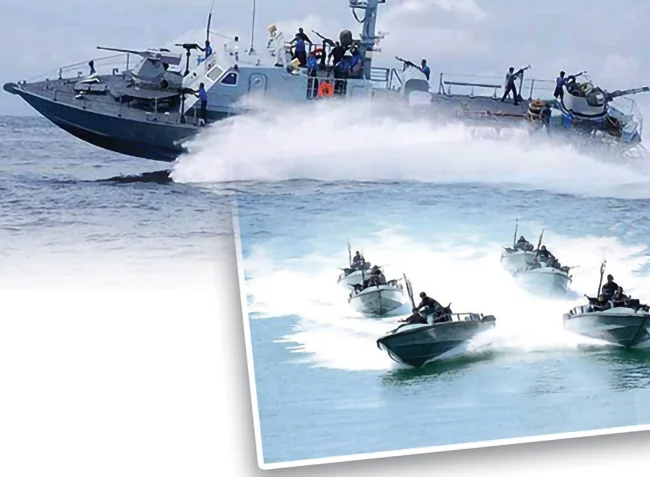
I have read a newspaper report that the Special Task Force of Sri Lanka Police, with help of Military Intelligence, recovered three buried yet well-preserved 84mm Carl Gustaf recoilless rocket launchers used by the LTTE, in the Kudumbimalai area, Batticaloa.
These deadly weapons were used by the LTTE SEA TIGER WING to attack the Sri Lanka Navy ships and craft in 1990s. The first incident was in February 1997, off Iranativu island, in the Gulf of Mannar.
Admiral Cecil Tissera took over as Commander of the Navy on 27 January, 1997, from Admiral Mohan Samarasekara.
The fight against the LTTE was intensified from 1996 and the SLN was using her Vanguard of the Navy, Fast Attack Craft Squadron, to destroy the LTTE’s littoral fighting capabilities. Frequent confrontations against the LTTE Sea Tiger boats were reported off Mullaitivu, Point Pedro and Velvetiturai areas, where SLN units became victorious in most of these sea battles, except in a few incidents where the SLN lost Fast Attack Craft.
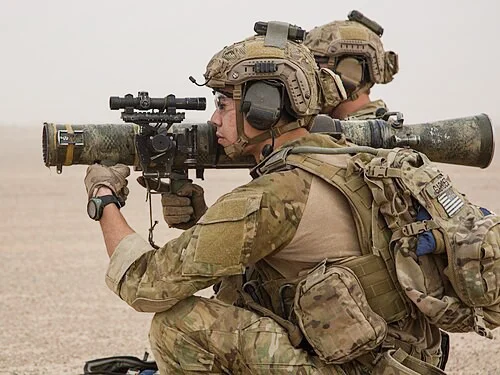
Carl Gustaf recoilless rocket launchers
The intelligence reports confirmed that the LTTE Sea Tigers was using new recoilless rocket launchers against aluminium-hull FACs, and they were deadly at close quarter sea battles, but the exact type of this weapon was not disclosed.
The following incident, which occurred in February 1997, helped confirm the weapon was Carl Gustaf 84 mm Recoilless gun!
DATE: 09TH FEBRUARY, 1997, morning 0600 hrs.
LOCATION: OFF IRANATHIVE.
FACs: P 460 ISRAEL BUILT, COMMANDED BY CDR MANOJ JAYESOORIYA
P 452 CDL BUILT, COMMANDED BY LCDR PM WICKRAMASINGHE (ON TEMPORARY COMMAND. PROPER OIC LCDR N HEENATIGALA)
OPERATED FROM KKS.
CONFRONTED WITH LTTE ATTACK CRAFT POWERED WITH FOUR 250 HP OUT BOARD MOTORS.
TARGET WAS DESTROYED AND ONE LTTE MEMBER WAS CAPTURED.
LEADING MARINE ENGINEERING MECHANIC OF THE FAC CAME UP TO THE BRIDGE CARRYING A PROJECTILE WHICH WAS FIRED BY THE LTTE BOAT, DURING CONFRONTATION, WHICH PENETRATED THROUGH THE FAC’s HULL, AND ENTERED THE OICs CABIN (BETWEEN THE TWO BUNKS) AND HIT THE AUXILIARY ENGINE ROOM DOOR AND HAD FALLEN DOWN WITHOUT EXPLODING. THE ENGINE ROOM DOOR WAS HEAVILY DAMAGED LOOSING THE WATER TIGHT INTEGRITY OF THE FAC.
THE PROJECTILE WAS LATER HANDED OVER TO THE NAVAL WEAPONS EXPERTS WHEN THE FACs RETURNED TO KKS. INVESTIGATIONS REVEALED THE WEAPON USED BY THE ENEMY WAS 84 mm CARL GUSTAF SHOULDER-FIRED RECOILLESS GUN AND THIS PROJECTILE WAS AN ILLUMINATER BOMB OF ONE MILLION CANDLE POWER. BUT THE ATTACKERS HAS FAILED TO REMOVE THE SAFETY PIN, THEREFORE THE BOMB WAS NOT ACTIVATED.
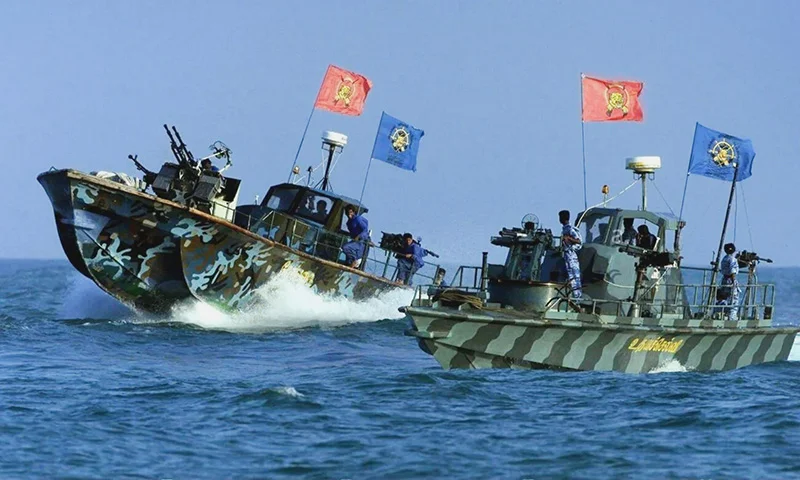
Sea Tigers
Carl Gustaf 84 mm recoilless gun was named after Carl Gustaf Stads Gevärsfaktori, which, initially, produced it. Sweden later developed the 84mm shoulder-fired recoilless gun by the Royal Swedish Army Materiel Administration during the second half of 1940s as a crew served man- portable infantry support gun for close range multi-role anti-armour, anti-personnel, battle field illumination, smoke screening and marking fire.
It is confirmed in Wikipedia that Carl Gustaf Recoilless shoulder-fired guns were used by the only non-state actor in the world – the LTTE – during the final Eelam War.
It is extremely important to check the batch numbers of the recently recovered three launchers to find out where they were produced and other details like how they ended up in Batticaloa, Sri Lanka?
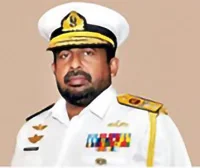 By Admiral Ravindra C. Wijegunaratne
WV, RWP and Bar, RSP, VSV, USP, NI (M) (Pakistan), ndc, psn, Bsc (Hons) (War Studies) (Karachi) MPhil (Madras)
Former Navy Commander and Former Chief of Defence Staff
Former Chairman, Trincomalee Petroleum Terminals Ltd
Former Managing Director Ceylon Petroleum Corporation
Former High Commissioner to Pakistan
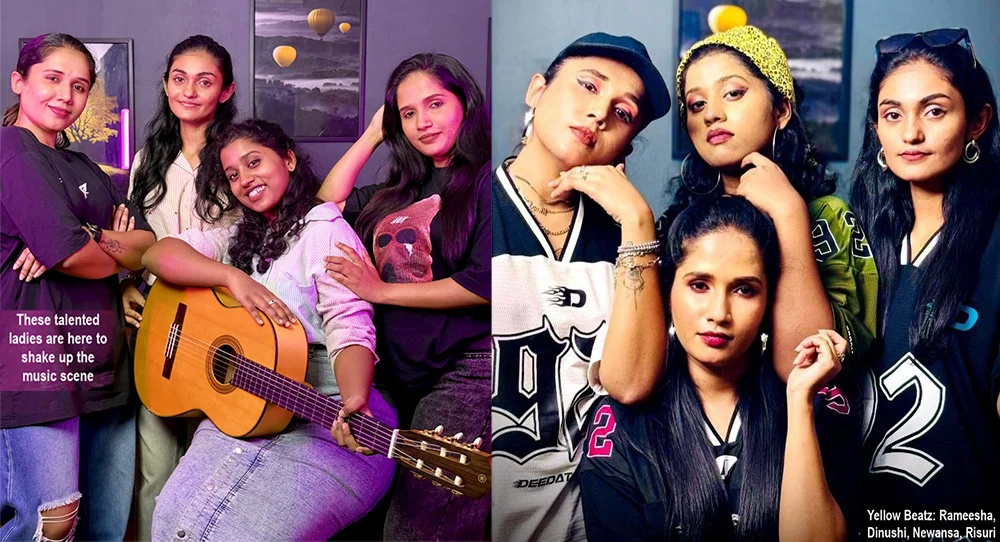
 Yes, get ready to vibe with Yellow Beatz, Sri Lanka’s awesome girl group, keen to take Sri Lankan music to the world with a style similar to K-pop!
With high-energy beats and infectious hooks, these talented ladies are here to shake up the music scene.
Think bold moves, catchy hooks, and, of course, spicy versions of old Sinhala hits, and Yellow Beatz is the package you won’t want to miss!
According to a spokesman for the group, Yellow Beatz became a reality during the Covid period … when everyone was stuck at home, in lockdown.
“First we interviewed girls, online, and selected a team that blended well, as four voices, and then started rehearsals. One of the cover songs we recorded, during those early rehearsals, unexpectedly went viral on Facebook. From that moment onward, we continued doing cover songs, and we received a huge response. Through that, we were able to bring back some beautiful Sri Lankan musical creations that were being forgotten, and introduce them to the new generation.”
The team members, I am told, have strong musical skills and with proper training their goal is to become a vocal group recognised around the world.
Believe me, their goal, they say, is not only to take Sri Lanka’s name forward, in the music scene, but to bring home a Grammy Award, as well.
“We truly believe we can achieve this with the love and support of everyone in Sri Lanka.”
The year 2026 is very special for Yellow Beatz as they have received an exceptional opportunity to represent Sri Lanka at the World Championships of Performing Arts in the USA.
Under the guidance of Chris Raththara, the Director for Sri Lanka, and with the blessings of all Sri Lankans, the girls have a great hope that they can win this milestone.
“We believe this will be a moment of great value for us as Yellow Beatz, and also for all Sri Lankans, and it will be an important inspiration for the future of our country.”
Along with all the preparation for the event in the USA, they went on to say they also need to manage their performances, original song recordings, and everything related.

The year 2026 is very special for Yellow Beatz
“We have strong confidence in ourselves and in our sincere intentions, because we are a team that studies music deeply, researches within the field, and works to take the uniqueness of Sri Lankan identity to the world.”
At present, they gather at the Voices Lab Academy, twice a week, for new creations and concert rehearsals.
This project was created by Buddhika Dayarathne who is currently working as a Pop Vocal lecturer at SLTC Campus. Voice Lab Academy is also his own private music academy and Yellow Beatz was formed through that platform.
Buddhika is keen to take Sri Lankan music to the world with a style similar to K-Pop and Yellow Beatz began as a result of that vision. With that same aim, we all work together as one team.
“Although it was a little challenging for the four of us girls to work together at first, we have united for our goal and continue to work very flexibly and with dedication. Our parents and families also give their continuous blessings and support for this project,” Rameesha, Dinushi, Newansa and Risuri said.
Last year, Yellow Beatz released their first original song, ‘Ihirila’ , and with everything happening this year, they are also preparing for their first album.

Seifert, Allen fifties help New Zealand gallop to record-breaking win against UAE
All-round de Leede leads Netherlands to thumping win over Namibia

Wanindu Hasaranga ruled out of T20 World Cup with injury

Royal Navy of Oman Vessel “SADH” arrives at Port of Colombo

Spirited USA seek Pakistan scalp after opening day heartbreak

New Zealand brace for unfamiliar opponents UAE

‘Dates have the highest sugar content to fight Coronavirus’

Sunday Island 27 December – Headlines

#SundayIsland 17th December – Headlines

Sunday Island – 28th March

Sunday Island Headlines – 21 March

Sunday Island – 21st February – Headlines
-
 Features3 days ago
My experience in turning around the Merchant Bank of Sri Lanka (MBSL) – Episode 3
-
 Business4 days ago
Zone24x7 enters 2026 with strong momentum, reinforcing its role as an enterprise AI and automation partner
-
 Business3 days ago
Remotely conducted Business Forum in Paris attracts reputed French companies
-
 Business3 days ago
Four runs, a thousand dreams: How a small-town school bowled its way into the record books
-
 Business3 days ago
ComBank and Hayleys Mobility redefine sustainable mobility with flexible leasing solutions
-
 Business4 days ago
HNB recognized among Top 10 Best Employers of 2025 at the EFC National Best Employer Awards
-

 Business4 days ago
GREAT 2025–2030: Sri Lanka’s Green ambition meets a grid reality check
-

 Editorial6 days ago
All’s not well that ends well?