
Business
CMTA calls for urgent recall of vehicle valuation and import processes


The Ceylon Motor Traders Association (CMTA) has highlighted the fact that Sri Lanka’s vehicle import framework requires urgent recalibration to ensure fairness, transparency, and the protection of state revenue. The CMTA states that one of the most critical issues that must be addressed is the automatic 15 per cent reduction applied to the CIF value of used vehicle imports when calculating import duties. The CMTA maintains that duty calculations should be applied uniformly across all importers, whether the vehicle is brought in through an authorised agent as brand new or through a dealer as a used import.
For example, if an authorised agent imports a 2026 zero-mileage vehicle of a particular brand at a CIF value of USD 50,000, the full value is used for duty assessment. However, if a dealer imports the exact same 2026 model, also zero mileage and identical in specification, but registered and subsequently de-registered prior to shipment, the CIF value for duty purposes is reduced by 15% to USD 42,500. This concession is granted solely because the vehicle is technically classified as “used” due to prior registration, despite there being no practical difference in mileage, condition, or specification between the two vehicles.
The CMTA believes this practice creates a structural imbalance in the market and results in a significant erosion of import duty revenue to the State. When two identical zero-mileage vehicles are assessed at different CIF values purely on the basis of a procedural registration classification, it distorts competition, disadvantages compliant authorised agents, and undermines equitable tax collection. The Association therefore calls for a uniform valuation approach that reflects the true transacted value of the vehicle, regardless of its registration status prior to export.
Compounding this issue is the widespread application of a 15% depreciation adjustment, which further distorts declared values. When combined with under-declared transaction prices and manipulated valuations, duty is calculated on figures that are significantly lower than actual market value. These reduced values are then reflected across various online platforms and price-tracking websites, creating a distorted reference market that reinforces undervaluation and normalises non-compliant pricing behaviour.
One of the most pressing issues confronting the State is the growing misuse of VAT-free trade-ins which certain car sales are supposed to be practicing within the used vehicle business. These transactions, often structured as vehicle-for-vehicle or vehicle-for-asset exchanges in selling an unregistered vehicle and bypass standard VAT mechanisms and obscure the true transacted value of imports. Such practices often allow vehicles to enter the market with lower invoice values, directly impacting the calculation of import duties and other applicable taxes.
The absence of structured, enforceable processes to accurately define and verify transacted value has created an environment where valuation practices vary widely and lack accountability. Evaluations are frequently conducted at lower price points that do not reflect genuine purchase consideration, enabling systemic revenue leakage for the Government. While mechanisms exist in principle to address these discrepancies, their inconsistent application has rendered them ineffective.
Vehicle imports through CMTA members which operate within clearly defined and auditable frameworks, demonstrate that transparent valuation and predictable tax collection are both achievable and sustainable. These channels provide the State with accurate invoicing, traceable foreign currency outflows, and reliable duty and VAT collection, while limiting the scope for malpractices.
The CMTA believes that consumer safety cannot exist in isolation. The association believes that authorities have a responsibility to ensure that all businesses within the automotive industry operate ethically and within the law. When certain segments of the market are permitted to circumvent regulation, consumer safety is compromised and businesses committed to lawful operations and sustained customer support are placed at an unfair disadvantage.
Therefore, the association urges the relevant authorities to rigorously enforce existing laws and regulations to mitigate malpractices and ensure a level playing field for all participants in the industry and ensure proper collection of tax revenue for the nation. Fair enforcement will not restrict consumer choice; it will enhance it by promoting transparency, safety, and accountability across the market.(CMTA).


Asian Development Bank (ADB) President Masato Kanda met with Sri Lanka Prime Minister Harini Amarasuriya at ADB’s Manila headquarters recently. The meeting reaffirmed the strong development partnership between ADB and Sri Lanka, with both leaders underscoring their commitment to post-cyclone recovery, inclusive growth, and advancing women’s equality.
“Sri Lanka’s resilience in the face of crises has been remarkable,” said Kanda. “We are committed to helping Sri Lanka rebuild after Cyclone Ditwah, while also investing in the country’s future by empowering women entrepreneurs and strengthening education and essential skills.”
Looking ahead, ADB is ready to provide more than $1 billion annually to Sri Lanka from 2026 to 2029. This financing will target macroeconomic stability, private sector-led growth, education and skills development, and resilient infrastructure. Key initiatives include a major digital transformation program to help unlock Sri Lanka’s digital economy, alongside support for its accession to the Regional Comprehensive Economic Partnership to deepen its integration into regional trade and investment networks.
During their discussion, Kanda emphasized ADB’s response to the devastation caused by Cyclone Ditwah. Building on emergency financing already mobilized, ADB is fast-tracking an emergency assistance loan to restore damaged infrastructure and support affected livelihoods.
With Dr. Amarasuriya serving as the keynote speaker for ADB’s International Women’s Day event, the leaders highlighted women’s equality as a cornerstone of inclusive development. Kanda noted ADB’s long-standing work as an implementing partner of the Women Entrepreneurs Finance Initiative, which expands access to finance, business skills training, and policy reform for women-owned enterprises. This partnership has helped drive lasting change, with Sri Lanka becoming one of the first countries to adopt the Women Entrepreneurs Finance Code at the national level in March 2025.
Dr. Amarasuriya also engaged in dialogue facilitated by ADB to advance Sri Lanka’s skills agenda, including discussions on referencing skills and qualifications with the Association of Southeast Asian Nations and on mutual areas of interest with the Philippines related to technical and vocational education and training.

The Unit Trust Association of Sri Lanka (UTASL) announced its new Board of Directors, appointing Jeevan Sukumaran of SENFIN Asset Management as President. The Board assumes leadership at a time of significant growth and resilience in Sri Lanka’s Unit Trust industry. Over the past five years, the number of unit holders has more than doubled, while assets under management have grown substantially, reflecting a clear shift in investor behaviour amid evolving economic conditions.
The 2026–2027 Board includes Vice President Kavin Karunamoorthy (First Capital Wealth Management), Secretary Asanka Herath (Lynear Wealth Management), Assistant Secretary Gayan De Silva (Capital Alliance), and Treasurer Wishan Perera (Softlogic Invest).
President Jeevan Sukumaran highlighted the importance of expanding the industry’s reach and increasing retail participation nationwide. “Whilst the Unit Trust industry has grown significantly in recent years, the next phase must focus on broadening retail investor participation across Sri Lanka’s different geographic/demographic sectors, with the key priority being strengthening investor education and awareness, particularly outside major urban centres. Improving financial literacy and expanding access to professionally managed investment solutions are essential to building long-term confidence and encouraging more Sri Lankans to invest in unit trusts.”
The new Board intends to build on the industry’s recent momentum by prioritising investor education, digital accessibility, and product innovation. Over the coming years, enhanced digital platforms are expected to make Unit Trust products more accessible, enabling investors across the country to participate in capital markets in a convenient and transparent manner.
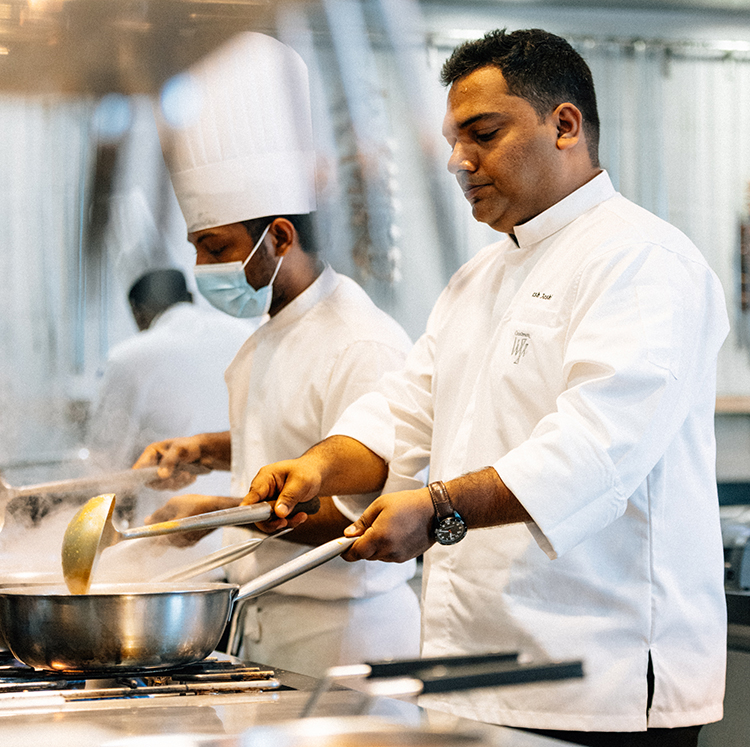
Colombo’s vibrant dining landscape has received a fresh infusion of flavour with the renewed culinary direction of Indiya, the signature Indian restaurant perched high above the city at Cinnamon Life at City of Dreams. With celebrated Indian chef Mukesh Joshi now steering the kitchen, the restaurant is presenting a menu that celebrates the depth, diversity and soul of Indian cuisine while subtly weaving in Sri Lankan influences.
Located on the spectacular Level 23 of the sprawling Cinnamon Life complex, Indiya’s setting itself feels like a prelude to the culinary journey that unfolds at the table.
The restaurant’s sweeping views of Colombo’s skyline provide a dramatic backdrop to a menu designed to take diners across India’s many culinary regions — from the fragrant biryani traditions of Awadh to the bold spice profiles of coastal kitchens.
At the heart of this new chapter is Chef Mukesh Joshi, a culinary craftsman whose career spans some of India’s most renowned hospitality institutions as well as prominent dining establishments in the Middle East.
Having honed his skills at luxury hotels such as The Westin and St. Regis Mumbai before leading kitchens in Dubai’s thriving Indian dining scene, Joshi is known for his ability to balance traditional flavours with contemporary finesse.
At Indiya, his philosophy is simple yet compelling: celebrate the authenticity of Indian cooking while creating dishes that encourage sharing and conversation.
The experience begins with a vibrant array of small plates that capture the playful spirit of India’s street food traditions. The crisp Sev Papdi Chaat offers bursts of sweet, tangy and spicy notes, while a generous Pakora Platter brings together an assortment of golden-fried fritters that evoke the comforting flavours of roadside tea stalls across the subcontinent.
From there, the menu moves naturally into the world of the tandoor — the clay oven that lies at the heart of many Indian kitchens. Among the highlights is the Hariyali Tandoori Gobi, where cauliflower is marinated in a fragrant blend of herbs before being charred to smoky perfection. Equally intriguing is the Rajma Galouti, a vegetarian reinterpretation of the famed Lucknowi kebab, delivering a melt-in-the-mouth texture that surprises and delights.
Seafood lovers will find much to savour as well. Jhinga Koliwada, a coastal delicacy of spiced prawns fried to a crisp exterior, offers a lively contrast to the delicately seasoned Rawa Fried Surmai. These dishes reflect Chef Mukesh’s confident handling of spice and texture — two essential pillars of Indian cooking.
No Indian dining experience would be complete without the ritual of sharing freshly baked breads, and Indiya’s basket arrives warm and inviting. Chilli Cheese Naan brings a playful modern twist to a classic favourite, while flaky parathas and stuffed Aloo Kulcha provide comforting companions to the restaurant’s richly spiced curries.
By Ifham Nizam

Bodies of 84 Iranian sailors killed in US torpedo strike to be repatriated

Four crew members killed after US refuelling plane crashes in Iraq

Safeguarding linguistic heritage is not only a cultural responsibility, but also a shared commitment to preserving the diversity of our world – PM

This is not an ordinary scholarship programme. It defines the future vision of our country – PM

West Indies name unchanged squad for home T20Is against Australia

Duplantis breaks world pole vault record in Uppsala

‘Dates have the highest sugar content to fight Coronavirus’

Sunday Island 27 December – Headlines

#SundayIsland 17th December – Headlines

Sunday Island – 28th March

Sunday Island Headlines – 21 March

Sunday Island – 21st February – Headlines
-

 News7 days ago
Peradeniya Uni issues alert over leopards in its premises
-

 News5 days ago
Repatriation of Iranian naval personnel Sri Lanka’s call: Washington
-

 News7 days ago
Wife raises alarm over Sallay’s detention under PTA
-
 Features5 days ago
Winds of Change:Geopolitics at the crossroads of South and Southeast Asia
-

 News4 days ago
Prof. Dunusinghe warns Lanka at serious risk due to ME war
-

 Sports3 days ago
Royal start favourites in historic Battle of the Blues
-

 Latest News7 days ago
Heat Index at ‘Caution Level’ in the Sabaragamuwa province and, Colombo, Gampaha, Kurunegala, Anuradhapura, Vavuniya, Hambanthota and Monaragala districts
-

 Features6 days ago
The final voyage of the Iranian warship sunk by the US