Connect with us

News

Civil society calls for action to eliminate corruption

Published

on

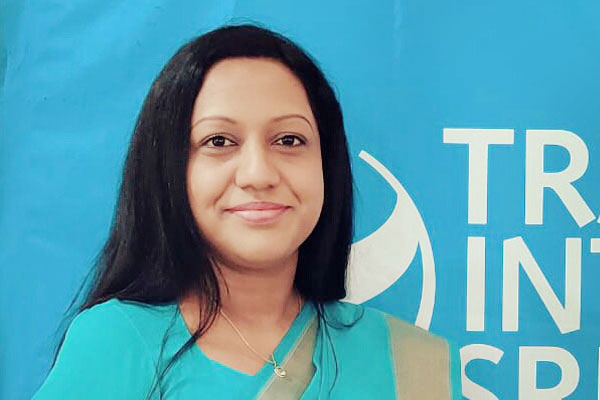
The people would hardly benefit from the aid and assistance Sri Lanka received as long as corruption persisted, Transparency International Sri Lanka (TISL) Executive Director, Nadishani Perera said.

Perera said so speaking at a discussion at the Sri Lanka Foundation Institute in Colombo last week, focusing on the recommendations detailed in ‘The Civil Society Governance Diagnostic Report on Sri Lanka.’ The event was attended by a diverse group of civil society representatives who gathered to address the pressing need for governance reforms in the country.

“No matter how much aid we receive, it will be squandered or misappropriated if we do not tackle corruption head-on. It’s akin to pouring water into a leaky vessel. While there’s much talk about revitalizing the economy, there’s an alarming lack of focus on governance reforms and corruption prevention. The masses, who took to the streets in large numbers last year, demanded a “system change” because they recognized that the country’s crisis was not solely economic but rooted in weak governance and deep-seated corruption.

“Recognizing the public’s heightened interest in anti-corruption, civil society organizations collectively worked on a Governance Diagnostic Report, highlighting a series of governance reforms essential for the nation. By advocating for these recommendations, we can bring about a real system change and ensure sustainable economic development,” Perera noted.

The Civil Society Governance Diagnostic Report, unveiled on September 13, put forth 34 pivotal governance benchmark recommendations. This comprehensive report was presented by ‘The Civil Society Initiative on Anti-Corruption Reform for Economic Recovery,’ led by Transparency International Sri Lanka (TISL), in collaboration with a core group including Verité Research, the Centre for Policy Alternatives (CPA), Sarvodaya Shramadana Movement, People’s Action for Free and Fair Elections (PAFFREL), and the National Peace Council (NPC).

Last week’s meeting was to raise awareness among civil society members regarding the Report’s recommendations. As part of the discussion, the civil society recommendations were compared with those made in the International Monetary Fund’s (IMF) recently issued report titled ‘Sri Lanka: Technical Assistance Report-Governance Diagnostic Assessment’.

Dr. Nishan de Mel, Executive Director of Verité Research, emphasized the importance of good governance, drawing on historical data from 1975. He highlighted that countries with multiple episodes of debt restructuring often scored lower in governance assessments. “Without addressing Sri Lanka’s governance issues, our efforts to rebuild the economy are akin to building a house without a solid foundation. Enhancing transparency and minimizing discretionary powers are imperative for improving Sri Lanka’s governance indicators,” he underscored.

He further warned, “Being content with temporary solutions is a costly mistake we’ve made repeatedly. The future of Sri Lanka now teeters on a precipice, with governance playing a pivotal role in determining whether we tread the right path or venture into dangerous territory.”

Sankhitha Gunaratne, Deputy Executive Director of TISL, stressed the urgency of implementing the proposed governance reforms in their entirety and without delay. She pointed out that key measures, such as introducing new legislation for asset recovery and procurement, establishing a ‘Beneficial Ownership Registry,’ and making the Asset Declarations of high-ranking public officials accessible to the public, are emphasized in both reports.

Professor Arjuna Parakrama, the researcher behind the Civil Society Governance Diagnostic Report, emphasized that these recommendations hold significance not only from an economic perspective but also in ensuring justice and fairplay for the masses.

The discussion also saw active participation from leaders of various organizations, including Rohana Hettiarachchi, Executive Director of PAFFREL; Dr. Vinya Ariyaratne, President of Sarvodaya Shramadana Movement; Dr. Jehan Perera, Executive Director of the National Peace Council; Dr. Paikiasothy Saravanamuttu, Executive Director of CPA; and Lasanthika Hettiarachchi, Advocacy and Research Manager at TISL.

The governance reforms proposed in the 34 Recommendations — derived from extensive island-wide consultation with grassroots citizens and experts alike — garnered the overwhelming support of the civil society representatives who attended the discussion.



Latest News

486 dead, 341 missing, 171,778 displaced as at 0600hrs today [05]

Published

on

By

The situation report issued by the Disaster Management Center at 0600hrs today [5th December] confirms that 486 persons have died and another 341 persons are missing after the devastating weather conditions in the past week.

171,778 persons have been displaced and have taken refuge at 1,231 safety centers established by the government.


Continue Reading

News

Media slams govt.’s bid to use Emergency to silence critics

Published

on

Sunil Watagala

Media organisations have denounced Deputy Minister of Public Security and Parliamentary Affairs Sunil Watagala after he urged law enforcement authorities to use emergency regulations to take action against those posting allegedly defamatory content about the President and senior ministers on social media.

The Sri Lanka Working Journalists Association (SLWJA) yesterday issued a strongly worded statement condemning Watagala’s remarks, warning that they posed a direct threat to freedom of expression and media rights, particularly at a time when the country is struggling through a national disaster.

Watagala made the controversial comments on 2 December during a meeting at the Malabe Divisional Secretariat attended by government officials and Deputy Media Minister Dr. Kaushalya Ariyarathna. During the discussion, the Deputy Minister claimed that a coordinated effort was underway to spread distorted or false information about the disaster situation through physical means, social media, and even AI-generated content. He also alleged that individuals based overseas were contributing to such activity.

According to the SLWJA, Watagala went further, directing police officers present at the meeting to treat those posting such content “not merely as suspects but as offenders” and to take action against them under emergency regulations currently in force.

The SLWJA accused the government of abandoning the democratic principles it once campaigned on, noting that individuals who publicly championed free speech in the past were now attempting to clamp down on it. The association said this was not an isolated incident but part of a pattern of growing state pressure on journalists and media platforms over the past year.

It warned that attempts to criminalise commentary through emergency powers especially during a disaster constituted a grave violation of constitutional rights. The union urged the government to respect democratic freedoms and refrain from using disaster-related powers to silence criticism.

In a separate statement, Internet Media Action (IMA) also expressed “strong objection” to Watagala’s comments, describing them as a “serious threat to freedom of expression”, which it said is a fundamental right guaranteed to all Sri Lankan citizens.

The IMA said Watagala’s assertion that “malicious character assassination attacks” were being carried out against the President and others through social media or other media channels, and that such acts should attract severe punishment under emergency law, represented “an abuse of power”. The organisation also criticised the Deputy Minister’s claim that false opinions or misrepresentations whether physical, online, or generated by AI could not be permitted.

Using emergency regulations imposed for disaster management to suppress political criticism amounted to “theft of fundamental rights”, the statement said, adding that the move was aimed at deliberately restricting dissent and instilling fear among social media users.

“Criticism is not a crime,” the IMA said, warning that such rhetoric could lead to widespread intimidation and self-censorship among digital activists and ordinary citizens.

The group demanded that Watagala withdraw his statement unconditionally and insisted that freedom of expression cannot be curtailed under emergency laws or any other legal framework. It also called on the government to clarify its stance on the protection of fundamental rights amid increasing concerns from civil society.

Continue Reading

News

Cardinal calls for compassionate Christmas amid crisis

Published

on

Archbishop of Colombo

Archbishop of Colombo, Cardinal Malcolm Ranjith, has called on Sri Lankans to observe this Christmas with compassion and restraint, as the nation continues to recover from one of its worst natural disasters in recent memory.

In his message, the Colombo Archbishop has highlighted the scale of the crisis, noting that more than 1.5 million people have been displaced, while an “uncounted number” remain buried under debris in the hill country following landslides and severe flooding.

“It is a most painful situation,”

he has written acknowledging the difficulty of celebrating a season traditionally associated with joy while thousands are mourning lost loved ones, living in refugee centres, or left with nothing but the clothes they were wearing.

The Cardinal has urged the faithful to temper excessive celebrations and extravagance, instead focusing on helping those affected. “Celebrate, by all means, yes, but make it a moment of spiritual happiness and concern for the needs of those who suffer,” he said. “Assist as much as possible those who lost their loved ones, their homes, and their belongings.”

He has called for a Christmas marked by love, sharing, and solidarity, describing it as an opportunity to make the season “a deeply spiritual and joyful experience.”

Continue Reading

Trending