
Business
CIPM Great HR Quiz 2026 concludes with ‘resounding’ success

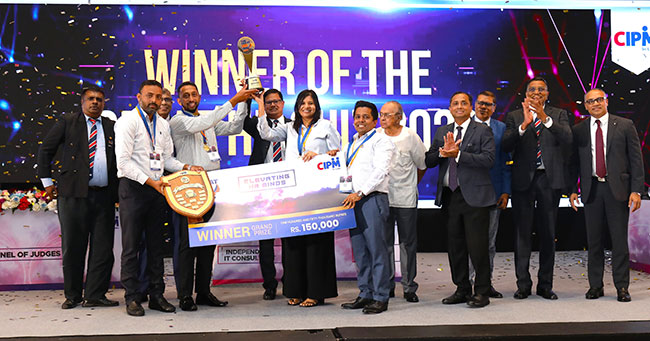
The CIPM Great HR Quiz 2026 concluded successfully on January 28 at Monarch Imperial, Kotte. Teams from leading organisations competed in Sri Lanka’s only corporate quiz dedicated exclusively to HR. Featuring a future-ready format with real-life case studies, the event tested strategic thinking and practical HR application. After a rigorous contest, International Distillers Limited emerged champions, with InQube Global (Pvt) Ltd and DFCC Bank PLC as first and second runners-up, respectively.


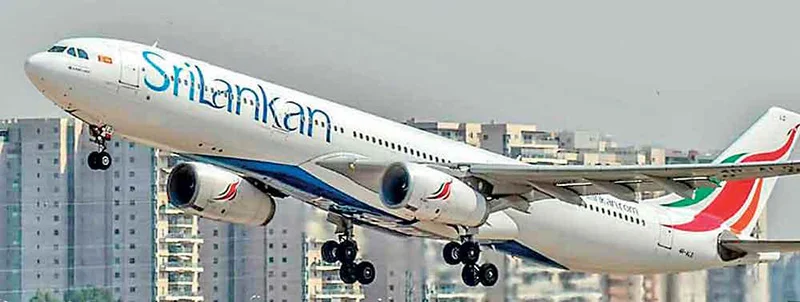
SriLankan Airlines aligning its response to evolving developments
The military strikes involving the United States and Israel against Iran have sent shockwaves through global aviation networks, particularly across the Gulf region – a key air transit corridor linking Europe, Asia, and Africa. In the wake of the attacks and swift Iranian retaliation, eight countries including Iran, Iraq, Israel, Qatar, Kuwait, Bahrain, and the United Arab Emirates have either fully or partially closed their airspace. Major international hubs in Dubai, Abu Dhabi and Doha have been heavily affected, leading to the suspension or cancellation of flights and the grounding of aircraft on a scale not seen since the COVID-19 pandemic.
Air traffic analytics show tens of thousands of flights delayed, thousands cancelled, and hundreds of thousands of passengers stranded or diverted as airlines avoid conflict zones and reroute around restricted skies. Closure of airspace over the Gulf has particularly disrupted east-west routes that normally go through Iranian and Iraqi flight information regions, forcing detours via longer, costlier corridors.
Authorities and carriers alike have emphasised that safety is the top priority amid heightened military risk and uncertainty over how long the closures will persist.
SriLankan Airlines, the national carrier, has been directly affected by these disruptions linked to the Gulf crisis:
The airline cancelled at least 30 flights to and from Middle Eastern destinations – including Riyadh, Kuwait, Dammam, Dubai and Doha — citing airspace closures and safety concerns as the reason.
The cancellations were implemented explicitly “in the interest of passenger and crew safety and operational security,” according to the airline’s statements.
SriLankan has been advising affected passengers to contact customer service or travel agents for rebooking, refunds or assistance as required.
Additional adjustments include flight rerouting and monitoring of dynamic changes in airspace status. Some flights are reported to be diverted via alternate routes, such as via Saudi Arabian airspace, to avoid the closed regions.
The carrier stressed that schedules will be reviewed continually and that services will resume “once conditions permit safe operations.”
by Sanath Nanayakkare

HNB PLC’s Managing Director and Chief Executive Officer, Damith Pallewatte, was named Sri Lanka’s ‘Bank CEO of the Year 2025’ by the Global CEO Forum.
The CEO of the Year Awards – which was hosted at Cinnamon Grand Colombo, recognises leadership excellence in the corporate sector across organisational performance, governance standards and industry impact, and serves as a national platform that brings together senior business leaders alongside key representatives from Government and the diplomatic community.
HNB’s robust risk governance framework, unique innovations drive and expansion of digital capability, transformation of its people and processes and clearly defined 5-year strategy focused on accelerating growth and revitalizing the grassroots economy were among the key considerations underpinning the recognition of the best CEO Award.
Pallewatte’s award follows a year of sustained momentum for HNB PLC. During the year, the Group recorded strong growth in profitability, alongside continued balance sheet expansion, with the Bank’s asset base expanding to Rs 2.39 trillion as at end-December 2025.
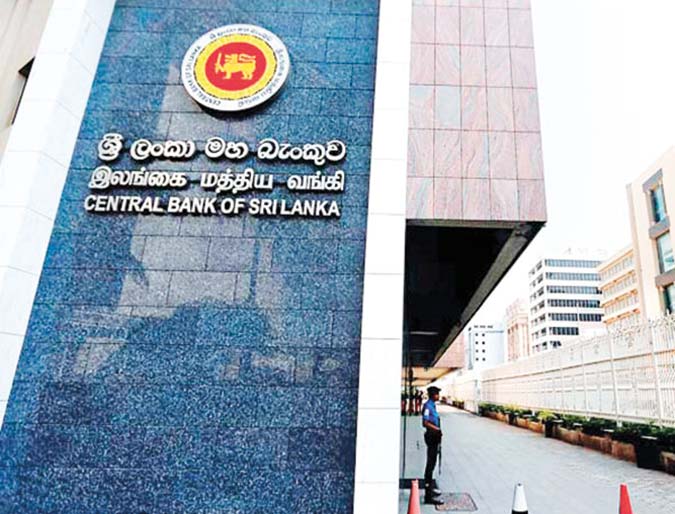
Inside the Central Bank’s Systemic Risk Survey
Sri Lanka’s financial sector enters the first half of 2026 with a cautiously steady footing, but undercurrents of concern over general domestic macroeconomic risks are growing more pronounced, according to the latest Systemic Risk Survey conducted by the Central Bank of Sri Lanka (CBSL).
The H1 2026 survey, carried out between December 19, 2025 and January 16, 2026 among 147 financial sector institutions, reveals a nuanced risk landscape: short-term confidence in the financial system remains positive, yet medium-term confidence has weakened, while the perceived probability of a high-impact negative event has edged up in both time horizons .
The CBSL has reclassified the previous broad category of ‘domestic macroeconomic risks’ into two distinct segments beginning H2 2025:
Fiscal and sovereign-related risks
General domestic macroeconomic risks
This refinement underscores the Central Bank’s intent to differentiate between sovereign balance sheet pressures and broader macroeconomic vulnerabilities such as growth slowdowns, inflation dynamics, labour market conditions and structural imbalances.
Survey responses for H1 2026 show that general domestic macroeconomic risks remain among the key concerns flagged by market participants. While no single risk category emerged as overwhelmingly dominant, perceptions were widely dispersed across several categories, indicating a multi-dimensional risk environment rather than a single flashpoint .
For businesses, this dispersion is telling. It suggests that the financial system is not currently gripped by a singular systemic threat but is instead facing a matrix of interlinked pressures – domestic macro fragilities, fiscal constraints, global uncertainties and institutional risks.
One of the more cautionary signals from the survey is the uptick in the perceived probability of a ‘high impact negative event’ in both the short term (next one year) and the medium term (next three years) .
Translated, market participants see a slightly elevated likelihood of a significant adverse shock.
In the Sri Lankan context, such a shock could stem from domestic macroeconomic strains, renewed inflationary pressures, currency volatility, growth disappointments, or fiscal slippages or from external spillovers amplified through trade, capital flows or geopolitical tensions.
Encouragingly, perceptions of overall confidence in the financial system remain positive in the short term. However, medium-term confidence has moderated .
The CBSL notes that this softening may reflect uncertainties prevailing during the survey period, including natural hazards and geopolitical tensions [such as U.S. and Israel attacking Iran] . For financial institutions and corporates alike, this indicates that while immediate systemic stability is not in question, risk buffers and contingency planning will be crucial over the next three years.
The Systemic Risk Survey, introduced in 2017 by the CBSL’s Macroprudential Surveillance Department, canvasses risk officers across licensed banks, finance companies, insurance firms, unit trust managers, stockbrokers, rating agencies and financial infrastructure providers .
For H1 2026, respondents assessed risks across seven major categories:
Global macroeconomic risks
Fiscal and sovereign-related risks
General domestic macroeconomic risks
Risks related to financial infrastructure
Financial market risks
Risks related to financial institutions
General risks
The broad spread of concerns across these categories suggests that the financial system is in a phase of recalibration rather than acute stress. However, the prominence of general domestic macroeconomic risks reinforces a key message for policymakers: structural reform momentum, fiscal discipline and macro stability remain central to sustaining financial sector resilience.
For corporate leaders and investors, the survey’s findings carry three strategic implications:
Growth stability, inflation management and policy consistency will heavily influence risk perceptions going forward.
Medium-term planning must factor in uncertainty. Even if near-term conditions appear stable, capital allocation decisions should account for potential volatility over a three-year horizon.
Risk is systemic, not isolated. The absence of a single dominant risk category implies interconnected vulnerabilities rather than a contained sectoral issue.
In essence, Sri Lanka’s financial system is not signalling alarm – but neither is it complacent.
For policymakers, the message is equally clear: maintaining macroeconomic credibility and strengthening buffers will be decisive in keeping confidence anchored – not just for the next year, but for the years beyond, the findings of the survey signalled.
-SN

Losses from low-grade coal increasing: Electricity Consumers’ Association

Madushani establishes national record in triple jump

Brilliant Navy officer no more

Free 7-day visa extension for passengers hit by flight cancellations

EU steps up humanitarian assistance for Lanka with additional €1 million

Drug haul detected in Ambalangoda

‘Dates have the highest sugar content to fight Coronavirus’

Sunday Island 27 December – Headlines

#SundayIsland 17th December – Headlines

Sunday Island – 28th March

Sunday Island Headlines – 21 March

Sunday Island – 21st February – Headlines
-

 News7 days ago
Prime Minister Attends the 40th Anniversary of the Sri Lanka Nippon Educational and Cultural Centre
-

 News7 days ago
Coal ash surge at N’cholai power plant raises fresh environmental concerns
-

 Opinion3 days ago
Jamming and re-setting the world: What is the role of Donald Trump?
-

 Sports6 days ago
Dottin out obstructing the field as Sri Lanka clinch series
-

 Features3 days ago
An innocent bystander or a passive onlooker?
-
 Features5 days ago
Building on Sand: The Indian market trap
-

 Opinion5 days ago
Future must be won
-
 Business4 days ago
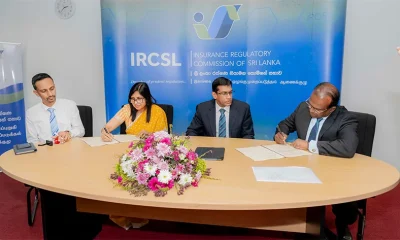
IRCSL transforms Sri Lanka’s insurance industry with first-ever Centralized Insurance Data Repository