
Business
CEAT radials designated Original Equipment for locally–assembled Mahindra Bolero City Pik-ups


CEAT Kelani Holdings has reached another milestone in radial tyre manufacture in Sri Lanka with the Company’s appointment as an Original Equipment Manufacturer (OEM) for Bolero City Pik-up vehicles assembled in Sri Lanka by Mahindra & Mahindra (M&M) India in collaboration with Ideal Motors.
All Mahindra Bolero City Pik-ups rolling off the assembly line at the Mahindra Ideal Lanka Automotive Assembly Plant at Welipenna, Matugama are fitted with CEAT Milaze HD radial tyres in the size of 215/75 R15, manufactured at the CEAT Kelani plant in Kelaniya, under an OEM agreement between the two companies.
CEAT has already supplied 180 of these high performance radial tyres for 36 vehicles that will be assembled in November and December this year and has committed to supply up to 720 tyres per month from January 2022 onwards for a targeted maximum of 144 vehicles to be produced monthly by the Mahindra Ideal Lanka joint venture, the Company said.
Commenting on the agreement, CEAT Kelani Managing Director Ravi Dadlani said: “We are delighted to contribute to the local value addition component of the Mahindra and Ideal Motors venture, while doing what we do best – producing high quality tyres designed and engineered for local conditions and supporting the government’s efforts to conserve foreign exchange. Over the past two decades, CEAT has built the equity of the ‘Made in Sri Lanka’ proposition in the tyre industry, and we are proud and appreciative of the opportunity, as exclusive tyre supplier, to support the aspirations of Mahindra and Ideal Motors to progress to vehicles made in Sri Lanka.”
The Managing Director of Mahindra Ideal Lanka Pvt Ltd. Nalin Welgama noted that “This new initiative is a step in the right direction and supports the government policy framework for Sri Lanka’s migration from a market economy to a production-based economy.”
The CEAT Milaze tyres manufactured by CEAT Kelani for the Mahindra Bolero City Pik-up feature profiled shoulder lateral grooves that provide better heat dissipation and wide-angle circumferential grooves that resist cuts and chips. Angular transversal notches and sipes provide enhanced grip and uniform wear, while the angular notched 4-rib high land area design provides longer tyre life and durability.
No stranger to the OEM segment, CEAT Kelani Holdings has been the exclusive original equipment tyre supplier for Mahindra KUV100 compact SUVs assembled in Sri Lanka since 2019. All locally-assembled Mahindra KUV100 vehicles are fitted with CEAT FUELSMARRT 185/60 R 15 tyres.
CEAT Kelani Holdings is considered one of the most successful India – Sri Lanka joint ventures. The joint venture’s cumulative investment in Sri Lanka to date totals Rs 8 billion, inclusive of Rs 3 billion invested since January 2018 for expansion of volumes, technology upgrades and new product development. The company’s manufacturing operations in Sri Lanka encompass pneumatic tyres in the radial (passenger cars, vans and SUVs), commercial (nylon and radial), motorcycle, three-wheeler and agricultural vehicle segments.
The CEAT brand accounts for market shares in Sri Lanka of 48 per cent in the Radial segment, 80 per cent in the Truck category, 84 per cent Light Truck tyre category, 51 per cent in the Three-Wheeler tyre segment, 36 per cent in the Motorcycle tyre segment and 72 per cent in the Agricultural vehicle tyre category. CEAT Kelani exports about 20 per cent of its production to 16 countries in South Asia, the Middle East, Africa and the Far East.

Business
JAT Holdings celebrates the 6th Pintharu Abhiman Convocation, uplifting over 800 painters through NVQ certification

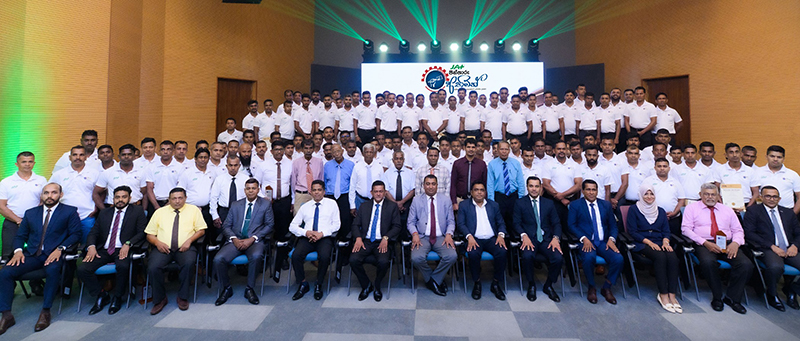
JAT Holdings PLC marked a significant milestone with the successful conclusion of the 6th JAT Pintharu Abhiman Convocation, recognising more than 800 painters who have earned their NVQ Level 3 qualification, an internationally recognised professional certification delivered in partnership with the National Apprentice and Industrial Training Authority (NAITA).
JAT Pintharu Abhiman was established to uplift Sri Lanka’s painter community through structured skills development, professional recognition and stronger earning potential. This year’s graduating cohort reflects the programme’s expanding reach and the tangible changes it continues to deliver for individuals, families and communities.JAT in collaboration with NAITA has streamlined the certification process such that what would traditionally take up to six months has been refined into an efficient and high-impact three-day assessment model. This approach ensures painters can obtain their qualification without sacrificing extended periods of work, while JAT fully absorbs the certification cost, removing financial barriers and enabling wider access to formal recognition.
Research conducted amongst NVQ qualified participants shows meaningful improvements in livelihoods, with 90 percent reporting increased personal confidence and 76 percent noting an improvement in their overall standard of living. This uplift demonstrates the long-term value of industry-aligned professional training.
A noteworthy moment at this year’s convocation was the recognition of four female painters who received their NVQ certifications. Their achievement marks an important step in broadening female participation in a field that has historically been male dominated, reinforcing JAT Holdings’ commitment to creating inclusive pathways for technical development and sustainable employment.
Speaking at the ceremony, Mr. Wasantha Gunaratne, Director Sales and Technical (South Asia) of JAT Holdings PLC, said:
“Pintharu Abhiman is fundamentally about development, giving painters the knowledge, structure and recognition they need to progress in their careers. By equipping over 800 painters with an internationally recognised NVQ qualification, we are not only strengthening the technical standards of the industry but also creating real pathways for entrepreneurship and financial independence. It is especially encouraging to see that one in five certified painters have already begun building their own businesses. These are the outcomes that matter because they show that when we invest in skills, we unlock opportunity. JAT remains committed to expanding these avenues so every painter has the chance to grow, lead and build a sustainable future.”
The 6th JAT Pintharu Abhiman Convocation underscores JAT’s continued dedication to uplifting the painter community, enhancing industry standards and supporting national skills development through accessible, professionally recognised qualifications.

The Ceylon Chamber of Commerce, together with the American Chamber of Commerce, Exporters Association of Sri Lanka, Federation of Renewable Energy Developers, Joint Apparel Association Forum, National Chamber of Commerce of Sri Lanka and Sri Lanka Association for Software and Services Companies, has submitted joint observations on the Draft National Electricity Policy, highlighting that several key issues have not been adequately addressed.
Whilst recognizing the need for reform in the electricity sector, the submission flags several gaps in the draft policy that require closer attention. Key areas such as affordability, decarbonisation commitments, incentives for renewable energy, competition, and the long-term financial health of the sector are either missing or not addressed in sufficient depth.
The proposed tariff revisions outlined in the draft energy policy raise concerns, particularly regarding the removal of cross-subsidies and the proposal to restrict subsidies exclusively to households consuming less than 30 kWh per month. Without detailed analysis, these measures could weaken access to sustainable and affordable energy and potentially lead to fiscal risks.
The provisions allowing uncompensated curtailment, removing feed-in tariffs, and imposing mandatory time-of-use tariffs on rooftop solar users could make renewable energy projects un-bankable for international lenders, thereby increasing the cost of capital for Sri Lanka.
Calling for a more future-focused approach, the submission stresses the need for a policy that reflects modern electricity systems, including planning for the energy transition, energy storage, market competition, cross-border electricity trading, and emerging technologies.
The Chambers and Associations request a comprehensive revision of the Draft National Electricity Policy, alignment with the Electricity Act, and resubmission following substantive consultation, and reiterate support to engage constructively with policymakers to shape a policy that supports affordability, investment confidence, and Sri Lanka’s long-term energy security.
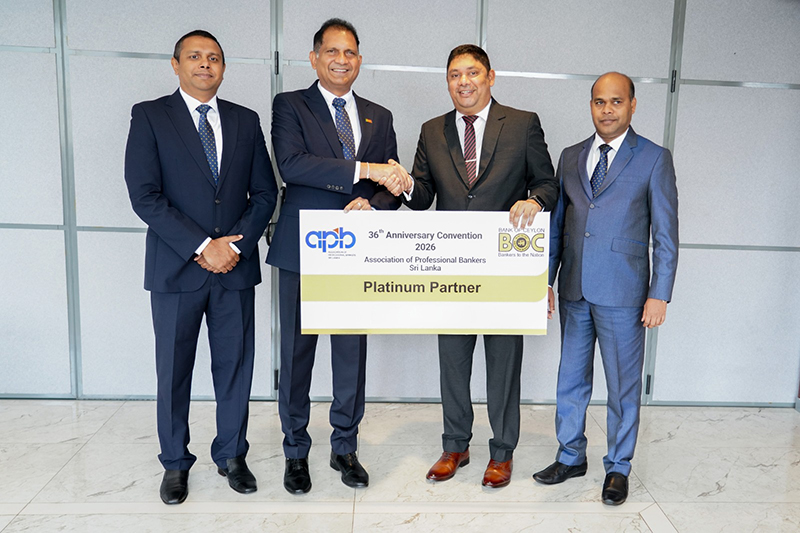
Bank of Ceylon (BOC) partnered with the 36th Annual Convention of the Association of Professional Bankers (APB) Sri Lanka, reaffirming its commitment to promoting professional excellence and knowledge sharing within the banking sector. The partnership was officially handed over by Sameera D. Liyanage, Chief Marketing Officer of Bank of Ceylon and M. R. N. Rohana Kumara, Deputy General Manager Business Revival Unit of Bank of Ceylon, reflecting BOC’s focus on empowering banking professionals and supporting the sustainable growth of Sri Lanka’s financial services industry.

National ThaiPongal Celebration held at Temple Trees.

U19 World Cup: Zimbabwe U-19 vs Scotland U-19: Match abandoned

U-19 World Cup: Francis, Bell, Andrew help West Indies thump Tanzania

U-19 World Cup: Henil, Kundu secure India’s first win

Deol, Tryon power Warriorz to first win of season

Fair weather will prevail in most parts of the island.

‘Dates have the highest sugar content to fight Coronavirus’

Sunday Island 27 December – Headlines

#SundayIsland 17th December – Headlines

Sunday Island – 28th March

Sunday Island Headlines – 21 March

Sunday Island – 21st February – Headlines
-

 Business1 day ago
Koaloo.Fi and Stredge forge strategic partnership to offer businesses sustainable supply chain solutions
-

 Business5 days ago
Dialog and UnionPay International Join Forces to Elevate Sri Lanka’s Digital Payment Landscape
-

 News5 days ago
Sajith: Ashoka Chakra replaces Dharmachakra in Buddhism textbook
-

 Features5 days ago
The Paradox of Trump Power: Contested Authoritarian at Home, Uncontested Bully Abroad
-

 Features5 days ago
Subject:Whatever happened to (my) three million dollars?
-
 Business1 day ago
SLT MOBITEL and Fintelex empower farmers with the launch of Yaya Agro App
-
 Business1 day ago
Hayleys Mobility unveils Premium Delivery Centre
-

 News5 days ago
Level I landslide early warnings issued to the Districts of Badulla, Kandy, Matale and Nuwara-Eliya extended