
Sports
Boxing Day Test memories

by Rex Clementine
The Boxing Day Test match has become an integral part of the game of cricket as during the festive season people are hooked onto their televisions from morning to evening watching the proceedings at MCG before switching their channel to find out what’s happening at Centurion.
The Boxing Day Tests are well attended too. Most people are on leave in the week between Christmas and New Year and they make it a point to attend the Test match with families. Both MCG in Australia and Centurion in South Africa put on a grand show.
Although the term ‘Boxing Day’ is associated with sports events on the day after Christmas, it originated in Britian during the Victorian era. Servants used to work for their masters on Christmas Day and they were given a day off the following day and when they went home, the servants were given gifts put in a box to be shared with the family. Hence the term Boxing Day.
Although Sri Lanka has got no such traditions, cricket fans of the country know what it means in cricket and remember quite well some of the biggest Boxing Day events their team has been part of.
The no balling of Muttiah Muralitharan by Darrel Hair happened on Boxing Day in front of 55,000 people at MCG in 1995.
Nine years later, Sri Lanka were playing a game in Auckland when news reached of deadly flooding in the country despite there being no rain and it took hours for the players to figure out that what had struck the nation was tsunami and not floods. That tour was aborted, and Sri Lanka returned home as the fate of several players’ parents and loved ones, especially those who were in the south coast, were unknown.
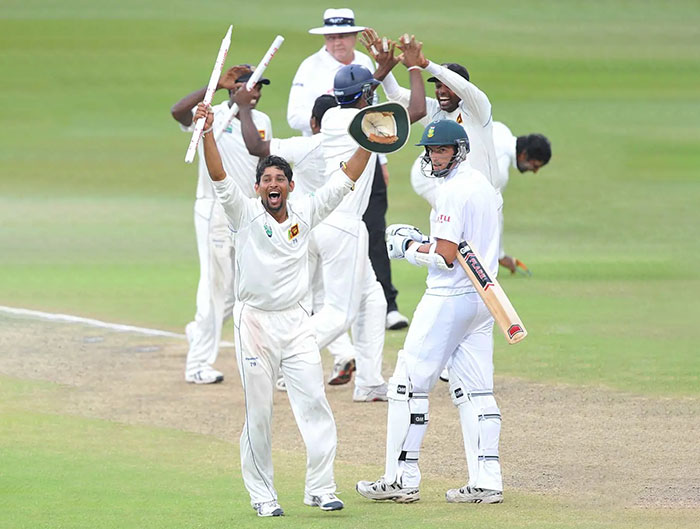
The Boxing Day Test in 2011 in Durban is etched in all Sri Lankan fans’ memories as for the first time the team won a Test match in South Africa.
The first Test was played at Centurion and Sri Lanka had been blown away inside three days to lose by an innings. There was little hope for the team and a 3-0 series whitewash was looming large. Former South African captain Keppler Wessels had suggested in commentaries that South Africa were too strong for the islanders and maybe the selectors should think of playing the ‘A’ team. That made a few seniors angry.
Head Coach Geoff Marsh re-esembled the team back to the Centurion on day four and five and replicated a Test match atmosphere in which training was conducted. There was a nine day gap between the first and second Tests and in a team bonding exercise the coach paired a senior player with a junior.
Dinesh Chandimal was paired with Kumar Sangakkara, Lahiru Thirimanne was under the watch of T.M. Dilshan and Dimuth Karunaratne was put along with Mahela Jayawardene. The seniors were supposed to take juniors out for meals and coffee and the day before the second Test; on Christmas Day, the players were supposed to present gifts to each other. While this was an excellent team bonding exercise, for the younger players this was a great learning experience too.
By the time the second Test came, the players were raring to go. The team had gelled well.
Thilan Samaraweera was making a comeback to the side. He had been controversially axed from the side earlier and went onto showcase what the team had been missing with a back to the wall hundred. He celebrated his century folding his bat to the armpit making the bat look like a gun and shooting towards the dressing room. Shaun Pollock in commentaries said that he may well have been shooting at the selectors.
Chandimal was on debut and made twin half-centuries stitching some valuable partnerships with the tail.
Left-arm seamer Chanaka Welegedara is the sort of bowler who can make life difficult for batters with angles he creates. South Africa found themselves at 119 for eight with Welegedara accounting for the big four – Jacques Kallis, Graeme Smith, Hashim Amla and A.B. de Villiers. He finished with a five wicket haul.
Sri Lanka couldn’t believe themselves that they had a first innings lead of 170. Kumar Sangakkara had been dismissed for a duck in the first innings but he wasn’t going to miss out on a golden opportunity to beat South Africa and cashed in with a second innings hundred.
A target of 450 proved to be beyond South Africa’s reach as Sri Lanka created history with a 208 run win with Rangana Herath claiming a five wicket haul. Among his victims were Jacques Kallis, dismissed for a duck, the only time the great man had collected a pair in Tests. Mind you he featured in 166 Test matches in a career that spanned across 18 years.
The nation was celebrating. T.M. Dilshan had a tough initiation as captain but he was beginning to turn things around for the team. But little did he know that less than a month later he will be sacked as captain. There had been a coup. A bloodless coup!


Shimron Hetmyer’s explosive half-century carried West Indies to respectability and ultimately victory after a sluggish start to their T20 World Cup opener against Scotland, iced by Romario Shepherd’s stunning five-wicket haul which included a hat-trick.
Head Coach Darren Sammy’s master plan to use Hetmyer’s experience and power up the order at No. 3 continues to pay off. In his three most recent innings in the position, Hemyer had scored 48, 75 and 48 not out against South Africa in the lead-up to this tournament and he saved his best for the big stage.
Smothered by Scotland’s spinners, West Indies had managed just 33 runs in the Powerplay. But Hetmyer negated a slow pitch to lift his side from 58 for 2 in the 10th over to set Scotland a target of 183 with his 64 off 36 balls, 44 of those runs coming in boundaries.
Handy cameos from Rovman Powell, who shared an 81-run stand with Hetmyer for the third wicket off just 37 balls, and Sherfane Rutherford helped push West Indies’ total up. Their dismissals amid some tight bowling at the death by Brad Currie limited the damage for Scotland.
Hetmyer couldn’t steer clear of the action, his brilliant catch reducing Scotland to 37 for 3. But it was Shepherd’s five-for, which included four wickets in five balls in the 17th over that stole the limelight in Scotland’s run chase as the tournament’s late ring-ins fell short.
Just a fortnight after being called into the World Cup as replacements for Bangladesh, Scotland skipper Richie Berrington and New Zealand recruit Tom Bruce produced a 78-run union for the fourth wicket. With them out of the way though, Shepherd tore through the remainder of the line-up as West Indies launched their campaign in style.
Hetmyer shrugged off his late arrival in India – he only landed on Friday afternoon due to a visa issue – to launch a full-blooded assault from the outset. With his side desperately needing to break the shackles, he sent the second ball he faced, off debutant spinner Oliver Davidson, over long-off for six, the first of six maximums in total for Hetmyer’s innings.
He helped himself to two more in three balls off Michael Leask in the next over and from that point it felt like West Indies could finally breathe. But Hetmyer didn’t ease up on Scotland’s spinners, heaving Mark Watt into the stands over deep midwicket and producing a devastating slog-sweep for consecutive sixes in the next over, which went for 17 runs.
A return to seam didn’t provide any respite for Scotland as Safyaan Sharif leaked another 17 runs off the next. Hetmeyer brought up his half-century off just 22 balls in wonderful style with a six off Davidson over deep cover, the fastest fifty by a West Indian at a T20 World Cup. It took a stunner of a catch from Brandon McMullen to remove him, running round to wide long on and diving at full stretch to gather a skied full toss off Sharif in his fingertips.
Akeal Hosein’s theatrical bow to his team-mate summed up Hetmyer’s day after he clung onto a spectacular catch to remove George Munsey and upstage McMullen’s effort which had removed him. Running a long way round from fine leg, Hetmyer launched himself to his right and plucked the ball from the air to collect Munsey’s pull off the bowling of Shamar Joseph. It reduced Scotland to 37 for 3 inside the powerplay.
Jason Holder had already removed Michael Jones for just 1 in the second over and the in-form McMullen, who had slammed a 39-ball 95 against Namibia in their warm-up game, managed just 14 before he shovelled a Shepherd delivery onto his stumps in a botched scoop.
Having removed the threat posed by McMullen, then conceded 15 runs off his second over, Shepherd returned for his third and all but ended the match with four wickets in five balls. His wide yorker to Matthew Cross found Rutherford at point and he had Leask caught by Powell for a first-ball duck. With the 21-year-old Davidson left to face the hat-trick ball, Shepherd beat the inside edge and pinged the top of off stump,
It was Shepherd’s second T20I hat-trick after his effort against Bangladesh in October and thoughts turned to whether he could match Jason Holder’s four wickets in four deliveries against England in their bilateral series in 2022 but Sharif guided the next ball safely into the off side. No matter for Shepherd though when Sharif tried in vain to send the following ball over mid-off but managed only to pick out Holder. Fittingly, Holder and Shepherd combined for the last wicket when Mark Watt advanced to the former and Shepherd dived backwards at short third to take the catch.
After Brandon King carved the first ball of the match, a McMullen loosener, authoritatively through the covers for four, West Indies made a tentative start in the face of some otherwise disciplined Scotland bowling. At the end of the powerplay, West Indies were 33 without loss and in need of some acceleration. King duly advanced down the pitch to Sharif and muscled the first ball after the drinks break down the ground for six and back-to-back fours followed as West Indies took 17 off the over.
Berrington turned to left-arm spinner Davidson in the eighth over and he conceded just four off it. He was joined next over by experienced off-spinner Leask, who struck with his second ball which skidded on from its leg-stump line to take out Shai Hope’s off stump. With one ODI to his name, against UAE in 2022, Davidson claimed his maiden international wicket in the next, removing King as Munsey swallowed a catch at backward point. But with Hetmyer at the crease, Scotland’s elation was short-lived.
Brief scores:
West Indies 182 for 5 in 20 overs (Brandon King 35, Shai Hope 19, Shimron Hetmyer 64, Rovman Powell 24, Sherfane Rutherford 26; Brad Currie 2-23, Safyaan Shariff 1-46, Oliver Davidson 1-23, Michael Leask 1-42) beat Scotland 147 in 18.5 overs (George Munsey 19, Brandon McMullen 14, Richie Berrington 42, Tom Bruce 35, Matthew Cross 11, Mark Watt 15; Romario Shepherd 5-20, Jason Holder 3-30, Shamar Joseph 1-26, Gudakesh Motie 1-29) by 35 runs
[Cricinfo]
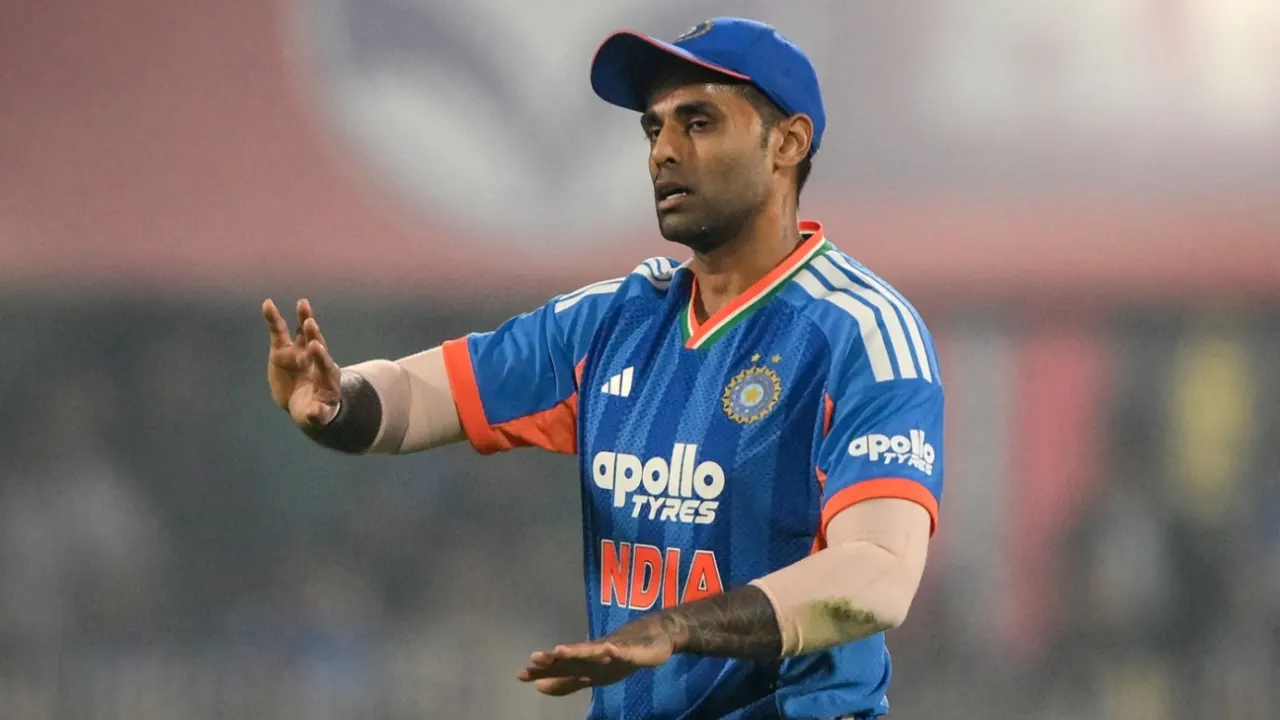
The USA captain Mpnak Patel won the toss and gave the scary Indian batting unit free reins to bat first, rather than setting them a target. Not that India wouldn’t have grabbed the reins anyway, as India’s captain Suryakumar Yadav said India were going to bat had they won the toss.
Immediately speculation around 300 went around. India come in with three scores of 250 or more since the last World Cup. Overall, their four scores of 250 or more are the highest by any side during this cycle. Playing against a less established side, on the batting paradise of Wankhede Stadium, all eyes were on the total India were going to get.
Elsewhere, India were dealing with early fitness jitters. Having lost Harshit Rana thanks to an injury sustained during a warm-up fixture, India were without the unwell Jasprit Bumrah in the tournament opener. His place went to Rana’s replacement, Mohammed Siraj, who last played a T20I in July 2024. Other than that India selected on expected lines: Ishan Kishan ahead of Sanju Samson, and only one mystery spinner in Varun Chakravarthy, leaving out Kuldeep Yadav.
The USA, a lot of them immigrants from India, were playing their first match in India. Hrameet Singh, Saurabh Netravalkar and Shubham Ranjane were three men in the first XI who started their cricket in Mumbai. The big-hitting wicketkeeper-batter Andries Gous came back into the XI after he missed their last T20I, the North America T20 Cup final last year.
India Abhishek Sharma, Ishan Kishan (wk), Tilak Varma, Suryakumar Yadav (capt.), Hardik Pandya, Rinku Singh, Shivam Dube, Axar Patel, Arshdeep Singh, Mohammed Siraj, Varun Chakravarthy
USA Saiteja Mukkamalla, Andries Gous (wk), Monank Patel (capt.), Milind Kumar, Sanjay Krishnamurthi, Harmeet Singh, Shubham Ranjane, Mohammad Mohsin, Shadley van Schalkwyk, Saurabh Netravalkar, Ali Khan
[Cricinfo]

Richie Berrington, the Scotland captain, called correctly as they elected to bowl against West Indies in a Group C fixture at Eden Gardens.
As part of their winter training, Scotland were scheduled to have a fitness test for all their players in Edinburgh on Saturday. Instead, here they are in Kolkata, having received an invitation less than two weeks earlier to participate in the T20 World Cup in place of Bangladesh.
“It’s a fantastic opportunity for us, it’s been a quick turnaround but everyone’e excited to be here,” Berrington said. “A lot of hard work has gone behind the scenes to get here. Since coming, we’ve had fantastic preparation in Bengaluru.”
Scotland have some wonderful memories of playing West Indies at the T20 World Cup – famously beating them by 42 runs in Hobart during the 2022 edition.
Talking of memories, it can’t get bigger than winning the T20 World Cup, which the West Indies did at this storied venue ten years ago when Carlos Brathwaite made everyone remember his name.
Their captain Shai Hope believes there’s a part of them that has confidence that they can start their campaign well. Johnson Charles is the only member from that April day to be a part of the current West Indies squad in a playing capacity; Darren Sammy, their captain then, is head coach.
Scotland: George Munsey, Matthew Cross(w), Brandon McMullen, Michael Jones, Tom Bruce, Richie Berrington(c), Michael Leask, Oliver Davidson, Mark Watt, Brad Currie, Safyaan Sharif
West Indies: Brandon King, Shai Hope(w/c), Shimron Hetmyer, Rovman Powell, Sherfane Rutherford, Jason Holder, Romario Shepherd, Akeal Hosein, Matthew Forde, Gudakesh Motie, Shamar Joseph
[Cricinfo]

US wants Russia and Ukraine to end war by June, says Zelensky
Hetmyer heroics, Shepherd hat-trick headline West Indies’ opening day win over Scotland

USA bowl, India pick Siraj with Bumrah out unwell

Colorado funeral home director sentenced to 40 years for corpse abuse

Scotland opt to field against West Indies

Faheem Ashraf drags unconvincing Pakistan over the line after big scare

‘Dates have the highest sugar content to fight Coronavirus’

Sunday Island 27 December – Headlines

#SundayIsland 17th December – Headlines

Sunday Island – 28th March

Sunday Island Headlines – 21 March

Sunday Island – 21st February – Headlines
-

 Business5 days ago
SLIM-Kantar People’s Awards 2026 to recognise Sri Lanka’s most trusted brands and personalities
-

 Business7 days ago
Altair issues over 100+ title deeds post ownership change
-

 Business7 days ago
Sri Lanka opens first country pavilion at London exhibition
-

 Business6 days ago
All set for Global Synergy Awards 2026 at Waters Edge
-

 Business5 days ago
API-first card issuing and processing platform for Pan Asia Bank
-

 Business16 hours ago
Zone24x7 enters 2026 with strong momentum, reinforcing its role as an enterprise AI and automation partner
-

 Business7 days ago
ESOFT UNI Kandy leads the charge in promoting rugby among private universities
-

 Editorial3 days ago
All’s not well that ends well?