
Sports
Badminton’s message of hope to war-torn Ampara

by A Special Sports Correspondent
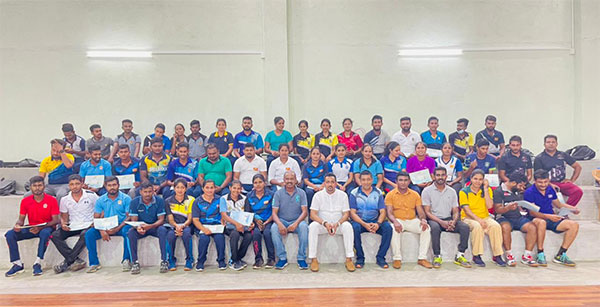
Sport is a wise tool to use in reconciliation activities. It comes in handy when participants are less affluent and have physical and mental scars; in this instance due to a civil war that concluded. Representatives of Sri Lanka Badminton (SLB) were in Ampara a few days ago to conduct a coaching session for coaches, but nothing could stop some children also ‘getting inside’ and participating in the two-day event held at the Ampara Public Indoor Stadium. The camp was held on March 20 and 21.
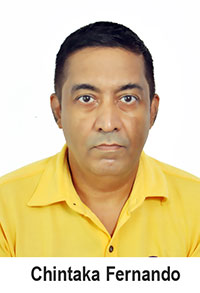
The coaching camp was organised by the Coaching and Promotions Committee of the SLB. What really caught the eye of the organisers was the physical conditioning of participants. The people present are used to hardships and they commute long distances on foot or by bicycles. “Hence the physical qualities needed for badminton are already there,” said Chintaka Fernando who conducted the coaching programme.
It’s after many years that Ampara is picking up in civil life activities. There is little facilities for sports and this programme was certainly a boost for the people in this town and those who also came from far away areas like Dehiaththakandiya.
Amapara knows more about a civil war than sports. Ampara was once ravaged by the civil war and history reveals how the Gonagala massacre took place in 1999 where 54 people were killed. There were many children among them and the killers were largely women LTTE cadres. But during the war too the town produced gems in the sports field who went on to represent Sri Lanka. Medal winners Damayanthi Darsha and Dileema Peterson are from Ampara and later continued their sports by coming to Colombo.
Once inside the hall and attending the camp the participants were eager to learn new things. It’s not that there was clear tunnel vision for them during the sessions. But according to Fernando what really pulled the heart strings of the participants was the technical part of the game.
According to Fernando the mission of the camp was to create a sports culture in Ampara and to educate coaches so that they know how to impart true knowledge. Thanks to the President of SLB Rohan de Silva sports equipment was distributed to participants. But the most valuable possession they got from the session was the ‘certificate of participation’ which they were entitled to after sitting for a written exam.
 Some of the participants at the coaching camp held at the Ampara Public Indoor Stadium on March 20 and 21 pose for a photograph
The message that was given to participants from the SLB representatives was that ‘nothing comes easy before it’s hard’.
Nothing in success comes without the role of volunteers and philanthropists. The camp in Ampara was largely successful because of the contributions of parliamentarian Dr. Tilak Rajapaksa who hails from Ampara. All what he did was to a village where he schooled at initially before shifting to Colombo to continue his studies. Mention must be made of his coordinator Lakshan de Silva and the efforts of Sri Lanka Badminton’s Coaching and Promotions Committee Chairman Deepal Madurapperuma and its Secretary Lalith Perera and Trevor Rackerman the CEO of SLB. For the record this camp was the second in the series following the first one in Colombo.
This is an era where individuals, especially young ones, ask the question ‘what’s in it for me’ before undertaking any venture or project because we are living in a ‘me era’. Individual returns have top most importance and selfishness reigns in life, politics and sports. But many of the organisers who were involved sacrificed a lot, especially their time to stay at home with their loved ones, to give rural fork a real badminton experience.
These folk who participated in the coaching camp needn’t be given lessons on how to make their focus sharp. They are from an area where the human elephant conflict is a daily occurrence. People in the area know the best times to move around and avoid facing the wrath of the jumbos. The organisers of the coaching camp were housed at the Irrigation Bungalow. While at the bungalow these representatives were reminded that there was an elephant corridor close by and no one should park his or her vehicle and block that passage. Not very long ago a van had been damaged because it was parked in a way that it blocked the corridor.
 Something that would be a cause for sadness is that there were no Tamil participants at the camp. Ampara has Tamil citizens who didn’t have the best of life due to the armed conflict that concluded in 2009. The organisers of the coaching camp had taken a Tamil citizen, Sivalingam Kethees, who was ready to translate the content in the sports literature that was distributed and what was said by officials at the camp. The absence of Tamils makes the orgnisers of the camp ponder whether there was lack of coordination among the sports officials of Ampara and the citizens of this Eastern Town.
The coaching camp was loaded, but the participants found enough energy and enthusiasm needed to last and absorb the content of the two full days coaching. When the dusk was setting in on the final day and when it was ready to bid goodbye the best thing that the organisers heard from participants, where the majority were coaches and sports officials, was that they would target to produce medal winners at badminton in the future.
They also made a request for the SLB representatives to visit Ampara again; possibly to show results from what they have learned and to strengthen the bridge that Colombo build with the Eastern Province thanks to badminton.









After three one-sided, low-scoring encounters, the fourth T20I between India and Sri Lanka exploded into a run-fest in Thiruvananthapuram, with both sides posting their highest totals in women’s T20Is. India’s big score of 221 for 2 proved too much for Sri Lanka, who fell short by 30 runs, handing the hosts a 4-0 series lead with one match remaining. India missed two catching opportunities and a stumping chance, while Sri Lanka gave away three, but the batting dominance was decisive.
Smriti Mandhana and Shafali Verma set the tone with blistering half-centuries to power India’s innings, while Chamari Athapaththu kept Sri Lanka in the chase with a fighting 52. Despite a few late cameo efforts, the visitors couldn’t overcome India’s dominant batting display.
Shafali and Mandhana delivered a masterclass in aggressive opening batting, putting together 162 runs off just 92 balls – the highest opening partnership for India in women’s T20Is. Shafali continued her purple patch with a third successive T20I half-century, while Mandhana, who had managed only 40 runs in the first three matches, roared back to form. The innings also saw Mandhana climb to the top of the charts for most runs (1,703) in women’s internationals in a calendar year, underlining her dominance.
India’s openers were relentless from the outset, racing to 61 without loss in the powerplay with 12 boundaries. Shafali’s innings was built on control and placement – her first six came only after her fifty, a loft over long-off in the 11th over – and she finished with 12 fours and a six.
Mandhana, meanwhile, struck 11 fours and three sixes, though her innings briefly dipped in tempo. After racing to 24 off 14 balls, she moved to 28 off 24 during a short lull before accelerating sharply to reach her half-century off 35 deliveries. From there, she cut loose, using the feet to loft the spinners and driving straight with authority.
The contest decisively tilted in overs 11 to 13, when India tore into the attack. The 11th over went for 15 runs, followed by a 20-run 12th and an 18-run 13th, each featuring two fours and a six. Any hopes Sri Lanka had of restricting the damage vanished as India surged from 85 for no loss to 120 in just two overs.
India brought up 150 in only 14.2 overs, making light of the Sri Lanka captain’s assessment at the toss that 140 would be a competitive total.
Sri Lanka had to wait 92 balls for their first breakthrough and struck again in the following over, the 17th, but any momentum was swiftly snuffed out by Richa Ghosh. With Harleen Deol replacing Jemimah Rodrigues, who was recovering from a mild fever, India promoted Ghosh to No. 3 for the death overs – a move that paid rich dividends. Having faced just one delivery in the series before this match, Ghosh made an impact, blasting 40 off 16 balls and adding an unbroken 53-run stand with Harmanpreet Kaur.
Ghosh announced herself by heaving her second ball over Nimasha Meepage’s head for four. After a relatively quiet 17th over, she found her range against the same bowler, striking two more boundaries. The onslaught peaked against Kavisha Dilhari, one of Sri Lanka’s more experienced bowlers, as Ghosh went into overdrive. She smoked three sixes and a four to plunder 23 runs from the 19th over, punishing anything in her hitting arc and underlining India’s ruthless finish.
Sri Lanka began their chase aggressively, with Hasini Perera taking charge. She tore into Renuka Singh’s first over, hitting three boundaries, while Arundhati Reddy, making a comeback in place of the rested Kranti Gaud, conceded 17 off the second over. By the end of four, Sri Lanka had raced to 52 for 0, with the opening stand between Perera and Athapaththu putting on 59 runs off 34 balls.
Athapaththu struck the chase’s first six, charging down the track and clearing long-off off Deepti Sharma in the third over. Both left-handers punished anything too full or short, though Perera fell in the sixth over, holing out to Harmanpreet at mid-off off Reddy’s offcutter.
Athapaththu kept the momentum going, adding 57 runs off 46 balls with Imesha Dulani for the second wicket. Athapaththu moved from 20 off 15 balls to fifty in the next 19 deliveries, hitting three sixes and as many fours. However, her innings ended when she mistimed a charge over the off side, gifting a catch to Mandhana at long-off off Vaishnavi Sharma. At that stage, Sri Lanka needed 106 runs from 42 balls. Despite a few late cameos, the chase fell short.
On a night dominated by big scores, Vaishnavi emerged as the standout bowler, picking up two crucial wickets for just 24 runs. Introduced into the attack after the powerplay, she began by floating the ball outside off stump to entice the batters before gradually attacking the stumps and testing the left-handers with clever variations.
After dismissing Athapaththu in the 13th over, she also removed Harshitha Samarawickrama for a 13-ball 20 in the 17th, when the batter looked threatening. Her disciplined lines and sharp changes of pace helped India keep Sri Lanka’s scoring in check.
Brief scores:
India Women 221 for 2 in 20 overs (Smriti Mandhana 80, Shafali Verma 79, Richa Ghosh 40*, Harmanpreet Kaur16*; Malsha Shehani 1-32, Nimasha Meepage 1-40) beat Sri Lanka Women 191 for 6 in 20 overs (Chamari Athapaththu 52, Hasini Perera 33, Imesha Dulani 29, Harshitha Samarawickrama 20, Kavisha Dilhari 13, Nilakshika de Silva 23*; Arundhati Reddy 2-42, Vaishnavi Sharma 2-24, Shree Charani 1-46) by 30 runs
(Cricinfo)
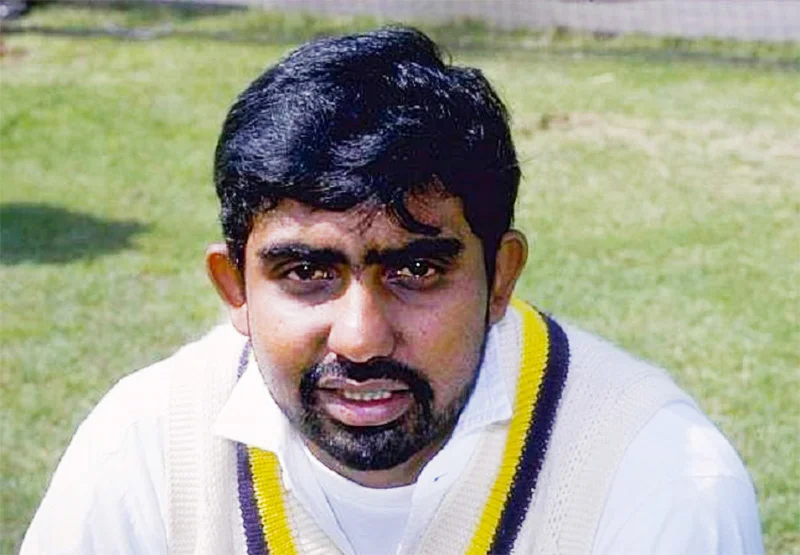
A private function will be held on Monday, December 29 at Melbourne’s Spicy Wicket Restaurant to celebrate Asanka Gurusinha’s iconic Boxing Day century at the MCG, the first and still the only hundred by a Sri Lankan at the grand old ground that staged the game’s inaugural Test and has long been cricket’s festive showpiece in Australia.
Sri Lanka featured in the 1995 Boxing Day Test against Australia at the Melbourne Cricket Ground, a match remembered as much for controversy as for courage. Umpire Darrel Hair repeatedly no-balled Muttiah Muralitharan for throwing in front of a stunned crowd of 55,000, turning the contest into a cauldron.
It was a one-sided affair dominated by Mark Taylor’s Australians. Forced to follow on, Sri Lanka were staring down the barrel before Gurusinha dug in to produce a back-to-the-wall 143. It was the left-hander’s career-best Test score and more importantly helped Sri Lanka avoid the ignominy of an innings defeat.
“Any Test hundred is a moment to remember, but to do it against Australia, facing McDermott, McGrath, Warne and Reifel at the MCG is very special,” Gurusinha told Telecom Asia Sport. “It didn’t sink in 30 years ago, but I know now why it’s special. I always enjoyed batting on pitches with bounce and seam and Australia was a place I loved playing.”
“Coming up against the best team in the world at the time and that formidable bowling attack is something that will stay with me forever,” he added.
Gurusinha also paid tribute to those behind the celebration. “I want to thank my good friends David and Cathy Cruse for organising this event. All my family will be there and it’s great to have Aravinda de Silva as chief guest. I played against him at school level for eight years and then alongside him for 12 years for Sri Lanka. He’s a dear friend.”
Gurusinha made his Test debut in 1985, straight out of school as a 19-year-old wicketkeeper-batter. His sound technique soon demanded promotion and he settled into the No. 3 slot, becoming the side’s human sandbag, valuing his wicket, batting time and wearing down attacks during marathon vigils that tested bowlers’ patience as much as their stamina.
A key member of Sri Lanka’s World Cup-winning squad in 1996, Gurusinha willingly shelved his natural strokeplay to play the anchor’s role, allowing the likes of Sanath Jayasuriya and Aravinda de Silva to cut loose. He struck a vital half-century in the final against Australia, earning praise from captain Arjuna Ranatunga, who famously labelled him the unsung hero of Sri Lanka’s World Cup triumph.
Gurusinha retired prematurely at the age of 30 soon after that World Cup success, migrated to Australia and has since made Melbourne his adopted home, fitting, perhaps, that the city where he played his finest innings will now raise a glass to a knock that has aged like fine wine.
Royal scored a first innings win over Gurukula after they restricted the team from Kelniya to 215 runs in reply to their 302 in the Under 19 Division I Tier ‘A’ match at Reid Avenue on Sunday.
For the home team open bat Hirun Liyanarachchi scored back to back half centuries. He remained unbeaten on 56 in the second innings.
For the visitors Ohas Sadew picked up six wickets.
Scores
Royal 302 for 9 decl. in 80 overs (Hirun Liyanarachchi 50, Dushen Udawela 25, Ramiru Perera 60, Yasindu Dissanayake 41, Thevindu Wewalwala 36, Manuth Disanayake 42, Udantha Gangewatta
22n.o.; Ohas Sadew 6/101) and 130 for 2 in 39 overs (Hirun Liyanarachchi 56n.o., Rehan Peiris 59)
Gurukula
215 all out in 75.2 overs (Sahas Induwara 35, Denura Dimansith 79, Janith Mihiranga 44; Himaru Deshan 2/65, Ramiru Perera 2/58) (RF)

Navy seizes an Indian fishing boat poaching in northern waters

Mandhana, Shafali and Ghosh help India edge run-fest to go 4-0 up

Showers predicted in several provinces today (29th December)

Delay in govt. response to UK sanctions on ex-military chiefs, and others causes concern

Sri Lanka outlines seven key vectors of international cooperation at Moscow forum

Sri Lanka third most preferred destination for Indians

‘Dates have the highest sugar content to fight Coronavirus’

Sunday Island 27 December – Headlines

#SundayIsland 17th December – Headlines

Sunday Island – 28th March

Sunday Island Headlines – 21 March

Sunday Island – 21st February – Headlines
-

 News7 days ago
Members of Lankan Community in Washington D.C. donates to ‘Rebuilding Sri Lanka’ Flood Relief Fund
-

 News5 days ago
British MP calls on Foreign Secretary to expand sanction package against ‘Sri Lankan war criminals’
-

 Features7 days ago
General education reforms: What about language and ethnicity?
-
 News7 days ago
Suspension of Indian drug part of cover-up by NMRA: Academy of Health Professionals
-
 Sports5 days ago
Chief selector’s remarks disappointing says Mickey Arthur
-
 News4 days ago
Street vendors banned from Kandy City
-

 Editorial7 days ago
A very sad day for the rule of law
-

 News7 days ago
US Ambassador to Sri Lanka among 29 career diplomats recalled