
Foreign News
Astronaut Shubhanshu Shukla becomes first Indian to set foot on ISS


Astronaut Shubhanshu Shukla has created history by becoming the first Indian ever to set foot on the International Space Station (ISS).
A live broadcast showed the Axiom-4 (Ax-4) mission docking with the orbiting laboratory and its four-member crew crossing over to the ISS.
Led by former Nasa veteran Peggy Whitson and piloted by Group Captain Shukla, Ax-4 lifted off on Wednesday. The crew, including Slawosz Uznanski-Wisniewski from Poland and Tibor Kapu from Hungary, will spend two weeks on the ISS.
Group Captain Shukla is only the second Indian to travel to space. His trip comes 41 years after cosmonaut Rakesh Sharma became the first Indian to fly aboard a Russian Soyuz in 1984.

Ax-4 – a commercial flight operated by Houston-based private firm Axiom Space – lifted off from Nasa’s Kennedy Space Center in Florida at 02:31 EDT (06:31 GMT; 12:01 India time) on Wednesday.
The docking on Thursday occurred at 06:31EDT (10:31 GMT; 16:01 India time). A pressurised vestibule was created between the spacecraft and the space station and then hatches were opened on both sides to allow the Ax-4 crew to make their way on board the ISS.
With their arrival, the total crew strength of ISS is now 11.
The mission is a collaboration between Nasa, India’s space agency Isro, European Space Agency (Esa) and SpaceX. The two European astronauts will also be taking their countries back to space after more than four decades.
During their two-week mission, the crew would spend most of their time conducting 60 scientific experiments, including seven designed by Indian Space Research Organisation (Isro).
Isro, which has paid 5bn rupees ($59m; £43m) to secure a seat for Group Captain Shukla on Ax-4 and his training, says the hands-on experience he will gain during his trip to the ISS will help India in its human space flights.
Isro has said it wants to launch the country’s first-ever human space flight in 2027 and has announced ambitious plans to set up a space station by 2035 and send an astronaut to the Moon by 2040.
[BBC]

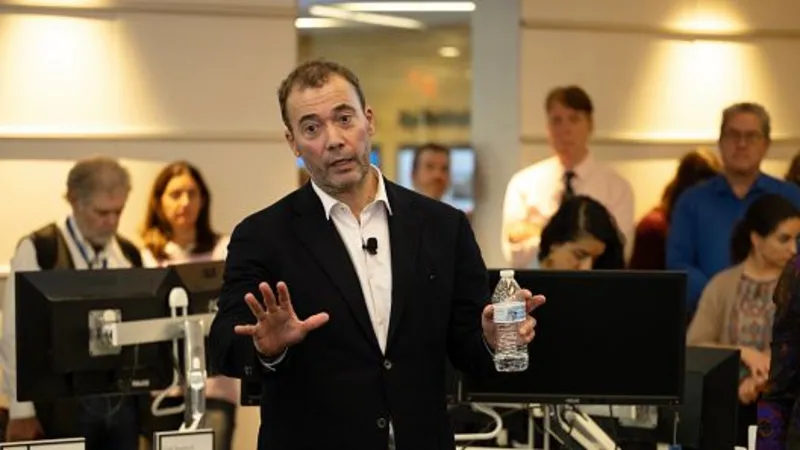
The chief executive of the Washington Post is stepping down, the newspaper has announced, days after overseeing mass lay-offs.
William Lewis said it was the right time to leave, saying in a message to staff that was shared online that “difficult decisions” had been made to ensure the paper’s future.
On Wednesday the newspaper announced it was cutting a third of its workforce, dramatically scaling back its coverage of sport and international news.
The decision was condemned by many journalists and prompted criticism of the Post’s billionaire owner, Jeff Bezos. Executive editor Matt Murray said the cuts would bring “stability”.
Jeff D’Onofrio, who joined as chief financial officer of the newspaper last year, will serve as acting publisher and CEO, the Post said as it announced Lewis’s departure.
A former Dow Jones chief executive and publisher of the Wall Street Journal, Lewis was appointed to the role at the Washington Post in 2023.
He has faced criticism from subscribers and employees as he tried to reverse financial losses at the daily.
Hundreds protested in front of the paper’s headquarters in Washington DC on Thursday after the mass lay offs, which included the paper’s entire Middle East staff and its Kyiv-based Ukraine correspondent.
Marty Baron, the Post’s executive editor until 2021, said the cuts ranked “among the darkest days in the history of one of the world’s greatest news organisations”.
The departure of Lewis marks the latest upheaval for the leading US newspaper, which has seen a series of staff cuts and controversial editorial decisions in recent years.
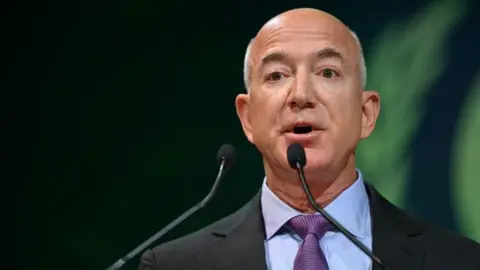
Shortly before the 2024 US presidential election, Bezos, the founder of Amazon, broke with decades of tradition by deciding the newspaper would not endorse a presidential candidate.
The newspaper had endorsed a candidate in most presidential elections since the 1970s – all of whom had been Democrats.
The move caused widespread criticism and led to the loss of tens of thousands of subscribers.
Meanwhile, the opinion editor resigned in February last year when Bezos decided to focus the paper’s comment section on “personal liberties and free markets”.
Bezos, who acquired the newspaper in 2013, said pieces opposing those views would not be published.
[BBC]
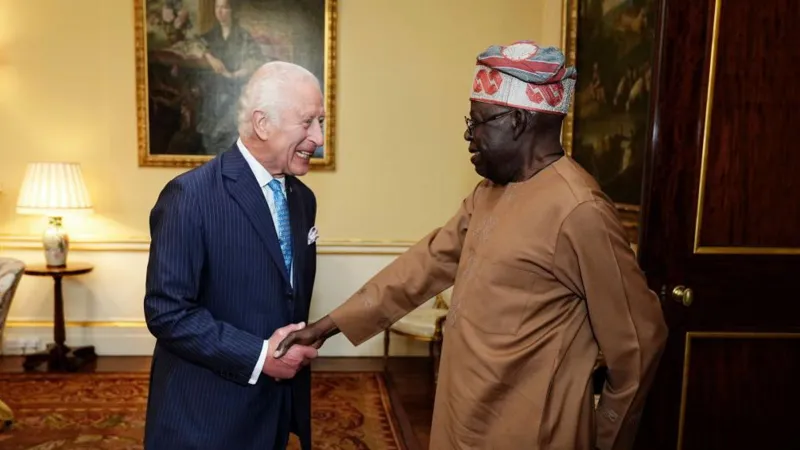
King Charles III and Queen Camilla will host Nigeria’s president in the country’s first state visit to the UK in 37 years, Buckingham Palace has announced.
Bola Tinubu and First Lady Oluremi Tinubu have accepted an invitation to be guests of the King at Windsor Castle from 18 to 19 March.
State visits are considered a form of soft-power diplomacy, using the pomp of royal hospitality to strengthen relations with important international partners.
The last Nigerian state visit to the UK took place in 1989, when military ruler Gen Ibrahim Babangida travelled to meet the late Queen Elizabeth II for a four-day trip.
Although this will be Tinubu’s first formal state visit to the UK, he has already met the King since taking office following Nigeria’s disputed election in 2023.
Tinubu and his wife were received at Buckingham Palace in September 2024 and also held a bilateral meeting with the King on the sidelines of the COP28 summit in Dubai.
But a state visit allows for ceremonial pageantry aimed at elevating the occasion and demonstrating the importance with which the UK views those visiting.
The visit comes at a time of improving diplomatic and economic links between the UK and Nigeria – with trade between the two worth more than £8bn in the year to October, government figures show. This makes the African nation one of the UK’s most important partners in the continent.
In 2024, the two countries signed a new trade and investment partnership designed to expand opportunities for business.
The agenda for the March visit has not been disclosed, nor details of the events planned for it – but state visits typically include carriage processions and a state banquet, and usually coincide with visiting leaders having political meetings.
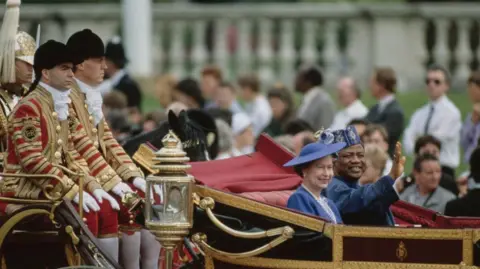
In 2025 alone, the King presided over three state visits – those of French President Emmanuel Macron, US President Donald Trump and German President Frank-Walter Steinmeier – the first time the UK had held such a number in a single year since 1988.
The King has longstanding ties to Nigeria, a Commonwealth country, having expressed a love for Pidgin English and Nigerian Afrobeats music.
Before becoming monarch, he visited the country four times as the Prince of Wales – in 1990, 1999, 2006 and 2018. Camilla, then the Duchess of Cornwall, joined him on the latter trip.
In 2023, the King’s Trust International – formerly the Prince’s Trust – officially launched in Nigeria, announcing a project aimed at tackling youth unemployment.
[BBC]

The co-owner of a Colorado funeral home where nearly 200 decaying bodies were found has been sentenced to 40 years in prison for corpse abuse.
Before Jon Hallford was sentenced, he apologised in court and listened to family members describe having nightmares about their loved ones decomposing in his care. They called him a “monster” who should rot in jail.
His ex-wife and co-owner Carie Hallford has pleaded guilty to similar charges and is awaiting sentencing.
The Return to Nature home, in the town of Penrose, Colorado, had given fake ashes to grieving relatives instead of their loved-ones’ remains. Prosecutors said 189 bodies were improperly stored in the building over four years.

England bat; Nepal hand debut to Sher Malla

Seifert and Phillips conquer Afghanistan spin to script convincing New Zealand win

Thailand votes as reformists, conservatives vie for power

Afghanistan to bat first against New Zealand

‘I’d like to play on flat tracks’ – Shanaka links Sri Lanka’s batting woes to spin-friendly pitches at home

Washington Post chief executive steps down after mass lay-offs

‘Dates have the highest sugar content to fight Coronavirus’

Sunday Island 27 December – Headlines

#SundayIsland 17th December – Headlines

Sunday Island – 28th March

Sunday Island Headlines – 21 March

Sunday Island – 21st February – Headlines
-

 Business2 days ago
Zone24x7 enters 2026 with strong momentum, reinforcing its role as an enterprise AI and automation partner
-

 Business6 days ago
SLIM-Kantar People’s Awards 2026 to recognise Sri Lanka’s most trusted brands and personalities
-

 Business7 days ago
All set for Global Synergy Awards 2026 at Waters Edge
-
 Business6 days ago
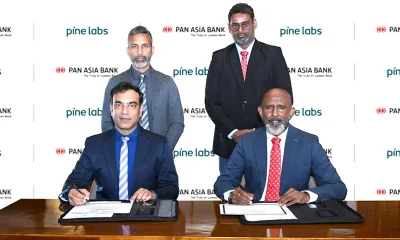
API-first card issuing and processing platform for Pan Asia Bank
-
 Business2 days ago
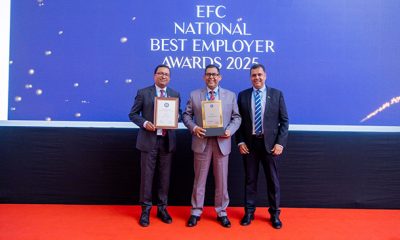
HNB recognized among Top 10 Best Employers of 2025 at the EFC National Best Employer Awards
-

 Business2 days ago
GREAT 2025–2030: Sri Lanka’s Green ambition meets a grid reality check
-

 Editorial4 days ago
All’s not well that ends well?
-

 Features4 days ago
Phew! The heat …