
Business
Aligning private capital with public purpose: The role of banks in driving a true Sri Lankan revival-part II


Across Sri Lanka, we meet many other spirited entrepreneurs—from spice farms, and fisheries to young designers, software engineers, and even creative professionals – who each possess the drive and local insight to build vibrant businesses that can empower themselves financially, and create quality employment for others.
Our role as a bank is to spot these visionaries early, to tailor financing and advisory support to their specific needs, and to partner with them as they scale. By doing so, we rebuild livelihoods and catalyse a new wave of valueadded enterprises that can compete nationally and even internationally.
At its core, Sarusara seeks to help Sri Lankan farmers understand, integrate and adapt to technology in their work. Confronted with yields well below global benchmarks, rural communities remain tethered to traditional practices not out of preference but because of entrenched knowledge and resource gaps.
We begin by introducing basic laboursaving implements—hand tractors, threshers and minicombine harvesters—but swiftly moves participants towards advanced systems such as droneassisted crop monitoring and mobile soilmapping services. Through pilot schemes set to scale in the coming year, we are laying the groundwork for precision agriculture practices to be scaled across the island, optimising fertilisers, herbicides and pesticides, curbing waste while driving meaningful productivity gains and improving margins for farmers.
In time, the full integration of precision agriculture and automation will free up valuable labour, creating a new imperative: supporting communities as they transition to different forms of employment. As routine tasks become automated, fresh opportunities will emerge for higherskilled roles in equipment maintenance, data analysis and agritechnology entrepreneurship across regional hubs.
Strengthening national economic resilience
To seize these gains, Sri Lanka must invest now in education and vocational training, ensuring that future generations are equipped to thrive in an increasingly technologydriven agrarian economy.
While these technological and agricultural transitions are vital, we cannot expect them alone to deliver game‑changing results in the short term. In the interim, further structural reforms are essential—most notably in our export sector. The crisis laid bare how critical exports are as a growth engine for Sri Lanka, and with thousands of SMEs and abundant natural resources at our disposal, we have the raw ingredients for a robust export renaissance. Yet to truly elevate our global standing, we must cultivate a small cadre of large, home‑grown exporters capable of anchoring entire value‑chain ecosystems.
While capital must continue to be channeled into the grassroots, simultaneously we must also follow the example of Asia’s most dynamic economic success stories – from India and China to Vietnam and South Korea. In each, they were able to focus investment into substantial enterprises, around which vibrant ecosystems were then built.
Sri Lanka too must seek to build a new generation of national champion export brands that can emulate and build on the success of the nation’s current leaders while competing in entirely new markets. Those focused on export manufacturing need to be incentivized to scale themselves up within our Export Processing Zones. Their scale and ambition would not only generate direct export revenues but also spur demand for upstream suppliers, logistics providers and support services, creating a virtuous circle of growth.
From a macroeconomic standpoint, building these national champions must be a strategic priority. Banks have a crucial role to play—designing bespoke financing structures, co‑investing alongside foreign, private and public partners, and underwriting the large‑scale capital commitments that these export leaders require.
To align private capital with public purpose, we must harness our collective expertise and deploy our resources where they will have the greatest impact. In doing so, we will not only restore trust in our economy but also chart a course towards a Sri Lankan revival that is both resilient and inclusive—one in which every citizen can take pride and share in our nation’s success.
Concluded
By Damith Pallewatte,
Managing Director/CEO, HNB PLC
Continued from Tuesday

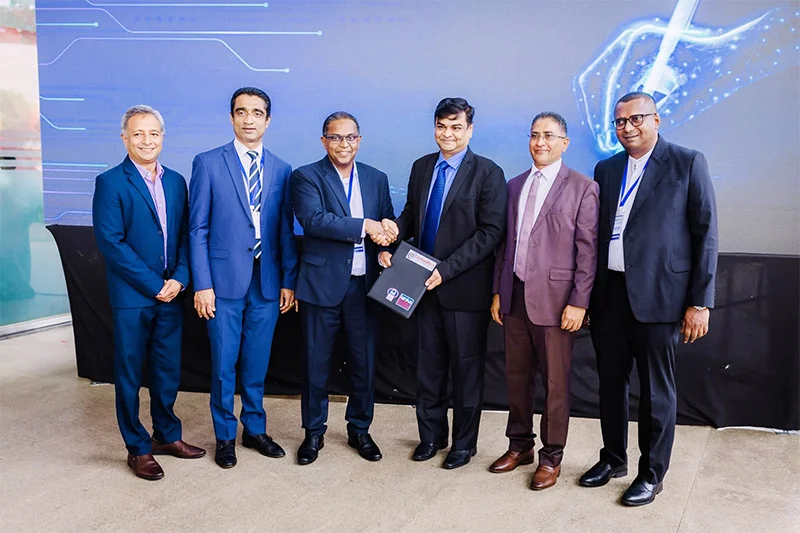
Sri Lanka has launched a National Digital Signing Framework, a foundational initiative paving the way for paperless governance. This strategic move eliminates the need for physical signatures and documents in government transactions, aiming to dramatically enhance efficiency, transparency, and accessibility for citizens and businesses. An analyst said that this could accelerate Sri Lanka’s governance and commercial relationships with other countries as traditional signatures make room for digitally signed documents accepted by the government.
In this significant step toward accelerating Sri Lanka’s digital transformation, eMudhra, a global leader in digital identity and security solutions, has entered into a strategic partnership with LankaSign the only Certification Service Provider (CSP) in the country that complies with the Electronic Transactions Act No. 19 of 2006, operated by LankaPay, Sri Lanka’s national payment network during recently held inauguration of INFOTEL 2025 ICT exhibition at Sirimavo Bandaranaike Exhibition Hall.
The LankaSign–eMudhra partnership brings together the strengths of LankaPay’s legally recognized digital signing certificates issued via LankaSign – the pioneering digital Certification Service Provider in Sri Lanka established in 2009 – and eMudhra’s globally trusted emSigner platform, which has enabled secure digital document signing across more than 68 countries since 2008. Through this collaboration, Sri Lankan citizens and businesses will be able to experience a seamless, secure, and user-friendly digital signing solution, enabling documents to be signed anytime, anywhere using iOS, Android, or web-based applications.
This partnership with eMudhra aligns with the national agenda to promote adoption of digital documents, reduce dependency on paper-based processes, and facilitate a more efficient, transparent, and secure digital economy. This collaboration aims to support the government’s long-term digitalization roadmap by enabling a secure digital documentation layer essential for e-government services, digital finance, and digital transformation.
By Sanath Nanayakkare

In a significant move to accelerate technological innovation in Sri Lanka, Dialog Axiata PLC, Sri Lanka’s #1 connectivity provider, and the Dialog-University of Moratuwa (UoM) Research Lab, has announced the release of SinhalaVITS, a state-of-the-art, open-source Text-to-Speech (TTS) model for the Sinhala language.
This non-commercial initiative delivers a powerful, high-quality, and natural-sounding Sinhala voice model to the public, making it freely accessible to developers, researchers, and students. The model is available for download on Hugging Face, the world’s largest open-source AI community, empowering anyone to build and experiment with advanced voice technology.
The SinhalaVITS model is the result of a deep-rooted collaboration that unites Dialog’s industry leadership with the academic excellence of the Dialog–UoM Mobile Communications Research Lab, fulfilling a vital need within Sri Lanka’s tech community for accessible, high-performance tools that drive innovation. By removing cost and licensing barriers tied to proprietary software, Dialog is empowering developers and researchers while fostering a more inclusive, collaborative, and future-ready AI ecosystem. This initiative further reinforces Dialog’s commitment to advancing Sri Lanka’s digital future—investing in open-source technology and academic partnerships to nurture local talent and lay the foundation for next-generation digital services built by Sri Lankans, for Sri Lankans.
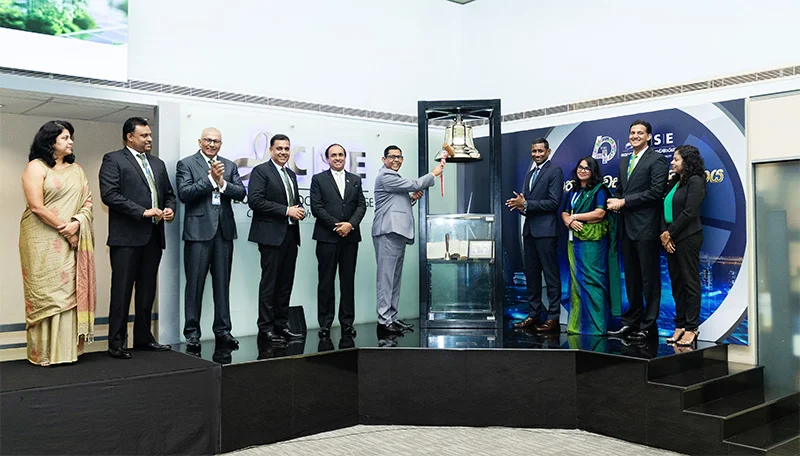
The Hatton National Bank PLC (HNB PLC) commemorated raising LKR 10 bn with its first ever issuance of sustainable bonds by way of a market opening ceremony conducted on the trading floor of the Colombo Stock Exchange (CSE) last week.
The 9th December issuance of 100 mn listed, rated, unsecured senior sustainable bonds, in five year and seven-year tenors, with a par value of LKR 100/- and rated “AA-(lka)” By Fitch Ratings Lanka Limited, was oversubscribed on the same day, raising LKR 10 bn.
Sustainable bonds, which were launched in Sri Lanka for the first time this year, are part of a series of GSS+ (Green, Social, Sustainable & Sustainability Linked) debt instruments. The proceeds of the sustainable bond issuance will be used by HNB PLC to fund the development and installation of solar, wind, biomass and hydropower projects, improve energy efficiency through retrofits, fund the construction of recognized ‘green’ buildings, fund investment infrastructure for water treatment, water conservation and efficient agricultural water technologies, finance housing development, healthcare and education for low- and middle-income families, promote women entrepreneurship, amongst others initiatives.
Damith Pallewatte, Managing Director and CEO of HNB PLC, who was the ceremony’s keynote speaker remarked upon the issuance of sustainable bonds commenting: “HNB’s LKR 10 bn sustainable bond issuance is a landmark step in advancing Sri Lanka’s sustainability agenda.”
Delivering his welcome address at the event, Rajeeva Bandaranaike, CEO of CSE, remarked upon rising corporate engagement in CSE’s GSS+ debt instruments stating: “HNB’s Sustainable Bond represents a welcome new addition to the list of leading Sri Lankan financial instruments that have set the example for the success of CSE’s GSS+ Bond framework which have allowed the capital market to operate as a financing vehicle for sustainable and socially equitable projects.”

Several spells of showers may occur in Central, Uva and Eastern provinces and in Polonnaruwa and Mullaittivu districts

India’s External Affairs Minister meets Sri Lanka PM

Shafali 69 not out , spinners lead India’s rout of Sri Lanka

Sri Lanka’s coastline faces unfolding catastrophe: Expert

SOC examines proposed amendments to the Microfinance and Credit Regulatory Authority Bill

CEB–NTPC joint venture seeks investors for 50 MW Sampur solar project

‘Dates have the highest sugar content to fight Coronavirus’

Sunday Island 27 December – Headlines

#SundayIsland 17th December – Headlines

Sunday Island – 28th March

Sunday Island Headlines – 21 March

Sunday Island – 21st February – Headlines
-

 News1 day ago
Members of Lankan Community in Washington D.C. donates to ‘Rebuilding Sri Lanka’ Flood Relief Fund
-

 News6 days ago
Pope fires broadside: ‘The Holy See won’t be a silent bystander to the grave disparities, injustices, and fundamental human rights violations’
-

 News6 days ago
Pakistan hands over 200 tonnes of humanitarian aid to Lanka
-

 Business5 days ago
Unlocking Sri Lanka’s hidden wealth: A $2 billion mineral opportunity awaits
-

 News5 days ago
Army engineers set up new Nayaru emergency bridge
-

 News6 days ago
Officials of NMRA, SPC, and Health Minister under pressure to resign as drug safety concerns mount
-

 News6 days ago
Expert: Lanka destroying its own food security by depending on imported seeds, chemical-intensive agriculture
-

 Editorial6 days ago
Flawed drug regulation endangers lives