
Sports
Akalanka breaks meet record to reserve Commonwealth Youth Games spot

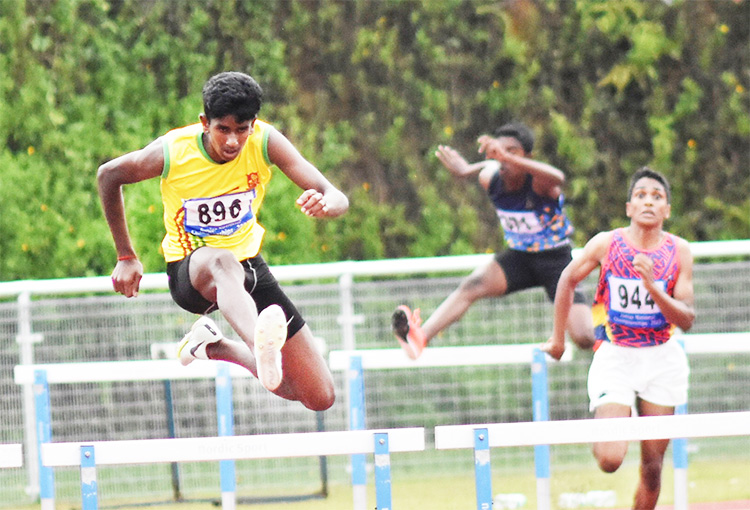
Junior National Athletics Championships 2023
By Reemus Fernando
For the second consecutive day an Asian Youth Championship medallist topped track event performances as meet records continued to fall at the Junior National Athletics Championships continued at Diyagama on Monday.
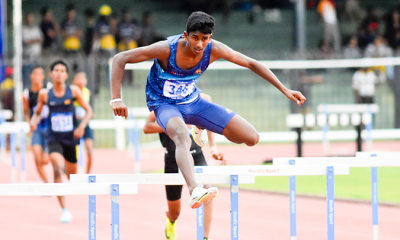
Commonwealth Youth Games hopeful Ayomal Akalanka of Ambagamuwa Central took 26 miliseconds off the meet record held by an alumni of his school, Dhanuka Dharshana to win the Under 18 boys’ 400 metres hurdles in a time of 52.66 seconds. That was the second hurdles record to suffer a beating by an athlete trained by veteran coach Anura Bandara. S. Himashani of the same school bettered the previous record in the Under 16 girls’ 300 metres hurdles. However, the new record (46.44) in that event was written against the name of Sasvi Seneviratne of Mahamaya Girls’ School, Kandy who piped Himashani to win the gold .
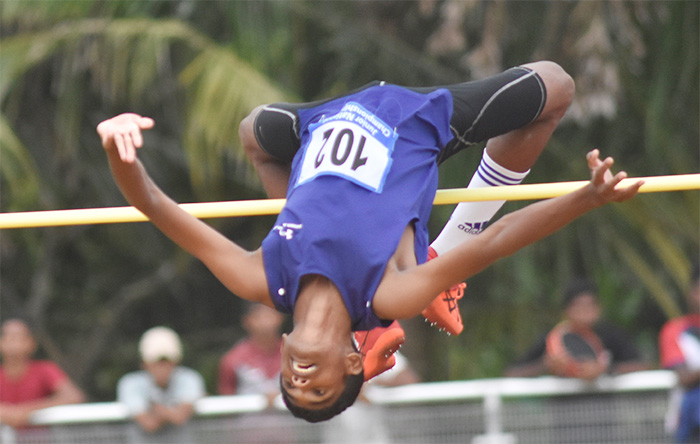
Tharusha Mendis
Akalanka’s notable achievement came just a day after another Asian Youth Championship medallist, Thushen Silva hogged the limelight.
Akalanka had already reached qualifying standards for this year’s Commonwealth Youth Games. But by finishing the event under 52.90 seconds (the locally set qualifying standard) he also convinced selectors of his strength.
Dulanjana Pradeepani of Wickramabahu National School, Gampola was another Asian Youth Championship participant to excel on day two as she won the Under 18 girls’ 800 metres in a time of 2:20.52 seconds. Tharushi Abisheka of the same school won the Under 16 girls’ 800 metres to unsettle Ratnayake Central, Walala, the school that had been dominating these events for years.
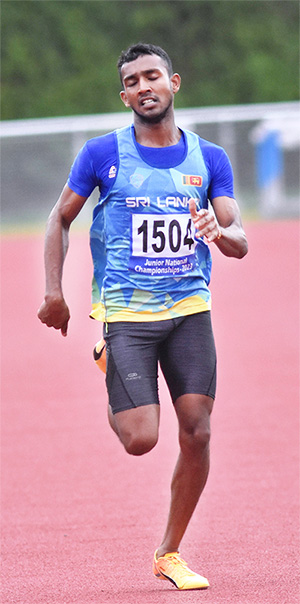
Isuru Kalushalya
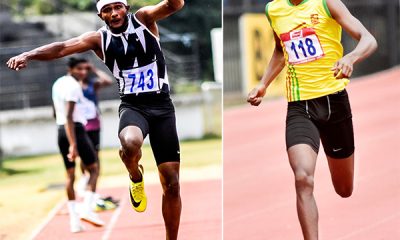
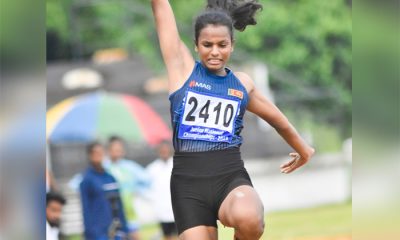
Lyceum International, Wattala athlete Tharusha Mendis continued his impressive run in the high jump with a record breaking performance in the Under 16 boys’ event.
The impressive feat was on the cards as Mendis carried a personal best of 1.96 metres from last year’s Sir John Tarbat Championships. The athlete trained by Nipuna Nirmal cleared 1.94 metres yesterday to erase a 11-year-old record held by M. Ruvinga of Bandaranaike MMV, Mirigama.
The World Junior Championships participant Isuru Kaushlya competing for Sri Lanka Army registered a new meet record in the Under 23 men’s 200metres. Kaushalya clocked 21.65 seconds to win the final after breaking the record in the heats with a feat of 21.42 seconds. He erased the record (21.50 secs) jointly held by Sachith Perera and Mohamed Safan.








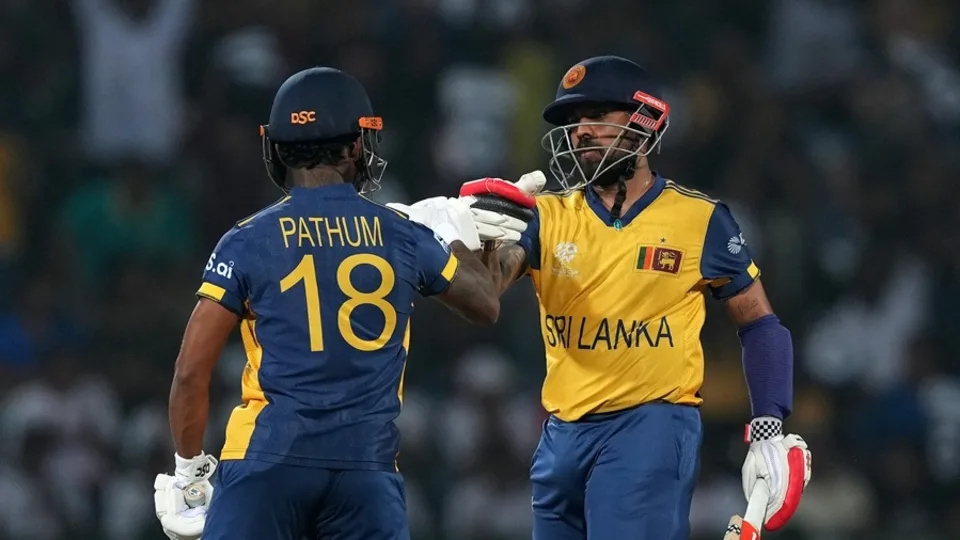
Sri Lanka have opted to chase against England at Pallekele, hoping to replicate their dominance victory over Australia here to kickstart their Super Eight campaign.
It was six days ago that Pathum Nissanka’s unbeaten 100 saw the hosts chase down Australia’s total of 181 with eight wickets and two overs to spare. And with home skipper Dasun Shanaka is looking to utilise that confidence in this Group 2 encounter.
“We’ve been chasing well in the past few occasions and happy to chase again,” said Shanaka at the toss. “The boys are very confident playing here.”
England skipper Harry Brook – on his 27th birthday – again called for bravery after his side stumbled into the second stage of this tournament. The two-time champions have gone in with an unchanged team for the fourth match in a row, with Jamie Overton retaining his place as the allrounder. Brook’s only slight worry is a cut to Jacob Bethell’s bowling hand (sustained during the match against West Indies), which is likely to prevent him from bowling due to the strapping on his finger.
Sri Lanka meanwhile make two changes to their XI, with Dushmantha Chameera returning in place of Pramod Madushan, having been rested for the defeat to Zimbabwe. Kamil Mishra comes back in for the man who replaced him, Kusal Perrera, as the hosts shuffle once more in an attempt to find a functional opening partnership.
These two squads know each other very well, having only concluded a three-match T20I series against one another at the start of the month, which took place entirely in Pallekele. England secured a 3-0 scoreline, capping things off with a professional 12run win in a low scoring encounter.
As for the outfield, both sides are primed for a different evening of ground-fielding on patchy grass. Heavy rains have punctuated the five das leading into this clash. Overnight precipitation has sodden the edges of the field, though the middle parts of the ground had been well-covered.
Sri Lanka: Pathum Nissanka, Kamil Mishara, Kusal Mendis (wk), Pavan Rathnayake, Kamindu Mendis, Dasun Shanaka (capt), Dunith Wellelage, Dushan Hemantha, Maheesh Theekshana, Dilshan Madushanka, Dushmantha Chameera
England: Phil Salt, Jos Buttler (wk), Jacob Bethell, Tom Banton, Harry Brook (capt), Sam Curran, Will Jacks, Liam Dawson, Jamie Overton, Jofra Archer, Adil Rashid
[Cricinfo]

Johannes Hoesflot Klaebo, Norway’s king of cross-country skiing, broke the record for the most gold medals won at a single Winter Olympics with his sixth of the Games.
Klaebo led a Norwegian sweep of the podium in the 50km mass start classic, with team-mates Martin Loewstroem Nyenget and Emil Iversen taking silver and bronze respectively.
The 29-year-old finished the brutal distance in two hours six minutes 44.8 seconds, 8.9secs ahead of Nyenget who takes his third medal of the Games.
“It’s been crazy, it’s a dream come true,” Klaebo told BBC Sport.
“I really think this Olympics has been perfect. Being able to crown the Olympics with the 50km was unbelievable.”
Klaebo breaks the previous record of five golds from a single Games, held by American speed skater Eric Heiden since the Lake Placid Olympics of 1980.
It also extends his own record for most Winter Olympic golds to 11, while he becomes the first athlete to win all six cross-country events at one Games.
Only US swimming great Michael Phelps, who won 23 gold medals, has more Olympic titles to his name.
Born in Oslo, Klaebo moved to Trondheim – a haven of cross-country skiing trails – as a young child, a move that has seen him become the greatest to ever do the sport.
No other man, active or retired, comes close to his record of 116 World Cup wins, while he is also a 15-time world champion, winning all six titles at last year’s edition on home snow in Trondheim.
“After the world championships last year, we knew that it was possible, but to be able to do it, it’s hard to find the right words,” he told reporters.
“[There were] so many emotions when I’m crossing the finish line.”
His sixth Olympic gold at Milan-Cortina adds to the titles he had won earlier in the Games in the skiathlon, sprint classic, 10km interval start free, 4×7.5km relay and the team sprint.
[BBC]
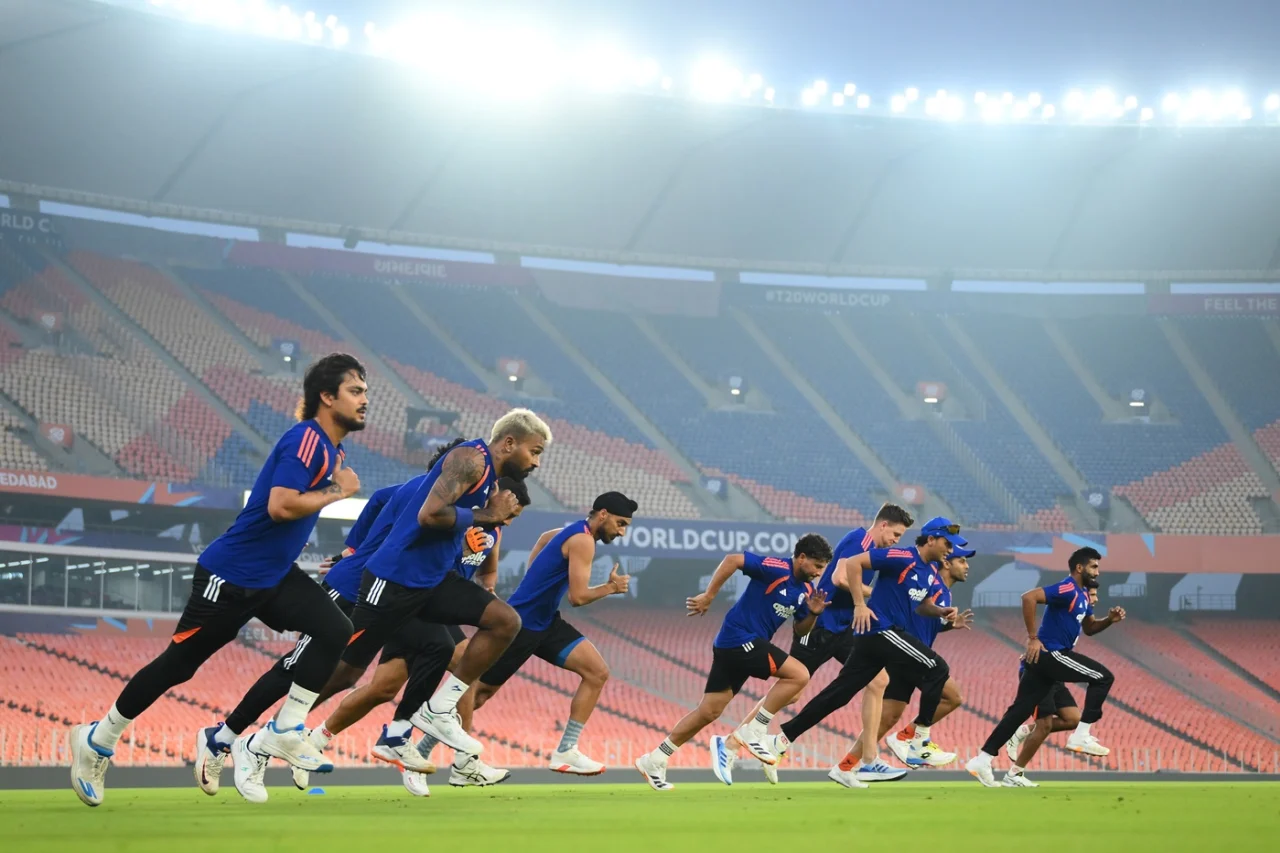
Some are calling this the final before the final. India were the clear favourites anyway, and South Africa have emerged unbeaten from the toughest group of the draw. Their easy win against New Zealand has sent warning signs.
A budding rivalry that began with the last T20 World Cup final, which South Africa lost despite bossing it for 35 overs, continued as they had their own back with a Test whitewash of India in India.
Throw in high stakes. This is no longer a match in which only India stand to lose something although they will not want to be the XI that breaks India’s winning streak of 12 at T20 World Cups. South Africa stand to lose a lot as well.
You lose this match, and the remaining two become must-wins but not a guarantee to make the semi-finals. It is a blockbuster start to the Group 1 Super Eight round. South Africa have been used to the Ahmedabad conditions having played three of their four matches there. India don’t need any more familiarity with Ahmedabad as every important match of any series or tournament invariably ends up there.
The last such game was the last T20I in the series against South Africa where India overcame the toss and buried South Africa by piling 231 runs. At that time, South Africa didn’t have any idea what their best XI looked like. Now they will hope to put up a much better fight against the all-conquering Indian side.
The two openers have been setting the tournament alight. Not long ago neither of them was opening. Ishan Kishan is a bolter thanks to his performance in the Syed Mushtaq Ali Trophy. In December when South Africa last played India in Ahmedabad, Aiden Markram was batting at No. 5. Now they are the leading openers of the tournament having aggregated in 170s at nearly two a ball. A lot of time will be spent on them in the respective strategy meetings.
Arshdeep Singh expectedly returned for the last match, but India rested Axar Patel to give Washington Sundar a game. Axar should come back into the XI.
India (probable): Abhishek Sharma, Ishan Kishan (wk), Tilak Varma, Suryakumar Yadav (capt.), Hardik Pandya, Rinku Singh, Shivam Dube, Axar Patel, Arshdeep Singh, Jasprit Bumrah, Varun Chakravarthy.
South Africa rested Lungi Ngidi in their last game, giving Kagiso Rabada time to attain full rhythm while also testing out Anrich Nortje. Ngidi, still their leading wicket-taker, should come back at the expense of one of the big quicks. This being a night game, Corbin Bosch is likelier to get the nod ahead of George Linde.
South Africa (probable): Aiden Markram (capt.), Quinton de Kock (wk), Ryan Rickelton, Dewald Brevis, Tristan Stubbs, David Miller, Marco Jansen, Corbin Bosch, Keshav Maharaj, Kagiso Rabada/Anrich Nortje, Lungi Ngidi.
[Cricinfo]

Sri Lanka opt to chase against England in Pallekele

More than 1,500 Venezuelan political prisoners apply for amnesty

Six races, six golds – Klaebo’s historic Olympics

India, South Africa meet in the final before the final

Matara Festival for the Arts’ inaugurated by the Prime Minister

Showers or thundershowers will occur at most part of the Island after 1.00 p.m.

‘Dates have the highest sugar content to fight Coronavirus’

Sunday Island 27 December – Headlines

#SundayIsland 17th December – Headlines

Sunday Island – 28th March

Sunday Island Headlines – 21 March

Sunday Island – 21st February – Headlines
-

 Business6 days ago
Ministry of Brands to launch Sri Lanka’s first off-price retail destination
-
 Latest News2 days ago
New Zealand meet familiar opponents Pakistan at spin-friendly Premadasa
-

 Features10 hours ago
Why does the state threaten Its people with yet another anti-terror law?
-

 Latest News2 days ago
Tariffs ruling is major blow to Trump’s second-term agenda
-

 Latest News2 days ago
ECB push back at Pakistan ‘shadow-ban’ reports ahead of Hundred auction
-
 Features6 days ago
Giants in our backyard: Why Sri Lanka’s Blue Whales matter to the world
-

 Sports3 days ago
Old and new at the SSC, just like Pakistan
-

 News2 days ago
Construction begins on country’s largest solar power project in Hambantota