
Latest News
Afghan Taliban confirm ‘retaliatory’ border attacks on Pakistan

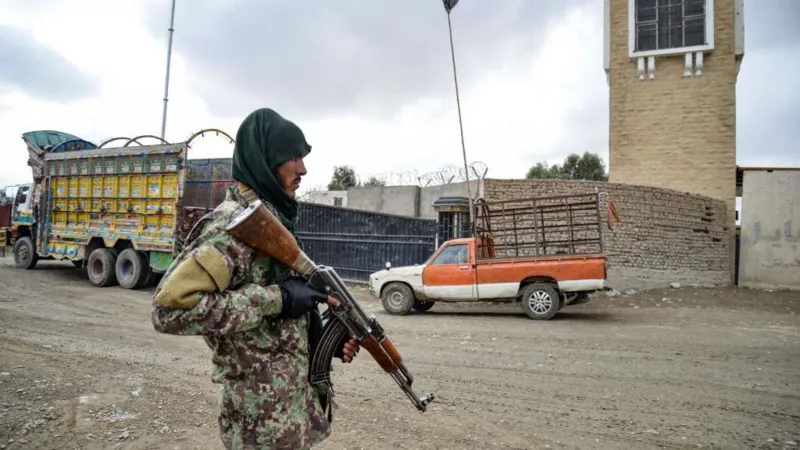
The Taliban government has confirmed that it attacked Pakistani troops in multiple mountainous locations on the northern border.
Casualties are not yet clear in what the Taliban called “retaliatory operations”, after it said Pakistan violated Afghan airspace and bombed a market inside its border on Thursday.
Pakistani Interior Minister Mohsin Naqvi called the Taliban attacks “unprovoked”, accusing them of firing at civilians. Pakistani forces would respond “with a stone for every brick”, he warned.
Islamabad accuses Kabul of harbouring terrorists who target Pakistan on its soil, a claim the Taliban reject. The escalation came as the Afghan Taliban foreign minister was in India for an historic visit.
Both sides are said to have used small arms and artillery in the Kunar-Kurram region, the BBC understands.
Saying he “strongly condemns” the Taliban’s attacks, Naqvi stated: “The firing by Afghan forces on civilian populations is a blatant violation of international laws.
“Afghanistan is playing a game of fire and blood,” he said in a post on X.
A Pakistani military spokesman said they would take necessary measures to safeguard Pakistani lives and properties.
Pakistan’s military has not officially commented, but a security source told the BBC firing took place at several locations along the Pakistani-Afghan border, including Angoor Adda, Bajaur, Kurram, Dir, Chitral and Baramcha.
A police official stationed near the Zero Point in Kurram district told the BBC that heavy weapons fire began from the Afghan side around 22:00 local time (17:00 GMT).
He said they had received reports of intense gunfire from multiple locations along the border.
Last week, Afghanistan’s Taliban government accused Pakistan of violating Kabul’s sovereign territory, as two loud blasts were heard in the city late on Thursday.
Pakistan bombed a civilian market in the border province of Paktika, in Afghanistan’s south-east, the Taliban Defence Ministry said on Friday. Locals there told the BBC’s Afghan service that a number of shops had been destroyed.
A top Pakistani general alleged Afghanistan was being used as a “base of operation for terrorism against Pakistan”.
Pakistan has long accused the Afghan Taliban of permitting the Pakistan Taliban, known as the TTP, to operate from their land and fight against the Islamabad government in a bid to enforce a strict Islamic-led system of governance.
The Taliban government has always denied this.
The latest escalation came as the Afghan Taliban Foreign Minister Anur Khan Muttaqi was in India for a week-long visit. In a diplomatic thaw, Delhi said that it would reopen the embassy in Kabul, which was shut four years ago when the Taliban returned to power.
“Afghanistan will also be given a befitting reply like India, so that it will not dare to look at Pakistan with a malicious eye,” Naqvi warned.
In a statement, Saudi Arabia, which signed a mutual defence pact with Pakistan last month, called for self-restraint and avoidance of escalation between Islamabad and Kabul.
Qatar also issued a statement, expressing concern over the Pakistan-Afghanistan border tensions and saying that it “urges both sides to prioritise dialogue, diplomacy, and restraint”.
[BBC]

Latest News
Trump says US will ‘obliterate’ Iran’s power plants if Strait of Hormuz not open before 48-hour deadline

President Donald Trump says the US will “obliterate” Iranian power plants if the Strait of Hormuz is not open within 48 hours – the waterway is vital for global oil shipping.
Iran warns it will retaliate against all US-linked energy infrastructure in the Middle East if its power plants are attacked.
Trump also says he has achieved his war aims “weeks ahead of schedule”, adding: “Iran wants to make a deal. I don’t”
More than 100 people have been injured after strikes on southern Israel. The target appears to have been a nuclear facility 13km away from the city of Dimona
Meanwhile, Israel says it launched a wave of strikes on the Iranian capital. It follows an attack on Iran’s Natanz nuclear facility, Tehran says
An attempted Iranian strike on the joint UK-US base on Diego Gracia happened late on Thursday night into Friday morning, the BBC understands. Foreign Secretary Yvette Cooper says the UK won’t be drawn into wider conflict
[BBC]
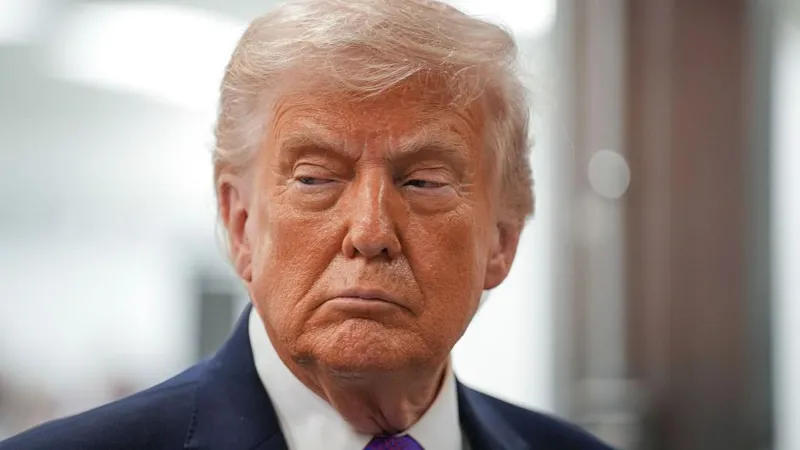
Three weeks after the joint US-Israeli war against Iran began, the conflict has reached a fuzzy state of mixed messages and uncertainty, with Donald Trump’s public comments often seemingly contradicted by realities on the ground.
The war is “very complete, pretty much”, Trump has said, but new American ground forces – including a Marine expeditionary unit – are moving into the region. It is “winding down”, but US and Israeli bombing and missile strikes on Iranian targets continue unabated.
Opening the Strait of Hormuz, the geographic choke point through which 20% of the world’s oil export travels, is a “simple military manoeuvre”, but for now only Iranian-approved ships are transiting the waters.
The Iranian military is “gone”, but drones and missiles are still striking targets in the region and targets have extended as far as the joint US-UK base on Diego Garcia.
In a Friday evening Truth Social post published while he was flying from Washington to his Florida resort for the weekend, the US president provided a numbered list of American military objectives for the Iran war, which he said the US was “getting really close” to fulfilling.
The items, comprising his most detailed statement on the subject since the war began, included degrading or destroying Iran’s military, its defence infrastructure and its nuclear weapons programme, as well as protecting American allies in the region.
Not included was the goal of securing the Strait of Hormuz, which Trump said should be the responsibility of other nations that are more dependent on oil exports from the Gulf. The president has frequently noted that the US is a net exporter of energy and does not rely on oil from the Middle East – although such a view glosses over the global nature of the fossil fuel market, where price fluctuations directly impact the price at American gas pumps.
Trump’s Truth Social post also made no call for Iranian regime change. Gone are any references to approving the nation’s next leader or “unconditional surrender”, which Trump had insisted on in the early days of the war.
In Trump’s latest outline of his objectives, it is possible that the US could end its operation with Iran’s current anti-American leadership in power, its oil exports still flowing and its ability to assert some measure of control over the Strait of Hormuz intact.
If that is an unappealing resolution to a war that the president and his aides have said began with the 1979 Iran Revolution and that they would finish, there is an alternative route that involves the US ground forces presently on the way to the Middle East region.
Just over a week ago, US media reported that a Marine expeditionary unit, with about 2,500 combat soldiers and supporting ships and aircraft, had been dispatched from Japan to the Middle East, which it should reach in the coming days. Another Marine force of similar size recently departed its base in California with its arrival expected in mid-April.
Military analysts have suggested that the US could be planning to capture Kharg Island. an 3-sq-km (8-sq-mile) slice of land that contains Iran’s primary oil export terminal. Doing so could, in theory, cut off the nation’s oil shipments, depriving the nation of much-needed revenue and forcing it to make greater concessions to the Americans in exchange for an end to hostilities.
Trump on Friday said that he wasn’t sending ground troops to Iran, but added: “If I were, I certainly wouldn’t tell you”. Clarity, it seems, is not his intention.
The threat of such a move prompted Iran’s state media to report on Saturday that any attack on Kharg Island would lead Iran to cause “insecurity” in the Red Sea, another key global shipping transit point, and “set fire” to energy facilities throughout the region.
Iran’s warning underscores the dangers that would accompany a US escalation that further exposes American military forces to Iranian reprisals.
Earlier this week, US media reported that the Trump administration was preparing to ask Congress for $200bn (£150bn) in emergency funding for the ongoing Iranian military operation. Such a request would suggest that, far from winding down, the White House is preparing for a long, expensive fight.
The initial reaction from Congress, including from Trump’s Republican allies, was cautious at best.
“We’re talking about boots on the ground. We’re talking about that kind of extended activity,” said Republican Congressman Chip Roy of Texas.
“They have got a whole lot more briefing and a whole lot more explaining to do on how we’re going to pay for it, and what’s the mission here.”
The so-called “fog of war” doesn’t just cloud the thinking of military planners, it also affects the perception of politicians and the public.
The Iran war, it seems, is at a pivot. But which direction it takes from here is a puzzle.
(BBC)
Latest News
Heat Index likely to increase up to ‘Caution level’ at some places in the Western, Sabaragamuwa, Southern and North-western provinces and in Anuradhapura, Monaragala, Mannar and Vavuniya districts

Warm Weather Advisory
Issued by the Natural Hazards Early Warning Centre of the Department of Meteorology
at 3.30 p.m. on 21 March 2026, valid for 22 March 2026.
Heat index, the temperature felt on human body is likely to increase up to ‘Caution level’ at some places in the Western, Sabaragamuwa, Southern and North-western provinces and in
Anuradhapura, Monaragala, Mannar and Vavuniya districts.
The Heat Index Forecast is calculated by using relative humidity and maximum temperature and this is the condition that is felt on your body. This is not the forecast of maximum temperature. It is generated by the Department of Meteorology for the next day period and prepared by using global numerical weather prediction model data.

Effect of the heat index on human body is mentioned in the above table and it is prepared on the advice of the Ministry of Health and Indigenous Medical Services.
ACTION REQUIRED
Job sites: Stay hydrated and takes breaks in the shade as often as possible.
Indoors: Check up on the elderly and the sick.
Vehicles: Never leave children unattended.
Outdoors: Limit strenuous outdoor activities, find shade and stay hydrated.
Dress: Wear lightweight and white or light-colored clothing.
Note:
In addition, please refer to advisories issued by the Disaster Preparedness & Response Division, Ministry of Health in this regard as well. For further clarifications please contact 011-7446491.

Trump says US will ‘obliterate’ Iran’s power plants if Strait of Hormuz not open before 48-hour deadline

Showers may occur at several places in the Western, Sabaragamuwa and Southern provinces and in Nuwara-Eliya district after 1.00 pm.

PM Harini leads panel to protect public services

Sajith slams President over war conduct and economic missteps

Johnston Fernando, sons held in Lanka Sathosa lorry misuse case

Gura: The unsung hero

‘Dates have the highest sugar content to fight Coronavirus’

Sunday Island 27 December – Headlines

#SundayIsland 17th December – Headlines

Sunday Island – 28th March

Sunday Island Headlines – 21 March

Sunday Island – 21st February – Headlines
-

 Business7 days ago
Browns EV launches fast-charging BAW E7 Pro at Rs. 5.8 million
-

 News5 days ago
CIABOC questions Ex-President GR on house for CJ’s maid
-

 News6 days ago
Sri Lankan marine scientist Asha de Vos honoured at UNGA opening
-

 Features7 days ago
Achievements of the Hunduwa!
-

 News6 days ago
Australian HC debunks misleading travel risk claims for Sri Lanka
-

 News4 days ago
Bailey Bridge inaugurated at Chilaw
-

 Latest News6 days ago
Wednesdays declared a government holiday with effect from 18th March
-

 News4 days ago
Pay hike demand: CEB workers climb down from 40 % to 15–20%