
News
ADB urges strategic push for Lanka’s blue economy


Asian Development Bank (ADB) Country Director for Sri Lanka, Takafumi Kadono, has called for a strategic and sustainable approach to developing the nation’s blue economy, stressing the need for investment, regulation, and branding to fully harness the island’s vast maritime resources.
Speaking at a high-level forum, Kadono said Sri Lanka is uniquely positioned to lead in ocean-based development, but success hinges on protecting marine ecosystems, empowering coastal communities, and ensuring long-term resilience.
“You have everything,” he noted. “But there needs to be further investment, better regulation, and branding. It’s not just about enjoying the ocean—it’s about protecting it and shaping a more resilient future.”
Kadono highlighted the ADB’s multi-pronged strategy to support high-value, low-impact interventions that balance economic growth with environmental stewardship. He identified marine tourism, fisheries, and logistics as key sectors capable of generating livelihoods while conserving fragile ecosystems.
“Ports move cargo, but tourism moves lives,” he added, stressing that infrastructure development must go hand-in-hand with human development in the blue economy.
He also urged the government to encourage private sector participation, focusing on creating a stable, enabling environment for investment rather than crowding out opportunities for private capital.
“The ocean surrounding Sri Lanka is more than a backdrop—it is a partner in economic progress,” Kadono said. “The waves that lap our shores must carry not just vessels, but opportunity, resilience, and prosperity for generations to come.”
With over five decades of partnership in Sri Lanka’s development, the ADB reaffirmed its commitment to financing, innovation, and knowledge sharing as the country charts a new chapter in sustainable growth.

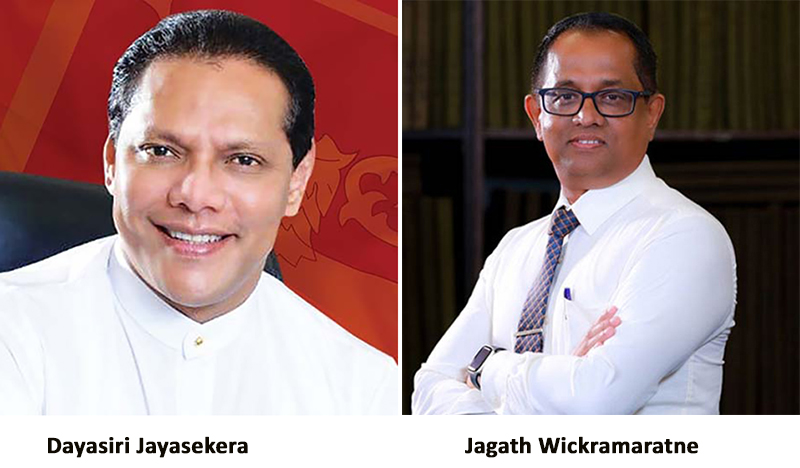
Dayasiri questions legitimacy of appointments made by Council
The Constitutional Council (CC) should ask its head, Speaker Dr. Jagath Wickramaratne, to step down temporarily pending an investigation by the Commission to Investigate Allegations of Bribery or Corruption (CIABOC) into a complaint lodged by sacked Deputy Secretary General of Parliament Chaminda Kularatne, SJB MP Dayasiri Jayasekera has said.
Former Minister Jayasekera said so in response to The Island queries pertaining to Kularatne’s recent complaint to the CIABOC.
Jayasekera pointed out that the CC, which is responsible for key appointments, couldn’t afford to have a person under CIABOC investigation as its head. “We have never experienced a similar situation since the establishment of the CC in 2000,” the Kurunegala District lawmaker said.
Parliament introduced CC under the 17th Amendment to the Constitution. It was abolished in 2010, reinstated in 2015 through the 19th Amendment, then replaced by a Parliamentary Council in 2020, and reintroduced via the 21st Amendment in October 2022.
MP Jayasekera said that the NPP government had turned a blind eye to his recent request made in Parliament for the Speaker to step down. He said that subsequently he had discussed the issue with other MPs and they were of the view that Dr. Wickramaratne’s continuation as the Chairman of the CC undermined the integrity of the council.
A parliamentary committee headed by Dr. Wickramaratne sacked Kularatne on January 23 over alleged irregularities pertaining to his appointment as Deputy Secretary General of Parliament and Chief of Staff. Kularatne lodged the complaint with the CIABOC on 2 February.
Austin Fernando, Professor Wasantha Seneviratne and Ranjith Ariyaratne were appointed as non-Members of Parliament to the CC on 23 January, the day Parliament sacked Kularatne.
MP Jayasekera said that the CC should discuss the issue with the Speaker. Political parties represented in parliament should intervene to ensure that the controversy over the Speaker’s conduct didn’t undermine the apex body.
The CC consists of Prime Minister Dr. Harini Amarasuriya (Ex-officio), Speaker Dr. Jagath Wickramaratne (Ex-officio), Leader of the Opposition Sajith Premadasa (Ex-officio), one MP appointed by the President (Bimal Rathnayake), five persons appointed by the President, upon being nominated as follows: one MP nominated by agreement of the majority of the Members of Parliament representing the Government (Aboobucker Athambawa, M.P), one MP nominated by agreement of the majority of the MPs of the political party or independent group to which the Leader of the Opposition belongs—Ajith P. Perera—and three persons nominated by the Speaker by agreement of the Prime Minister and the Leader of the Opposition—Austin Fernando, Professor Wasantha Seneviratne and Ranjith Ariyaratne—and one MP nominated by agreement of the MPs other than those representing the Government and those belonging to the political party or independent group to which the Leader of the Opposition belongs, and appointed by the President (Sivagnanam Shritharan, M.P).
The CC recommend nominations to the President for the appointment of Chairpersons and Members of Election Commission, Public Service Commission, National Police Commission, Audit Service Commission, Human Rights Commission of Sri Lanka, Commission to Investigate Allegations of Bribery or Corruption, Finance Commission, Delimitation Commission and National Procurement Commission.
Jayasekera asked how Dr. Wickramaratne could continue as CC head as appointments to CIABOC, too, are made by the 10-member body.
The CC also approve/disapprove recommendations by the President for the appointment Chief Justice and the Judges of the Supreme Court, President and the Judges of the Court of Appeal, Members of the Judicial Service Commission, other than the Chairman, Attorney-General, Governor of the Central Bank of Sri Lanka, Auditor-General, Inspector-General of Police, Parliamentary Commissioner for Administration (Ombudsman) and Secretary General of Parliament.
MP Jayasekera said that it would be really interesting to see the response of the newly appointed civil society members to the developing situation. The SJBer pointed out that the recent appointment of Samudika Jayaratne, a Senior Deputy Auditor General as the Auditor General was made after Kularatne moved the CIABOC against the Speaker.
The JVP and NPP, having preached other political parties of transparency, couldn’t pretend the Speaker’s issue was not serious. Dr. Wickramaratne was appointed Speaker in Dec 2024 after Asoka Ranwala had to step down after being exposed for making false higher education qualifications.
by Shamindra Ferdinando

The Electricity Consumers’ Association (ECA) Friday (6) called on newly appointed Auditor General Samudika Jayarathne to begin her tenure by launching an investigation into the controversial coal procurement deal, which has drawn widespread public criticism.
Addressing a media briefing in Marandagahamula, Gampaha, ECA Secretary, Sanjeewa Dhammika, said the probe should be conducted independently. The appointment of a new Auditor General, following a vacancy of nearly six to seven months, was a crucial step in restoring the effectiveness of the state audit system, he said, extending congratulations to Jayarathne.
Dhammika urged the Auditor General to carry out a swift, independent investigation into the questionable coal procurement deals, alleging that they had caused significant economic and environmental harm to the country.
He called for the findings of such an investigation to be disclosed to the public as a priority.
He also called for an immediate audit of Lanka Transformer Ltd, which has faced severe criticism from the Committee on Public Enterprises (COPE). Dhammika said the audit should reveal details of alleged irregularities, identify those responsible, and disclose any misuse of public funds.
Noting that the government held a substantial share in Lanka Transformer Ltd, he stressed that the matter constituted a direct responsibility of the State.
“The audit system should not function to provide political protection, but to safeguard public funds,” Dhammika said, adding that the Association expected the new Auditor General to uphold this principle.
By Anuradha Hiripitiyage

A 150-hectare site near the Kalu Ganga Reservoir in Matale District has been earmarked for Sri Lanka’s first-ever holding centre for Toque Macaques, the Department of Wildlife Conservation (DWC) announced.
The centre will feature water, food, and security facilities, providing a safe environment to manage macaques that cause damage in nearby communities. The Matale District Development Committee has approved the project, following a recommendation from the DWC.
Wildlife Range Officer Chamath Lakshman Perera told the Committee that similar holding centres operate in several countries, including Malaysia. A total of Rs. 283.87 million has been allocated for the project.
Under the plan, macaques causing destruction will be captured and relocated to the centre. Population control measures will include fitting loops on female monkeys to prevent breeding. The facility will be secured to ensure the animals cannot escape back into the wild.
Officials said the site has sufficient natural food sources, but additional supplies will be provided if necessary. Each macaque is expected to require around 70 grams of food per day.
The project aims to balance wildlife conservation with community protection, offering a model for managing human-macaque conflicts in the country, Perera said.
by Nimal Gunathilake

Canada bowl against pace-heavy South Africa

Hong Kong court jails media tycoon and British citizen Jimmy Lai for 20 years

Muzarabani returns as Zimbabwe opt to bowl against Oman

Munsey and Leask spoil Italy’s T20 World Cup debut2

Italy captain Wayne Madsen injures shoulder in T20 World Cup opener

Canada look for early splash against favourites South Africa

‘Dates have the highest sugar content to fight Coronavirus’

Sunday Island 27 December – Headlines

#SundayIsland 17th December – Headlines

Sunday Island – 28th March

Sunday Island Headlines – 21 March

Sunday Island – 21st February – Headlines
-

 Features2 days ago
My experience in turning around the Merchant Bank of Sri Lanka (MBSL) – Episode 3
-

 Business3 days ago
Zone24x7 enters 2026 with strong momentum, reinforcing its role as an enterprise AI and automation partner
-

 Business7 days ago
SLIM-Kantar People’s Awards 2026 to recognise Sri Lanka’s most trusted brands and personalities
-

 Business2 days ago
Remotely conducted Business Forum in Paris attracts reputed French companies
-

 Business2 days ago
Four runs, a thousand dreams: How a small-town school bowled its way into the record books
-

 Business2 days ago
ComBank and Hayleys Mobility redefine sustainable mobility with flexible leasing solutions
-

 Business7 days ago
API-first card issuing and processing platform for Pan Asia Bank
-
 Business3 days ago
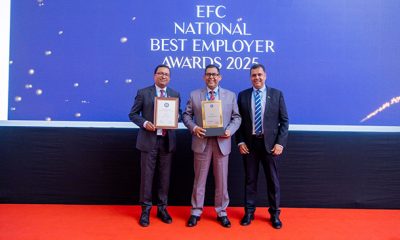
HNB recognized among Top 10 Best Employers of 2025 at the EFC National Best Employer Awards