
News
About 90% of SL youth under 25 want to go overseas to live comfortably


By Rathindra Kuruwita
More than 90 percent of youth under 25 believe that they have to go overseas if they are to live comfortably, lecturer at the University of Vocational Technology, H.A Gayan Madushanka, who is one of the authors of a recent study titled ‘Better living, better opportunities: Exploring how economic distress influence the intention to migrate’ says.
The study had been carried out between June and August 2023, he said. 33 percent of respondents have completed an advanced-level coursework, nine percent have completed diploma-level coursework, 59 percent have completed degrees, and one percent have completed doctoral degrees, according to Madushanka.
“About 92 percent feel like this. 66 percent of people we interviewed were in the process of leaving the country. These are people who have at least started learning Korean, seeking employment in South Korea. We also found that 58 percent of the respondents were facing stress because of the economic crisis. There is a lot of uncertainty, and a lot of people don’t think they can achieve their objectives if they stay here,” he said.
Madushanka said they had interviewed a large number of university students and that most students had to stay in Colombo or move to the city to find jobs that match their education level. Many were not certain that it would not be possible with the starting salaries of most of the jobs available, he said.
“On the other hand, young people who have left the country seem to be enjoying a better quality of life. Most undergraduates feel that they, too, need to leave. A lot of undergraduates, who do not come from well off families, are struggling financially,” he said.
Almost all respondents believed that living in Sri Lanka would not provide them with the necessary skills to compete on a global scale.
“Sixty six percent of respondents stated that they would leave the country as soon as a job opportunity presented itself to ensure a better future and to be rewarded for their efforts. Due to uncertainty, nearly one third of respondents said they had lost focus on studies and daily activities. They reported increased anxiety, a lack of uninterrupted sleep, and peer pressure,” he said.
Madushanka said that the beginning of the economic crisis could be traced to Easter Sunday attacks and continued through the COVID lockdowns and the economic crisis. Even young people from well off families started feeling that the country was not a stable place for them to live.
“Even if people have money, their purchasing power has drastically decreased and the services as well. Companies froze recruitment and there were salary cuts. Inflation also rose. Young people feel uncertain about the future,” he said.
Madushanka said they had also come up with a number of policy recommendations that minimise the exodus of youth from the country.
Among the recommendations they had come up with are: make it mandatory for and public sector organisations to recruit a minimum of 25% of their workforce annually from the youth demographic; implement state backed initiatives to support young entrepreneurs and encourage self-reliance by nurturing startup enterprises; develop comprehensive mental health guidelines for employees and university students by establishing anonymous helplines within universities for open communication, ensuring widespread access to these services; mandate universities and workplaces to employ a minimum of one mental health specialist, fostering an environment where students and employees can openly discuss and seek assistance for their mental health concerns; implement participatory research practices at the district level to assess diverse community needs comprehensively and create sustainable mechanisms for advancing youth-driven initiatives and foster cross-border collaborations within state universities to provide students exposure to international academic frameworks, equipping them with the skills required to meet global demands effectively.

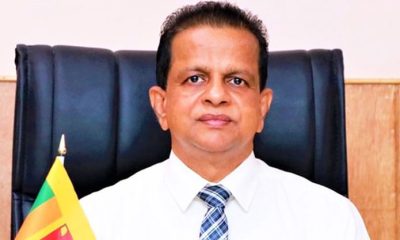





Prime Minister Dr. Harini Amarasuriya stated that all government strategic plans must be formulated in a manner that ensures no child in the country is deprived of vocational education or any other educational opportunity due to economic hardship.
The Prime Minister made these remarks while addressing a workshop on budget formulation and strategic planning of institutions affiliated with the vocational education sector, held on 29th and 30th of January 2026 at the Grand Monarch.
The workshop was organized with the participation of heads and senior officials of nine institutions, including two universities affiliated with the vocational education sector.
The Prime Minister pointed out that it is essential to align the development plans of key institutions and the affiliated institutions with the National Economic Development Plan.
The Prime Minister stated that while educational institutions produce individuals with vocational knowledge, reforms must also nurture compassion, empathy, care for others, and ethical values. The Prime Minister noted that the objective of this initiative is to nurture professionals enriched by humanity.
She further emphasized that it is the responsibility of the government to further expand pathways for children who are experiencing economical disadvantages to access vocational education and secure their future.
Attention was also drawn to the sectors of AI revolution and the future of vocational education. The Prime Minister observed that there is still no comprehensive global understanding of the changes taking place in the world of work and vocational fields due to artificial intelligence (AI). She stressed that integrating vocational education into the mainstream education process through educational reforms is an urgent necessity at this time.
The revolution brought about by AI technology is often driven by profit. Just as we were exploited during past industrial revolutions, we must ensure that we are not left behind or marginalized in this revolution. We must not merely confine ourselves to a data center.
The Prime Minister highlighted that while teaching and learning activities can be carried out online, the impact of technology is limited in professions involving human care and compassion, such as childcare and caregiving services underscoring the importance of developing soft skills and adopting a human-centered approach.
It was discussed that the flexible pathways should be created to enable a student to progress continuously through vocational education up to doctoral level, as well as to re-enter education while being employed (lateral entry). While ensuring such flexibility in the system, maintaining high standards and quality in education was highlighted as essential to ensuring credibility.
The event was attended by the Deputy Minister of Education and Higher Education Dr. Madhura Senevirathna, Deputy Minister of Vocational Education Nalin Hewage, Secretary to the Ministry of Education Nalaka Kaluwewa, Vice Chancellor of the University of Vocational Technology Professor Prasanna Premadasa, Vice Chancellor of the Ocean University Professor Nalin Rathnayake, Chairman of NIBM Dr. G. Thantirigama, Director General D.M.A. Kulasooriya, and several other officials.

(Prime Minister’s Media Division)

Deputy Minister of Digital Economy, Eranga Weeraratne, stated that the Ministry of Education, the Ministry of Women and Child Affairs and the Ministry of Digital Economy are planning to initiate a national assessment and policy review on the impact of social media on children.
The Deputy Minister emphasized that the initiative is expected to be advanced by giving due consideration to the insights of experts across all relevant fields, including child protection, education, health, mental health, cyber security, law and research, as well as by listening to the voices of civil society and youth.
Full statement made by Deputy Minister, Eranga Weeraratne.
“Many parents in Sri Lanka today face the challenge of understanding the impact of social media on their children and determining what measures they should take to ensure their safety. The solution is not to restrict children’s access to technology. Social media offers numerous benefits, including educational opportunities, the development of creative skills and improved communication. However, there is also a reality we must acknowledge. The online environment can often be unsafe, overwhelming and psychologically stressful for children. The resulting harm can negatively affect a child’s sleep, education, friendships and overall mental well-being. In some cases, excessive engagement with social media becomes difficult to control. Attempts to prevent such overuse may sometimes lead to conflicts, anger, or harsh disciplinary measures, which further impact learning and mental health. Consequently, children may experience stress, diminished self-confidence and emotional distress.
Online cyber bullying is another major concern. Additionally, children are often exposed to age-inappropriate content, including violent, sexual, or otherwise harmful material. There have been cases where children repeatedly engage with such harmful content, becoming increasingly absorbed in it. Some online games also present situations that encourage children to engage in disruptive or unsafe behaviour.
In extreme cases, such engagement has even led children to put their lives at risk. For this reason, ensuring the online safety of children has become a national priority in many countries. Our approach, likewise, must be guided by three fundamental principles.
First, the safety of children is paramount. This remains a non-negotiable policy of the government. Second, our actions must be based on evidence and research. We never proceed based on assumptions. Third, while safeguarding rights and privacy, our goal is to minimize excessive surveillance. Striking a balance between rights, safety and innovation is our primary objective.
Many countries around the world are already taking measures in this regard. It has become a timely necessity for us to carefully study these experiences, adapt them to our context and develop a comprehensive programme to protect our children. As a first step, we hope to initiate a national assessment and policy review on the impact of social media on children, in consultation with the Ministry of Education and the Ministry of Women and Child Affairs.”
Experts in fields such as child protection, education, health, mental health, cyber security, law and research, along with the voices of civil society and youth, must be engaged in this effort. This is not a challenge that the government can address alone. Parents, teachers and children themselves all need to participate collaboratively. Through this approach, we can create an environment where our children can make full use of technology safely and responsibly.
News
Public officials must clearly understand public expectations against corruption and fraud – Secretary to the President


In line with the Government’s programme to build a clean, transparent and corruption-free public service, a workshop to brief heads of 250 state institutions that have been instructed to establish Internal Affairs Units was held on Thursday (29) at the auditorium of the Sri Lanka Foundation Institute, under the patronage of Secretary to the President, Dr. Nandika Sanath Kumanayake.
As the first phase of this programme, Internal Affairs Units were previously established in 106 state institutions and the relevant officers were trained accordingly. As part of the second phase, instructions have been issued to establish Internal Affairs Units in an additional 250 state institutions. Accordingly, this workshop was organised by Presidential Secretariat, with the assistance of the Clean Sri Lanka Programme.
Although Sri Lanka continues to maintain relatively high rankings in sectors such as education and healthcare, Secretary to the President, Dr. Nandika Sanath Kumanayake noted that the country is ranked 121st in the 2024 Corruption Perceptions Index, a position that could adversely affect its overall standing in other key sectors.
Addressing the gathering, the Secretary to the President stated that while the primary slogan of the recent public uprising was against the corrupt politics, the allegations were directed not only at corrupt politicians but also at corrupt public officials. He emphasised that the public uprising occurred at a time when the country had become economically bankrupt and its adverse consequences were being directly felt by the people.
He further observed that such public uprisings are not sudden events, but rather the culmination of a prolonged and systematic process, driven by public frustration and the erosion of trust in governance.
Further addressing the workshop, Secretary to the President emphasised that public uprisings should not be underestimated, noting that they represent a powerful expression of public will.
He stated that it is essential for public officials, as well as politicians, to have a clear understanding of public aspirations and public sentiment. As public servants, he stressed, there is an obligation to deliver a clean, transparent and accountable public service to the people.
Accordingly, he explained that a structured programme has been initiated to strengthen the integrity of public service delivery. The establishment of Internal Affairs Units forms a key component of this initiative, aimed at ensuring greater transparency and accountability within state institutions.
Dr. Kumanayake further noted that public officials must remain mindful of upholding ethical standards while performing their duties, as strengthening individual integrity can contribute to transforming the broader culture of corruption within the public sector.
He highlighted that Internal Affairs Units can be viewed both as a mechanism for fostering a culture of integrity within the public service and as a platform that enables the public to raise concerns regarding the conduct of public officials, thereby strengthening accountability and public trust.
At the event, Additional Secretary to the President, Ms. Chandima Wickramasinghe and Senior Lecturer at the University of Kelaniya, Tharindu Dhananjaya Weerasinghe delivered keynote presentations.

England to bowl first in Pallekelle

No child should be deprived of vocational or higher education due to poverty – PM

Ireland thump Thailand to qualify for 2026 women’s T20 World Cup

National Assessment and Policy Review: The impact of social media on children

Public officials must clearly understand public expectations against corruption and fraud – Secretary to the President

West Indies seal consolation win in ten-over shootout

‘Dates have the highest sugar content to fight Coronavirus’

Sunday Island 27 December – Headlines

#SundayIsland 17th December – Headlines

Sunday Island – 28th March

Sunday Island Headlines – 21 March

Sunday Island – 21st February – Headlines
-
 Business7 days ago
ComBank, UnionPay launch SplendorPlus Card for travelers to China
-
 Business4 days ago
Climate risks, poverty, and recovery financing in focus at CEPA policy panel
-

 Opinion3 days ago
Sri Lanka, the Stars,and statesmen
-

 Business2 days ago
Hayleys Mobility ushering in a new era of premium sustainable mobility
-
 Opinion7 days ago
Luck knocks at your door every day
-

 Business2 days ago
Advice Lab unveils new 13,000+ sqft office, marking major expansion in financial services BPO to Australia
-

 Business2 days ago
Arpico NextGen Mattress gains recognition for innovation
-

 Editorial2 days ago
Govt. provoking TUs