
Opinion
A Realistic, Fantastic and Futuristic Dream

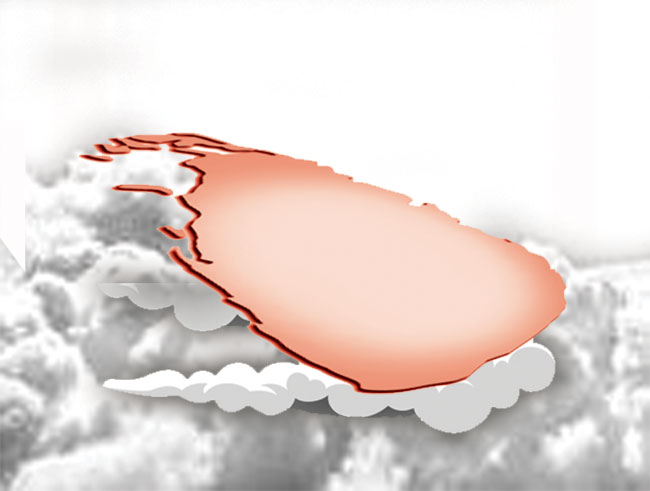
By D. L. Sirimanne
I dreamt I was the Radio Officer on a KLM Super Constellation flight to Colombo with a Dutch crew. Flight Information sent us a ‘red alert’ that Colombo Airport was closed and to divert the flight to Jaffna. I immediately informed the Captain and he accordingly altered heading to Jaffna. I called KKS Approach several times with no success. When the captain heard me calling KKS, he burst into laughter. “Call Jaffna Control, Siri; surely haven’t you flown to Jaffna before?” I said, “Of course Captain, I have flown hundreds of times to KKS on DC3s in the 1950s and knew every bit of the Jaffna peninsula.” Rather amused he said,” But that was 100 years ago Siri, aren’t we in the 2050s now?” I felt embarrassed and then called Jaffna Control, and they answered immediately. I gave our position and ETA and requested weather and landing instructions. Clearance was received to land on runway 22. The Controller’s voice was familiar and I asked, “Is that you Nada?” “Yes Siri, I am Nada, where were you all these years, so nice to hear you.”
Approaching Jaffna, I was surprised to see at a distance the glare of a well-lit city like Singapore glistening in the night. I told the captain, “I feel we are approaching some strange airport and this can’t be Jaffna I knew!” He laughed. “You should see Jaffna Airport and the city now.” We landed and taxied to a huge modern busy airport terminal. JAFFNA INTERNATIONAL AIRPORT in huge letters glowed above the buildings and in Tamil too.
The passengers and the crew disembarked. ‘I said to myself, Good Lord! This is fantastic and strange to me.’ As we entered the Arrival Gate, I was greeted warmly by the Airport Manager, my good old friend, Reggie Santiapillai. “Hello Siri, where have you been all these years? “I told him “I was with KLM flying the North Atlantic and this is my first flight to this region after ages.” He said, “That’s great Siri, I am glad the flight was diverted to Jaffna and not to Lonkok.” “What? Are you referring to Bangkok?” I asked highly amused. “No Siri, the Chinese took over Mattala Rajapaksa International Airport on a ninety-nine years lease for nonpayment of loans and developed it to international standards and changed its name. It is a very busy airport now, busier than BIA”. I was in fits of laughter at this funny name.
Soon, a number of my Tamil friends whom I knew at KKS in the 1950 surrounding me, Customs and Immigration Officers Siva, Raja, Airport Controller Nada, Traffic Officers Fitch, Shakespeare, Panchalingam etc., to greet me. I asked Reggie, “How did insignificant KKS airfield with only a Control Tower in the 1950s become Jaffna International Airport?” “It’s a long story Siri, I will tell you when we get to the hotel.” I couldn’t believe what I saw. We were in a very busy airport like Croydon.
I expected a coach ride to the city, instead we went by sky-train which was almost supersonic and in 15 minutes we were in the city center. I wondered what happened to the miles and miles of cadjan fences that lined the rugged road in the 1950s from KKS airport to Jaffna town. Huge high-rise buildings well lit and with beautiful avenues lined with large beautiful shops displaying their products in show cases was unbelievable. It reminded me of Bond Street in London, a beautiful metropolis crowded even at this late hour with shoppers and tourists. The crew was booked into Jaffna Hilton an impressive hotel with manicured colorful lawns and walkways, swimming pools. Reggie and I settled down in the cafeteria for a chat and a beer.
“How did all this happen, Reggie?” I asked. He thought for some time and smiled. “Siri, we are now a Federal State. It is called THE FEDERAL STATE OF TAMIL ILLAM.’’ “That’s wonderful news Reggie! Congratulations!! I am so proud and happy you people have at last a Federal State of your own.” “Thank you Siri,” he said. “Can you remember when we were under British Rule, Sinhalese, Tamils, Burghers, Muslims and other ethnic groups were known as Ceylonese. Unfortunately, when Ceylon received Independence in 1948, the majority Sinhalese Governments took control of the country, and named it Sri Lanka, and a Sinhalese Buddhist Country.
Instead of treating all citizens impartially, they treated us Tamils and Muslims as minorities. They thought none other than a Sinhalese Buddhist should rule the country. Two major Sinhala Political Parties formed alternate Governments and for years fought each other for power neglecting the country. Due to this discrimination of Tamils, an uprising lead by Prabhakaran with a gang of terrorist suicide bombers, well-known as LTTLE waged a 30-year war with the governments, which retarded the country’s development and finally in 2009 was destroyed by President Rajapaksa under emergency rule.
It was an ideal opportunity for the Sinhalese and Tamils to shed their differences and unite all Sri Lankans as one prosperous nation, but President Mahinda Rajapaksa and his government ignored that opportunity. The Tamils did not wish the country to be divided and requested to give them at least a Federal State in the north of the country, but the arrogant Sinhalese Governments dismissed it.
President Rajapaksa and his government had great power, and since the war had ended and there was no need for defence spending. He found China the ‘rescuer’ as a bottomless well for borrowing, and got China to build large unwanted project such as Highways, Harbours, Airports, a massive Lotus Tower, dredging the seafloor to build a worthless dream of a Port City, etc., and the country getting into enormous debt while he and his Ministers collected huge commissions.
During General Elections in 2018, Basil Rajapaksa formed a new powerful party named SLPP which came into power with a huge majority. It was a Rajapaksa Government, with Gotabaya as President and Mahinda as Prime Minister. There was mismanagement and when the time came to settle the loans from China, India and Japan, etc., the country was found completely bankrupt. There were no dollars to obtain even the basic requirements such as fuel, medicine and food for the people. People revolted by forming a huge protest rally termed the ‘ARAGALAY’ on the Galle Face Green for a couple of months which compelled the President Gotabaya Rajapaksa to flee the country and the Prime Minister Mahinda Rajapaksa to resign.”
“The Ethnic Tamils and Muslims were greatly depressed with what was happening. The Ethnic Reconciliation proposed by President Ranil Wickremesinghe failed. Their cry was, why should we suffer mismanagement of the country by the corrupt Sinhalese Governments. The country is in severe debt to China and India. The IMF and World Bank were reluctant to help an unstable government and the borrowings were enormous. The country was heading for anarchy. In disgust, they appealed to the United Nations for a Federal State of their own in Sri Lanka.
Considering the chaotic unmanageable state of the country and the imbalanced disparity between the Sinhalese and Tamils, the United Nations passed a Resolution, temporarily dividing the Country into a Northern Territory and a Southern Territory, for a period till they can govern the country by themselves as a united nation. Talks between the creditors India and China on the outstanding debts, came into an arrangement, India to govern the Northern Territory and China to govern the Southern Territory for twenty five years.”
“China appointed a Chinese Governor to rule The Southern Territory and made Colombo similar to Hong Kong. I must say, the Chinese improved the Southern Territory by leaps and bounds, with strict discipline, and Industrialised it with large factories manufacturing farming tractors, motor vehicles, Information Technology, Medicines, Garments etc. Farming too was modernised and soon Rice, Tea, Rubber, vegetables spices found overseas markets earning millions of dollars. Exports dramatically increased and imports drastically reduced with local production. Tourism too expanded rapidly to almost 50 million visitors a year shared by both Territories. The Central Bank stabilized with a continuous steady healthy credit balance in US Dollars. Employment and living standards improved quickly with decent wages. The rupee appreciated equivalent to a US Dollar, a great achievement.”
“In the Northern Territory, the Tamils, Muslims and other ethnic groups adopted the old British Colonial form of Government. India allowed a prominent respected Jaffna Tamil politician to Govern the Territory with an efficient Civil Service. India, Britain, USA, and the European Union came to our aid and built Jaffna International Airport. Jaffna, Mannar, Mullaitivu, Batticaloa became major cities. Very soon ours became highly industrialised with Trincomalee becoming a financial and industrial hub with container terminals, ship building yards, steel factories, car assembly plants, flour mills, fishing, etc. In double quick time our Northern Territory too became a highly successful State in the island. Most of the expatriate Tamils came back with their earnings and expertise and developed the North into what it is now. Trade oriented Universities were established in all our cities since skilled labor was needed for development. Tourism developed very rapidly. Last year we shared almost 50 million tourists with the friendly Southern Territory and permitted free travel between. Successful drilling in the Mannar basin produced oil and gas for our industries and we shared it with the South for development.”
“What about border defense?” I asked Reggie. He replied, “Actually, the North and South have their own police forces. There is no need for border patrol as major crimes such as smuggling narcotics, currency and gold disappeared. After all we were once one nation and now both the North and the South have developed simultaneously and the two governments have cordial relations living side by side. The whole island has developed as the Most Beautiful and Peaceful Country on Earth for trade and tourism. Who knows, someday these Territories may merge as one Nation in one country,” Reggie said with a laugh.
A gentle tap on the door ended the dream with our maid bringing our morning coffee. My wife with a kiss asked me, “Darling, why were you laughing and talking in your sleep?”


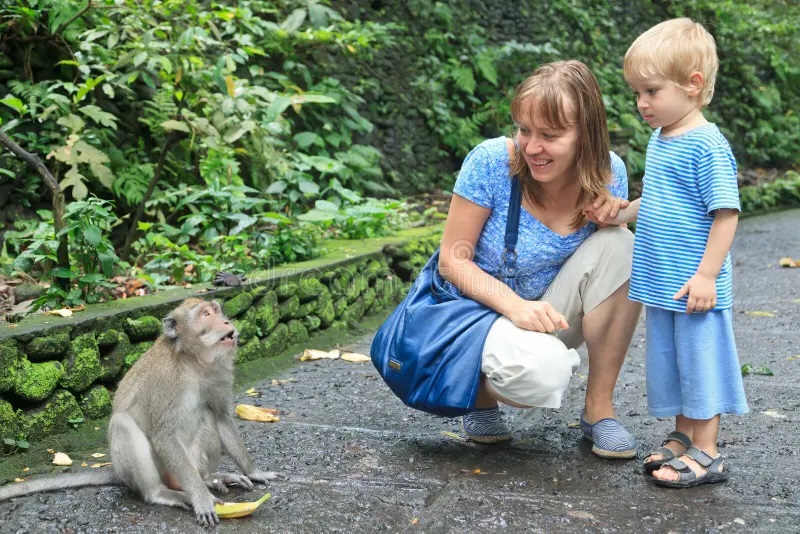
Being wildlife enthusiasts and bird watchers we took a river “safari” during a recent family trip to Bentota. We were dismayed to see that it seems to be the standard practice to feed the monkeys, I think they were the purple faced langurs, that were encountered on the river banks. Each boat that passed by stopped with boxed fruit, coconut and other odds and ends to feed them.
We managed to stop our guy from doing so but faced derision and laughter that we shouldn’t be afraid of monkeys. We tried to explain to him that this is a plague affecting Sri Lanka; elephants being fed on road sides and even in national parks, monkeys being fed from hotel balconies and apparently during river boat rides, birds being fed on hotel terraces etc.
This was met with further mockery and amused dismissal. An effort to make them understand that this was their livelihood that they were destroying it in this manner sailed over their heads. They even have a picture of a baby crocodile on the shoulders of a tourist on their billboard.
We need to consider the following:
Educate such tour operators about the importance of not interfering with the environment and the behaviour of wild animals.
Include education and training in the hotel school, and in schools in tourist resort towns about their duty and responsibility to the environment and the ecosystem on which we all depend.
If it is not already the case such operators should have licenses that should be revoked and fined if found to be engaging in such destructive acts.
Tamara Nanayakkara
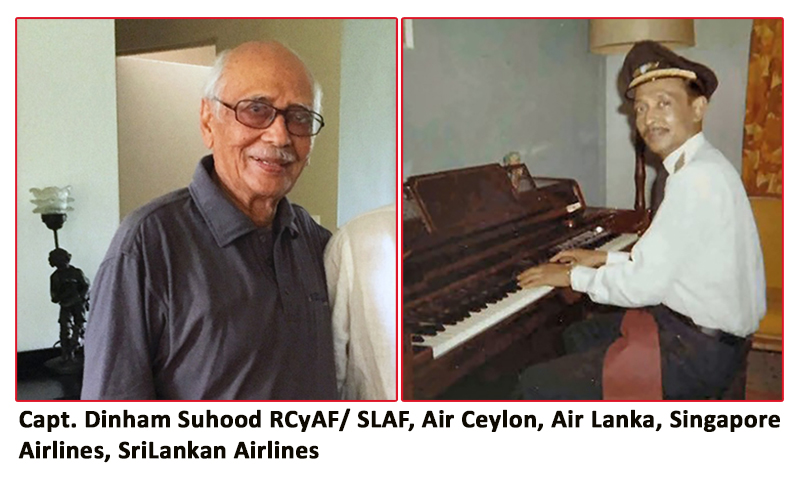
A few days ago, we heard the sad news of the passing on of Capt. Dinham Suhood. Born in 1929, he was the last surviving Air Ceylon Captain from the ‘old guard’.
He studied at St Joseph’s College, Colombo 10. He had his flying training in 1949 in Sydney, Australia and then joined Air Ceylon in late 1957. There he flew the DC3 (Dakota), HS748 (Avro), Nord 262 and the HS 121 (Trident).
I remember how he lent his large collection of ‘Airfix’ plastic aircraft models built to scale at S. Thomas’ College, exhibitions. That really inspired us schoolboys.
In 1971 he flew for a Singaporean Millionaire, a BAC One-Eleven and then later joined Air Siam where he flew Boeing B707 and the B747 before retiring and migrating to Australia in 1975.
Some of my captains had flown with him as First Officers. He was reputed to have been a true professional and always helpful to his colleagues.
He was an accomplished pianist and good dancer.
He passed on a few days short of his 97th birthday, after a brief illness.
May his soul rest in peace!
To fly west my friend is a test we must all take for a final check
Capt. Gihan A Fernando
RCyAF/ SLAF, Air Ceylon, Air Lanka, Singapore Airlines, SriLankan Airlines
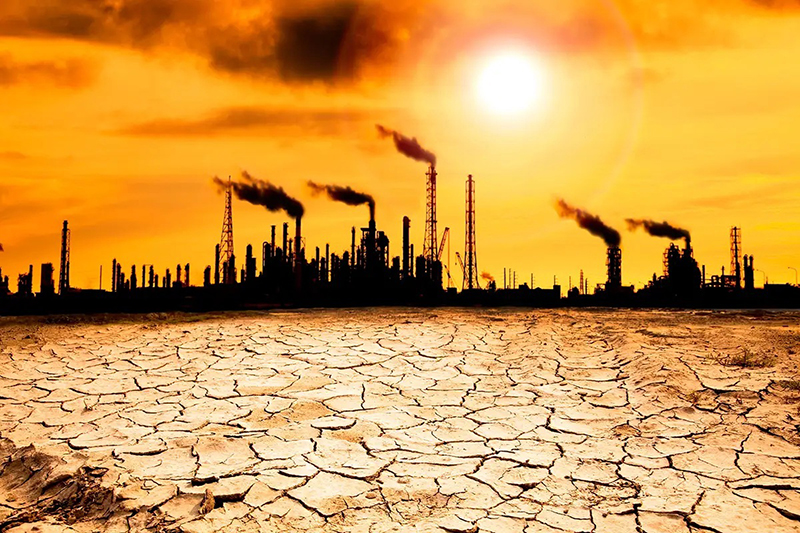
The cause of global warming, they claim, is due to ever increasing levels of CO2. This is a by-product of burning fossil fuels like oil and gas, and of course coal. Environmentalists and other ‘green’ activists are worried about rising world atmospheric levels of CO2. Now they want to stop the whole world from burning fossil fuels, especially people who use cars powered by petrol and diesel oil, because burning petrol and oil are a major source of CO2 pollution. They are bringing forward the fateful day when oil and gas are scarce and can no longer be found and we have no choice but to travel by electricity-driven cars – or go by foot. They say we must save energy now, by walking and save the planet’s atmosphere.
THE DEMON COAL
But it is coal, above all, that is hated most by the ‘green’ lobby. It is coal that is first on their list for targeting above all the other fossil fuels. The eminently logical reason is that coal is the dirtiest polluter of all. In addition to adding CO2 to the atmosphere, it pollutes the air we breathe with fine particles of ash and poisonous chemicals which also make us ill. And some claim that coal-fired power stations produce more harmful radiation than an atomic reactor.
STOP THE COAL!
Halting the use of coal for generating electricity is a priority for them. It is an action high on the Green party list.
However, no-one talks of what we can use to fill the energy gap left by coal. Some experts publicly claim that unfortunately, energy from wind or solar panels, will not be enough and cannot satisfy our demand for instant power at all times of the day or night at a reasonable price.
THE ALTERNATIVES
It seems to be a taboo to talk about energy from nuclear power, but this is misguided. Going nuclear offers tried and tested alternatives to coal. The West has got generating energy from uranium down to a fine art, but it does involve some potentially dangerous problems, which are overcome by powerful engineering designs which then must be operated safely. But an additional factor when using URANIUM is that it produces long term radioactive waste. Relocating and storage of this waste is expensive and is a big problem.
Russia in November 2020, very kindly offered to help us with this continuous generating problem by offering standard Uranium modules for generating power. They offered to handle all aspects of the fuel cycle and its disposal. In hindsight this would have been an unbelievable bargain. It can be assumed that we could have also used Russian expertise in solving the power distribution flows throughout the grid.
THORIUM
But thankfully we are blessed with a second nuclear choice – that of the mildly radioactive THORIUM, a much cheaper and safer solution to our energy needs.
News last month (January 2026) told us of how China has built a container ship that can run on Thorium for ten years without refuelling. They must have solved the corrosion problem of the main fluoride mixing container walls. China has rare earths and can use AI computers to solve their metallurgical problems – fast!
Nevertheless, Russia can equally offer Sri Lanka Thorium- powered generating stations. Here the benefits are even more obviously evident. Thorium can be a quite cheap source of energy using locally mined material plus, so importantly, the radioactive waste remains dangerous for only a few hundred years, unlike uranium waste.
Because they are relatively small, only the size of a semi-detached house, such thorium generating stations can be located near the point of use, reducing the need for UNSIGHTLY towers and power grid distribution lines.
The design and supply of standard Thorium reactor machines may be more expensive but can be obtained from Russia itself, or China – our friends in our time of need.
Priyantha Hettige

Australia on brink as Sri Lanka eye Super Eights spot

Krishnamurthi, van Schalkwyk keep USA alive

Pakistan bowl; no handshakes between captains at toss

May the blessings of Lord Shiva bring peace, good health, and spiritual fulfillment to your homes and to our beloved country – PM

West Indies brush aside Nepal to reach Super Eights

India vs Pakistan match is a godsend for T20 World Cup hosts Sri Lanka

‘Dates have the highest sugar content to fight Coronavirus’

Sunday Island 27 December – Headlines

#SundayIsland 17th December – Headlines

Sunday Island – 28th March

Sunday Island Headlines – 21 March

Sunday Island – 21st February – Headlines
-
 Life style19 hours ago
Marriot new GM Suranga
-

 Business5 days ago
Autodoc 360 relocates to reinforce commitment to premium auto care
-

 Midweek Review5 days ago
A question of national pride
-
 Opinion4 days ago
Will computers ever be intelligent?
-
 Features19 hours ago
The Rise of Takaichi
-
 Midweek Review5 days ago
Theatre and Anthropocentrism in the age of Climate Emergency
-

 Editorial7 days ago
The JRJ syndrome
-
 Features19 hours ago
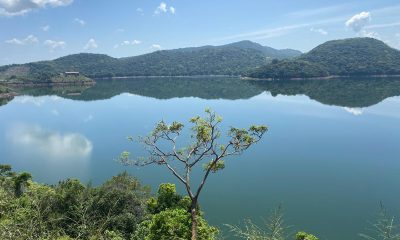
Wetlands of Sri Lanka: