
News
A new education system is being introduced alongside the new economy – President


President Ranil Wickremesinghe stressed on the necessity of an advanced education system combined with modern technology to move the country forward with a new economy. He noted that educational reforms are currently underway to achieve this goal.
The President made these remarks on Saturday (06) during a ceremony at Hall De Galle in Galle. The event marked a significant step towards educational modernization, with the provision of 200 Smart Classrooms and 2000 Tabs to 200 schools in the Southern Province.
Following a request by the Minister of Health and Industry, Dr. Ramesh Pathirana, the Government of India allocated RS. 300 million to the Southern Provincial Council for this project.
Of the 200 schools selected schools, 150 are in the Galle district, while the remaining 50 schools are in the Hambantota and Matara districts.
Additionally, 2000 Tabs were distributed, with each of the 200 classrooms receiving 10 tabs.
In his further remarks, President Wickremesinghe stated:
“Currently, the world is advancing rapidly with modern technology. Consequently, our country’s education system must also progress in tandem with these technological advancements. The Ministry of Education has already initiated necessary educational reforms to achieve this goal.
In the past, we introduced several educational policies that were appropriate for their time. However, given the current technological advancements of today, there is a pressing need for new reforms in the education sector to ensure our education system remains relevant and effective.
Thus far, we have launched the establishment of Artificial Intelligence (AI) clubs in schools. Countries such as England and America began integrating AI technology years ago. To ensure the sustainability of our newly launched AI program this year, it is essential for teachers to undergo comprehensive training. The government is actively developing training programs and infrastructure to bolster this initiative. There is also a plan to elevate existing Central Colleges and National Schools into specialized institutions focusing on artificial intelligence.
We deeply appreciate the support extended by neighbouring India in advancing modern technology. Prime Minister Narendra Modi has expressed interest in establishing an Indian Institute of Technology (IIT) campus in Sri Lanka, which is highly appreciated.
Additionally, negotiations to enhance cooperation in the energy sector with India are progressing successfully. I had discussions with Mr. Elon Musk in Malaysia, and his internet technology is anticipated to be introduced in Sri Lanka following Parliamentary approval.
This development will facilitate the provision of technical education to students in remote areas. Presently, the Southern Province has emerged as a region showcasing exceptional educational talent.
By leveraging modern technology to nurture future-ready generations, we aim to position our country as a global leader.



News
India plans to restore northern regular train services to pre-Ditwah frequencies before traditional New Year 2026


… USD 5 mn out of USD 450 mn allocated for repairs to Northern Railway Line
IRCON International Limited, an Indian Public Sector Undertaking, has launched a major project to restore the Northern Railway Line (NRL) that suffered quite significant damage due to Cyclone Ditwah in late November, 2025.
The Indian High Commission said that under the project launched on January 11, restoration work would cover three severely affected sections of the NRL, namely Maho–Omanthai, Omanthai–Jaffna, and Medawachchiya–Mannar which led to major disruptions in rail connectivity across the Northern and North Central regions.
The Indian High Commissioner Santosh Jha, and Transport, Highways and Urban Development Minister Bimal Rathnayake jointly launched the restoration work under an Indian grant of USD 5 million. The project forms part of the Indian reconstruction and rehabilitation package of USD 450 million announced during the visit of External Affairs Minister Dr. S. Jaishankar to Sri Lanka.
The Indian HC spokesperson said: ” The scale and severity of the damage caused by Cyclone Ditwah necessitated urgent restoration of critical connectivity infrastructure, particularly railways, which remain vital for passenger movement, essential services, and logistics in the affected regions. In this context, the Government of India announced grant assistance for the reconstruction and rehabilitation of the Northern Railway Line, which was earlier upgraded with Indian assistance.
The commencement of restoration works, within less than three weeks of the announcement of assistance, reflects the priority accorded by India to time-bound delivery of development cooperation. It is planned to restore regular train services to pre-Ditwah frequencies within three months, by April 2026, ahead of the Sinhala and Tamil New Year, with the remaining works targeted for completion by May 2026. The accelerated timeline will involve large-scale deployment of manpower and specialised machinery. IRCON International Limited will also complete pending ancillary works on the Maho–Omanthai railway line, for which India has recently continued its existing Line of Credit.
Railways remain a cornerstone of India–Sri Lanka development cooperation. India’s cumulative financial assistance to Sri Lanka’s railway sector stands at approximately USD 1.2 billion. This includes construction and rehabilitation of nearly 500 kilometres of railway track, provision of signalling systems across around 400 kilometres, and supply of rolling stock, significantly strengthening the operational capacity of Sri Lanka Railways and enhancing seamless rail connectivity.”
News
Inauguration of first Bailey Bridge under Indian assistance package for post-Ditwah reconstruction

A 100-foot Bailey Bridge was jointly inaugurated by High Commissioner of India Santosh Jha, the Deputy Minister of Transport and Highways, Dr. Prasanna Gunasena, and the Deputy Minister of Education and Higher Education Dr Madhura Senevirathna on January 10, 2026. The event was also attended by MP Ranjith Wijeyrathna. The bridge was installed by the 19 Engineer Regiment, Indian Army on the B-492 Highway along the Kandy–Ragala Road, restoring a vital land link between Sri Lanka’s Central Province and Uva Province. This marks the beginning of implementation of projects under India’s USD 450 mn assistance package for reconstruction post-Ditwah. The implementation has begun within less than three weeks of announcement of the package during the visit of Indian External Affairs Minister Dr. S. Jaishankar on 22-23 December 2025. Projects in other areas will also be launched in the coming days.
A press release issued by the Indian High Commission said: The bridge has re-established an essential transport corridor crucial for passenger movement, supply of essential goods, and local economic activity in the region. The newly commissioned Bailey Bridge has significantly improved access and mobility for communities in this affected area, particularly in the difficult hilly terrain. These restoration efforts are being undertaken in close coordination with the Sri Lankan Army and the Road Development Authority (RDA).
As part of this mission, four Bailey Bridge sets, with a combined weight of approximately 228 tonnes, were airlifted to Sri Lanka aboard four C-17 Globemaster aircraft, along with an engineering task force of 48 personnel from the Indian Army. This rapid mobilisation enabled the swift commencement of engineering operations despite challenging terrain and adverse weather conditions.
It may be recalled that during the visit of the External Affairs Minister of India, Dr. S. Jaishankar, to Sri Lanka on 23 December 2025, a Bailey Bridge located on the A-35 road in the Kilinochchi District of the Northern Province was inaugurated. This bridge was the first Bailey Bridge which was installed under India’s post-cyclone assistance.
In addition to the bridge inaugurated yesterday (10), another Bailey Bridge located very close to this site at KM 15 on the Kandy–Ragala Road is scheduled to be installed soon. In the next phase, over 15 additional Bailey Bridges will be constructed over the coming weeks, ensuring comprehensive restoration of connectivity across all affected areas.
India’s continued support for the restoration of critical infrastructure underscores its steadfast commitment to Sri Lanka’s recovery and rehabilitation efforts and reflects the close partnership and enduring friendship between the two countries.
News
SOC acts to prevent undermining of community-based financial institutions by proposed Microfinance and Credit Regulatory Authority Bill

The Chairperson of the Sectoral Oversight Committee (SOC) on Economic Development and International Relations, Attorney-at-Law Lakmali Hemachandra, MP, has proposed that the term “community-based financial institutions” be properly defined in the Microfinance and Credit Regulatory Authority Bill. Declaring that the proposed new law should not undermine the community-based financial institution, lawmaker Hemachandra has stressed the need for necessary amendments to the Bill.
According to the Office of Director Legislative Services / Director Communication, this directive has been given after the relevant SOC recently obtained views of community-based financial society representatives on the Microfinance and Credit Regulatory Authority Bill
During the meeting, representatives of community-based financial societies explained the role played by their societies and highlighted how they differ from microfinance and credit-providing institutions. They emphasised that community-based financial societies play a unique role in uplifting rural areas of Sri Lanka, including empowering women.
The representatives pointed out that the proposed Microfinance and Credit Regulatory Authority Bill seeks to bring all microfinance and credit-providing institutions under a single regulatory authority, and that this could potentially impact the role and operations of community-based financial societies.
Commenting on this matter, the Chairperson of the Committee noted that the Bill does not contain a separate definition for community-based financial institutions. She pointed out that regulating such institutions under a common set of criteria through a central authority could hinder their fundamental objectives.
Representatives of the community-based financial societies stated that while there is a strong need to subject their societies to regulation, it is important that any amendments to the Bill should not obstruct their core objectives.
After considering these views, the Chairperson proposed that the term “community-based financial institutions” be properly defined in the Microfinance and Credit Regulatory Authority Bill, and that necessary amendments be made to ensure their fundamental objectives are not adversely affected.
Accordingly, subject to these amendments, the Committee granted its approval to the Microfinance and Credit Regulatory Authority Bill. As the Bill also contains matters falling within the purview of the Committee on Public Finance, the Committee further decided to refer the Bill to that Committee for consideration.
Members of the Committee, including Members of Parliament Lakshman Nipuna Arachchi, Attorney-at-Law Nilanthi Kottahachchi, Thilina Samarakoon, and Samanmali Gunasinghe.
Government officials were also present at the meeting.

India plans to restore northern regular train services to pre-Ditwah frequencies before traditional New Year 2026

Inauguration of first Bailey Bridge under Indian assistance package for post-Ditwah reconstruction

SOC acts to prevent undermining of community-based financial institutions by proposed Microfinance and Credit Regulatory Authority Bill

ITAK won’t support no-faith motion against PM

Hasaranga backs Sri Lanka for World Cup semi-final push

Norochocholai coal-fired power complex seen as facing staggering financial losses

‘Dates have the highest sugar content to fight Coronavirus’

Sunday Island 27 December – Headlines

#SundayIsland 17th December – Headlines

Sunday Island – 28th March

Sunday Island Headlines – 21 March

Sunday Island – 21st February – Headlines
-
 News2 days ago
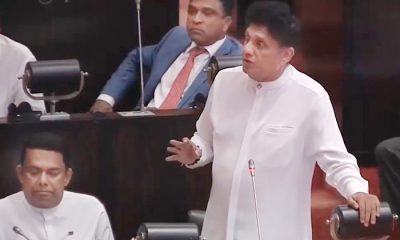
Sajith: Ashoka Chakra replaces Dharmachakra in Buddhism textbook
-

 Business2 days ago
Dialog and UnionPay International Join Forces to Elevate Sri Lanka’s Digital Payment Landscape
-

 Features2 days ago
The Paradox of Trump Power: Contested Authoritarian at Home, Uncontested Bully Abroad
-

 Features2 days ago
Subject:Whatever happened to (my) three million dollars?
-

 News2 days ago
Level I landslide early warnings issued to the Districts of Badulla, Kandy, Matale and Nuwara-Eliya extended
-

 News2 days ago
National Communication Programme for Child Health Promotion (SBCC) has been launched. – PM
-

 News2 days ago
65 withdrawn cases re-filed by Govt, PM tells Parliament
-

 Opinion4 days ago
The minstrel monk and Rafiki, the old mandrill in The Lion King – II