
Opinion
A journalist of courage and deep conviction


Robert Fisk (12 July 1946 – 30 October 2020) was a legendary journalist and author who penned down meticulously the sufferings of millions of people reporting not from secondary sources or keeping a safe distance from the theatres of the war but from the battle front, endangering his own life. He was attacked many times, once even with the possibility of losing his life.
by SUBRATA MUKHERJEE
During the period of the Cold War, North America and Europe never became war zones and the battle for ideological domination shifted to the non-European world primarily West Asia (Middle East) and Southeast Asia. This led to untold suffering for ordinary people in these areas. Whereas Southeast Asia has now settled for a relatively peaceful order, many regions of West Asia are still riven by strife and uncertainty.
Robert Fisk (12 July 1946 – 30 October 2020) was a legendary journalist and author who penned down meticulously the sufferings of millions of people reporting not from secondary sources or keeping a safe distance from the theatres of the war but from the battle front, endangering his own life. He was attacked many times, once even with the possibility of losing his life.
Fisk’s journalistic career began with covering the conflict in Northern Ireland as a London Times correspondent in 1972. His reports annoyed British authorities as it tilted towards the republicans. He earned in the process a massive following. Out of his reports he published a book The Point of No Return: The Strike which Broke the British in Ulster in 1975. In his Ph.D. thesis he explained the issues connected with Irish neutrality during the Second World War. Later on, he took up Irish citizenship.
He also had a stint in Portugal during the 1974 Carnation Revolution (April Revolution), which not only ended the authoritarian regime in Portugal but also led to the demise of Portuguese colonialism in Africa. But the most important evolution in his journalistic career was his appointment by The Times as its Middle East correspondent in 1976.
For the next forty-four years from Beirut where he witnessed fifteen years of Lebanese Civil War (1975-90), he reflected on the unfoldment of history in the region full of bloody conflicts, ethnic cleansing, wars, revolutions and uprisings. His parting of ways with The Times came in 1988, when he sent a report on the US warship Vincennes having shot down an Iranian civil airline. Fisk’s scoop was not published because by the time the report reached the newspaper editorial office the ownership of the newspaper had gone to media Mughal Robert Murdoch. He was also advised to take up more balanced reporting. Fisk switched to left-leaning British newspaper The Independent, where he spent the rest of his journalistic career (His contributions to both newspapers were re-published in The Statesman.)
As part of his journalistic requirements Fisk travelled extensively. That included Algeria, Libya, the Balkans and Turkey, strife torn homelands of Kurds and Afghanistan. What made his reporting different from other journalistic accounts was his understanding of both colonial and postcolonial history in comprehending contemporary conflicts in West Asia. He was trenchant in his criticism of the Western powers led by the USA and Israel as their policies and machinations had humiliated local people fuelling their anger.
Even when he was grievously injured after being attacked by Afghan refugees in Pakistan he wrote that this “brutality entirely the product of others, of us – of me who had armed their struggle against the Russians, and ignored their pain and laughed at their civil war and then armed and paid them again for the war for civilization” just a few miles away and then bowled their homes and ripped up their families and called them ‘collateral damage’.
In 1982, Fisk was amongst the few journalists to enter the Palestinian refugee camps in Sabra and Shatila where more than a thousand unarmed people were massacred by pro-Christian, Lebanese militia in the presence of Israeli armed personnel. He described this as a war crime. In 1993 in Sudan, he was the first Western journalist to interview Osama Bin Laden, whom he subsequently met twice. The title of his article was “Anti-Soviet Warrior puts his army on the road to peace”.
Laden in the first interview revealed that he was a construction engineer and an agriculturalist. But instead of taking the road of peace he became the most dreaded terrorist who successfully planned and meticulously executed the killing of 3,000 innocent people in the destruction of the Twin Towers in New York in 2001. Laden praised Fisk for his neutrality. The latter tried to remain neutral but severely condemned the brutal attack and also reminded the need to highlight and investigate the motivation of the attackers.
Fisk examined in detail the Israeli-Palestinian animosity, the US led invasion of Kuwait and Iraq and the US entry into Afghanistan. He was critical of the former as he pointed out that there were no weapons of mass destruction. The US bombing of Kosovo under NATO auspices and other involvements of the USA in the Middle East were examined critically by him. Though he was critical of the USA, he was a frequent visitor and popular speaker in the USA. He analysed war but despised it as he was a proclaimed pacifist.
Regarding being neutral as a journalist, Fisk had this to say “if you watch wars the old ideas of journalism that have to be neutral and take nobody’s side is rubbish. As a journalist you have got to be neutral and unbiased on the side of those who suffer”. His magnum opus The Great War for Civilization (2005) chronicled critically the relationship of former colonial powers with the ordinary people of Arabia. His journalistic outpouring was always controversial and divisive. Some even blamed him for self-promotion and for being biased.
The most serious controversy came up during the ongoing civil war in Syria. Fisk accompanied the Syrian army while fighting the Islamic State (ISIS) and Syrian independent militias. However, though he was critical and condemned the Syrian army’s atrocities before, he exonerated President Assad in 2018 for lack of evidence of using chemical weapons in Duma. A follow up book to the Great War for civilization would be published posthumously which would cover the period of US intervention in Iraq to present times.
Fisk was winner of many journalistic awards and is widely revered in the Arabian Peninsula. He was a critic like IF Stone. His journalistic accounts were not based on official briefing as these did not fully and properly reflect the actual situation. His account of the protracted civil war in Lebanon was published as Pity the Nation, a phrase that he borrowed from Khalil Gibran (18831931). He referred to reporting that was not based on first hand accounts as ‘Hotel Journalism’. He looked to journalism as search for truth and his enduring legacy is the dedication of his entire journalistic career to search for roots of conflicts and war.
(The Statesman/ANN)
The writer is a retired Professor of Political Science, University of Delhi


 On the occasion of the ninetieth anniversary of the Lanka Sama Samaja Party (LSSP), this article highlights the party’s positions on constitutional matters. When the LSSP was founded, it had two primary objectives: obtaining complete political independence for Sri Lanka and building a socialist society. The first of these was achieved in two stages. The LSSP directly contributed to achieving semi-independence in 1948 through its anti-imperialist struggle and full political independence in 1972. The second objective remains a distant goal.
Citizenship Act
In the very second year after independence, the D. S. Senanayake government acted to deny citizenship to the Hill-Country Tamil community and, consequently, deprived them of voting rights. In the 1947 election, many Hill-Country Tamils—who voted as British subjects—were inclined toward the Left, and especially toward the Sama Samaja Party. In that election, the Ceylon Indian Congress won seven seats, and with the support of plantation workers in areas where they were numerous, several left-wing candidates were also elected.
Seeing the long-term danger in this alliance, the Sri Lankan capitalist class ensured that the Citizenship Act defined the term “citizen” in a way that denied citizenship to hundreds of thousands of Hill-Country Tamil people. As a result, they also lost their voting rights. At that time, it was the Left, led by the Sama Samaja Party, that opposed this.
While the Tamil Congress, a coalition partner of the government at the time, voted in favour of the legislation, S.J.V. Chelvanayakam stated that the inability of Tamil leaders to protect their cousins—the Hill-Country Tamil community—showed that being a partner in a Colombo-based government brought no benefit to minority groups. He argued that the lesson to be learned was the need for self-government in the regions where they lived. Chelvanayakam’s founding of the Federal Party was one consequence of this process.
Although section 29 of the 1947 Constitution purported protection by providing that no law shall make persons of any community or religion liable to disabilities or restrictions to which persons of other communities or religions are not made liable, neither the Supreme Court of Ceylon nor the Privy Council in England, which was then the country’s highest appellate court, afforded any relief to the Hill-Country Tamil community.
Parity of Status for Sinhala and Tamil and the Ethnic Issue
When the UNP and the SLFP, both of which had previously agreed to grant equal status to the Sinhala and Tamil languages, reversed their positions in 1955 and supported making Sinhala the sole official language, the LSSP stood firmly by its policy of parity. Earlier, when a group of Buddhist monks met N. M. Perera and told him they were prepared to make him Prime Minister if he agreed to make Sinhala the only official language, he rejected the proposal. Had the country heeded Colvin R. de Silva’s famous warning— “One language, two countries; two languages, one country”—the separatist war might have been averted. Because the Left refused to be opportunistic, it lost public support.
During the 1956 debate on the Official Language Bill, Panadura LSSP MP Leslie Goonewardene warned: “The possibility of communal riots is not the only danger I am referring to. There is the graver danger of the division of the country; we must remember that the Northern and Eastern provinces of Ceylon are inhabited principally by Tamil-speaking people, and if those people feel that a grave, irreparable injustice is done to them, there is a possibility of their deciding even to break away from the rest of the country. In fact, there is already a section of political opinion among the Tamil-speaking people which is openly advocating the course of action.” It is an irony of history that Sinhala was designated the sole official language in 1956, yet in 1987, both languages were formally recognised as official.
1972 Republican Constitution
Colvin’s contribution to the making of the 1972 Republican Constitution, which severed Sri Lanka’s political ties with Britain, was immense. Preserving the parliamentary system, recognising fundamental rights, and incorporating directive principles of state policy that supported social justice were further achievements of that Constitution. It also had its weaknesses, and any effort to assign full responsibility for them to Colvin must also be addressed.
In the booklet that he wrote on the 1972 Constitution, he said the following regarding the place given to Buddhism: “I believe in a secular state. But you know, when Constitutions are made by Constituent Assemblies, they are not made by the Minister of Constitutional Affairs.” What he meant was that the final outcome reflected the balance of power within the Constituent Assembly. As a contributor to constitution drafting, this writer’s experience confirms that while drafters do have a role, the final outcome on controversial issues depends on the political forces involved and mirrors the resultant of those forces.
In fact, the original proposal approved by the Constituent Assembly was that Buddhism should be given its “rightful place” as the religion of the majority. However, the subcommittee on religion, chaired by Prime Minister Sirimavo Bandaranaike, changed this to “foremost place.” It is believed that her view was influenced by the fact that one of her ancestors had signed the 1815 Kandyan Convention, in which Buddhism was declared inviolable, and the British undertook to maintain and protect its rites, ministers, and places of worship.
As Dr Nihal Jayawickrama, a member of the committee that drafted the 1972 Constitution, has written, the original draft prepared by Colvin did not describe Sri Lanka as a unitary state. However, Minister Felix Dias Bandaranaike proposed that the country be declared a “unitary state”. Colvin’s view was that, while the proposed constitution would have a unitary structure, unitary constitutions could vary substantially in form and, therefore, flexibility should be allowed. Nevertheless, the proposed phrase found its way to the final draft. “In the course of time, this impetuous, ill-considered, wholly unnecessary embellishment has reached the proportions of a battle cry of individuals and groups who seek to achieve a homogenous Sinhalese state on this island”, Dr Jayawickrama observed.
Indeed, the failure of the 1972 Constitution to make both Sinhala and Tamil official languages was a defeat for the Left. Allowing the use of Tamil in the courts of the Northern and Eastern Provinces and granting the right to obtain Tamil translations in any court in the country were only small achievements.
Devolution
The original Tamil demand was for constitutionally guaranteed representation in the legislature. Given that, in the early stages, they showed greater willingness to share power at the centre than to pursue regional self-government, it is not surprising that the Left believed that ethnic harmony could be ensured through equality. After the conflict escalated, N. M. Perera, now convinced that regional autonomy was the answer to the conflict, wrote in a collection of essays published a few months before his death: “Unfortunately, by the time the pro-Sinhala leaders hobbled along, the young extremists had taken the lead in demanding a separate State. (…) What might have satisfied the Tamil community twenty years back cannot be adequate twenty years later. Other concessions along the lines of regional autonomy will have to be in the offing if healthy and harmonious relations are to be regained.”
After N. M.’s death, his followers continued to advance the proposal for regional self-government. At the All-Party Conference convened after the painful experiences of July 1983, Colvin declared that the ethnic question was “a problem of the Sri Lanka nation and state and not a problem of just this community or that community.” While reaffirming the LSSP’s position that Sri Lanka must remain a single country with a single state, he emphasised that with Tamils living in considerable numbers in a contiguous territory, the state as presently organised does not serve the purposes it should serve, especially in the field of equality of status in relation to the state, the nation and the government. The Left supported the Thirteenth Amendment in principle. More than 200 leftists, including Vijaya Kumaratunga, paid the price with their lives for doing so, 25 of whom were Samasamajists. The All-Party Representatives Committee appointed by President Mahinda Rajapaksa and chaired by LSSP Minister Tissa Vitharana, proposed extensive devolution of power within an undivided country.
Abolishing the Executive Presidency
It is unsurprising that N. M. Perera, who possessed exceptional knowledge of parliamentary procedure worldwide and was one of the finest parliamentarians, was a staunch defender of the parliamentary system. In his collection of essays on the 1978 Constitution, N. M. noted that the parliamentary form of government had worked for thirty years in Sri Lanka with a degree of success that had surprised many Western observers. Today, that book has become a handbook for advocates of abolishing the executive presidency. The Left has consistently and unwaveringly supported the abolition of the executive presidential system, and the Lanka Sama Samaja Party has contributed significantly to this effort.
The National People’s Power, in its presidential election manifesto, promised a new constitution that would abolish the executive presidency, devolve power to provinces, districts, and local authorities, and grant all communities a share in governance. However, there appears to be no preparation underway to fulfil these promises. It is the duty of the Left to press for their implementation.
In an article published in The Island on June 6 this year, to commemorate N. M. Perera’s 120th birth anniversary, the writer wrote: “The Left may be weaker and fragmented; nevertheless, the relevance and need for a Left alternative persist. If the LSSP can celebrate its 90th anniversary as a reunited party, that could pave the way for a stronger and united Left as well. Such a development would be the best way to honour NM and other pioneering leaders of the Left.” It is encouraging that some discussion on this matter has now emerged. Merely discussing the history of the LSSP and the Left is insufficient; action is required. It is the duty of leftists to disprove Bernard Soysa’s sarcastic remark, “left activists are good at fighting for the crown that does not exist.”
by (Dr) Jayampathy Wickramaratne,
President’s Counsel
Cyclone Ditwah:
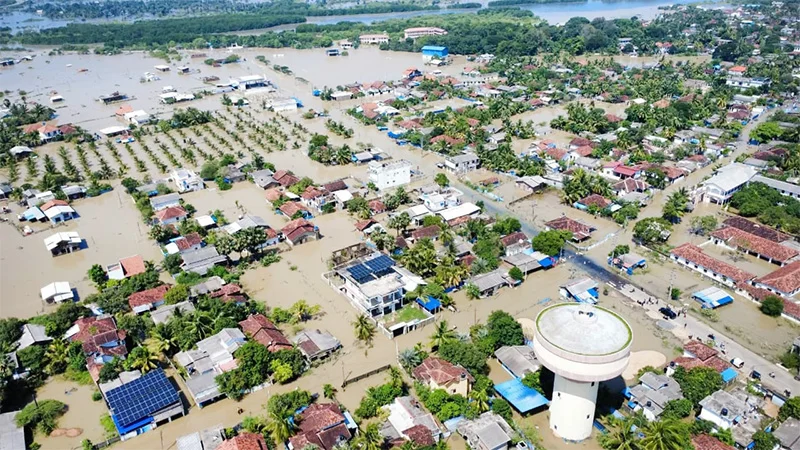
Cyclone Ditwah, which swept across Sri Lanka at the end of November, caused massive damage to the country, the extent of which need not be mentioned here, as all are aware of it by now. Heated arguments went on among many parties with regard to how this destruction could have been mitigated and who should take responsibility. Although there may have been shortcomings in several aspects of how we responded to Ditwah, this article highlights a critical area that urgently requires attention if we are to protect ourselves from similar hazards in the future.
As is common in many situations, it has once again showcased a concerning weakness in the country’s disaster-management cycle, the gap between issuing early warnings and the expected public response. The Meteorological Department, the Irrigation Department, the National Building Research Organization, and other authorities issued continuous warnings to evacuate well in advance of imminent threats of flooding, landslides, and water hazards. However, the level of preparedness and community reaction fell short, leading to far greater personal property damage, including loss of a few hundred lives.
Sri Lanka is not unfamiliar with natural disasters. One of the most devastating disasters in our history could be considered the 2004 Tsunami event, which resulted in over 35,000 deaths and over $1 billion in property damage in the coastal belt. After the event, the concepts of disaster management were introduced to the country, which we have been adhering to since then. Again in 2016, the country faced massive river flooding, especially in western and southern regions, and until recently experienced repeated floods and landslides due to rains caused by atmospheric disturbances, though less in scale. Each of these events paved the way for relevant authorities to discuss and take appropriate measures on institutional readiness, infrastructure resilience, and public awareness. Yet, Cyclone Ditwah has demonstrated that despite improvements in forecasting and communication, well supported by technological advancements, the translation of warnings into action remains critically weak.
The success of early-warning systems depends on how quickly and effectively the public and relevant institutions respond. In the case of Ditwah, the Department of Meteorology issued warnings several days beforehand, supported by regional cyclone forecasting of neighbouring countries. Other organisations previously mentioned circulated advisories with regard to expected flood risk and possible landslide threats on television, radio, and social media, with continuous updates. All the flood warnings were more than accurate, as low-lying areas were affected by floods with anticipated heights and times. Landslide risks, too, were well-informed for many areas on a larger spatial scale, presumably due to the practical difficulties of identifying such areas on a minor scale, given that micro-topography in hill country is susceptible to localised failures. Hence, the technical side of the early-warning system worked as it should have. However, it is pathetic that the response from the public did not align with the risk communicated in most areas.
In many affected areas, people may have underestimated the severity of the hazard based on their past experiences. In a country where weather hazards are common, some may have treated the warnings as routine messages they hear day by day. As all the warnings do not end up in severe outcomes, some may have disregarded them as futile. In the meantime, there can be yet another segment of the population that did not have adequate knowledge and guidance on what specific actions to take after receiving a warning. This could especially happen if the responsible authorities lack necessary preparedness plans. Whatever the case may be, lapses in response to early warnings magnified the cyclone’s impact.
Enforcing preventive actions by authorities has certain limitations. In some areas, even the police struggled to move people from vulnerable areas owing to community resistance. This could be partly due to a lack of temporary accommodation prepared in advance. In some cases, communities were reluctant to relocate due to concerns over safety, privacy, and the status quo. However, it should be noted that people living in low-lying areas of the Kelani River and Attanagalu Oya had ample time to evacuate with their valuable belongings.
Hazard warnings are technical outputs of various models. For them to be effective, the public must understand them, trust them, and take appropriate action as instructed. This requires continuous community engagement, education, and preparedness training. Sri Lanka must therefore take more actions on community-level disaster preparedness programs. A culture of preparedness is the need of the day, and schools, religious institutions, and community-based organisations can play an important role in making it a reality. Risk communication must be further simplified so that people can easily understand what they should do at different alert levels.
Cyclone Ditwah has left, giving us a strong message. Even an accurate weather forecast and associated hazard warnings cannot save lives or property unless the public responds appropriately. As it is beyond doubt that climate change intensifies the frequency and severity of extreme weather events, people in Sri Lanka have to consider preparedness as a routine part of life and respond to warnings promptly to mitigate damage from future disasters.
(The writer is a chartered Civil Engineer)
by Eng. Thushara Dissanayake

Here is what you can do!
Comedy and the ability to have a good laugh are what keep us sane. The good news to announce is that there are many British and American comedy shows posted up and available on the internet.
They will bring a few hours of welcome relief from our present doldrums.
Firstly, and in a class of its own, are the many Benny Hill shows. Benny is a British comedian who comes from a circus family, and was brought up in an atmosphere of circus clowning. Each show is carefully polished and rehearsed to get the comedy across and understood successfully. These clips have the most beautiful stage props and settings with suitable, amusing costumes. This is really good comedy for the mature, older viewer.
Benny Hill has produced shows that are “Master-Class” in quality adult entertainment. All his shows are good.
Then comes the “Not the Nine o’clock news” with Rowan Atkinson and his comedy team producing good entertainment suitable for all.
And then comes the “Two Ronnies” – Ronnie Barker and Ronnie Corbett, with their dry sense of humour and wit. Search and you will find other uplifting shows such as Dave Allen, with his monologues and humour.
All these shows have been broadcast in Britain over the last 50 years and are well worth viewing on the Internet.
Similarly, in The USA of America. There are some really great entertainment shows. And never forget Fats Waller in the film “Stormy Weather,” where he was the pianist in the unforgettable, epic, comedy song “Ain’t Misbehavin”. And then there is “Bewitched” with young and glamorous Samantha Stevens and her mother, Endora who can perform magic. It is amazing entertainment! This show, although from the 1970s was a milestone in US light entertainment, along with many more.
And do not overlook Charlie Chaplin and Laurel and Hardy, and all the Disney films. Donald Duck gives us a great wealth of simple comedy.
The US offers you a mountain of comedy and good humour on Youtube. All these shows await you, just by accessing the Internet! The internet channel, ‘You tube’ itself, comes from America! The Americans reach out to you with good, happy things right into your own living room!
Those few people with the ability to understand English have the key to a great- great storehouse of uplifting humour and entertainment. They are rich indeed!
Priyantha Hettige

FIFA World Cup 2026 winners’ prize money doubles to $50m

Winter storms worsen Gaza humanitarian crisis as UN says aid still blocked

Vice Chairman of the Standing Committee of the National People’s Congress of China meets Prime Minister Dr Harini Amarasuriya

Indra Traders (Pvt) Ltd contribute Rs. 100 million to the ‘Rebuilding Sri Lanka’ Fund

England have review reinstated after technology failure on Carey appeal

Showers above 75 mm are likely at some places in the Eastern, Uva and Central provinces and in Polonnaruwa district

‘Dates have the highest sugar content to fight Coronavirus’

Sunday Island 27 December – Headlines

#SundayIsland 17th December – Headlines

Sunday Island – 28th March

Sunday Island Headlines – 21 March

Sunday Island – 21st February – Headlines
-
 Business7 days ago
Cabinet approves establishment of two 50 MW wind power stations in Mullikulum, Mannar region
-

 Features4 days ago
Why Sri Lanka Still Has No Doppler Radar – and Who Should Be Held Accountable
-

 Features6 days ago
Ditwah: A Country Tested, A People United
-
 News6 days ago
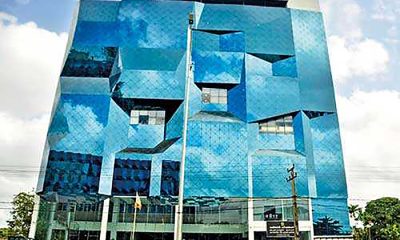
Rs 1. 3 bn yahapalana building deal under investigation
-
 News7 days ago
Cabinet approves the transfer of the constructions and land reserved for the Kiinniya University to the Ministry of Foreign Affairs, Foreign Employment, and Tourism
-

 Opinion6 days ago
Comfort for some, death for others: The reality of climate change
-

 Business6 days ago
Fluctuating fortunes for bourse in the wake of selling pressure
-
 News6 days ago
Former SAARC SG Esala Weerakoon calls for ‘South Asian Climate Compact’