
Opinion
A 6th Year Accolade: The eternal opulence of my fair lady


The 6th of December marked the sixth solar cycle since my adored life partner, Dr Malwattage Josephine Sarojini Perera (née Peeris), left this mortal world. Six years have elapsed; a period characterised by a searingly perpetual heartache. However, her inspiring influence is not diminished by the passage of time, and her memory has become more burnished and sublimely potent. It has transformed from a painful void into a sparkling, indestructible legacy that fortifies the hearts of all who were privileged to share her path.
The abyss left by her departure is multitudinous for all of us, including those who benefited from her professional dedication. Nevertheless, the consciousness of her magnificent journey, a spectacular 72 years, 2 months, and 11 days on this planet Earth, remains as a seamless record of a unique chronicle. It was the radiance of her inner spirit that rendered her truly peerless. She epitomised the beautiful words of one of my favourite Sri Lankan lady singers, “Beauty is how you feel inside; you glow from within.” Sarojini was a woman of monumental dignity and benevolence, whose serene, consistent luminosity brought a radiance into every room she entered. Her smile was a glorious spectacle of her lovely inner human nature; a pure expression of her soul’s integrity. That spectacularly radiant smile epitomised the immortal words of the beautiful song by Nat King Cole, “Smile though your heart is aching, smile even though it is breaking, when there are clouds in the sky, you will get by.“
Throughout her tenure on earth, she embodied the highest form of selfless service, dedicating her energies wholly to our family unit, her relatives, and all her acquaintances. She served her patients with an unreserved commitment, functioning as the very milieu of abiding reassurance for them. Her chosen field in medicine was one of profound challenges and pressing needs. She primarily worked ever so tirelessly with individuals afflicted and affected by Sexually transmitted Diseases, HIV and AIDS. They were a cohort frequently marginalised, ostracised, and terribly wounded by societal judgment. Yet, this extraordinary woman approached her work with limitless compassion and an intrinsic, deep-seated sense of humanitarian duty. She held an irrefutable conviction that beyond the stark finality of any medical diagnosis, there was a human being whose entitlement to honour, consideration, respect and warmth was absolute.
Sophocles wisely said: “One word frees us of all the weight and pain of life: That word is love.” Sarojini’s approach to life was built upon this very word ‘love’ as its foundation. She remained steadfastly true to her ethical moorings, never wavering in her commitment to assuage suffering and nurture genuine understanding. Her patients were not mere cases receiving clinical attention; they were embraced into a circle of care that extended beyond the confines of the clinic. Sarojini’s gentle disposition and empathetic spirit captivated all those who came seeking relief and comfort in her ministrations.
She extended not only medical expertise but also essential emotional ballast, serving as a critical beacon of optimism in times of the most profound darkness and utter despair. Her engagement was holistic; she saw the complete person, not just the disease. The philosopher Kahlil Gibran expressed a sentiment that describes the core values of her life: “You give but little when you give of your possessions. It is when you give of yourself that you truly give.” Her affection emanated as a gentle, regenerative anodyne, calming the distressed spirits of those sighing in overwhelming heartache. Her bequest in this vital domain of medicine is not merely a record of treatments, but a register of hearts healed and spirits uplifted by unconditional acceptance and love.
Beyond her professional life, Sarojini was the gravitational centre of our existence; a loving spouse, an undaunted mother, and a precious confidante. The habitat and the canvas of love we built together were a haven of affection and composure, a place where joy thrived, and the air was often vibrant with shared merriment. She cultivated her family with boundless tenderness, sowing and nurturing the essential precepts of benevolence, rectitude, and resilience within us. In return, we never made her cry, but sometimes she cried for others, and some made her cry too.
Her capacity for quiet strength was remarkable; she could maintain perfect equilibrium even when confronted with severe setbacks, always taking deliberate, measured steps to restore serenity and balance. Her affection is a vibrant force that persists in the deepest recesses of our hearts, a covenant that triumphantly surpasses the limitations of physical existence and the transience of life. The deep impact of her role as a matriarch cannot be overstated; she was the silent architect of our moral framework and emotional stability, and the queen of our hearts.
As we reflect on her exceptional life and the vast bounty of goodness she left behind, our determination is not to be subdued by the grief of her physical absence, but rather, to eulogise the radiant splendour of her time amongst us. It is a legacy beyond epithets and the true portrayal of the lilting music of remembrance. We feel the unremitting pain of missing her absolutely and profoundly. She may have transitioned from this worldly realm, but her vital essence remains inextricably bound to ours, steering us with her quiet wisdom and inspiring us with her incomparable dignity. Sarojini’s life stands as an eternal affidavit to the transformative power of enduring love, deep empathy, and sacrificial duty. It remains a boon that richly augments our present and illuminates our future. True beauty, as she demonstrated, is not simply what the eyes can witness, but, more crucially, what the soul can permanently safeguard. What we perceive visually is destined to fade, but the treasures we store within our hearts will remain eternally.
Many, including myself, our daughter Maneesha and our grandchildren, Joshua, Malaika and Jaydon, have endeavoured with every available adjective and hyperbolic utterance to paint a faithful portrait of the superlative person that was Sarojini. Yet, even if we were to compile tomes detailing her excellence, the effort would still fall short of creating a realistic depiction that truly captures her profile. It is simply impossible to confine a description of her magnificence to even a substantial plethora of words.
For my part, I had the wonderful pleasure of the company of that stunning lady for all those blessed years, from the dawn of our courtship in 1973 until her fateful day of final rest. Despite the finality of that separation, memories remain the ultimate constant. I will forever recall her life as an exquisite and enduring strand, a beautiful composition, that will never diminish and will reverberate throughout the balance of my time on this planet Earth.
Sarojini, your loved ones strive daily to revere your memory by actively embodying the virtues you demonstrated so effortlessly: boundless compassion, humane benevolence, unbridled affection, and an unwavering commitment to the welfare of others. This is a matter of seminal importance to us, as it is a pledge towards the continuity of the very matrix of your tapestry of life on Mother Earth.
Darling Sara, I will end with a couple of lines from the 1996 Quadruple Chart Topper, “Because You Loved Me” by Celine Dion, which very concisely sums up what you were to me: –
“You’ve been my inspiration.
Through the lies, you were the truth.
My world is a better place because of you.”
by Dr B. J. C. Perera
(This appreciation appeared in The Island online edition on 06 Dec. 2025)



It is with profound sadness that we received the shocking news of untimely passing of our dear leader Lakshman Balasuriya.
I first met Lakshman Balasuriya in 1988 while working at John Keells, which had been awarded an IT contract to computerise Senkadagala Finance. Thereafter, in 1992, I joined the E. W. Balasuriya Group of Companies and Senkadagala Finance when the organisation decided to bring its computerisation in-house.
Lakshman Balasuriya obtained his BSc from the University of London and his MSc from the University of Lancaster. He was not only intellectually brilliant, but also a highly practical and pragmatic individual, often sitting beside me to share instructions and ideas, which I would then translate directly into the software through code.
My first major assignment was to computerise the printing press. At the time, the systems in place were outdated, and modernisation was a challenging task. However, with the guidance, strong support, and decisive leadership of our boss, we were able to successfully transform the printing press into a modern, state-of-the-art operation.
He was a farsighted visionary who understood the value and impact of information technology well ahead of his time. He possessed a deep knowledge of the subject, which was rare during those early years. For instance, in the 1990s, Balasuriya engaged a Canadian consultant to conduct a cybersecurity audit—an extraordinary initiative at a time when cybersecurity was scarcely spoken of and far from mainstream.
During that period, Senkadagala Finance’s head office was based in Kandy, with no branch network. When the decision was made to open the first branch in Colombo, our IT team faced the challenge of adapting the software to support branch operations. It was him who proposed the innovative idea of creating logical branches—a concept well ahead of its time in IT thinking. This simple yet powerful idea enabled the company to expand rapidly, allowing branches to be added seamlessly to the system. Today, after many upgrades and continuous modernisation, Senkadagala Finance operates over 400 locations across the country with real-time online connectivity—a testament to his original vision.
In September 2013, we faced a critical challenge with a key system that required the development of an entirely new solution. A proof of concept was prepared and reviewed by Lakshman Balasuriya, who gave the green light to proceed. During the development phase, he remained deeply involved, offering ideas, insights, and constructive feedback. Within just four months, the system was successfully developed and went live—another example of his hands-on leadership and unwavering support for innovation.
These are only a few examples among many of the IT initiatives that were encouraged, supported, and championed by him. Information technology has played a pivotal role in the growth and success of the E. W. Balasuriya Group of Companies, including Senkadagala Finance PLC, and much of that credit goes to his foresight, trust, and leadership.
On a deeply personal note, I was not only a witness to, but also a recipient of, the kindness, humility, and humanity of Lakshman Balasuriya. There were occasions when I lost my temper and made unreasonable demands, yet he always responded with firmness tempered by gentleness. He never lost his own composure, nor did he ever harbour grudges. He had the rare ability to recognise people’s shortcomings and genuinely tried to guide them toward self-improvement.
He was not merely our boss. To many of us, he was like a father and a brother.
I will miss him immensely. His passing has left a void that can never be filled. Of all the people I have known in my life, Mr. Lakshman Balasuriya stands apart as one of the finest human beings.
He leaves behind his beloved wife, Janine, his children Amanthi and Keshav, and the four grandchildren.
May he rest in eternal peace!
Timothy De Silva
(Information Systems Officer at Senkadagala Finance.)

A remarkable increase in marriage proposals in newspapers and the thriving matchmaking outfits in major cities indicate the difficulty in finding the perfect partners. Academics have done much research in interpersonal attraction or love. There was an era when young people were heavily influenced by romantic fiction. They learned how opposites attract and absence makes the heart grow fonder. There was, of course, an old adage: Out of sight out of mind.
Some people find it difficult to fall in love or they simply do not believe in love. They usually go for arranged marriages. Some of them think that love begins after marriage. There is an on-going debate whether love marriages are better than arranged marriages or vice versa. However, modern psychologists have shed some light on the science of love. By understanding it you might be able to find the ideal life partner.
To start with, do not believe that opposites attract. It is purely a myth. If you wish to fall in love, look for someone like you. You may not find them 100 per cent similar to you, but chances are that you will meet someone who is somewhat similar to you. We usually prefer partners who have similar backgrounds, interests, values and beliefs because they validate our own.
Common trait
It is a common trait that we gravitate towards those who are like us physically. The resemblance of spouses has been studied by scientists more than 100 years ago. According to them, physical resemblance is a key factor in falling in love. For instance, if you are a tall person, you are unlikely to fall in love with a short person. Similarly, overweight young people are attracted to similar types. As in everything in life, there may be exceptions. You may have seen some tall men in love with short women.
If you are interested in someone, declare your love in words or gestures. Some people have strong feelings about others but they never make them known. If you fancy someone, make it known. If you remain silent you will miss a great opportunity forever. In fact if someone loves you, you will feel good about yourself. Such feelings will strengthen love. If someone flatters you, be nice to them. It may be the beginning of a great love affair.
Some people like Romeo and Juliet fall in love at first sight. It has been scientifically confirmed that the longer a pair of prospective partners lock eyes upon their first meeting they are very likely to remain lovers. They say eyes have it. If you cannot stay without seeing your partner, you are in love! Whenever you meet your lover, look at their eyes with dilated pupils. Enlarged pupils signal intense arousal.
Body language
If you wish to fall in love, learn something about body language. There are many books written on the subject. The knowledge of body language will help you to understand non-verbal communication easily. It is quite obvious that lovers do not express their love in so many words. Women usually will not say ‘I love you’ except in films. They express their love tacitly with a shy smile or preening their hair in the presence of their lovers.
Allan Pease, author of The Definitive Guide to Body Language says, “What really turn men on are female submission gestures which include exposing vulnerable areas such as the wrists or neck.” Leg twine was something Princess Diana was good at. It involves crossing the legs hooking the upper leg’s foot behind the lower leg’s ankle. She was an expert in the art of love. Men have their own ways. In order to look more dominant than their partners they engage in crotch display with their thumbs hooked in pockets. Michael Jackson always did it.
If you are looking for a partner, be a good-looking guy. Dress well and behave sensibly. If your dress is unclean or crumpled, nobody will take any notice of you. According to sociologists, men usually prefer women with long hair and proper hip measurements. Similarly, women prefer taller and older men because they look nice and can be trusted to raise a family.
Proximity rule
You do not have to travel long distances to find your ideal partner. He or she may be living in your neighbourhood or working at the same office. The proximity rule ensures repeated exposure. Lovers should meet regularly in order to enrich their love. On most occasions we marry a girl or boy living next door. Never compare your partner with your favourite film star. Beauty lies in the eyes of the beholder. Therefore be content with your partner’s physical appearance. Each individual is unique. Never look for another Cleopatra or Romeo. Sometimes you may find that your neighbour’s wife is more beautiful than yours. On such occasions turn to the Bible which says, “Thou shalt not covet thy neighbour’s wife.”
There are many plain Janes and penniless men in society. How are they going to find their partners? If they are warm people, sociable, wise and popular, they too can find partners easily. Partners in a marriage need not be highly educated, but they must be intelligent enough to face life’s problems. Osho compared love to a river always flowing. The very movement is the life of the river. Once it stops it becomes stagnant. Then it is no longer a river. The very word river shows a process, the very sound of it gives you the feeling of movement.
Although we view love as a science today, it has been treated as an art in the past. In fact Erich Fromm wrote The Art of Loving. Science or art, love is a terrific feeling.
karunaratners@gmail.com
By R.S. Karunaratne

Rethinking climate prediction, disasters, and plantation economics in Sri Lanka
For decades, Sri Lanka has interpreted climate through a narrow lens. Rainfall totals, sunshine hours, and surface temperatures dominate forecasts, policy briefings, and disaster warnings. These indicators once served an agrarian island reasonably well. But in an era of intensifying extremes—flash floods, sudden landslides, prolonged dry spells within “normal” monsoons—the question can no longer be avoided: are we measuring the climate correctly, or merely measuring what is easiest to observe?
Across the world, climate science has quietly moved beyond a purely local view of weather. Researchers increasingly recognise that Earth’s climate system is not sealed off from the rest of the universe. Solar activity, upper-atmospheric dynamics, ocean–atmosphere coupling, and geomagnetic disturbances all influence how energy moves through the climate system. These forces do not create rain or drought by themselves, but they shape how weather behaves—its timing, intensity, and spatial concentration.
Sri Lanka’s forecasting framework, however, remains largely grounded in twentieth-century assumptions. It asks how much rain will fall, where it will fall, and over how many days. What it rarely asks is whether the rainfall will arrive as steady saturation or violent cloudbursts; whether soils are already at failure thresholds; or whether larger atmospheric energy patterns are priming the region for extremes. As a result, disasters are repeatedly described as “unexpected,” even when the conditions that produced them were slowly assembling.
This blind spot matters because Sri Lanka is unusually sensitive to climate volatility. The island sits at a crossroads of monsoon systems, bordered by the Indian Ocean and shaped by steep central highlands resting on deeply weathered soils. Its landscapes—especially in plantation regions—have been altered over centuries, reducing natural buffers against hydrological shock. In such a setting, small shifts in atmospheric behaviour can trigger outsized consequences. A few hours of intense rain can undo what months of average rainfall statistics suggest is “normal.”
Nowhere are these consequences more visible than in commercial perennial plantation agriculture. Tea, rubber, coconut, and spice crops are not annual ventures; they are long-term biological investments. A tea bush destroyed by a landslide cannot be replaced in a season. A rubber stand weakened by prolonged waterlogging or drought stress may take years to recover, if it recovers at all. Climate shocks therefore ripple through plantation economics long after floodwaters recede or drought declarations end.
From an investment perspective, this volatility directly undermines key financial metrics. Return on Investment (ROI) becomes unstable as yields fluctuate and recovery costs rise. Benefit–Cost Ratios (BCR) deteriorate when expenditures on drainage, replanting, disease control, and labour increase faster than output. Most critically, Internal Rates of Return (IRR) decline as cash flows become irregular and back-loaded, discouraging long-term capital and raising the cost of financing. Plantation agriculture begins to look less like a stable productive sector and more like a high-risk gamble.
The economic consequences do not stop at balance sheets. Plantation systems are labour-intensive by nature, and when financial margins tighten, wage pressure is the first stress point. Living wage commitments become framed as “unaffordable,” workdays are lost during climate disruptions, and productivity-linked wage models collapse under erratic output. In effect, climate misprediction translates into wage instability, quietly eroding livelihoods without ever appearing in meteorological reports.
This is not an argument for abandoning traditional climate indicators. Rainfall and sunshine still matter. But they are no longer sufficient on their own. Climate today is a system, not a statistic. It is shaped by interactions between the Sun, the atmosphere, the oceans, the land, and the ways humans have modified all three. Ignoring these interactions does not make them disappear; it simply shifts their costs onto farmers, workers, investors, and the public purse.
Sri Lanka’s repeated cycle of surprise disasters, post-event compensation, and stalled reform suggests a deeper problem than bad luck. It points to an outdated model of climate intelligence. Until forecasting frameworks expand beyond local rainfall totals to incorporate broader atmospheric and oceanic drivers—and until those insights are translated into agricultural and economic planning—plantation regions will remain exposed, and wage debates will remain disconnected from their true root causes.
The future of Sri Lanka’s plantations, and the dignity of the workforce that sustains them, depends on a simple shift in perspective: from measuring weather, to understanding systems. Climate is no longer just what falls from the sky. It is what moves through the universe, settles into soils, shapes returns on investment, and ultimately determines whether growth is shared or fragile.
The Way Forward
Sustaining plantation agriculture under today’s climate volatility demands an urgent policy reset. The government must mandate real-world investment appraisals—NPV, IRR, and BCR—through crop research institutes, replacing outdated historical assumptions with current climate, cost, and risk realities. Satellite-based, farm-specific real-time weather stations should be rapidly deployed across plantation regions and integrated with a central server at the Department of Meteorology, enabling precision forecasting, early warnings, and estate-level decision support. Globally proven-to-fail monocropping systems must be phased out through a time-bound transition, replacing them with diversified, mixed-root systems that combine deep-rooted and shallow-rooted species, improving soil structure, water buffering, slope stability, and resilience against prolonged droughts and extreme rainfall.
In parallel, a national plantation insurance framework, linked to green and climate-finance institutions and regulated by the Insurance Regulatory Commission, is essential to protect small and medium perennial growers from systemic climate risk. A Virtual Plantation Bank must be operationalized without delay to finance climate-resilient plantation designs, agroforestry transitions, and productivity gains aligned with national yield targets. The state should set minimum yield and profit benchmarks per hectare, formally recognize 10–50 acre growers as Proprietary Planters, and enable scale through long-term (up to 99-year) leases where state lands are sub-leased to proven operators. Finally, achieving a 4% GDP contribution from plantations requires making modern HRM practices mandatory across the sector, replacing outdated labour systems with people-centric, productivity-linked models that attract, retain, and fairly reward a skilled workforce—because sustainable competitive advantage begins with the right people.
by Dammike Kobbekaduwe
(www.vivonta.lk & www.planters.lk ✍️

India look to cap off successful year with clean sweep over Sri Lanka

Nepal to scrap ‘failed’ Mount Everest waste deposit scheme

Trump hopes to reach phase two of Gaza ceasefire ‘very quickly’

Bangladesh’s first female prime minister Khaleda Zia dies aged 80

Ukraine denies drone attack on Putin’s residence

Showers expected at times in the Northern, Eastern, Central, North-central and Uva provinces

‘Dates have the highest sugar content to fight Coronavirus’

Sunday Island 27 December – Headlines

#SundayIsland 17th December – Headlines

Sunday Island – 28th March

Sunday Island Headlines – 21 March

Sunday Island – 21st February – Headlines
-

 News5 days ago
British MP calls on Foreign Secretary to expand sanction package against ‘Sri Lankan war criminals’
-
 News4 days ago
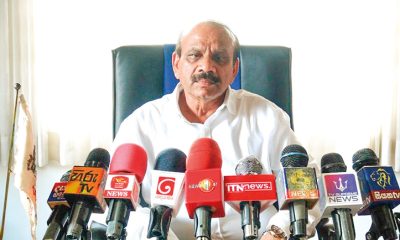
Street vendors banned from Kandy City
-

 Sports5 days ago
Chief selector’s remarks disappointing says Mickey Arthur
-

 News6 days ago
Sri Lanka’s coastline faces unfolding catastrophe: Expert
-

 Opinion5 days ago
Disasters do not destroy nations; the refusal to change does
-

 News4 days ago
Lankan aircrew fly daring UN Medevac in hostile conditions in Africa
-

 Midweek Review6 days ago
Year ends with the NPP govt. on the back foot
-

 Sports6 days ago
Life after the armband for Asalanka