
News
“50% of ITAK supports common Tamil presidential candidate”


By Saman Indrajith
Fifty percent of Ilankai Tamil Arasu Kachchi (ITAK) will support the Tamil common presidential candidate, Gurusuwamy Surenthiran, Media Spokesman, Tamil National Common Structure and Tamil Eelam Liberation Organisation (TELO) said during a televised interview recently.
Surenthiran said that they understand their candidate, P. Ariyanethran, will not be the winning presidential candidate but this is a great opportunity to demonstrate the electoral power of the Tamil people. He said C.V. Vigneswaran’s Tamil People’s Alliance, Selvam Adaikkalanathan’s Tamil Eelam Liberation Organisation (TELO), D. Siddharthan’s People’s Liberation Organisation of Tamil Eelam (PLOTE), Suresh Premachandran’s Eelam People’s Revolutionary Liberation Front (EPRLF), Democratic Crusaders party and former MP Srikantha’s Tamil National Party, supported the common candidate.
There were about 593,000 votes in the Jaffna District, about 306,000 votes in Vanni District, and about 900,000 votes in the Northern Province, he said. In the East there were about 1.3 million votes, he added.
“Altogether there are 2.2 million Tamil speaking voters,” he said.
Surenthiran said that while they intended to contest the 21 September presidential election, they were also open for supporting a main candidate who would agree to implement a political solution to the problems faced by the Tamils.
“In the coming weeks, we will show our strength and then negotiate. There are 2.2 million Tamil speaking voters in the North and East and everyone knows how important these votes are in a tight presidential election,” Surenthiran said.
“There are four main candidates in the coming presidential election, and this is the most competitive presidential elections in Sri Lankan history,” he said. Perhaps the winner would scrape through and all leading candidates needed the support of the Tamils in the North, he said.
He said that while Tamils had been demanding a common candidate, some sections of the ITAK, including MP M.A. Sumanthiran were opposed to the idea.
Sumanthiran has even declared that they would take disciplinary action against Ariyanethran, who is an ITAK member. Surenthiran said.
“We have not fielded a candidate to win the presidential election. We want to highlight the fact that the problems of the Tamils have not been addressed by successive governments. In the past, main candidates visited the north and east, acknowledged that the Tamils had a political problem, and promised to solve it but they reneged on their promises. We have voted for Sarath Fonseka, Maithripala Sirisena and Sajith Premadasa. The living standards of the north and east have not improved at all,” he said.
Fifteen years had elapsed since the conclusion of the war, but there was not a single factory in the north, he said. In 2022, the contribution of the Northern Province to the GDP had been 4.1 percent. The east contributed 5.2 percent that year, he said.

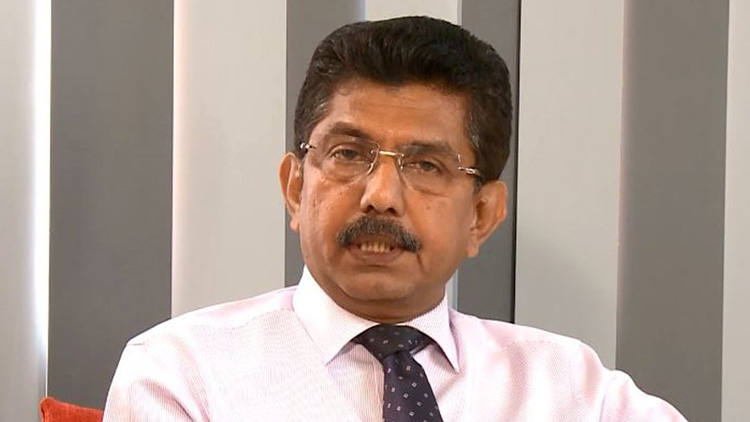
Health Secretary Dr. Anil Jasingha has requested IGP Priyantha Weerasooriya to ensure his security and take action against those issuing death threats.
Dr. Jasingha, in a letter to the IGP, has alleged that a health official who has been suspended from service is using several persons to issue such threats. The Health Secretary has specifically referred to a statement made by civil society activist Asela Sampath on a social media platform to the effect that he should procure a bullet proof vehicle.
The Island learns that the Health Secretary has sought the IGP’s intervention before the Health Service Committee (HSC) of the Public Service Commission (PSC) interdicted Dr. Bellana.

Among numerous other schemes, under its High Impact Community Development Projects (HICDPs) framework in Sri Lanka, the government of India (GoI) has been extending financial assistance to three housing-sector projects: Gram Shakthi Northern, Gram Shakthi Southern I and Gram Shakthi Southern II, under Memoranda of Understanding (MoUs) signed in October 2017 and October 2018, the IHC said.
Text of the IHC statement: ” Under the provisions of the MoUs, GoI was releasing SLR 500,000 to low-income families selected by the Government of Sri Lanka (GoSL) for construction of houses under the owner-driven model in the Northern and Southern provinces. Due to price escalations in the wake of the Covid-19 pandemic, and its aftermath, as well as the economic challenges that arose in Sri Lanka in 2022, the projects’ beneficiaries found it difficult to complete the construction of their houses within the allocated assistance. Accordingly, based on request from GoSL, GoI agreed to double the financial support per house to SLR 1,000,000.
Diplomatic Letters to effect the revised assistance were exchanged by High Commissioner Santosh Jha and Secretary, Ministry of Housing Construction and Water Supply Eng. L.B. Kumudu Lal at a ceremony held at the High Commission of India on 30 December 2025. Over 1550 families will be benefitted by the revised assistance under the three projects.
‘Housing’ figures prominently among the numerous sectors in which people-centric development cooperation initiatives of India are bringing a positive impact in the everyday lives of the people of Sri Lanka. Close to 50,000 houses have been constructed and handed over under the flagship Indian Housing Project in the Northern and Eastern provinces and plantation regions of Sri Lanka. Construction of another 10,000 houses is underway as part of Phase IV of the project. Besides thethree Gram Shakthi projects to which financial support was revised upwards on 30 December, India is also implementing other HICDPs in the sector in Sri Lanka. These include the island-wide Model Village Project covering housing facilities for 24 low-income families in each of the 25 districts of the country; transit houses for pilgrims visiting the Madhu Shrine near Mannar; and the recently completed Ven. Shobhita Nahimigama project in Anuradhapura. Assistance to support construction of fully and partially damaged houses is also proposed under the USD 450 million reconstruction and recovery package for Sri Lanka announced by GoI in the wake of Cyclone Ditwah.”

The Bar Association of Sri Lanka (BASL) has protested against the way the NPP/JVP government promoted judicial officers (magistrates, district judges), judges of the High Court and the Court of Appeal.
The BASL, in a letter dated 29 December, 2025, to President Anura Kumara Dissanayake, with copies to the Chairman and members of the Constitutional Council, Chief Justice, Justice Minister and Secretary Judicial Service Commission, has emphasised that promotions must continue to be made on the basis of seniority unless a specific demerit in respect of a particular judge or some other compelling circumstances.
The following is the text of the BASL letter:
“The Bar Association of Sri Lanka (BASL) wishes to draw Your Excellency’s attention to the process of promotions of Judicial Officers, Judges of the High Court and the Court of Appeal in our country.
Traditionally, promotions within the Judiciary have been granted on the basis of seniority. In the recent past however, there have been occasions where this principle has been departed from.
If seniority has been overlooked on the basis of merit, it is observed, presently there are no clear or established guidelines governing the assessment of merit in granting such promotions in the Judiciary. This absence of transparent criteria risks undermining the fairness and consistency of the process.
The BASL emphasizes the importance of a transparent and fair system in the granting of promotions and appointments in the Judiciary. Such a system is vital to maintaining public confidence in the Judiciary and ensuring that the administration of justice remains impartial and credible.
It is the considered view of the BASL that promotions must continue to be made on the basis of seniority, in keeping with the longstanding practice, until such time there are objective and defensible guidelines governing the assessment of merit.
Accordingly, Seniority may only be disregarded where there exists a specific and recognized demerit in respect of the particular Judge concerned or such other known compelling circumstances that are objectively identifiable. This approach will safeguard both the integrity of the Judiciary and the trust reposed in it by the public.
Accordingly, the BASL respectfully requests Your Excellency to take these considerations into account when deciding upon future promotions in the Judiciary.”

Health Secy. alleges death threats, seeks police protection

India doubles financial commitment to housing projects in Sri Lanka

BASL protests against NPP/JVP-style promotions to judicial officers

Trace all missing firearms

US’ drastic aid cut to UN poses moral challenge to world

New tourist arrivals record signals recovery

‘Dates have the highest sugar content to fight Coronavirus’

Sunday Island 27 December – Headlines

#SundayIsland 17th December – Headlines

Sunday Island – 28th March

Sunday Island Headlines – 21 March

Sunday Island – 21st February – Headlines
-
 News6 days ago
Street vendors banned from Kandy City
-

 Sports3 days ago
Gurusinha’s Boxing Day hundred celebrated in Melbourne
-

 News6 days ago
Lankan aircrew fly daring UN Medevac in hostile conditions in Africa
-
 News24 hours ago
Leading the Nation’s Connectivity Recovery Amid Unprecedented Challenges
-

 Sports4 days ago
Time to close the Dickwella chapter
-

 Features6 days ago
Rethinking post-disaster urban planning: Lessons from Peradeniya
-

 Opinion6 days ago
Are we reading the sky wrong?
-

 Features2 days ago
It’s all over for Maxi Rozairo