
Life style
From ‘nobody’s child’ to somebody’s child

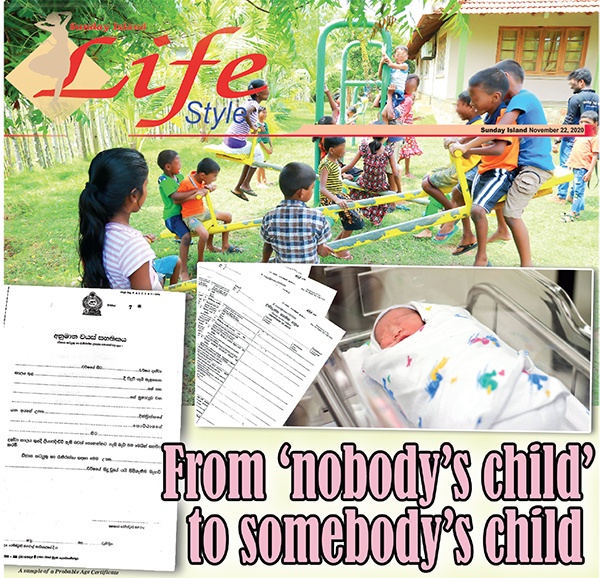
‘The Probable Age Certificate’ (PAC) issued to children without a birth certificate for lack of key information required for its issue often means discrimination and social stigma despite the PAC’s legal validity. In a bid to renew discussion on this social dilemma and find more socially acceptable alternatives at policy-making level, we spoke to multiple stakeholders including those who had left care homes and have been at the receiving end of the consequences.
by Randima Attygalle
Dhanushka Kumara Jayaratne was rejected by several leading schools when seeking Grade One admission on the grounds of his holding a ‘Probable Age Certificate’ as opposed to a Birth Certificate. When he was finally admitted to a school, he was shut out of cultural events and sport competitions at various levels on the basis that he had no ‘proper birth certificate’. When applying for his national identity card and travel visas on several occasions, bottlenecks were many. One of the main problems was that the probable age certificate (PAC) did not specify any guardian in the absence of names of parents.
 Today a 31-year-old executive, Dhanushka gives leadership to the ‘Generation Never Give up Network’ (GNGN), an initiative of the SOS Children’s Villages, Sri Lanka which advocates the causes of care leavers (children leaving child care institutions at 18 years). Lobbying for a more socially acceptable form of a birth certificate in place of the PAC is one of the top priorities of this collective.
“PAC often leads to discrimination and stigmatization due to its format,” observes this young man pushing for a more ‘dignified’ birth certificate with ‘better terminology’ and provisions for ‘guardians’ that could either be an individual or a child care institute. “The issue was taken up by the Parliamentary Sectoral Oversight Committee on Women and Children a couple of years ago and was discussed for a while but unfortunately no solution was tabled,” notes Danushka who hopes to renew the dialogue among relevant partners through the GNGN initiative.
“The probable age certificate of mine is nothing but a piece of paper with some dotted lines claiming that I was born within such a time frame. It is very humiliating to produce this piece of paper for government exams, employment etc,” says Nirmala Niroshini. Recollecting the emotionally traumatizing moments when she was viewed almost as an ‘abnormal’ individual on the basis of her PAC, Nirmala urges the authorities to revise its present format and enable a more acceptable document. She also proposes that an endorsement on the PAC by the Registrar General’s Department to make it as good as a normal birth certificate for official purposes. “It was an uphill task for me to get my NIC. I had to submit so many supporting documents verifying the legality of my PAC to convince the authorities. Finding employment was another battle,” says Nirmala, who is today employed as a clerical staffer at a dental clinic.
Current regulations
The Registrar General’s Department makes provisions to obtain a PAC for children who are in homes approved by the government, children who are not in such homes and even adults. Statistics on the exact number of children presently holding PACs in the country however remain unclear.
The PAC is issued to individuals (children as well as adults) who cannot be granted a ‘birth certificate’ due to lack of key information required for the latter. “This includes the absence of an exact date of birth or even the mother’s name. To issue a birth certificate, an informant is required and if the informant (who is often an authority from a child care institute in case of children under 14 years) cannot furnish the information required, providing a birth certificate would become difficult,” admits the Senior Deputy Registrar General G.A.L.D. Ganepola.
The Establishment Code and the Public Administration Circular 26/1995 provide for the acceptance of the PAC. The Public Administration Circular 26/1995 states that PAC ‘is acceptable for the purpose of confirmation of name and date of birth of persons.’
“Probable age certificate is a legitimate legal document which should be accepted by all agencies although in reality it doesn’t happen largely due to ignorance of the regulations,” notes Ganepola. Increased public awareness on this matter with wide media coverage is necessary for this, says the official. A unique ID number at birth is another alternative proposed by the Senior Deputy Registrar General which could be used for all administrative purposes including school admission, admission into children’s homes etc.
Social stigma
Despite the law recognizing all individuals to be treated equally regardless of any complications pertaining to their birth, children with the PAC are discriminated and stigmatized from all directions in society when they sit for government exams, apply for jobs, universitiy admission, competitive sports and government benefits, says Divakar Ratnadurai, National Director, SOS Children’s Villages Sri Lanka.
Out of 900 children currently living in SOS villages, around 300 have PACs. Also, many who have left the homes are similarly burdened. Lobbying for the reintroduction of the Extract (a shorter version of the birth certificate) with certain modifications enabling practical options where the required information is not available is a possible solution says Ratnadurai. This Extract which was once available was discontinued in the 1970s.
Constraints in obtaining basic information of destitute children is another bottleneck which has led to certain children receiving the PAC instead of a birth certificate, he points out. “Sometimes children are enrolled in care homes without basic information and care givers are faced with difficulties searching for this information.”
Ratnadurai proposes several measures to raise awareness among multiple stakeholders including school authorities to eliminate discrimination. Establishing a special unit in the Department of Probation and Child Care Services to provide continuous awareness on the PAC; lobbying policy makers and administrators for the ‘Extract’ to be given legal recognition etc. are among the correctional proposals made to make life easier for those carrying this burden.
Sensitizing stakeholders
Proposing a probable ‘birth’ certificate replacing the present probable age certificate, Commissioner, Department of Probation and Child Care Services, Chandima Sigera calls for sensitizing the stakeholders at every level including education authorities, other government officials, private sector and the community at large on this issue. In the best interest of children moving for a more socially acceptable form of identity which wouild eliminate dicrimination is urgent says the Commissioner who alludes to the fundamental rights of ‘non discrimination’ and and ‘best interest’ of children upheld in the United Nations Convention on the Rights of the Child.
Determining the age of a child
The current regulations require for a medical certificate estimating the age of the child (probable age) to be submitted to the Registrar General’s Department to obtain a probable age certificate. This is issued by a JMO who collaborates with other specialists.
“In estimating the age of a child, factors such as development of teeth and bones are taken into account. If there is any other medical evidence such as a diagnosis card, we take it into consideration as well,” explains the Consultant JMO, Dr. Uthpala Attygalle. Once the probable time frame of birth is established, the applicant’s date of birth is recorded either as January 1 or July 1, depending on each case.
A vicious cycle
Care leavers sadly become victims of a vicious cycle points out Prabodhini Munasinghe Wickrematunga, Attorney-at-Law with special interest in gender issues. “When women are unable to care for them, children are abandoned. Often the mother is unable to reveal the identity of the father because the pregnancy is a result of rape, sometimes by a relative.
Most employers know nothing about PACs making it difficult for their holders to find decent work and sometimes out of sheer desperation are driven to prostitution. This vulnerability exposes them to risks both in terms of health and security.
Uncertain identity arising as a result of not having a birth certificate which is regarded as an essential document can lead to many negative emotions, explains Dr. Neil Fernando, Consultant Psychiatrist and Senior Lecturer from the Kotelawala Defence University. “Uncertainty frequently brings with it unpredictability which reduces the mental well being and frequently acts as a stress factor. Long term stress is a predisposing factor in causing many non-communicable diseases which include heart disease and diabetes,” he said. Feelings of alienation from the community can lead to social isolation and depression, he added.


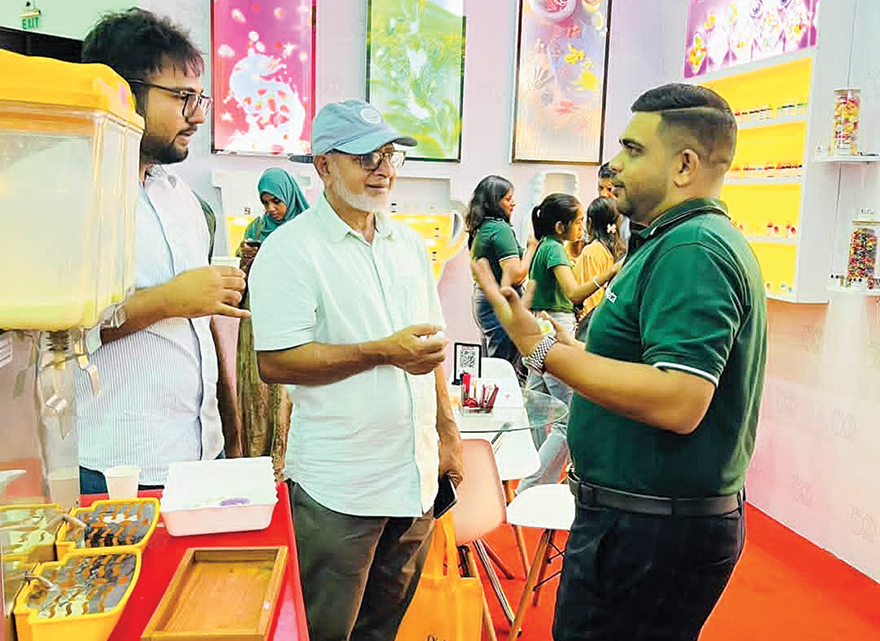
Salman Faiz has turned his family legacy into a modern sensory empire. Educated in London, he returned to Sri Lanka with a global perspective and a refined vision, transforming the family legacy into a modern sensory powerhouse blending flavours,colours and fragrances to craft immersive sensory experiences from elegant fine fragrances to natural essential oils and offering brand offerings in Sri Lanka. Growing up in a world perfumed with possibility, Aromatic Laboratories (Pvt) Limited founded by his father he has immersed himself from an early age in the delicate alchemy of fragrances, flavours and essential oils.
 Salman Faiz did not step into Aromatic Laboratories Pvt Limited, he stepped into a world already alive with fragrance, precision and quiet ambition. Long before he became the Chairman of this large enterprise, founded by his father M. A. Faiz and uncle M.R. Mansoor his inheritance was being shaped in laboratories perfumed with possibility and in conversations that stretched from Colombo to outside the shores of Sri Lanka, where his father forged early international ties, with the world of fine fragrance.
Growing up amidst raw materials sourced from the world’s most respected fragrance houses, Salman Faiz absorbed the discipline of formulation and the poetry of aroma almost by instinct. When Salman stepped into the role of Chairman, he expanded the company’s scope from a trusted supplier into a fully integrated sensory solution provider. The scope of operations included manufacturing of flavours, fragrances, food colours and ingredients, essential oils and bespoke formulations including cosmetic ingredients. They are also leading supplier of premium fragrances for the cosmetic,personal care and wellness sectors Soon the business boomed, and the company strengthened its international sourcing, introduced contemporary product lines and extended its footprint beyond Sri Lanka’s borders.

Where raw materials transform into refined fragrance

Salman Faiz -carrying forward a legacy
Today, Aromatic Laboratories stands as a rare example of a second generation. Sri Lankan enterprise that has retained its soul while embracing scale and sophistication. Under Salman Faiz’s leadership, the company continues to honour his father’s founding philosophy that every scent and flavour carries a memory, or story,and a human touch. He imbibed his father’s policy that success was measured not by profit alone but the care taken in creation, the relationships matured with suppliers and the trust earned by clients.
“We are one of the leading companies manufacturing fragrances, dealing with imports,exports in Sri Lanka. We customise fragrances to suit specific applications. We also source our raw materials from leading French company Roberte’t in Grasse
Following his father, for Salman even in moments of challenge, he insisted on grace over haste, quality over conveniences and long term vision over immediate reward under Salman Faiz’s stewardship the business has evolved from a trusted family enterprise into a modern sensory powerhouse.
Now the company exports globally to France, Germany, the UK, the UAE, the Maldives and collaborates with several international perfumes and introduces contemporary products that reflect both sophistication and tradition.
We are one of the leading companies. We are one of the leading companies manufacturing fine and industrial fragrance in Sri Lanka. We customise fragrances to suit specific applications said Faiz
‘We also source our raw materials from renowned companies, in Germany, France, Dubai,Germany and many others.Our connection with Robertet, a leading French parfume House in Grasse, France runs deep, my father has been working closely with the iconic French company for years, laying the foundation for the partnership, We continue even today says Faiz”
Today this business stands as a rare example of second generation Sri Lankan entrepreneurship that retains its souls while embracing scale and modernity. Every aroma, every colour and every flavour is imbued with the care, discipline, and vision passed down from father to son – a living legacy perfected under Salmon Faiz’s guidance.
By Zanita Careem
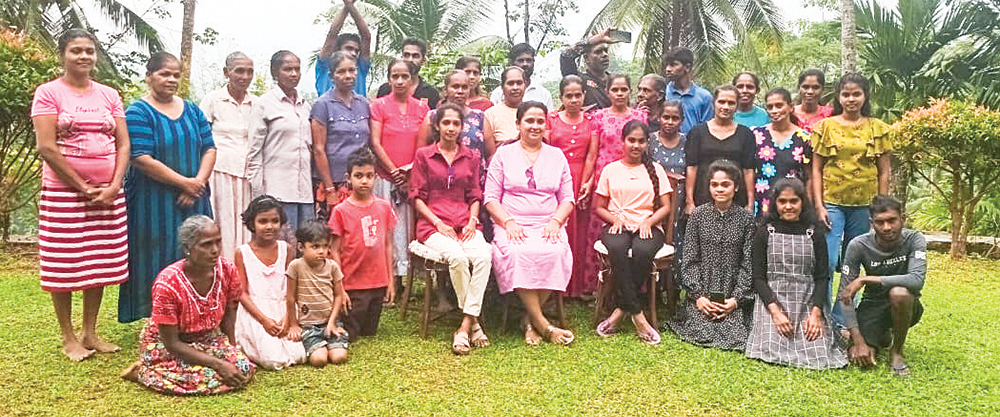
Harini and Chanaka cultivating change
When Harini and Chanaka Mallikarachchi returned to Sri Lanka after more than ten years in the United States, it wasn’t nostalgia alone that they brought home . It was purpose.Beneath the polished resumes and strong computer science backgrounds lay something far more personal- longing to reconnect with the land, and to give back to the country that shaped their memories. From that quiet but powerful decision was born Agri Vision not just an agricultural venture but a community driven movement grounded in sustainability ,empowerment and heritage. They transform agriculture through a software product developed by Avya Technologies (Pvt Limited) Combining global expertise with a deep love for their homeland, they created a pioneering platform that empowers local farmers and introduce innovative, sustainable solutions to the country’s agri sector.
After living for many years building lives and careers in theUnited States, Harini and Chanaka felt a powerful pull back to their roots. With impressive careers in the computer and IT sector, gaining global experience and expertise yet, despite their success abroad, their hearts remained tied to Sri Lanka – connection that inspired their return where they now channel their technological know-how to advance local agriculture.
For Harini and Chanaka, the visionaries behind Agri Vision are redefining sustainable agriculture in Sri Lanka. With a passion for innovation and community impact, they have built Agri Vision into a hub for advanced agri solutions, blending global expertise with local insight.
In Sri Lanka’s evolving agricultural landscape, where sustainability and authenticity are no longer optional but essential. Harini and Chanaka are shaping a vision that is both rooted and forward looking. In the heart of Lanka’s countryside, Uruwela estate Harini and Chanaka alongside the ever inspiring sister Malathi, the trio drives Agri Vision an initiative that fuses cutting edge technology with age old agricultural wisdom. At the core of their agri philosophy lies two carefully nurtured brands artisan tea and pure cinnamon, each reflecting a commitment to quality, heritage and people.
Armed with global exposure and professional backgrounds in the technology sector,they chose to channel thier experiences into agriculture, believing that true progress begins at home.
-
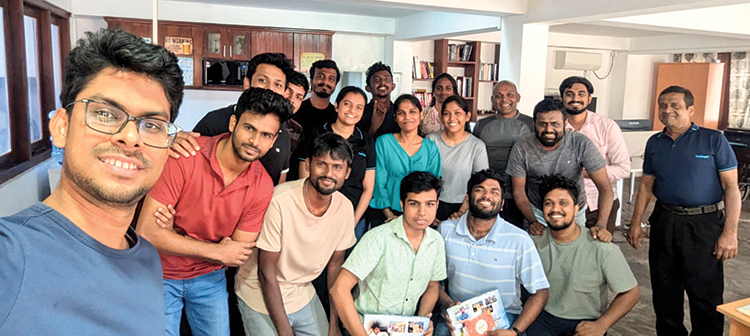
- Avya Technologies (Pvt) ltd software company that developed Agri Vision
-

- Chanaka,Harini and Shakya Mallikarachchi and Malathi Malathi dias (middle)
But the story of Agri Vision is as much about relationships as it is about technology. Harini with her sharp analytical mind, ensures the operations runs seamlessly Chanaka, the strategist looks outward, connecting Agri Vision to globally best practices and Malathi is their wind behind the wings, ensures every project maintains a personal community focussed ethos. They cultivate hope, opportunity and a blueprint for a future where agriculture serves both the land and the people who depend on it .
For the trio, agriculture is not merely about cultivation, it is about connection. It is about understanding the rhythm of the land, respecting generations of farming knowledge, and that growth is shared by the communities that sustain it. This belief forms the backbone of Agro’s vision, one that places communities not only on the periphery, but at the very heart of every endeavour.
Artisan tea is a celebration of craft and origin sourced from selected growing regions and produced with meticulous attention to detail, the tea embodier purity, traceability and refinement, each leaf is carefully handled to preserve character and flavour, reflecting Sri Lanka’s enduring legacy as a world class tea origin while appealing to a new generation of conscious consumers complementing this is pure Cinnamon, a tribute to authentic Ceylon, Cinnamon. In a market saturated with substitutes, Agri vision’s commitment to genuine sourcing and ethical processing stands firm.
By working closely with cinnamon growers and adhering to traditional harvesting methods, the brands safeguards both quality and cultural heritage.
What truly distinguishes Harini and Chanake’s Agri Vision is their community approach. By building long term partnerships with smallholders. Farmers, the company ensures fair practises, skill development and sustainable livelihoods, These relationships foster trust and resilience, creating an ecosystem where farmers are valued stakeholders in the journey, not just suppliers.
Agri vision integrates sustainable practices and global quality standards without compromising authenticity. This harmony allows Artisan Tea and Pure Cinnamon to resonate beyond borders, carrying with them stories of land, people and purpose.
As the brands continue to grow Harini and Chanaka remain anchored in their founding belief that success of agriculture is by the strength of the communities nurtured along the way. In every leaf of tea and every quill of cinnamon lies a simple yet powerful vision – Agriculture with communities at heart.
By Zanita Careem
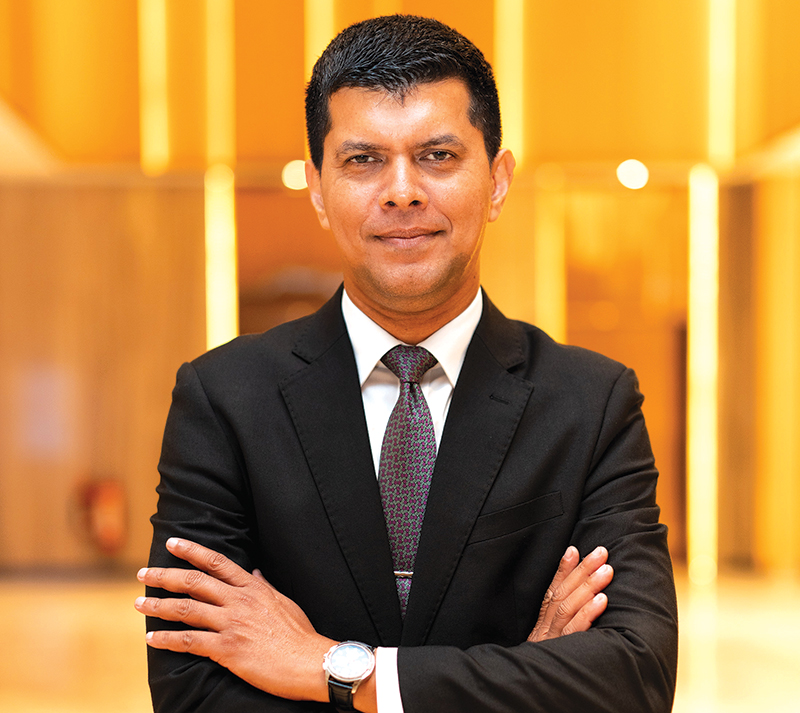
Courtyard by Marriott Colombo has welcomed Suranga Peelikumbura as its new General Manager, ushering in a chapter defined by vision, warmth, and global sophistication.
Suranga’s story is one of both breadth and depth. Over two decades, he has carried the Marriott spirit across continents, from the shimmering luxury of The Ritz-Carlton in Doha to the refined hospitality of Ireland, and most recently to the helm of Resplendent Ceylon as Vice President of Operations. His journey reflects not only international mastery but also a devotion to Sri Lanka’s own hospitality narrative.
What distinguishes Suranga is not simply his credentials but the philosophy that guides him. “Relationships come first, whether with our associates, guests, partners, or vendors. Business may follow, but it is the strength of these connections that defines us.” It is this belief, rooted in both global perspective and local heart, that now shapes his leadership at Courtyard Colombo.
At a recent gathering of corporate leaders, travel partners, and media friends, Suranga paid tribute to outgoing General Manager Elton Hurtis, hon oring his vision and the opportunities he created for associates to flourish across the Marriott world. With deep respect for that legacy, Suranga now steps forward to elevate guest experiences, strengthen community ties, and continue the tradition of excellence that defines Courtyard Colombo.
From his beginnings at The Lanka Oberoi and Cinnamon Grand Colombo to his leadership roles at Weligama Bay Marriott and Resplendent Ceylon, Suranga’s career is a testament to both resilience and refinement. His return to Marriott is not merely a professional milestone, it is a homecoming.

Australia on brink as Sri Lanka eye Super Eights spot

Krishnamurthi, van Schalkwyk keep USA alive

Pakistan bowl; no handshakes between captains at toss

May the blessings of Lord Shiva bring peace, good health, and spiritual fulfillment to your homes and to our beloved country – PM

West Indies brush aside Nepal to reach Super Eights

India vs Pakistan match is a godsend for T20 World Cup hosts Sri Lanka

‘Dates have the highest sugar content to fight Coronavirus’

Sunday Island 27 December – Headlines

#SundayIsland 17th December – Headlines

Sunday Island – 28th March

Sunday Island Headlines – 21 March

Sunday Island – 21st February – Headlines
-

 Life style24 hours ago
Marriot new GM Suranga
-

 Business5 days ago
Autodoc 360 relocates to reinforce commitment to premium auto care
-

 Midweek Review5 days ago
A question of national pride
-
 Opinion4 days ago
Will computers ever be intelligent?
-

 Features24 hours ago
The Rise of Takaichi
-

 Features24 hours ago
Wetlands of Sri Lanka:
-

 Midweek Review5 days ago
Theatre and Anthropocentrism in the age of Climate Emergency
-

 Editorial7 days ago
The JRJ syndrome